Micronova IPA-Resistant LabMarkers - Fine-Tip Cleanroom Markers - PEN-40 / PEN-42 - 10 Markers per Bag
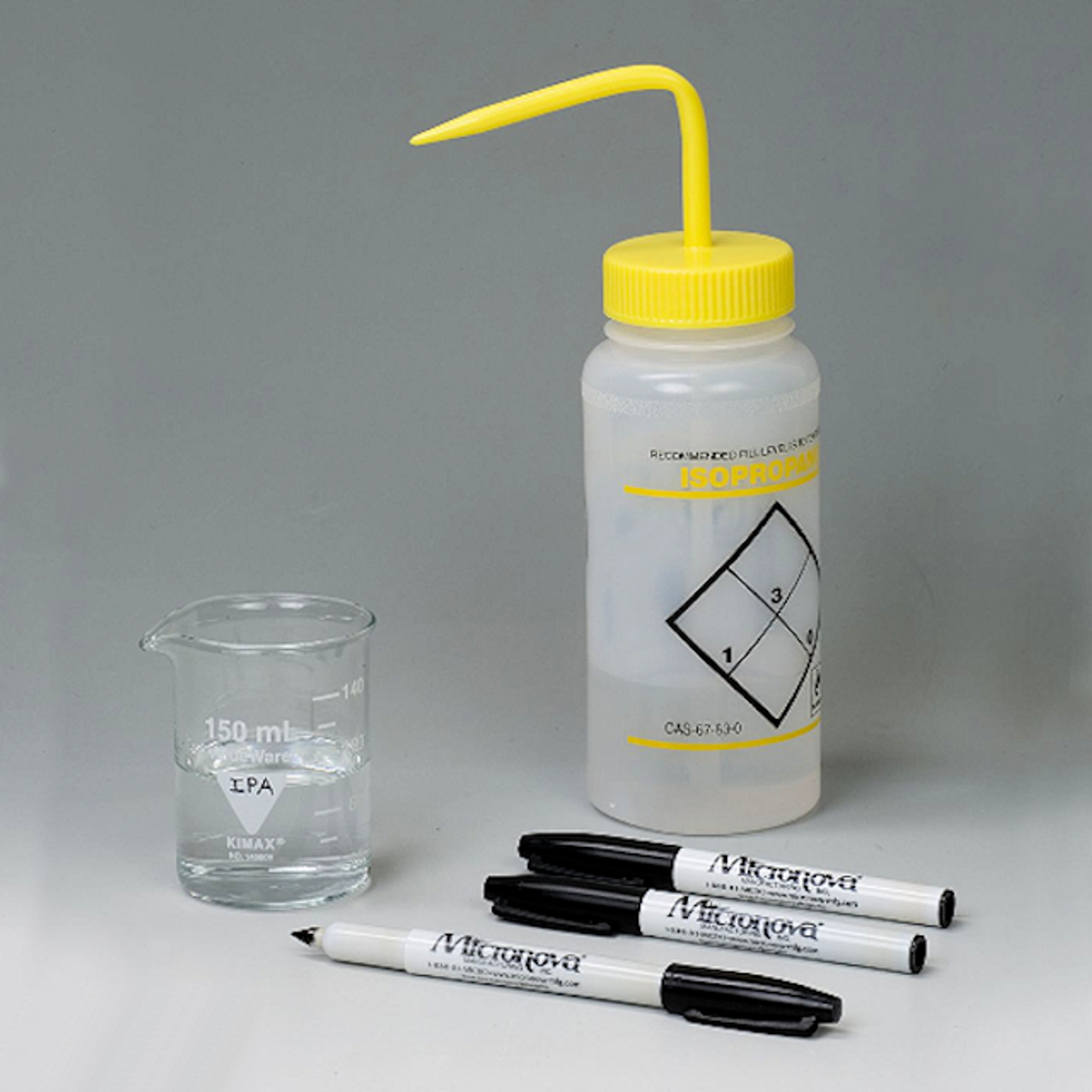
Micronova IPA-Resistant LabMarkers™ are fine-tip permanent markers developed for labeling, identification, and documentation in cleanrooms and controlled manufacturing environments. Featuring quick-drying, isopropyl alcohol-resistant ink, these markers help maintain legible identification on cleanroom bags, disposable laboratory supplies, sample containers, and equipment labels during routine handling and controlled cleaning procedures.
The markers are designed to write on cold or damp surfaces, plastic bags, and disposable labware. Their ink resists IPA overspray and smearing on compatible surfaces, including glass, metal, and porcelain. A high-density polypropylene barrel supports routine exterior wipe-downs with compatible IPA, bleach, and phenol-based cleaning solutions.
Standard PEN-40 black and PEN-42 blue LabMarkers are supplied non-irradiated. Micronova also offers separately identified gamma-irradiated versions for applications requiring processed markers. Standard manufacturer packaging consists of five markers per inner bag and ten markers per case.
Cleanroom Identification Advantage: Micronova IPA-Resistant LabMarkers combine fine-point writing, fast-drying ink, and resistance to incidental IPA overspray to support clear identification in contamination-controlled workflows. Their capped design, wipe-down-compatible polypropylene barrel, and lot-identified packaging make them suitable for facilities managing labeling consistency, material traceability, and controlled stationery usage.
Specifications:
- Manufacturer: Micronova Manufacturing, Inc.
- Product Family: IPA-Resistant LabMarkers™
- Product Type: Fine-Tip Permanent Cleanroom Marker
- Standard Black Part Number: PEN-40
- Standard Blue Part Number: PEN-42
- Optional Irradiated Black Part Number: PEN-40IR
- Optional Irradiated Blue Part Number: PEN-42IR
- Marker Style: Capped
- Tip Type: Fine point
- Ink Color: Black or blue, according to selected manufacturer SKU
- Ink Type: Permanent, quick-drying, IPA-resistant ink
- Barrel Material: High-density polypropylene
- Cap Material: Polypropylene
- Ink Reservoir Tube: Acrylic (PMMA)
- Ink Reservoir Core: Polyester fiber/felt
- Nib Material: Acrylic fiber blend
- Overall Length: 5.25 inches (13.34 cm)
- Barrel Diameter: Approximately 0.5 inches (1.27 cm)
- Writing Surface Compatibility: Cold or damp surfaces, compatible plastic bags, disposable labware, glass, metal, and porcelain
- Ink Performance: Resists IPA overspray and smearing under appropriate application conditions
- Removability: Markings on suitable reusable glass, metal, and porcelain surfaces can be removed with soap and water
- Barrel Wipe-Down Compatibility: IPA, bleach, and phenols, subject to application conditions
- Strong Solvent Compatibility: Thinners and aggressive solvents may damage printed barrel identification
- Autoclavability: Not autoclavable
- Standard PEN-40 / PEN-42 Processing: Non-irradiated
- Optional Irradiated Versions: Separate manufacturer SKUs with applicable irradiation-processing documentation
- Standard Manufacturer Inner Bag: 5 markers
- Standard Manufacturer Case: 10 markers
- Standard Manufacturer Case Contents: Two inner bags of five markers
- Irradiated Configuration: Individually bagged markers with additional protective packaging according to the selected SKU
- Traceability: Manufacturer lot and part identification on inner bags and cases
- Certificate of Conformance: Available from Micronova
- Recommended Storage Temperature: 15-30°C (59-86°F)
- Storage: Protect from sunlight, ultraviolet exposure, and extreme temperature or humidity fluctuations
- Manufacturer Shelf Life: Not specified for standard PEN-40/PEN-42 in Revision 002
- Manufacturing Location: Torrance, California, USA
- Manufacturing Quality System: ISO 9001 certified facility
- Manufacturer Technical Specification: PEN-40 / PEN-42, Revision 002, effective October 5, 2023
About the Manufacturer:
Micronova Manufacturing develops specialized contamination-control supplies for pharmaceutical manufacturing, biotechnology, medical device production, laboratory research, semiconductor processing, and other controlled environments. Its product portfolio includes cleanroom pens and markers, cleaning tools, wipers, mopping systems, and specialized cleaning solutions.
Micronova's IPA-Resistant LabMarkers are designed to address the practical challenges of identifying materials and equipment in areas where routine IPA wipe-downs, cleaning chemicals, and controlled handling can affect ordinary marker ink. The marker family includes non-irradiated and irradiated configurations to support different facility requirements.
SOSCleanroom has supplied Micronova products for more than 15 years, assisting customers with cleanroom stationery selection, manufacturer documentation, packaging configurations, and procurement support for contamination-sensitive environments.
IPA-Resistant LabMarker Features:
- Fine-point capped permanent marker
- Quick-drying IPA-resistant ink
- Available black and blue ink configurations
- Suitable for writing on cold and damp surfaces
- Marks compatible plastic bags and disposable laboratory supplies
- Smear-resistant on glass, metal, and porcelain
- Markings on selected reusable hard surfaces can be removed with soap and water
- High-density polypropylene barrel
- Polypropylene cap
- Acrylic reservoir tube and polyester fiber/felt core
- Acrylic fiber-blend writing nib
- Barrel compatible with controlled wipe-downs using IPA, bleach, and phenols
- Designed for controlled environments, including ISO Class 5 cleanrooms
- Standard non-irradiated configurations
- Optional gamma-irradiated configurations
- Lot-identified manufacturer packaging
- Five standard markers per manufacturer inner bag
- Ten standard markers per manufacturer case
IPA-Resistant LabMarker Benefits:
- Improved Label Durability: IPA-resistant ink helps preserve markings during incidental overspray and appropriate wipe-down conditions.
- Clear Fine-Point Writing: Fine nib supports writing on small labels, sample containers, bags, and laboratory materials.
- Fast-Drying Ink: Helps reduce smearing when sufficient drying time is allowed before handling.
- Cold and Damp Surface Marking: Supports identification tasks involving refrigerated supplies and surfaces with incidental moisture.
- Versatile Surface Compatibility: Can mark a variety of common cleanroom packaging and laboratory materials.
- Reusable Surface Identification: Markings on suitable glass, metal, and porcelain can be removed with soap and water when temporary identification is required.
- Cleanroom Wipe-Down Compatibility: Polypropylene construction tolerates appropriate cleaning with common facility wipe-down chemistries.
- Traceability Support: Lot-identified packaging helps support controlled receiving and issuance procedures.
- Color-Coding Options: Black and blue configurations allow facilities to establish approved visual identification systems.
- Controlled Material Transfer: Manufacturer packaging supports staged introduction into designated cleanroom areas.
- Irradiated Product Availability: Separate irradiated configurations support facilities that require documented irradiation processing.
Common Applications:
- Cleanroom bag and package identification
- Disposable laboratory container labeling
- Sample identification and laboratory documentation
- Work-in-process material labeling
- Lot and batch identification on compatible label surfaces
- Controlled equipment and fixture marking
- Identification of cold or damp laboratory supplies
- Marking compatible plastic bags and polyethylene packaging
- Temporary identification on reusable glassware
- Marking compatible metal and porcelain surfaces
- Pharmaceutical manufacturing support
- Biotechnology laboratory operations
- Medical device manufacturing documentation
- Material staging and controlled inventory identification
- Cleanroom workstation labeling procedures
Best-Practice Use:
- Select the Correct Marker: Choose the required black or blue ink and the processing configuration approved for the work area.
- Inspect Before Use: Check the barrel, cap, and nib for damage or visible contamination.
- Use a Clean Writing Surface: Remove heavy liquid films, oil, and loose contamination before writing.
- Control Dampness: Although LabMarkers can write on damp surfaces, excessive moisture may reduce adhesion or delay ink drying.
- Allow the Ink to Dry: Wait until markings are dry before handling, stacking, or exposing them to routine cleaning chemicals.
- Use Light Writing Pressure: Avoid deforming the nib or damaging plastic bags and delicate label surfaces.
- Protect the Marker Tip: Keep the nib away from gloves, cleanroom garments, workbenches, and contaminated objects when not writing.
- Recap After Use: Replace the cap securely to help protect the nib and limit premature ink drying.
- Minimize Ink Transfer: Avoid contact between freshly written markings and clean gloves, wipers, containers, or other surfaces.
- Control Chemical Exposure: Verify that markings remain legible after the actual facility cleaning procedure.
- Segregate by Work Area: Assign markers to designated rooms, workstations, or cleanliness zones when required.
- Maintain Traceability: Retain manufacturer lot information when the marking consumable is controlled by the facility quality program.
- Replace Contaminated Markers: Remove markers from use if damaged, heavily contaminated, leaking ink, or no longer producing consistent markings.
IPA Resistance and Marking Performance:
Micronova designs LabMarker ink to resist isopropyl alcohol overspray and smearing. The performance of a written mark depends on the surface material, ink drying time, cleaning chemistry, exposure duration, wiping pressure, and frequency of cleaning.
- IPA Overspray: The ink is designed to resist incidental IPA overspray after appropriate application and drying.
- Wipe-Down Exposure: Repeated direct scrubbing may affect the legibility or permanence of a mark depending on the surface.
- Surface Material: Polyethylene bags, laboratory plastics, metal, glass, and porcelain may exhibit different ink-adhesion characteristics.
- Drying Time: Fast-drying ink still requires an appropriate interval before exposure to handling or cleaning.
- Cold Surfaces: Surface temperature and condensation may influence writing and drying behavior.
- Damp Surfaces: The marker can write on damp surfaces, but standing liquid should be removed where practical.
- Plastic Bags: Confirm that the ink does not transfer to adjacent packaging during stacking, folding, or storage.
- Reusable Glass and Metal: Markings can be removed from suitable surfaces with soap and water.
- Strong Solvents: IPA resistance does not establish universal resistance to acetone, ketones, thinners, or other aggressive solvent systems.
- Validated Identification: Where labeling is critical to product identity or traceability, qualify mark legibility after the applicable cleaning and handling cycles.
Marking Performance Guidance: IPA-resistant ink is designed to withstand routine incidental alcohol exposure, but actual mark durability depends on the surface and cleaning method. Allow sufficient drying time and verify label legibility after the facility's normal wipe-down procedure, especially when markings are used for regulated material or batch identification.
Cold, Damp and Laboratory Surface Marking:
Micronova LabMarkers are suitable for writing on cold or damp surfaces, disposable laboratory materials, and compatible packaging. Consistent results require proper surface preparation and handling after marking.
- Cold Containers: Mark compatible chilled containers while controlling condensation and handling conditions.
- Damp Surfaces: Remove standing droplets where possible before writing.
- Plastic Bags: Apply markings to a smooth, supported area to avoid puncturing or stretching the package.
- Disposable Labware: Write on the designated identification area without contaminating product-contact surfaces.
- Reusable Glassware: Apply identification to a suitable external surface and use an approved cleaning method when removal is necessary.
- Metal Surfaces: Test the actual finish for mark durability and removability.
- Porcelain Surfaces: Confirm ink performance and subsequent cleanability under the intended procedure.
- Critical Identification: Do not allow labels or markings to contact exposed products, open containers, or sterile product-contact areas unless the process specifically permits it.
Contamination Control and Ink-Transfer Prevention:
Cleanroom markers should be managed as controlled consumables because their nibs, ink, caps, barrels, and handling surfaces can introduce contamination if used incorrectly. Appropriate workstation practices help maintain clean handling and reliable written identification.
- Nib Contamination: Avoid contact between the writing tip and unapproved work surfaces, wiping materials, clothing, or gloves.
- Ink Transfer: Allow newly written labels to dry before contact with cleanroom gloves or adjacent materials.
- Cap Handling: Place removed caps only on approved clean surfaces or retain them using a controlled handling method.
- Barrel Abrasion: Avoid scraping marker bodies against rough tools, fixtures, or drawers that may generate particles.
- Material Segregation: Keep cleanroom-approved markers separate from ordinary office markers.
- Work-Area Assignment: Use dedicated markers by room or processing zone when required by the contamination-control program.
- Ink Leakage: Remove leaking or damaged markers from controlled areas immediately.
- Marking Location: Keep permanent ink away from exposed product, sterile surfaces, and equipment areas where it could introduce unacceptable residues.
- Particle Qualification: Evaluate marker and packaging cleanliness when the process has defined particulate requirements.
- Traceability: Follow site procedures for marker issuance, lot recording, and replacement.
Cleanroom Handling Guidance: Keep markers capped and protected between uses, minimize nib contact with unintended surfaces, and avoid handling freshly written marks before drying. Maintain designated marker supplies for controlled areas to reduce unnecessary introduction of unqualified stationery and potential contamination.
Marker Barrel Wipe-Down and Chemical Compatibility:
The high-density polypropylene barrel is intended to tolerate wipe-down with IPA, bleach, and phenol-based cleaning solutions. This characteristic concerns the marker exterior and should be distinguished from the chemical resistance of a written mark.
- Isopropyl Alcohol: Manufacturer identifies the barrel as suitable for routine IPA wipe-downs.
- Bleach: Manufacturer identifies compatibility with wipe-down exposure to bleach-based solutions.
- Phenols: Manufacturer identifies compatibility with phenolic cleaning solutions.
- Strong Solvents: Thinners and aggressive solvents may damage printed barrel markings.
- Closed Cap: Wipe the exterior while the marker is capped to reduce the risk of contaminating the writing tip.
- Controlled Wetness: Avoid flooding the cap opening, writing nib, or internal reservoir.
- Wiping Direction: Use clean, compatible wiping materials and follow the facility's approved cleaning technique.
- Drying: Allow the barrel to dry before storage or further handling.
- Material Integrity: Replace markers if cleaning chemicals cause cracking, swelling, degraded barrel printing, or changes in marker operation.
- Qualification: Verify compatibility with the exact cleaning formulation, exposure duration, and cleaning frequency used at the facility.
Standard vs. Gamma-Irradiated LabMarker Selection:
Micronova provides standard non-irradiated LabMarkers and separately identified gamma-irradiated versions. The correct selection depends on cleanroom classification, material-transfer procedures, and whether the facility requires documented irradiation processing.
- PEN-40: Black, fine-tip, capped LabMarker; standard non-irradiated configuration.
- PEN-42: Blue, fine-tip, capped LabMarker; standard non-irradiated configuration.
- PEN-40IR: Black, gamma-irradiated LabMarker with separately defined packaging and processing documentation.
- PEN-42IR: Blue, gamma-irradiated LabMarker with separately defined packaging and processing documentation.
- Standard Versions: Packaged five markers per manufacturer inner bag and ten markers per case.
- Irradiated Versions: Individually bagged and grouped in protective packaging according to the specific irradiated manufacturer SKU.
- Documentation: Review the applicable Certificate of Irradiation Processing and Certificate of Conformance for irradiated products.
- Sterility Requirements: Do not assume that irradiation processing alone establishes a particular Sterility Assurance Level or a validated sterile presentation.
- Aseptic Operations: Confirm the required irradiation dose, packaging, handling, and processing documentation with the approved facility procedure.
- Autoclaving: Neither standard nor irradiated LabMarkers should be autoclaved.
Product Selection Guidance: Choose standard PEN-40 or PEN-42 when non-irradiated cleanroom stationery is permitted. Select the corresponding irradiated version when the procedure specifically requires irradiation-processed markers and the applicable manufacturer documentation supports the intended application. Follow the selected SKU's packaging, processing, and material-transfer requirements.
Ink Handling and Chemical Safety:
- Ink Exposure: Avoid unnecessary contact with marker ink, the writing nib, and damaged ink reservoirs.
- Glove Protection: Use gloves appropriate for the facility's cleanroom and chemical-handling requirements.
- Eye Contact: Avoid contact with eyes and follow facility first-aid procedures in the event of accidental exposure.
- Ventilation: Use markers in accordance with facility chemical-use and ventilation requirements.
- Ink Leakage: Remove damaged or leaking markers from service and clean affected surfaces using an approved procedure.
- Surface Contact: Keep ink away from product-contact surfaces unless the marking method has been qualified for that application.
- Safety Documentation: Review the applicable manufacturer ink Safety Data Sheet and facility chemical hazard assessment.
- Disposal: Follow the facility's applicable chemical and controlled-environment waste procedures.
Packaging and Storage Recommendations:
- Standard PEN-40 / PEN-42 Inner Packaging: 5 markers per LDPE bag
- Standard Manufacturer Case Quantity: 10 markers
- Manufacturer Case Liner: LDPE
- Shipping Case: ECT-rated recycled-content packaging
- Irradiated Versions: Individual packaging and additional protective layers according to the selected manufacturer SKU
- Lot Traceability: Lot and part identification on each standard inner bag and case
- Certificate of Conformance: Available upon request
- Irradiation Documentation: Available for applicable irradiated products
- Storage Temperature: Recommended 15-30°C (59-86°F)
- Sunlight Protection: Avoid direct sunlight and ultraviolet exposure
- Environmental Control: Protect from extreme temperature and humidity fluctuations
- Cap Storage: Keep markers securely capped when not in use
- Particle Protection: Store markers in approved clean containers or original packaging
- Area Segregation: Maintain designated cleanroom marker supplies by location where required
- Package Inspection: Inspect bags and marker bodies before controlled-area introduction
- Autoclaving: Not autoclavable
- Disposal: Follow local and facility-approved waste procedures
Manufacturer Technical Documents:
Micronova IPA-Resistant LabMarkers Manufacturer Product Information: Click Here
Micronova PEN-40 / PEN-42 IPA-Resistant LabMarkers Product Specification - Revision 002 (PDF): Click Here
Micronova PEN-40IR Irradiated LabMarker Product Specification (PDF): Click Here
Micronova Pens and Markers Product Brochure (PDF): Click Here
Micronova Safety Data Sheet Resources: View Manufacturer Product Resources
SOSCleanroom IPA-Resistant LabMarkers Product Information: Click Here
Other Similar Products Available From SOSCleanroom.com
Micronova IPA-Resistant LabMarker Configurations
Notes: Need assistance choosing IPA-resistant cleanroom markers, selecting an irradiated configuration, or establishing controlled marking procedures? Open the SOSCleanroom Technical Vault tab above for additional guidance on IPA exposure, ink drying, cleanroom stationery handling, contamination prevention, and marker selection.
SOSCleanroom.com supports pharmaceutical, biotechnology, medical device, semiconductor, laboratory, and other critical environments with cleanroom stationery, labels, cleaning solutions, protective apparel, and contamination-control supplies. Our team provides manufacturer documentation, product selection assistance, packaging information, and procurement support.
Product description updated: October 22, 2026 (SOS Technical Staff)
© 2026 SOS Supply. All rights reserved.