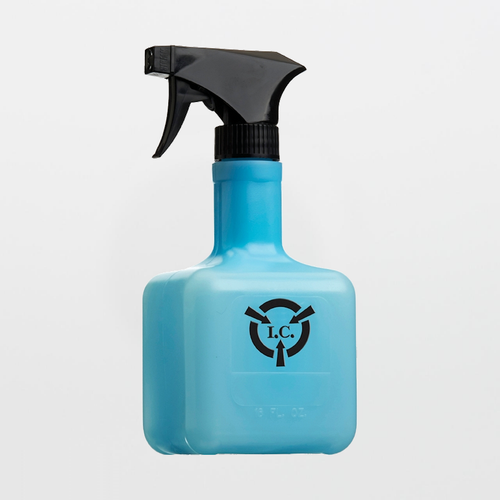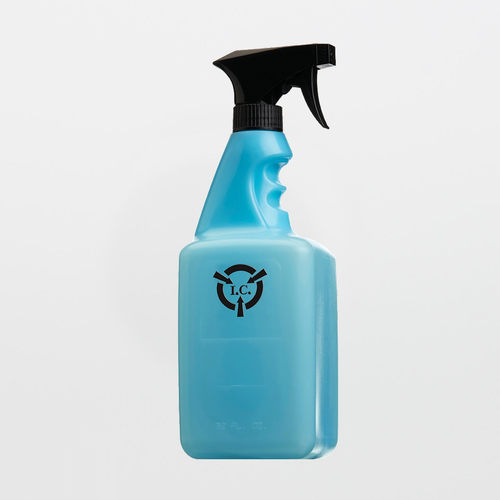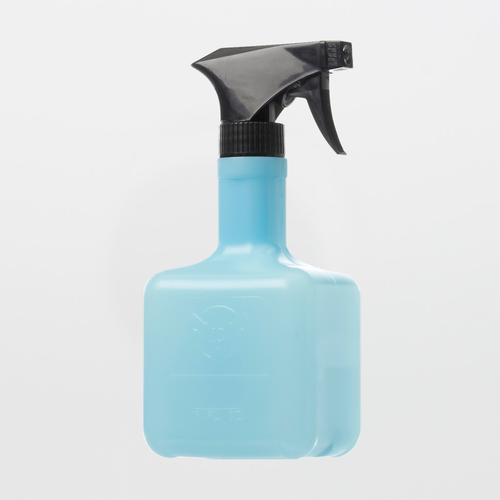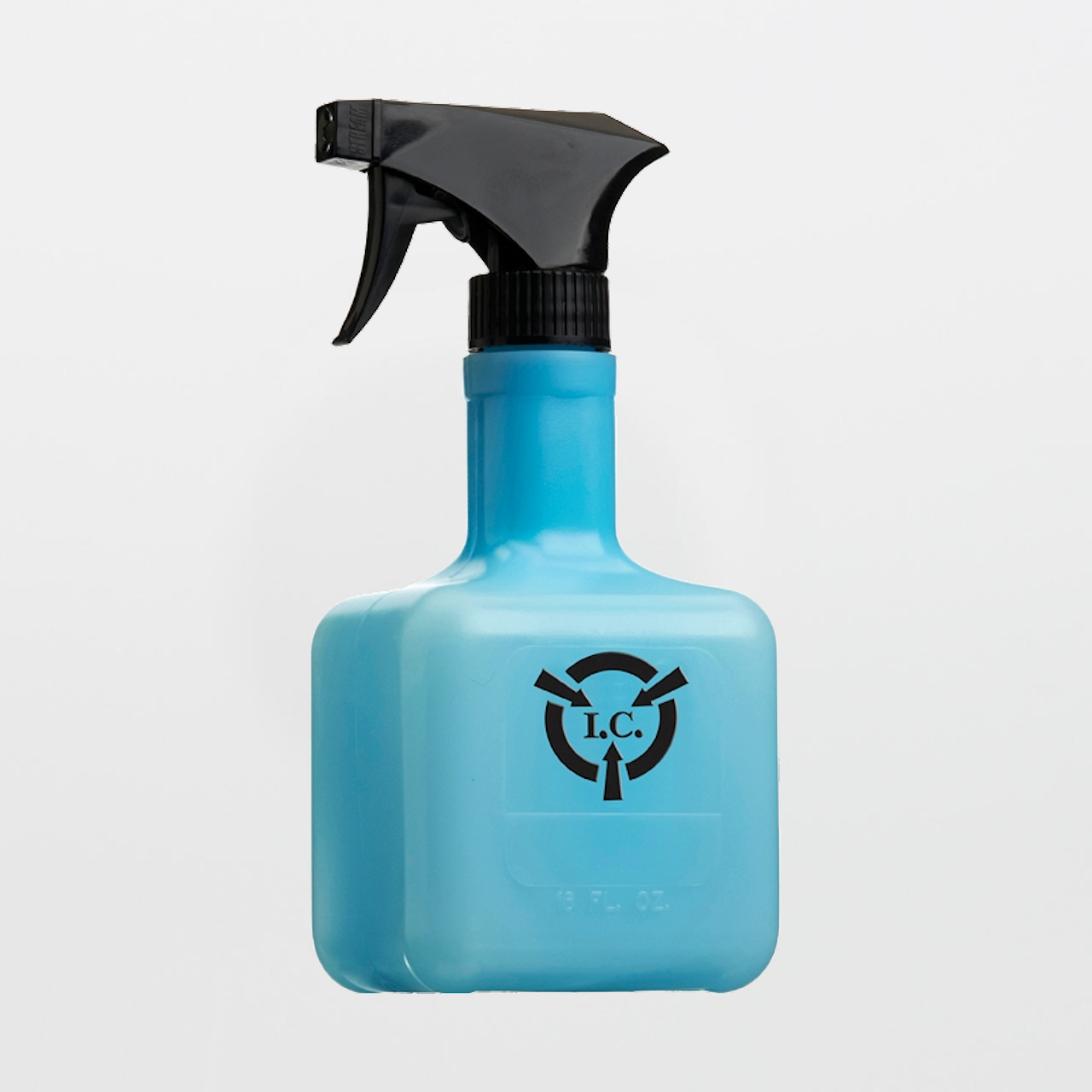
I.C. Topical Antistat in ESD-Safe Spray Bottle (16 oz.)

$107.14
(No reviews yet)
SKU:
ICAS-16-ESD
Availability:
7 - 10 Business Days
Shipping:
Calculated at Checkout
Quantity Option (Case):
10 Bottles
I-C Topical Antistat (ESD-Safe Spray Bottle) – 16 oz
Available Quantity Option: Case   |   Case Unit: 10 Bottles

I-C Topical Antistat is a spray-applied, water-based antistatic product intended to leave a static dissipative coating after drying so static can dissipate when grounded. It is supplied in an ESD-safe spray bottle for controlled dispensing at the point of use.

In ESD-controlled work areas, this type of topical antistat is typically used as a support control where charge buildup can be triggered by low humidity, high airflow, or repeated handling of insulating surfaces. Treat it as part of a broader ESD program (grounding, verification, housekeeping) rather than a stand-alone fix.

Key notes
  • Manufacturer describes the bottle as ESD safe and intended for personnel and non-ESD surfaces as a static-control support.
  • SDS indicates the product is non-flammable and should be stored below 115°F in the original container.
  • Verify compatibility with your surfaces and local SOPs before wide deployment in production.

When static control is the hidden variable: using I-C Topical Antistat (16 oz) without contaminating the process

The Technical Vault  |  By SOSCleanroom

In ESD-controlled environments, “static events” are often not dramatic. They show up as intermittent failures, unexplained drift, or yield loss that correlates with low humidity, high airflow, insulating contact surfaces, and inconsistent operator handling. I-C Topical Antistat is designed to reduce that risk by leaving a static dissipative coating after drying so static can dissipate when grounded. The product is packaged in an ESD-safe spray bottle for controlled, point-of-use dispensing.

The control objective is not “spray more.” It is “apply enough to reduce charging risk without adding a new contamination mechanism” (over-wetting, streaking, residues on critical surfaces, or uncontrolled migration into seams and interfaces).

What It’s For

I-C Topical Antistat is described as a spray-applied product that, once dry, leaves a protective static dissipative coating on non-ESD surfaces to allow static to dissipate when grounded. It is commonly used as a support control in ESD programs where personnel practices and insulating surfaces can contribute to charge buildup.

The SOSCleanroom offering is a 16 oz bottle and is sold as a case of 10 bottles. The product page also notes it is non-returnable.

Decision Drivers

  • Static-dissipative intent: designed to dry to a dissipative film so static can dissipate when grounded (support layer, not a replacement for grounding/verification).
  • Dispensing control: spray format supports targeted application, but overspray and flooding are real contamination risks if not controlled.
  • ESD-safe packaging: the bottle is positioned as ESD safe, supporting handling in ESD-controlled work areas.
  • Storage limits and shelf-life planning: SDS calls out avoiding temperatures above 115°F and notes storage up to 2 years from date of manufacture.
  • Process compatibility: any film-forming antistat must be evaluated against your surfaces, optics, adhesives, and “no-residue” constraints before broad release.

Materials and Construction: Practical Implications

SDS identifies the product as an aqueous blend (DI water listed as the majority component) with a low-percentage antistatic ingredient. The key operational implication is that it is intended to dry down to a functional surface condition rather than stay wet as a cleaner.

Non-flammable posture: the SDS indicates the product is non-flammable and lists no flash point (N/A). This can simplify point-of-use controls compared with alcohol-based sprays, but it does not eliminate the need for controlled application and surface compatibility checks.

Residue discipline: any antistat that leaves a dissipative film can be a defect mechanism if it migrates onto “keep-clean” surfaces (optical apertures, adhesive bond lands, contact interfaces, sensor windows). Treat application boundaries as part of the method.

Specifications in Context

Pack configuration Case of 10 bottles; 16 oz bottle size (per SOSCleanroom listing)
Intended function Dries to a static dissipative coating so static can dissipate when grounded (per SDS description)
Appearance / pH Clear liquid; pH 7.0–8.0 (per SDS)
Storage Store cool in original container; avoid temperatures >115°F; protect from direct sunlight (per SDS)
General shelf-life note May be stored up to 2 years from date of manufacture (per SDS)

Operational interpretation: treat this as a method input. Define where it is allowed to land, how it is applied (distance, sprays, wipe-off rules if applicable), and what constitutes an acceptable dry-down condition at the workstation.

Cleanliness and Performance: How to Think About Risk

  1. ESD benefit is conditional: Topical antistats reduce risk when the rest of the ESD program is functioning (grounding, verification, humidity strategy). If the workstation is not grounded or operators are not verified, a surface film will not “fix” the system.
  2. Film control is the contamination control problem: you are intentionally leaving a coating. That can be acceptable on designated surfaces and unacceptable on critical areas. Define boundaries and keep-out zones.
  3. Over-application creates variability: too much product can pool, migrate into seams, and spread beyond the intended zone. In ESD work, “more” often feels safer — but it increases contamination risk and changes surface properties.
  4. Confirm compatibility: qualify against sensitive surfaces (optical plastics, coatings, adhesives, elastomers) using the same dry time and exposure conditions your operators will create.

Why Packaging and Traceability Matter

The product is supplied in an ESD-safe spray bottle, which supports handling in ESD-controlled areas. From a program-control standpoint, the bigger win is standardizing the exact product and presentation so that “antistat use” does not drift into ad hoc substitutes with unknown residue behavior.

Build traceability into the station: track when bottles are opened, where they are used, and what process steps they are associated with — especially if you are correlating intermittent electrical failures or seasonal humidity-driven events.

Best-Practice Use

  • Define the target surface and the keep-out surface before spraying. Overspray is the most common failure mechanism.
  • Use the minimum effective amount. The goal is an even, controlled dry-down — not visible wetness or pooling.
  • Allow a defined dry time before handling sensitive parts. Document that time if it affects surface condition or ESD measurements.
  • Treat this as one layer of the ESD system: maintain grounding, verification routines, and humidity controls where applicable.
  • Store per SDS guidance: protect from heat and sunlight; avoid temperatures >115°F; keep in original container.

Common Failure Modes—and How to Prevent Them

  • Overspray onto critical surfaces: prevent with masking/keep-out zones and controlled spray distance.
  • Pooling and migration into seams: prevent with minimal dosing and defined dry time; do not “chase coverage” by re-wetting repeatedly.
  • Assuming antistat replaces grounding: prevent with routine ESD verification and documented workstation controls.
  • Heat-exposed storage: prevent by storing below 115°F and out of direct sunlight, per SDS guidance.

Where This Fits in a Controlled Program

I-C Topical Antistat is best treated as a support consumable inside a defined ESD and contamination-control program: useful when charge control is the goal, but only if application boundaries and dry-down behavior are controlled so you do not trade ESD risk for residue risk. Document the method, standardize the product, and qualify compatibility where the surface condition is yield-critical.

Source Basis
  • SOSCleanroom product page: I-C Topical Antistat in ESD safe spray bottle (16 oz), packaging quantity and listing notes. Source
  • Safety Data Sheet (PDF): IC Topical Antistat (product description, storage limits >115°F, 2-year storage note, physical properties, non-flammable classification). Source