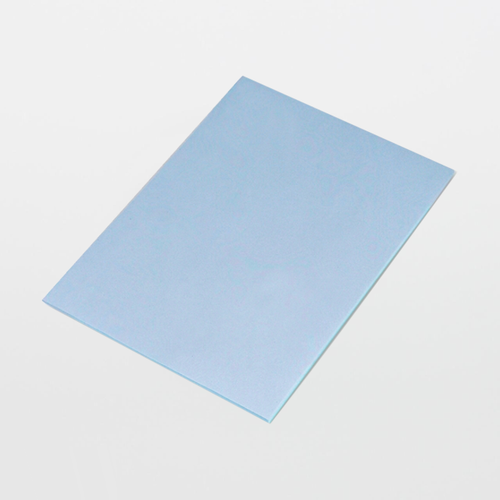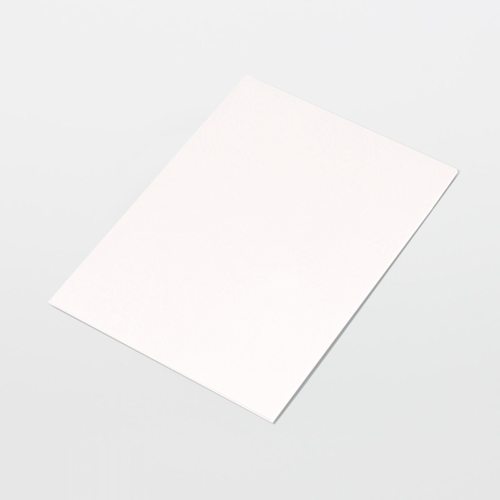
TX5832 (TexWrite® 30) — heavy-weight loose sheets for controlled-environment documentation.
1. Practical solutions in a critical environment
In cleanrooms, “office supplies” become contamination-control tools. Standard copy paper can shed fibers at cut edges, carry filler-related ionic contaminants,
and create printer/toner debris that migrates into work zones. TX5832 is designed for documentation tasks where you need paper that behaves predictably:
it feeds cleanly, holds toner, stays readable after handling, and supports disciplined document control without importing avoidable particle and ionic risk.
Common real-world use cases include: printing travelers and batch packet inserts on a dedicated cleanroom printer; issuing controlled work instructions at a line-side binder;
capturing maintenance readings at a tool; and staging “line clearance” checklists where legibility and page integrity matter as much as the text itself.
2. What this product is used for
- Standard-duty and high-speed laser printers and photocopiers (cleanroom documentation printing).
- Double-sided printing where show-through and durability are concerns (TexWrite® 30 is called out for duplex use).
- Offset printing and controlled distribution of manuals, work instructions, and log sheets.
- Cleanroom note taking and data transfer where pages are handled, filed, and audited.
3. Why customers consider this product
- Heavy-weight durability: higher basis weight and caliper support repeated handling, binder turns, and line-side use.
- Cleaner formulation approach: manufacturer literature positions TexWrite® as cleaner/more consistent than conventional bond paper and formulated without common inorganic fillers.
- Printer compatibility: strong toner adhesion and heat resistance for laser/photocopier use.
- Duplex-friendly opacity: high opacity supports legibility when printing or writing on both sides.
- Cleanroom packaging and autoclave option: supports facilities that stage documentation into controlled zones and, where validated, use autoclaving for sterile-area entry.
4. Materials, composition, and build
Material/structure is stated as cellulose paper with a polymer reinforcement. Texwipe describes TexWrite® 30 as a 30# heavy-weight cellulose paper
reinforced with a synthetic copolymer, designed to reduce particle generation versus conventional bond paper. The TexWrite® loose leaf sheet literature also emphasizes
formulation without inorganic fillers (e.g., calcium carbonate and titanium dioxide), which are often used to increase opacity/whiteness but can contribute to ionic contamination.
Latex note: current TexWrite® loose sheet literature states “no natural latex binders.” If latex sensitivity is a program driver at your site, treat that statement as a key requirement,
then confirm against your internal change-control expectations (e.g., request current documentation through your procurement/QA channel).
5. Specifications in context (include a table: Attribute vs SKU)
These are the published, product-specific details most teams use to qualify paper for controlled documentation. Where the manufacturer reports “typical values,” treat them as
guidance for risk assessment, not as formal acceptance limits, unless your quality system explicitly adopts them.
| Attribute |
TX5832 (TexWrite® 30) |
| Sheet size |
8.5" x 11" (21.6 cm x 28 cm) |
| Color |
White |
| Paper weight class |
30# (heavy-weight) |
| Basis weight (typical) |
110 g/m² |
| Caliper (typical) |
6.0 mil |
| Opacity (typical) |
88% |
| Tensile strength (typical) |
Machine direction 6.6 kg; Cross direction 5.5 kg |
| Tear strength (typical) |
Machine direction 114 g; Cross direction 122 g |
| Surface resistivity (typical) |
1.9 × 10⁹ ohms (≈ 1.9 × 10¹⁰ ohms/sq) at 55% RH (per test method note) |
| Cleanroom environment guidance |
ISO Class 3–8; Class 1–100,000; EU Grade A–D |
| Autoclavable |
Yes (manufacturer literature indicates autoclavable; follow their TechNotes and validate for your process) |
| Packaging (inner / case) |
250 sheets per pack; 7 packs per case (1,750 sheets per case) |
| Sterility status |
Not stated as sterile; described as cleanroom packaged |
| Country of origin |
Made in USA (per manufacturer TDS) |
6. Performance and cleanliness considerations
Cleanroom stationery failures often show up as unexpected particles (edge dust, fiber shed), ink/toner flake, smearing, and “mystery residue” when pages contact gloves,
fixtures, or product-contact-adjacent packaging. TX5832 is built around two practical controls: reinforcement for reduced shedding and stability, and formulation choices intended
to reduce ionic contribution from common filler chemistries used in conventional paper.
Typical cleanliness indicators (manufacturer-reported typical values)
| Metric |
Typical value for TexWrite® 30 |
Why it matters in practice |
| Particles (>0.5 µm) |
5.0 million particles/m² |
Helps estimate the risk of “paper-related” particle adders during handling, stacking, and page turns. |
| Sodium (ions) |
80 ppm |
Relevant for corrosion-sensitive assemblies and processes with ionic cleanliness concerns. |
| Chloride (ions) |
65 ppm |
Often monitored in controlled environments due to corrosion and residue risk. |
Ink/solvent behavior: the paper’s cleanroom formulation is documented, but solvent resistance of your chosen inks (pens/markers), toner rub resistance after autoclave,
and smudge performance with IPA/ethanol/quats are not published as universal claims for TX5832. If your process includes solvent wipe-downs of paperwork or label-over-paper
workflows, qualify using your internal methods (dry time, smear, transfer, legibility after exposure).
7. Packaging, sterility, traceability, and country of origin
- Packaging: 250 sheets per pack; 7 packs per case (1,750 sheets per case). Cleanroom packaged.
- Sterility: not stated as sterile; intended for cleanroom use and described as autoclavable for sterile-environment entry when processed appropriately.
- Traceability / COA: not stated in published sources as “COA included.” If your facility requires COA/lot traceability alignment, request current documentation during purchasing/receiving.
- Country of origin: Made in USA (per manufacturer technical data sheet).
8. Best-practice use
- Stage smart: keep packs sealed until you are inside the intended controlled zone. Open one pack at a time to avoid exposing unused sheets to room air and handling.
- Control the printer, not just the paper: dedicate a printer/copier for controlled areas where possible. Toner dust and paper path debris often dominate the contamination story.
- Duplex discipline: if duplex printing is required, run a short validation batch that checks show-through, smear/offset, and barcode readability (if used) after the pages cool and after typical handling.
- Glove-to-paper transfer: avoid laying pages directly on “wet” gloves (IPA/ethanol residue) and avoid stacking freshly printed sheets before toner fully fuses/cools.
- Binder and clipboard habits: use smooth-surface clipboards/binders intended for cleanroom stationery. Sharp clips or rough edges can abrade paper and create edge dust over time.
- If autoclaving is part of your workflow: follow manufacturer guidance (their TechNotes are referenced) and validate your cycle for curl, ink/toner stability, page adhesion (sticking), and post-cycle legibility.
9. Common failure modes
- Toner rub-off or offset: commonly tied to printer temperature settings, worn fuser assemblies, or stacking before toner fully sets.
- Edge dust from handling: shows up when pages are repeatedly turned, clipped, or dragged across textured surfaces; mitigate with smooth-surface binders and controlled page turning.
- Curl/warp after autoclave or humidity swings: heavier paper reduces some issues, but cycle design, drying, and storage conditions still matter.
- Smearing of handwritten entries: typically a pen/ink and dry-time problem, not just paper. Qualify inks against your solvents and glove contact patterns.
- Traceability gaps in receiving: when packs are split across lines without retaining lot/pack identifiers; prevent by keeping at least one original label with the batch packet or in the document-control file.
10. Closest competitors
Comparable products are typically sold as cleanroom documentation paper or cleanroom copy paper intended for controlled environments. When comparing,
focus on what drives risk in your application: filler chemistry (ionic contribution), edge quality, packaging approach, printer performance (toner adhesion, jam rate),
and whether the manufacturer publishes particle/ionic guidance for the specific paper class.
- Kimberly-Clark / Kimtech cleanroom documentation papers (validate environment guidance and published cleanliness metrics for the exact item).
- Berkshire cleanroom documentation papers (confirm sheet weight, packaging, and any published ionic/particle information).
- Micronova cleanroom stationery/documentation materials (confirm suitability statements for your ISO class and solvent/handling expectations).
11. Critical environment fit for this product
Texwipe’s published environment guidance for TexWrite® loose leaf sheets includes ISO Class 3–8 and legacy class references (Class 1–100,000; EU Grade A–D).
Fit is not only about paper cleanliness; it’s also about how documentation is produced and used. In tighter environments (ISO 3–5), the printer/copier location, exhaust management,
and page handling discipline often dominate actual contamination outcomes.
ESD handling note: TX5832 includes a published surface resistivity typical value, but it is not marketed as an ESD label or static-control product in the cited sources.
If your documentation lives inside an ESD control plan, treat paper as a potential tribocharging surface and manage it procedurally (grounded work surfaces, humidity control, handling rules),
rather than assuming the paper provides static-dissipative performance.
SOSCleanroom + Texwipe continuity note
For over 35 years, SOS and Texwipe have been close partners, and SOSCleanroom is the authorized Master Distributor of ITW Texwipe for the United States market.
If your program depends on consistent documentation materials, ask SOSCleanroom to help align pack/case purchasing, receiving checks, and any required paperwork for your quality system.
12. SOSCleanroom note about SOP's
The Technical Vault is written to help customers make informed contamination-control decisions and improve day-to-day handling technique.
It is not your facility’s Standard Operating Procedure (SOP), batch record, or validation protocol.
Customers are responsible for establishing, training, and enforcing SOPs that fit their specific risks, products, equipment, cleanroom classification, and regulatory obligations.
Always confirm material compatibility, cleanliness suitability, sterility requirements, and acceptance criteria using your internal quality system and documented methods.
If you adapt any technique guidance from this entry, treat it as a starting template. Your team should review and approve the final method, then qualify it for your specific surfaces,
solvents, cleanliness limits, inspection methods, and risk profile. In short: use these best-practice suggestions to strengthen your SOPs—not to replace them.
13. Source basis
- SOSCleanroom product page (TX5832): https://www.soscleanroom.com/product/facilities/texwipe-tx5832-texwrite-heavy-weight-8-5-x-11-white-cleanroom-paper/
- Manufacturer product page (TX5832): https://www.texwipe.com/texwrite-30-tx5832
- Manufacturer series page (TexWrite® 30 overview): https://www.texwipe.com/texwrite-30
- SOS-hosted manufacturer datasheet PDF (TX5832): https://www.soscleanroom.com/content/texwipe_pdf/5832.pdf
- Texwipe technical data sheet PDF (TexWrite® Loose Leaf Sheets, US-TDS-043 REV. 2/23): https://www.texwipe.com/images/uploaded/documents/Paper/TDS_TexWrite18%2C22%2C30_CuR4.pdf
- ISO (cleanrooms and associated controlled environments): https://www.iso.org/standard/53394.html
- FDA: https://www.fda.gov/
- ASTM: https://www.astm.org/
- IEST: https://www.iest.org/
SOSCleanroom is the source for this Technical Vault entry.
Briefed and approved by the SOSCleanroom (SOS) staff.
If you have any questions please email us at Sales@SOSsupply.com
Last reviewed: January 9, 2026
© 2026 SOSCleanroom