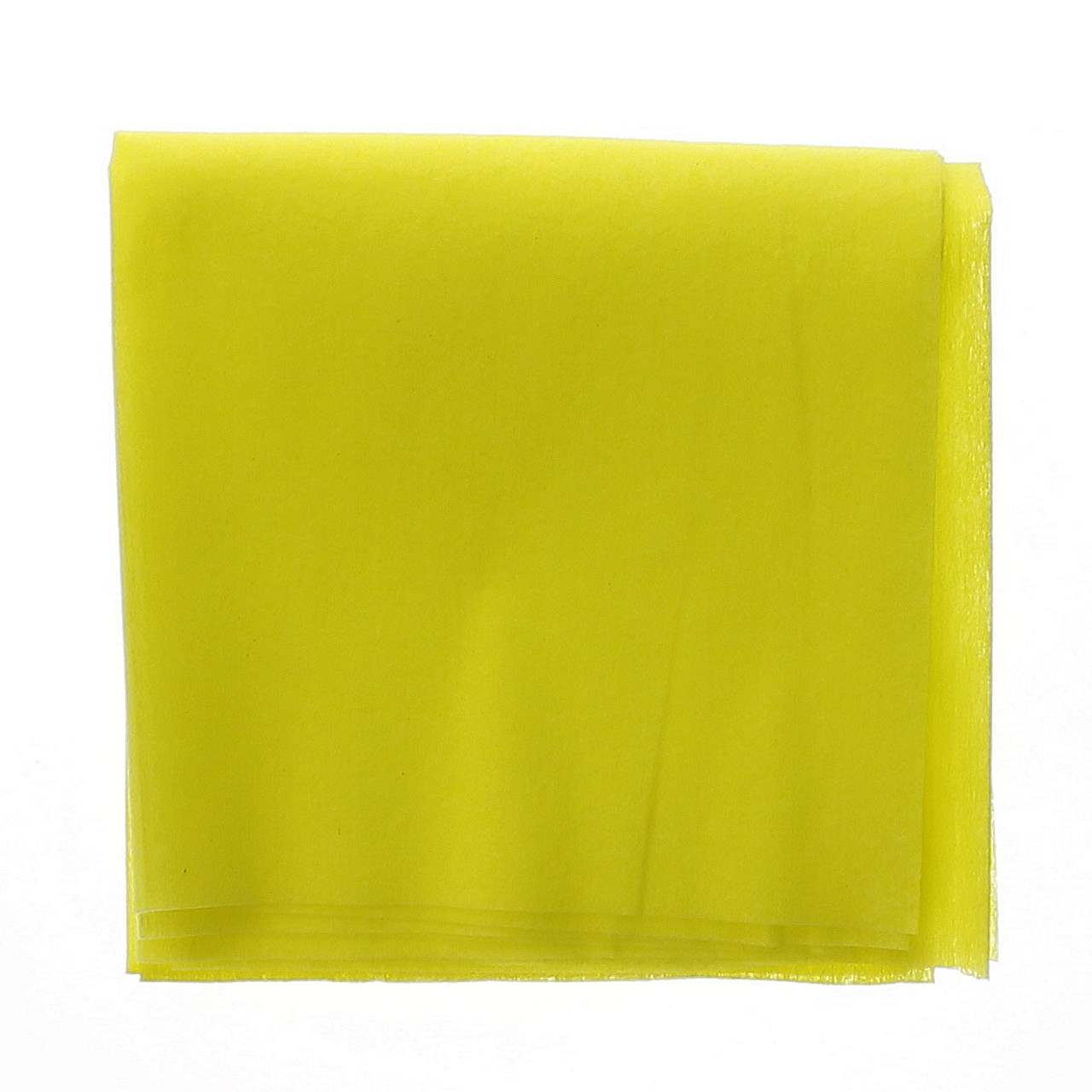
SOS 24" x 24" Nonwoven Treated Yellow Dust Cloths — 1/6 Folded, 50/Bag
6028-500 is a nonwoven treated yellow dust cloth used for light surface wiping where you want to attract and remove dust and small particles. The 24" x 24" format is well-suited for broad wipe coverage on equipment exteriors, carts, floors (non-critical zones), and general area dust pickup where loose debris can migrate into controlled work areas.
In technician practice, treated dust cloths perform best with a controlled touch: wipe lightly, keep the cloth folded to maintain a clean working face, and retire the cloth once it begins to load. That handling discipline helps reduce re-deposition, streaking, and dragging captured debris back across the surface.
Published configuration (6028-500)
- SKU: 6028-500
- Cloth size: 24" x 24"
- Material: Nonwoven treated yellow dust cloth
- Fold: 1/6 folded
- Available quantity option: Bag
- Bag unit: 50 wipes per bag
- Packaging: 50 per poly bag
- Use note (as published): Wiping lightly attracts and removes dust and small particles from surfaces
Dust pickup performance — and the reality check
Treated dust cloths are designed to attract and hold light dust so it does not re-settle. Even so, any wiping material can shed or re-deposit debris if it is overworked, used with excessive pressure, or reused beyond its effective life. Control performance with light contact, clean-face folding, and early discard.
Practical use guidance (technicians and engineers)
- Use the right zone: Position as a general-area dust pickup cloth (equipment exteriors, carts, floors, non-critical surfaces). For product-contact or critical wiping, standardize a cleanroom-grade wiper that is qualified for particles, extractables, and solvent compatibility.
- Light touch is the technique: Wipe lightly. High pressure can grind debris into the surface and increase streaking or drag marks.
- Fold to control re-deposition: Keep the cloth folded to create a flat pad. Refold to a clean face as it loads so captured dust does not get redistributed.
- One cloth, one task window: Do not stretch use across multiple zones or long durations. Once a cloth loads, it becomes a transfer tool.
- Keep it dry unless validated: Treated dust cloths are typically used dry. Introducing solvents or water can change pickup behavior and increase streaking/transfer risk under many processes.
Compatibility and wipe-down notes
- IPA / solvent exposure: Not published for 6028-500. If your process requires IPA wipe-down or solvent contact, qualify for streaking, residue transfer, and surface appearance under your solvent load and dwell time before standardizing.
- DI water / aqueous exposure: Not published. Avoid wet use unless validated for your application.
- Sensitive finishes: For high-gloss, optical, coated, or cosmetic surfaces, validate on a non-critical area first. Use minimal pressure to reduce drag marks and transfer risk.
- Sterility: Not stated. Do not assume sterile for aseptic programs.
Typical performance characteristics
Published quantitative performance metrics (basis weight, tensile/tear, absorbency, residue levels) are not provided on the SOSCleanroom product page for 6028-500. Use this table as a qualification checklist if your program requires documented performance data.
| Property |
Typical value |
Test method (as published) |
| Basis weight |
Not published |
Not stated |
| Tensile / tear strength |
Not published |
Not stated |
| Residue / transfer tendency (quantitative) |
Not published |
Not stated |
Typical contamination characteristics
Published contamination metrics (particles, fibers, NVR, ionic extractables) are not provided on the SOSCleanroom product page for 6028-500. If contamination limits are program-critical, qualify using your site methods on representative cloths from the delivered lot.
| Property |
Typical value |
Test method (as published) |
| Particles / fibers |
Not published |
Not stated |
| Non-volatile residue (NVR) |
Not published |
Not stated |
| Ionic extractables |
Not published |
Not stated |
Common failure modes
- Streaking / drag marks: Often caused by excessive pressure or overworking the same area. Prevent with light contact and single-direction passes.
- Re-deposition of captured dust: Happens when a cloth is reused beyond capacity or not refolded to a clean face. Prevent with clean-face folding and early discard.
- Residue transfer risk (process-specific): If the cloth contacts wet chemistry or incompatible surfaces, transfer can occur. Prevent by keeping use dry unless your SOP and qualification allow otherwise.
- Fiber/particle mobilization from aggressive wiping: Aggressive wiping can increase shedding and spread debris. Prevent with controlled technique and avoiding snagging on sharp edges.
- Cross-contamination between zones: Using one cloth across multiple areas turns the cloth into a transfer mechanism. Prevent with zone-based use rules.
Storage and handling best practices
- Keep wipes sealed in the poly bag until point-of-use to reduce airborne loading and accidental contamination.
- Stage dispensing away from wet cleaning chemistry to reduce accidental wetting and streaking/transfer issues.
- Store in a clean, dry location; avoid crushing or tearing the bag which increases handling contamination and variability.
- Standardize discard rules (per task/zone/time) to prevent overuse and re-deposition.
Documentation
If your QA file requires a manufacturer technical sheet or SDS for the treated cloth chemistry, request the document set from SOSCleanroom so it matches the exact delivered configuration and lot.
If you have any questions please email us at Sales@SOSsupply.com or give us a call at (214)340-8574.
OR check out the AI ChatBot powered by SOSCleanroom data libraries - give it a try!
THIS IS NEW FOR 2026!
© 2026 SOS Supply. All rights reserved.