The sticky mat that prevents “cleanroom creep”: controlling foot- and wheel-borne particles with Texwipe CleanStep 24" x 36" (240 sheets)
The Technical Vault | By SOSCleanroom
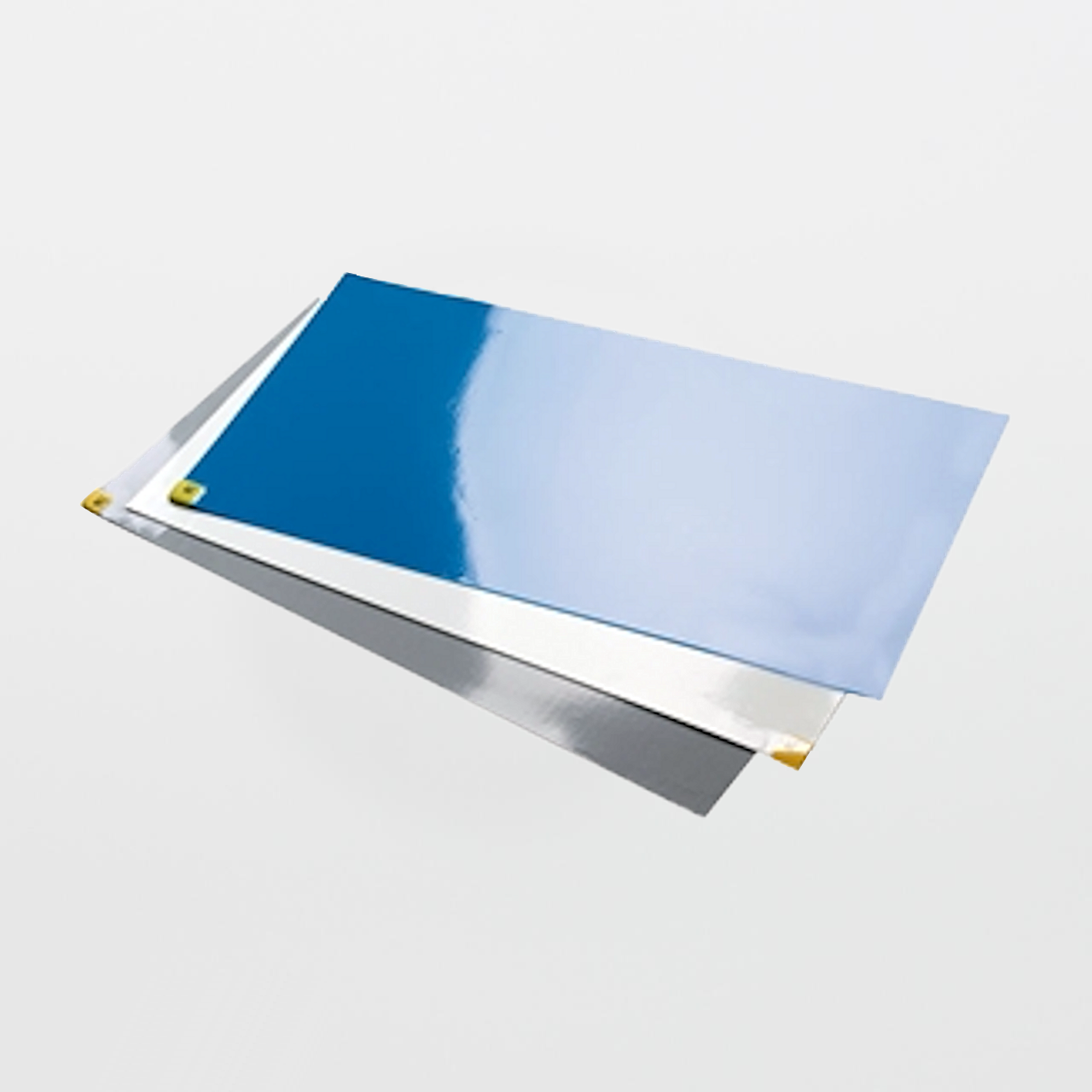
Many contamination events do not originate inside the process — they walk in. The “cleanroom creep” failure pattern is familiar: a controlled area trends dirtier over time, particle counts drift, and housekeeping intensity increases, but the root mechanism is foot- and wheel-borne carry-in at entrances, gowning transitions, and material pass-through zones. A sticky mat only works when it is engineered for repeatable capture and operators can change layers before the mat becomes a loaded transfer surface. Texwipe CleanStep 24" x 36" is built around that operational reality: adhesive-coated polyethylene layers that trap particulates, numbered tabs to enforce change-out discipline, and an antimicrobial agent to help reduce bacterial growth on the mat surface.
Reliability is part of the control plan. CleanStep is commonly used where programs want repeatable materials, predictable handling, and the ability to standardize entrance controls across multiple rooms or work cells without improvising on-site “tacky” solutions.
What It’s For
CleanStep mats are used to capture and retain particulates from foot traffic and wheeled carts at transition points: gowning rooms, cleanroom entrances, controlled corridors, maintenance access doors, print areas, labs, and critical manufacturing cells where carry-in drives particle events.
The 24" x 36" format is a common “single-step” footprint for personnel flow control and a practical staging size for carts where the entrance space is limited.
Decision Drivers
- Particle capture, not appearance: each removable, adhesive-coated polyethylene layer traps particles to reduce carry-in and cross-zone transfer.
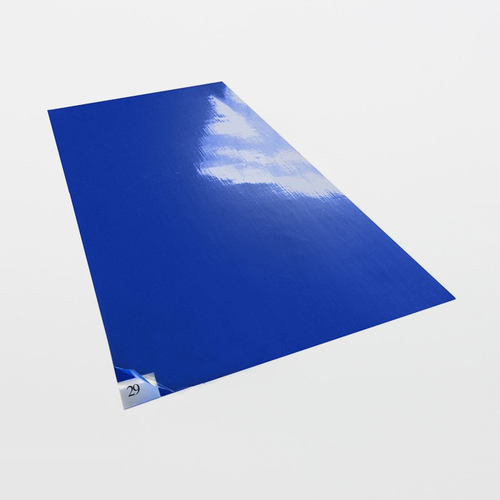
- Change-out discipline: numbered tabs make it easier to manage layer usage and replacement cadence without guesswork.
- Antimicrobial agent: positioned to help prevent bacterial growth on the mat surface (useful for general hygiene control, not a substitute for facility disinfection programs).
- Configuration control: this SKU is offered as Blue (30-layer) or White (60-layer) with different mats-per-case counts.
- System thinking: mats work best when paired with defined placement, traffic rules, and an enforced layer-change trigger (visual load or scheduled change-out).
Materials and Construction: Practical Implications
CleanStep adhesive mats are described as constructed from high-grade polyethylene sheets designed to grab and retain particulates from foot- and wheel-borne contaminants. Each sheet is removable and adhesive-coated, which is operationally important: you can retire the loaded surface without moving the mat or disrupting traffic flow.
The practical failure mode with any tacky mat is overuse. As the surface loads, it becomes less effective at capture and more likely to act like a transfer surface — especially if carts roll across with embedded debris. Numbered tabs are a simple control that supports a defined “change layer” habit.
CleanStep frames are described as polystyrene and non-skid for portability, but note the page guidance indicates frame availability limitations for the 24" x 36" size. If your SOP requires a frame, confirm compatibility for this size before standardizing.
Specifications in Context
| Product |
Texwipe CleanStep Adhesive Sticky Mats |
| Mat Size |
24" x 36" |
| Total Sheets |
240 removable adhesive sheets |
| Case Options |
Blue: 30-layer mats, 8 mats per case
White: 60-layer mats, 4 mats per case
|
| SKU on page |
AMA2436 |
Operational translation: select the layer configuration based on how fast your entrance loads. Higher traffic and cart movement often justify more frequent layer changes (and clearer triggers), regardless of whether the mat has 30 or 60 layers.
Performance: What Actually Makes Sticky Mats Work
-
Placement beats product: mats must sit where traffic naturally compresses (doorway threshold, gowning exit, cart entry point). A mat “near” the entrance is often unused in practice.
-
Layer change-out is the control: the most common failure is running a loaded surface too long. Use the numbered tabs to enforce a simple rule (for example, change at visible debris load, at a defined shift cadence, or after a known dirty move).
-
Cart wheels are the hidden driver: wheels can embed debris and defeat tack if the layer is saturated. If carts are primary, consider two-mat staging (pre-mat for gross capture, then a second mat as a finishing capture).
-
Do not treat antimicrobial as disinfection: the antimicrobial agent helps inhibit growth on the mat surface, but it does not replace validated cleaning and disinfection procedures for floors and transitions.
Why Packaging Options and Standardization Matter
The page configuration indicates two case builds tied to color and layer count: Blue (30-layer) packed 8 mats per case and White (60-layer) packed 4 mats per case. That matters for purchasing and inventory because the “mat-per-case” count changes your reorder frequency even though the overall sheet count for the product family is presented as 240 sheets.
Standardize by zone. If different rooms use different colors/layer strategies, document it. Sticky mats are often the first consumable swapped “because it looked similar,” and that is how entrance controls drift without anyone noticing.
Best-Practice Use
- Place mats at the true transition point, not “near the door.”
- Define a minimum contact behavior (one full step per foot; slow roll across for carts).
- Change layers early. Use the numbered tabs as a procedural control, not a convenience.
- If carts are heavy traffic, consider a two-mat approach (gross capture then finishing capture).
- Train housekeeping and operators on the same change-out trigger so the control is consistent across shifts.
Common Failure Modes—and How to Prevent Them
- Overloaded surface: mat becomes a transfer layer. Prevent with defined change-out cadence and visible-load triggers.
- Poor placement: traffic bypasses the mat. Prevent by aligning placement with natural flow and doorway geometry.
- Cart-wheel defeat: embedded debris rides over tack. Prevent with wheel cleaning policies and/or a two-mat staging strategy.
- Uncontrolled substitutions: “similar” mats with different adhesive behavior change performance. Prevent by locking SKU/color by zone and documenting standard work.
Closest Competitors
Other cleanroom adhesive mat systems (polyethylene sheet stacks)
Compare sheet-to-sheet peel behavior, adhesive aggressiveness under your traffic load, and how easy it is to enforce change-out discipline.
Economy “tacky mats” (general industrial)
Often acceptable for noncritical transitions, but evaluate for adhesive residue transfer, inconsistent peel, and lack of controls (tabs, documentation) when your area is sensitive to drift.
Where This Fits in a Controlled Cleaning Program
CleanStep mats belong in the front-end contamination control layer: reduce what enters the space so downstream cleaning and wipe/swab work stays focused on process soils, not hallway carry-in. When combined with gowning discipline, cart/wheel controls, and documented layer change-out, sticky mats are one of the lowest-effort, highest-leverage controls for stabilizing particle trends over time.
Source Basis
- SOSCleanroom product page: Texwipe CleanStep 24" x 36" Adhesive Sticky Mats (240 Sheets) (SKU, case configurations, material statements, antimicrobial and numbered-tab features, applications list, frame notes).
- ITW Texwipe CleanStep system description on page (polyethylene mats; polystyrene frame positioning and non-skid backing statement, with size-specific frame availability note).