Your ISO 5 Glove Program Is an SOP, Not a SKU: How Standardizing Fit, Change Rules, and Substitution Control Protects Class 100 Work
The Technical Vault
By SOSCleanroom
ISO 14644 Personnel Controls
ISO 5 / Class 100 Operations
Lot & Substitution Control
Change Frequency Discipline
Operator-Induced Contamination
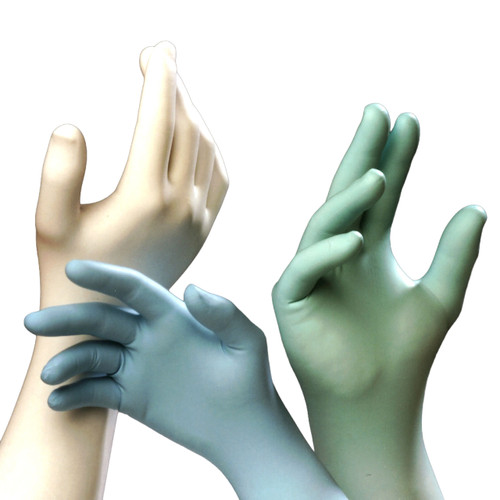
NCP Series Nitrile Class 100 / ISO 5 Cleanroom Gloves — what this glove program is designed to control
NCP Series nitrile cleanroom gloves are positioned for Class 100 / ISO 5 operations where gloves are a high-frequency contact point with
tools, components, swabs, wipers, and critical surfaces. In ISO 5 work, glove selection affects more than comfort—it can influence particle contribution,
residue transfer, grip behavior, and technique repeatability across operators and shifts.
The most successful ISO 5 programs treat gloves as a controlled system: fit and sizing discipline, defined donning behavior, defined change triggers,
and controlled substitution rules. When those controls are clear, glove-related variability drops and “mystery defects” become far less common.
Operations takeaway: The best cleanroom glove program is the one that operators can execute consistently—every shift, every day, without substitutions.
ISO-first context: personnel are the dominant contamination source—gloves are the boundary layer
ISO 14644 operations guidance recognizes personnel as a primary contamination source, which is why gloves are central to contamination control.
Even in a well-controlled ISO 5 environment, gloved hands can transport contamination from carts, sleeves, packaging edges, and staging areas back into
product-contact work. This is why glove programs are most effective when the touch rules and change rules are written, trained, and audited.
USP-influenced operations reinforce the same principle: gloved hands must be managed as a controlled interface. Residue transfer, glove loading, and technique drift are common
root causes of inconsistent cleaning outcomes and inspection failures—even when the room classification is correct.
Technical reference chart (confirm exact values via product page + manufacturer documentation)
| Product family |
NCP Series Nitrile Cleanroom Gloves |
| Material |
Nitrile (see manufacturer/product documentation for details) |
| Target environment |
Class 100 / ISO 5 (per product positioning) |
| Program control focus |
Sizing discipline, lot traceability, substitution control, change frequency |
| Sterility |
Refer to product page and packaging (sterile vs. non-sterile presentation) |
Receiving control note: If your process is validated or defect-sensitive, require “no substitution without written approval” and capture lot codes per receipt.
Best-practice use (how to run an ISO 5 glove program that is repeatable)
Best practice starts with sizing discipline and proper donning. Gloves should be donned according to gowning SOP without snapping or over-stretching, which can generate particles.
Proper sizing reduces operator compensation behaviors (excess grip force, repeated repositioning, glove “rolling,” and overhandling), which are common drivers of residue transfer and defects.
Once donned, gloves should only contact approved surfaces and tools within the defined work zone.
Define touch rules and change rules in writing. Touch rules specify what gloves may contact (and what is prohibited). Change rules specify the triggers for replacement:
after touching non-controlled surfaces, after leaving the controlled area, after solvent-heavy work, after defined time intervals (risk-based), after visible soiling, or after any integrity compromise.
Progressive glove loading is one of the most common root causes of “it was fine yesterday” problems.
For controlled programs, manage substitutions as a change control event. If a glove changes (material, thickness, surface finish, manufacturing stream), treat it as a process change—especially
if you are cleaning optics-adjacent surfaces, assembling high-value components, or working under customer audit expectations.
Typical cleanroom failures and how to avoid them (ISO & USP perspective)
- Touch drift: Gloves contact carts, packaging edges, or gown surfaces and then return to critical work. Prevention: defined work zone and immediate change triggers.
- Extended glove use: Progressive loading increases residues and particles. Prevention: time- and event-based glove changes.
- Size mismatch: Operators over-grip or re-handle parts. Prevention: correct sizing availability and training.
- Uncontrolled substitutions: Different glove introduced without evaluation. Prevention: lock approved SKU and require written approval to substitute.
- Solvent-heavy tasks without glove strategy: Glove surface changes and transfers residues. Prevention: task-based glove changes and compatibility review.
Suggested companion products and technical rationale
SOSCleanroom commonly pairs ISO 5 glove programs with controlled swabbing, wiping, and solvent practices to reduce variables and strengthen SOP repeatability.
The glove controls hand contact; tools control geometry and pickup; solutions control solvency and drying behavior.
Defensible pairing principle: Standardize glove + swab + wiper + solution to reduce operator variability and strengthen contamination control across shifts.
Disclaimer
This Technical Vault content is provided as supplemental operational guidance only and does not replace manufacturer instructions,
facility SOPs, validation protocols, quality risk assessments, or regulatory requirements. Always follow applicable ISO standards,
USP chapters, and site-specific procedures. Refer to current manufacturer documentation for sterility status, performance data,
and chemical compatibility. Control substitutions and document receiving/lot traceability where required.
Questions? Email Sales@SOSsupply.com or call (214) 340-8574.
© 2026 SOSCleanroom. All rights reserved.