Why footwear matters more than most teams admit
Shoes and floors are one of the most frequent “hidden” contamination transfer routes in cleanrooms: particles and debris accumulate in tread,
move through gowning transitions, and are redistributed by walking patterns and airflow interaction. Footwear protection is not just PPE—it is
part of a contamination-control strategy that depends on repeatable gowning technique and consistent change-out discipline.
What this product is used for
- Controlled-environment entry where non-sterile cleanroom apparel is specified by SOP.
- Reducing footwear-driven contamination transfer during staging, material handling, and routine cleanroom operations.
- Supporting gowning transitions where operators must maintain a strict “dirty side / clean side” boundary.
- Programs that want more secure footwear retention than basic shoe covers (ties help reduce slip-off events).
Why customers consider this product
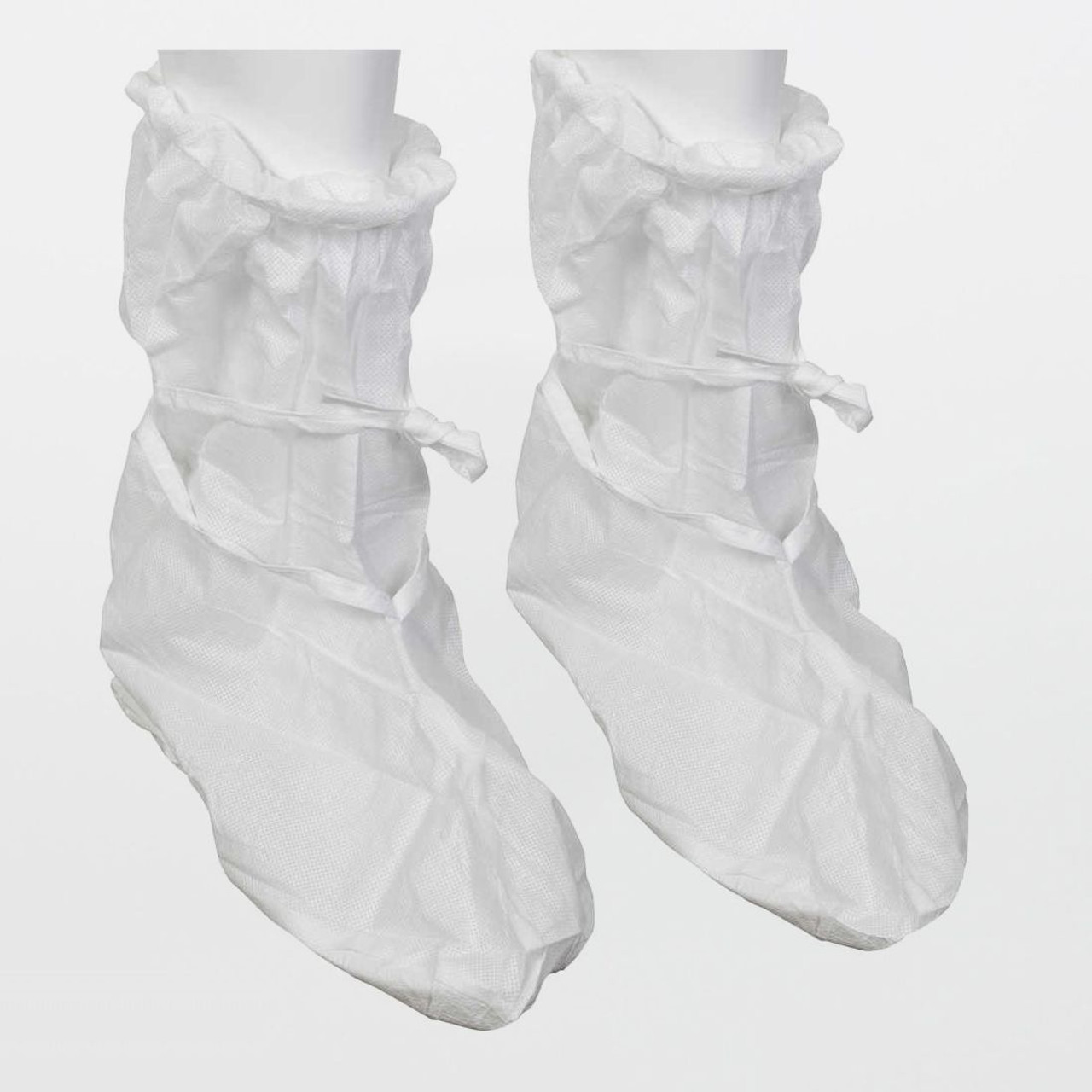
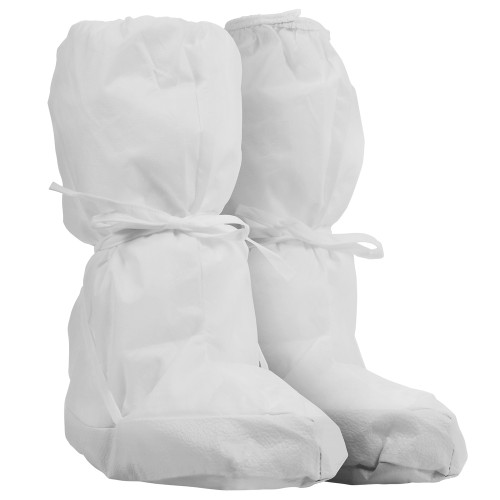
- Secure fit: ties help keep the boot cover in place during walking, turning, and gowning movements.
- Traction support: vinyl sole can improve grip compared to lighter shoe-cover formats (site-dependent).
- Standardization: size options (S/M, L/XL, Universal) reduce variability and “one-size-fits-none” failures.
- Operational fit: case quantity supports shift-based gowning programs and replenishment planning.
Materials, design, and build (manufacturer-published)
Manufacturer-published attributes for the KIMTECH A5 Non-Sterile Cleanroom Boots w/ Ties include:
ties for secure fit and a vinyl sole.
These design choices target two practical failure points: slip-off events (poor retention) and traction issues in gowning/production pathways.
Specifications in context
This table consolidates the manufacturer catalog identifiers most relevant to purchasing, size control, and stocking.
Total per case is shown as published; SOSCleanroom sells the case as 100 pairs (200 boot covers).
| Attribute |
KIMTECH A5 Boots w/ Ties |
| Manufacturer family |
KIMTECH™ A5 Cleanroom Apparel, Non-Sterile |
| Closure |
Ties for secure fit |
| Sole |
Vinyl sole |
| Sizes / codes |
12921 — S/M
12919 — L/XL
88850 — Universal
|
| Case quantity |
200 boot covers per case (100 pairs/case) |
| Sterility |
Non-sterile |
Performance and cleanliness considerations (what “good” looks like)
In practice, footwear protection “works” when it is paired with disciplined gowning behaviors:
consistent bench transitions, minimal garment contact, secure closure, and defined change-out triggers.
A tie-secured boot cover reduces the likelihood of loose footwear protection becoming a moving contamination source
(dragging, folding, or contacting gowning surfaces).
ISO-first guidance, then Annex 1 overlay
ISO perspective (cleanroom control program)
- Start with your ISO class and process risk: classification and required controls should drive gowning requirements, not the other way around.
- Gowning is a controlled process: use a defined sequence, boundary discipline, and training/qualification so technique is repeatable across shifts.
- Footwear is a high-transfer surface: treat boot covers as a critical control point—change when compromised and avoid re-entry practices that defeat the boundary.
European Annex 1 overlay (sterile manufacturing mindset)
If you operate under (or align to) EU GMP Annex 1 expectations, personnel practices and gowning are part of a broader Contamination Control Strategy (CCS).
This generally increases the emphasis on change-room discipline, garment qualification, and grade-appropriate attire (including footwear controls).
Practical takeaway: for higher-grade sterile areas, your SOP may require sterile overboots/footwear controls
(or validated sterilization/transfer practices) rather than non-sterile boot covers. Confirm with QA and your site CCS.
Best-practice donning (footwear-focused, contamination-minimizing)
Technique guidance: boot covers that actually reduce risk
- Bench transition: sit at the gowning bench; keep “dirty side” shoes from crossing into the clean side.
- Handle only the inside: avoid touching the outside surface; it will contact cleanroom floors and surfaces.
- Seat the sole correctly: ensure the vinyl sole is flat and centered—misalignment increases slip risk and contact with garments.
- Tie to a defined standard: same knot, same tension, ends controlled (no dragging). Consistency reduces failures.
- Confirm garment overlap: ensure coverall legs or gown overlap the boot top per SOP (and tape only if required by your program).
Change-out triggers should be simple and enforceable: torn material, wetting, visible soil, loss of secure fit, or area/grade change per SOP.
If your workflow allows “step-back” into lower-grade areas, treat the boundary as real—do not carry compromised footwear protection back into controlled zones.
Common failure modes (and how to prevent them)
- Slip-off events: typically caused by poor sizing or inconsistent tying; standardize both.
- Dragging ties: ends contact floors and then contact garments; control tie ends.
- Outside-surface handling: touching the exterior during donning transfers contamination to gloves and garments.
- Boundary drift: stepping across the bench line with uncovered footwear undermines the entire entry control.
- Wrong product for the grade: non-sterile footwear protection used where sterile controls are required; align to SOP/CCS.
Closest alternatives (selection thinking)
Closest alternatives are other cleanroom footwear protection products differentiated by sterility, barrier level, height (shoe cover vs. boot cover),
sole type, and packaging discipline. Compare to your SOP requirements for grade, transfer method, and change frequency.
- Sterile overboots/boot covers: for aseptic or sterile-manufacturing aligned entries that require sterile components.
- Standard cleanroom shoe covers: for lower-risk areas where ankle/boot coverage is not required by SOP.
- Higher barrier footwear protection: when liquid splash or chemical exposure drives selection (validate against your hazard profile).
Critical environment fit for this product
This product is typically selected for controlled environments where non-sterile cleanroom apparel is specified and footwear control is a recognized
contamination pathway. It supports programs that value repeatable donning technique, secure fit, and practical traction performance.
Always map garment selection to your cleanroom class, process risk, and documented SOP.
SOSCleanroom note about SOP's
The Technical Vault is written to help customers make informed contamination-control decisions and improve day-to-day handling technique.
It is not your facility’s Standard Operating Procedure (SOP), batch record, or validation protocol.
Customers are responsible for establishing, training, and enforcing SOPs that fit their specific risks, products, equipment, cleanroom classification, and regulatory obligations.
Always confirm suitability and acceptance criteria using your internal quality system and documented methods.
If you adapt any technique guidance from this entry, treat it as a starting template. Your team should review and approve the final method,
then qualify it for your specific risks, surfaces, and workflow.
Source basis
- SOSCleanroom product page: https://www.soscleanroom.com/product/kimtech/kimberly-clark-kimtech-a5-non-sterile-cleanroom-boots-w-ties/
- Manufacturer catalog (KIMTECH Scientific Products Catalog, 2018): https://www.soscleanroom.com/content/Kimberly_Clark_PDF/2018%20Scientific%20Catalog.pdf
- ISO 14644 context (classification and operations): https://www.iso.org/committee/54960/x/catalogue/
- EU GMP Annex 1 (Manufacture of Sterile Medicinal Products): https://health.ec.europa.eu/publications/eudralex-volume-4-eu-guidelines-good-manufacturing-practice-medicinal-products-human-and-veterinary-use_en
SOSCleanroom is the source for this Technical Vault entry.
Briefed and approved by the SOSCleanroom (SOS) staff.
If you have any questions please email us at Sales@SOSsupply.com
Last reviewed: Jan. 14, 2026
© 2026 SOSCleanroom