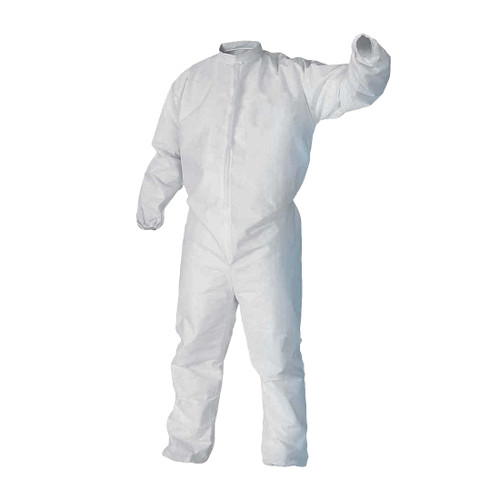
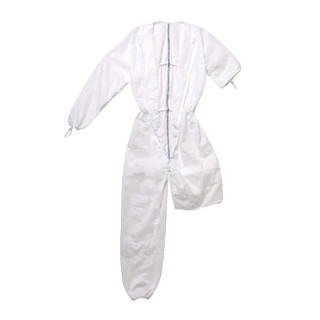
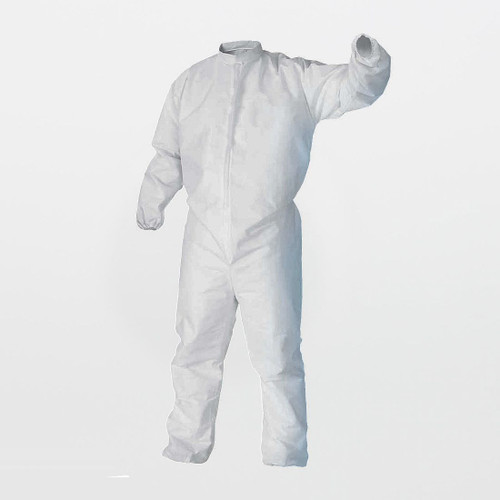
Series shown: Kimtech A5 coverall (individually packed codes vary by size).
Practical contamination control starts with people
In most cleanrooms, the largest contamination source is the operator: skin flakes, fibers, and movement-driven particle release.
A coverall is not “just PPE” — it is a control layer that helps reduce particle migration from street clothing and exposed skin into controlled airflow zones.
Kimtech™ A5 non-sterile coveralls are positioned for cleanroom environments where clean processed apparel and repeatable donning features matter, and where sterile processing is not required.
What this coverall is used for (manufacturer positioning)
- Non-sterile cleanroom environments aligned to ISO Class 5 and ISO Class 6–8 programs (facility- and process-dependent).
- Bioburden-control areas and controlled lab/manufacturing spaces that require clean processed apparel.
- Compounding, mixing, filling, and cleaning workflows where non-sterile garment programs are appropriate and documented.
Why customers choose individually packed A5 coveralls
- Cleaner handling vs. shared bulk packs: individual packaging reduces “many hands, one bag” touch contamination.
- Donning control features: Clean-Don™ positioning and a “donning signal” feature are intended to reduce common gowning mistakes.
- Coverage at critical interfaces: high neck collar + built-in thumb loops help reduce exposed skin at the neck and wrist.
- Ordering accuracy: manufacturer catalog provides size-to-code mapping and consistent 25/case packaging by size.
Materials and design (manufacturer catalog)
Kimtech™ A5 cleanroom apparel is described as SMS (Spunbond Meltblown Spunbond) garment material and includes a high neck collar, elastic waistband, and built-in thumb loops to help maintain coverage.
The A5 line is offered in nine sizes (Small to 6XL–8XL) with both individual-pack and bulk-pack options.
Specifications in context (size-to-code mapping)
The table below reflects manufacturer catalog ordering codes for Kimtech™ A5 non-sterile coveralls. Confirm size and code during QA qualification and purchasing setup.
| Size |
Individually Packed Code |
Total/Case |
| Small | 88842 | 25 |
| Medium | 88843 | 25 |
| Large | 88844 | 25 |
| XL | 88845 | 25 |
| 2XL | 88846 | 25 |
| 3XL | 88847 | 25 |
| 4XL | 88848 | 25 |
| 5XL | 12916 | 25 |
| 6XL–8XL | 12915 | 25 |
Note: ISO compatibility statements in catalogs are guidance and can be equipment/facility dependent; always qualify garments to your process and monitoring results.
ISO standards context (why gowning discipline matters)
ISO 14644-1 defines cleanroom air cleanliness classes based on airborne particle concentration limits, and ISO 14644-5 (Operations) addresses operational controls such as personnel practices, including entry/exit and behavior that can impact cleanliness.
In practical terms: the “class” you are trying to maintain is only achievable when gowning, movement, and handling are controlled as tightly as airflow and filtration.
Proper gowning (donning) education — ISO-first guidance
Goal: reduce particle release and prevent outside surfaces from being touched
- Start clean: wash/sanitize hands as required; remove jewelry; confirm hair/facial hair containment per your SOP.
- Stage gowning in the correct zone: follow your facility’s airlock and “dirty-to-clean” sequence. Do not open cleanroom packaging early.
- Don from the inside-out: handle only interior surfaces as you insert arms/legs; avoid snapping or shaking the garment.
- Protect the wrist interface: use the built-in thumb loops so sleeves don’t ride up; ensure gloves overlap the sleeve for continuous coverage.
- Use “donning signal” features correctly: Kimtech catalogs reference a donning signal feature to guide correct handling; incorporate it into training so operators do the same steps every time.
- Final check: confirm zipper closure, collar placement, and that cuffs/ankles are seated. If your SOP uses gowning tape, apply it consistently and document as required.
Individual packaging can materially improve consistency because it reduces shared-bag contact and supports “one pack, one gowning event” discipline.
Regardless of packaging style, the controlling principle is the same: minimize touch to external surfaces and keep the gowning sequence repeatable across operators and shifts.
European Annex 1 overlay (pharma/biotech programs)
EU GMP Annex 1 (Manufacture of Sterile Medicinal Products) adds a more prescriptive contamination-control expectation for sterile manufacturing, including personnel gowning as part of an overall Contamination Control Strategy (CCS).
If you operate under Annex 1 for aseptic processing, confirm sterile gowning requirements by grade (e.g., sterile garments for Grade A/B activities) and align garment selection, laundering/single-use strategy, and training/qualification to your CCS and SOPs.
Non-sterile coveralls may still be appropriate for supporting areas or lower-grade activities where permitted by your quality system — but they should not be assumed acceptable for aseptic core operations without documented justification.
Common gowning failure modes (and how to prevent them)
- Touching exterior surfaces while donning: retrain on inside-out handling and slow, deliberate movements.
- Sleeves creeping up: use thumb loops; confirm glove overlap at the wrist interface.
- Wrong size selection: too small increases tearing/stress; too large increases snagging and airflow disturbance. Use the size guide.
- Packaging compromise: do not use packs with tears, broken seals, or wet/dirty outer bags; treat as nonconforming material.
- Inconsistent sequence between shifts: standardize the donning order and document it in training and audits.
Critical environment fit for this product
Kimtech™ A5 non-sterile coveralls (individually packed) are best suited for facilities that want cleaner handling than bulk packs and that rely on controlled donning features as part of operator training.
They are positioned for ISO Class 5 and ISO Class 6–8 cleanroom environments where clean processed apparel is appropriate and validated by your program.
SOSCleanroom note about SOP's
The Technical Vault is written to help customers make informed contamination-control decisions and improve day-to-day handling technique.
It is not your facility’s Standard Operating Procedure (SOP), batch record, or validation protocol.
Customers are responsible for establishing, training, and enforcing SOPs that fit their specific risks, products, equipment, cleanroom classification, and regulatory obligations.
Always confirm suitability and acceptance criteria using your internal quality system and documented methods.
If you adapt any technique guidance from this entry, treat it as a starting template. Your team should review and approve the final method, then qualify it for your specific process and risk profile.
Source basis (manufacturer-first)
- SOSCleanroom product page (this SKU family): https://www.soscleanroom.com/product/kimtech/kimberly-clark-kimtech-a5-non-sterile-cleanroom-coveralls-individually-packed/
- Kimtech Scientific Apparel Catalog (includes A5 non-sterile size-to-code mapping): https://www.soscleanroom.com/content/Kimberly_Clark_PDF/A5%20Sterile%20Apparel/Coveralls/Scientific%20Apparel%20Catalog.pdf
- Kimtech Scientific Products Catalog (apparel section references A5 features): https://www.soscleanroom.com/content/Kimberly_Clark_PDF/2018%20Scientific%20Catalog.pdf
- A5 Coveralls Size Guide: https://www.soscleanroom.com/content/Kimberly_Clark_PDF/A5%20Sterile%20Apparel/Coveralls/A5%20Sterile%20Apparel-%20Coveralls%20Size%20Guide.pdf
- A5 Scientific Apparel Change Notification Letter (2018): https://www.soscleanroom.com/
- ISO cleanroom classification/operations context (ISO 14644 series): https://www.iso.org/
- EU GMP Annex 1 (sterile manufacturing overlay): https://health.ec.europa.eu/system/files/2022-08/20220825_gmp-an1_en_0.pdf
SOSCleanroom is the source for this Technical Vault entry.
Briefed and approved by the SOSCleanroom (SOS) staff.
If you have any questions please email us at Sales@SOSsupply.com
If you need additional information please try our SOSCleanroom specific AI ChatBot which draws from our extensive cleanroom specific libraries.
Last reviewed: Jan. 13, 2026
© 2026 SOSCleanroom