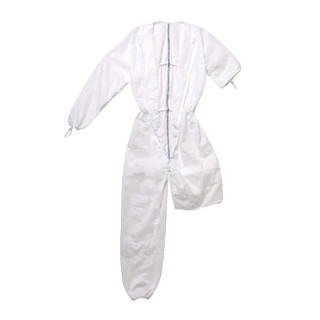
SKU shown: 36077 (18" sterile sleeve protector; CLEAN-DON* cues; integrated thumb loop).
Why sleeves matter in cleanrooms
Forearms and wrists are frequent contact points in real workflows: leaning on benches, reaching into equipment, or stabilizing materials.
In an ISO-governed operations control programme, your gowning programme is intended to reduce particle and microbial transfer from personnel to product.
Sleeve protectors are a targeted accessory: they help reduce direct transfer from uncovered forearms and reduce interface failures at the glove/cuff boundary.
Manufacturer basis: what 36077 is
Per the manufacturer technical data sheet, KIMTECH PURE* A5 Cleanroom Sterile Sleeves with CLEAN-DON* Technology are:
18" white sleeve protectors, packaged as 100 pairs per case (1 pair/inner bag; 25 pairs/secondary bag),
gamma irradiated to SAL 10-6, and made from 1.8 osy (61 gsm) SMS nonwoven.
Cleanliness and performance metrics (what they mean)
| Metric (manufacturer reported) |
Result / test reference |
Operational interpretation |
| Lint generation (>0.5 µm) |
Helmke Drum Category 1 (IEST RP-CC003.3 referenced) |
Supports low-shedding garment selection, especially important at arm/wrist interfaces. |
| BFE (3.0 µm) |
97% (ASTM F2100) — results listed prior to sterilization |
Indicates filtration behavior of the fabric; use alongside shedding data and interface controls. |
| PFE (0.5 µm) |
94% (ASTM F2299) — results listed prior to sterilization |
Helpful context when balancing breathability vs. barrier characteristics in garment systems. |
| Sterility assurance |
SAL 10-6, gamma irradiation |
Supports sterile accessory use where SOP specifies sterile gowning components. |
CLEAN-DON* cues: built to reduce “touch contamination” during donning
Most gowning failures are technique failures: touching the exterior, dragging garments on surfaces, and leaving gaps at interfaces.
The technical data sheet describes three design cues intended to reduce those errors:
- Cuff fold presentation: the sleeve fold is designed to present the inside during opening, reducing risk of touching/contaminating the outside.
- Interior blue line grasp indicator: signals the proper place to grasp while donning (so hands avoid the exterior surface).
- Integrated thumb loop: helps keep sleeves from rolling back and exposing the arm or wrist during work.
ISO-first: donning discipline to minimize contamination
ISO cleanroom operations are managed through an operations control programme (OCP), which includes personnel management and a gowning programme.
Your sleeve SOP should be designed to prevent shedding and prevent transfer from hands to garment exteriors.
Practical sleeve donning sequence (adapt to your SOP)
- Stage packaging: open outer bag(s) before the line of demarcation; present final sterile bag at the clean side.
- Use the blue line: grasp only the designated interior cue point; avoid touching the sleeve exterior.
- Thumb loop first: place thumb through loop, then draw sleeve up the forearm smoothly (avoid “sawing” motions that create friction/shedding).
- Seal the interface: ensure glove cuff overlaps the sleeve end fully, per SOP (no exposed wrist; no loose overlap that snags).
- Behavior control: once donned, keep sleeve exteriors off benches and out of contact with non-controlled surfaces.
EU overlay: Annex 1 perspective (when applicable)
EU GMP Annex 1 is more prescriptive about gowning for sterile manufacture, including changing room discipline and techniques that avoid touching the outer surface of sterile garments.
If your programme is Annex 1-driven, treat sleeve protectors as part of a wider garment system: the goal is continuous coverage (including wrists) and aseptic donning that protects the garment exterior.
Annex 1 is often used as a benchmark even outside Europe because it provides explicit personnel/gowning expectations for high-grade areas.
Common failure modes (what to coach out)
- Touching the sleeve exterior during donning: defeats the clean packaging advantage; use the fold + blue line cues.
- Wrist exposure: sleeve rollback or insufficient glove overlap creates a high-transfer zone.
- Dragging sleeves on benches: contact transfer onto the sleeve exterior can become a secondary contamination source.
- Over-handling packaging: excess manipulation increases risk of contaminating inner presentation surfaces.
Source basis (manufacturer-first)
- SOSCleanroom product page: https://www.soscleanroom.com/product/kimtech/kimberly-clark-kimtech-pure-a5-sterile-cleanroom-sleeves/
- Manufacturer technical data sheet (36077): https://www.soscleanroom.com/content/Kimberly_Clark_PDF/36077%20sleeve/KIMTECH-Pure-A5-Cleanroom-Sterile-Sleeves-Technical-Data-Sheet.pdf
- ISO 14644-5 (operations / gowning programme context): https://www.iso.org/standard/88599.html
- EU GMP Annex 1 (personnel/gowning expectations context): https://health.ec.europa.eu/system/files/2022-08/20220825_gmp-an1_en_0.pdf
SOSCleanroom is the source for this Technical Vault entry.
Briefed and approved by the SOSCleanroom (SOS) staff.
If you have any questions please email us at Sales@SOSsupply.com
Last reviewed: Jan. 14, 2026
© 2026 SOSCleanroom