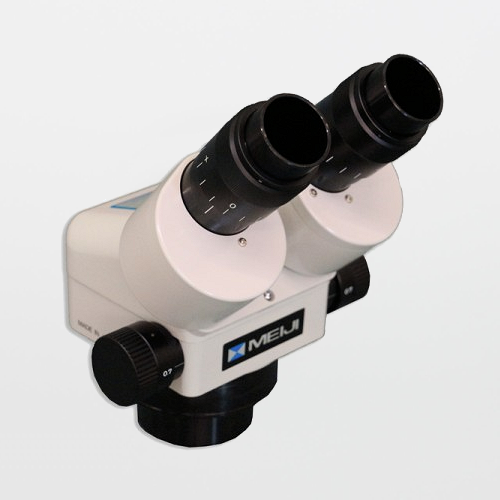
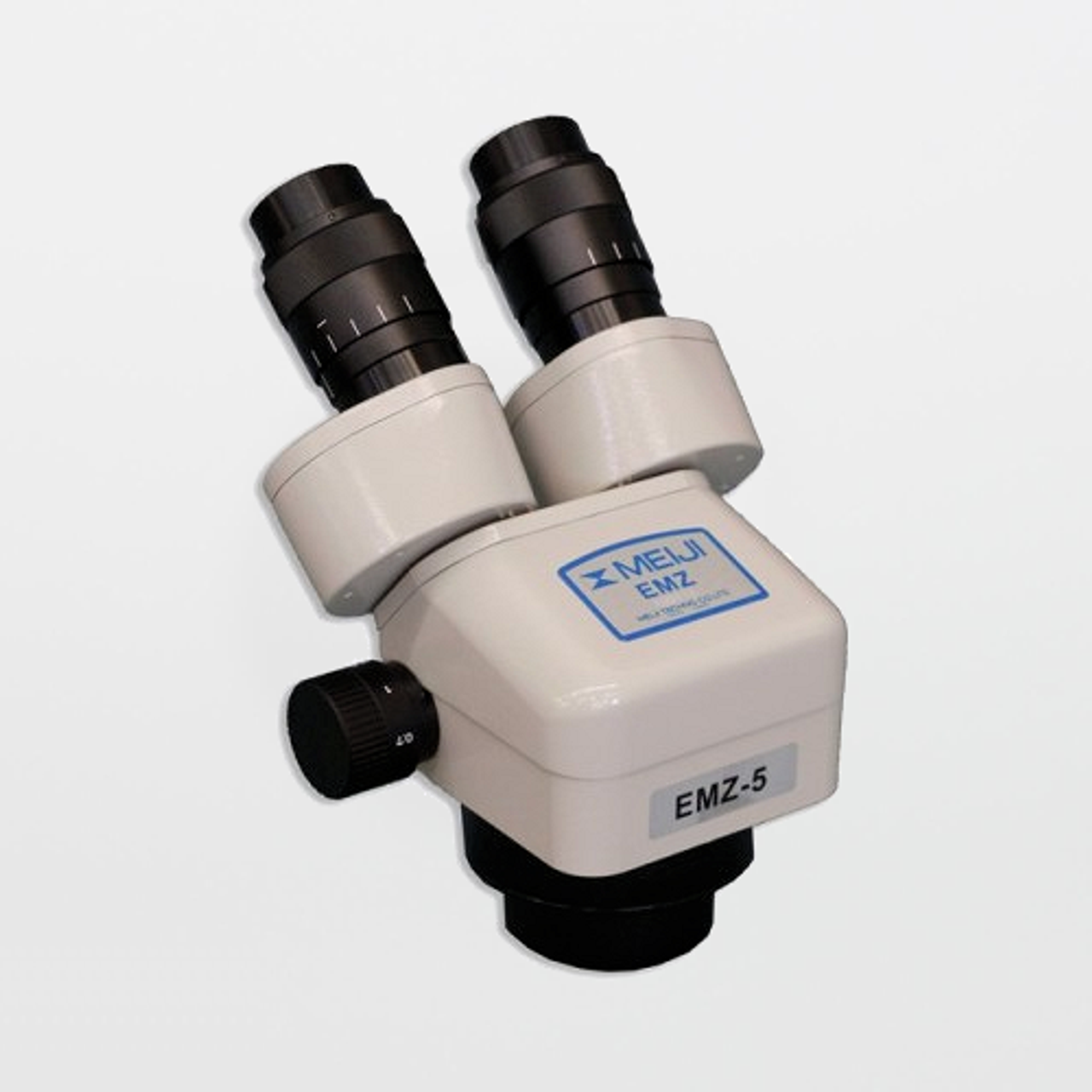
Meiji EMZ-5 (0.7x - 4.5x) Binocular Stereo Microscope Body, Working Distance 3.7" (93mm)

$1,410.00
(No reviews yet)
SKU:
EMZ-5
Availability:
7 - 10 Business Days
Shipping:
Calculated at Checkout

Meiji EMZ-5 (0.7X–4.5X) Binocular Stereo Zoom Microscope Body — 3.7" (93mm) Working Distance

The Meiji EMZ-5 is a modular binocular stereo zoom microscope body engineered for inspection, rework, and hands-on viewing where true depth perception and usable working distance matter. With a smooth 6.5:1 zoom range (0.7X–4.5X) and a 93mm working distance, EMZ-5 is a practical “daily-driver” stereo head for cleanroom benches, electronics/medical device inspection stations, and laboratory work areas that require stable, repeatable viewing without sacrificing tool clearance.

Build note: This SKU is the microscope body/head. A complete system typically requires a stand/focus block, eyepieces, and illumination selected for your task.

Specifications:
  • Type: Stereo zoom microscope body (binocular)
  • Optical design: Greenough stereo design (depth perception for inspection and manipulation)
  • Zoom ratio: 6.5:1
  • Zoom range: 0.7X – 4.5X
  • Magnification: 7X – 45X (with 10X eyepieces)
  • Field of view: 32mm – 5.1mm
  • Working distance: 93mm (3.7")
  • Mounting: Fits 84.5mm diameter focus holders
  • Warranty: Limited lifetime warranty (manufacturer)
Where EMZ-5 Fits in Cleanrooms and Laboratories (and Why)

In cleanroom and controlled environments, microscopy selection is typically driven by defect risk, handling method, and documentation requirements. Stereo microscopes like the EMZ-5 support inspection and rework because they provide a three-dimensional view and comfortable working distance for gloved handling, fixtures, tweezers, probes, and small tools.

Typical program fit: EMZ-5 is commonly deployed for cleanroom inspection benches, electronics/medical device assembly support, and general laboratory inspection where users need depth perception, usable clearance, and flexible zoom for fast defect localization.

Final configuration depends on your workflow: reflective vs transmitted lighting, glare control, required magnification, and whether photo/video documentation is required (trinocular systems are commonly used when documentation is a requirement).

About the Manufacturer: 

Meiji Techno began as a microscope contract manufacturer (Azuma Optics, founded 1964) and reorganized as Meiji Techno Co., Ltd. in 1975. The company expanded from education into industrial and laboratory markets, with Meiji Techno America established in 1986 to support distribution and technical assistance across the Americas.

Meiji Techno reports ISO 9001 certification (Aug. 2003) and emphasizes quality control systems and environmental management initiatives, including expanding LED options across many microscope models.

EMZ-5 Features:
  • Greenough stereo optical design for depth perception and high-contrast inspection viewing
  • 6.5:1 zoom ratio with 0.7X–4.5X zoom range
  • 93mm working distance for tool clearance and gloved handling
  • Modular platform: configure with stands, eyepieces, auxiliary lenses, and lighting to match your process
  • Fits 84.5mm diameter focus holders for standardized mounting
EMZ-5 Benefits:
  • Faster defect localization: Stereo viewing helps operators judge depth and surface topography during inspection and rework.
  • Better bench ergonomics: Working distance supports comfortable manipulation without constant collisions between tools and the objective area.
  • Operational flexibility: Zoom range supports rapid “find it / confirm it” workflows without swapping objectives.
  • Standardization across benches: Modular mounting supports repeatable builds across multiple stations.
Common Applications:
  • Cleanroom inspection benches (parts, assemblies, surfaces, and edges)
  • Electronics / micro-assembly / solder inspection support
  • Medical device component inspection and rework
  • Laboratory dissection and general inspection workflows (non-slide based)
  • Incoming QA and routine process verification
Optics Cleaning (Recommended for Microscopes)

Optics performance is often limited by contamination, not magnification. SOSCleanroom recommends using optical-grade swabs and low-lint wipers to reduce fiber shedding and protect coated optical surfaces during routine cleaning.


Link to Meiji EMZ-5 Specifications (PDF):
Click Here

Other Similar Products Available From SOSCleanroom.com

Notes: Looking for configuration help (stand, illumination, eyepieces, auxiliary lenses) and optics-care best practices? Open the SOSCleanroom Technical Vault tab above for a practical selection checklist and cleaning discipline guidance.

SOSCleanroom supports microscopy programs with responsive technical support, documentation handoff, and compatible optical cleaning supplies designed for controlled environments.

Product page updated: Jan. 20, 2026 (SOS Technical Staff)

© 2026 SOS Supply. All rights reserved.

The Technical Vault
By SOSCleanroom
Last reviewed: Jan. 20, 2026 | Audience: cleanroom operations, QA/QC, EHS, lab managers, manufacturing engineering
How a Stereo Microscope is Engineered (vs. a Compound Microscope) — and Why EMZ-5 is a Workhorse for Inspection
Meiji EMZ-5 — 0.7X–4.5X zoom, 93mm working distance, configuration drivers, and optics care discipline
Stereo vs. compound Working distance Illumination • documentation • optics care
The one-paragraph answer

The Meiji EMZ-5 is a modular stereo zoom microscope body designed for inspection and manipulation tasks where operators need true depth perception, usable tool clearance, and a practical zoom range. Stereo microscopes are engineered with two optical paths (one per eye) to create a 3D image that helps users judge height, edge conditions, and surface topography—critical for defect review and rework. In contrast, compound microscopes are optimized around a single optical axis for high magnification of thin specimens (often slides) using transmitted illumination. EMZ-5’s 0.7X–4.5X zoom and 93mm working distance make it a strong fit for cleanroom and lab inspection benches where hands-on work is part of the workflow.

Why it is widely specified: EMZ-5 balances practical magnification, depth perception, and working distance in a modular platform that can be standardized across multiple inspection stations.

Operational problem EMZ-5 is solving
  • Missed defects / inconsistent calls when lighting, working distance, or magnification range is not matched to the defect type.
  • Tool interference when working distance is too short for gloved handling, fixtures, tweezers, probes, or rework tools.
  • Documentation gaps when inspection requires photos/video but the system is not configured for camera integration (trinocular often required).
  • Operator fatigue when ergonomic setup (IPD, diopters, stand height, viewing angle) is not standardized across shifts.
  • Optics contamination artifacts (haze, streaks, “ghost” marks) caused by improper cleaning tools and poor bench contamination control.
Stereo vs. compound microscopes (engineering differences that matter)

Stereo microscopes are engineered to support inspection and manipulation. Two optical paths produce a stereoscopic (3D) view that improves judgment of height, edge conditions, and surface relief. This is why stereo systems are common at production inspection benches, rework stations, and cleanroom work areas where operators must “see and do” at the same time.

Compound microscopes are engineered for high magnification viewing of thin specimens using a single optical axis, typically with transmitted illumination through a slide. They are highly effective in laboratory microscopy workflows (biology, histology, certain materials analysis), but are generally less suited to hands-on manipulation because working distance and depth perception are not optimized for tool clearance.

Placement guidance: Use stereo for inspection/rework/assembly support; use compound when your workflow is slide-based and driven by higher magnification analytical observation.

How to configure the right stereo microscope (selection checklist)

In practice, microscope “performance” is determined as much by configuration as by the head itself. Standardize configuration to reduce operator variability and improve repeatability across benches.

Configuration checklist (SOP + purchasing approval)
  • Task + defect type: particulate, scratches, coating defects, solder joints, bonds, burrs, alignment, foreign material.
  • Magnification range: confirm low-end field-of-view for scanning and high-end detail for confirmation.
  • Working distance: validate tool/fixture clearance (EMZ-5 base working distance is 93mm).
  • Illumination strategy: ring light vs gooseneck vs near-vertical/coaxial; control glare for reflective surfaces.
  • Documentation: if imaging is required, specify trinocular/camera-ready configuration and stable mounting.
  • Ergonomics: standardize interpupillary distance (IPD), diopters, stand height, and viewing angle.
  • Maintenance discipline: define optics cleaning tools, cadence, and protective covers/storage controls.
Microscopy glossary (quick interpretation)
  • Working distance: clearance between the objective and specimen at focus (drives tool clearance).
  • Zoom ratio: max/min magnification range without swapping optics (EMZ-5: 6.5:1).
  • Field of view: the visible area at a given magnification (larger at low mag, smaller at high mag).
  • Depth of field: thickness of the sample that remains acceptably in focus (important for uneven surfaces).
Optical cleaning and contamination control (how image quality is preserved)

In cleanrooms and defect-sensitive inspection areas, optics often degrade from airborne particles, handling oils, and residues from improper cleaning. Use optical-grade swabs and low-lint wipers to reduce fiber shedding and protect coated optical surfaces.

SOP-ready optics cleaning guidance (template-style)
  1. Remove loose particles first (blower/approved method) to avoid dragging debris across coatings.
  2. Use optical swabs/wipers with minimal approved solvent (damp, not dripping).
  3. Wipe gently in a single direction; avoid aggressive circular scrubbing.
  4. Replace swabs/wipers frequently; do not “re-use” a loaded cleaning surface.
  5. Cover optics when idle; store away from airflow paths and chemical vapors.

Interpretation tip: If you see haze, streaking, or repeating artifacts, verify cleaning technique and contamination source control before assuming optical damage.

Source basis
  • SOSCleanroom listing context (configuration, intended use, and program-fit language).
  • Meiji EMZ-5 published specifications (zoom ratio/range, magnification with 10X eyepieces, field of view, working distance, mounting, warranty).
  • Common inspection microscopy best practices: illumination control, working distance planning, documentation readiness, and optics cleaning discipline.
Compliance note: This Technical Vault article is provided for educational support. Always follow facility SOPs, QA requirements, and validation/qualification plans.
Document control: Rev. Jan. 20, 2026 (SOS Technical Staff)
© 2026 SOS Supply. All rights reserved.