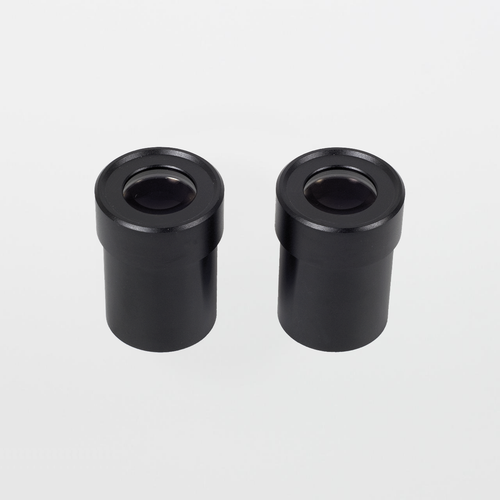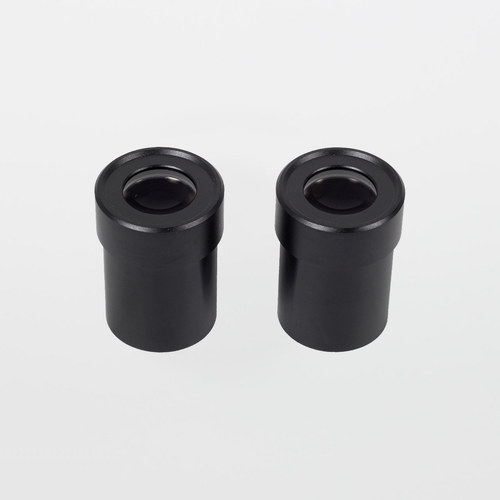
Meiji MA503 Super Widefield 15X Eyepieces (Sold in Pairs)

$210.00
(No reviews yet)
SKU:
MA503
Availability:
7 - 10 Business Days
Shipping:
Calculated at Checkout

Meiji MA503 Super Widefield 15X Eyepieces (Sold in Pairs) — FN 15.4, 25mm Reticle Mount

The Meiji MA503 is a Super Widefield 15X eyepiece set (sold as a matched pair) designed to expand magnification for Meiji stereo microscope systems while maintaining a comfortable widefield viewing experience. With a Field Number (FN) of 15.4 and an integrated 25mm reticle mount, MA503 supports inspection workflows that benefit from higher detail and optional measurement reticles—common in cleanroom and laboratory QA/QC, rework, and precision inspection benches.

System note: Eyepieces are a configuration component. Confirm your microscope series compatibility and select illumination/auxiliary optics as needed to balance brightness, field of view, and working distance for your task.

Specifications:
  • Magnification: 15X
  • Type: Super Widefield eyepieces (sold in pairs)
  • Field Number (FN): 15.4
  • Reticle mount: 25mm
  • Eye relief: 12.5
  • Focal length: 16.6
  • Compatible microscope families: Meiji EM Series (EMF, EMT, EMZ) and GEM Series
Where MA503 Fits in Cleanrooms and Laboratories (and Why)

In cleanroom and controlled inspection, microscope performance is frequently limited by operational realities: operator comfort over long shifts, consistent interpretation of defects, and repeatable “scan-to-confirm” workflows. Moving from 10X to 15X eyepieces is a straightforward method to increase perceived detail without changing the microscope body—often used when teams need more confirmation power on fine features while maintaining a familiar stereo inspection setup.

Typical program fit: MA503 is frequently selected for QA/QC inspection benches, electronics/assembly inspection, and precision manufacturing rework where higher eyepiece magnification supports faster defect confirmation and reticle-based checks.

Note that increasing eyepiece magnification can reduce perceived brightness and narrow the field of view versus lower-power eyepieces; illumination strategy and operator ergonomics should be evaluated as part of standardization.

About the Manufacturer: 

Meiji Techno designs modular microscope systems where eyepieces, auxiliary lenses, illumination, and stands are configured to match the application. This modular approach supports repeatable bench builds across cleanroom and laboratory environments while allowing targeted upgrades (like higher-power eyepieces) when inspection requirements evolve.

MA503 Features:
  • Super Widefield viewing experience for inspection workflows
  • 15X eyepiece magnification to increase perceived detail
  • FN 15.4 field specification for widefield viewing
  • 25mm reticle mount support for measurement/verification setups (reticle sold separately)
  • Matched pair for consistent left/right viewing performance
MA503 Benefits:
  • Higher confirmation power: supports defect review and fine-feature verification without changing the microscope body.
  • Measurement readiness: reticle mount enables standardized visual checks when measurement is part of the SOP.
  • Consistency across benches: matched pair helps reduce operator-to-operator viewing differences.
  • Upgrade path: a simple configuration change when inspection requirements increase over time.
Common Applications:
  • Cleanroom inspection benches (foreign material, surface defects, edge condition)
  • Electronics inspection and rework support (fine features and confirmation checks)
  • Medical device component inspection and QA verification
  • Precision manufacturing inspection (burrs, scratches, coating irregularities)
  • Reticle-based visual checks when measurement is part of the SOP
Optics Cleaning (Recommended for Eyepieces)

Eyepieces are high-touch surfaces and frequently accumulate oils, residue films, and particulates that reduce contrast and can create inspection artifacts. SOSCleanroom recommends using optical-grade swabs and low-lint wipers to minimize fiber shedding and protect coated optical surfaces.


Link to Meiji MA503 Product Details:
Click Here

Other Similar Products Available From SOSCleanroom.com

Notes: Need help selecting eyepiece magnification vs. field of view/brightness, or adding a reticle for standardized checks? Open the SOSCleanroom Technical Vault tab above for a practical selection checklist and optics-care discipline guidance.

SOSCleanroom supports microscopy programs with responsive technical support, compatible accessories, and optical cleaning supplies designed for controlled environments.

Product page updated: Jan. 21, 2026 (SOS Technical Staff)

© 2026 SOS Supply. All rights reserved.

The Technical Vault
By SOSCleanroom
Last reviewed: Jan. 21, 2026 | Audience: cleanroom operations, QA/QC, lab managers, manufacturing engineering, EHS
Eyepieces as a Controlled Input: How Field Number, Eye Relief, and Cleaning Discipline Affect Inspection Outcomes
Meiji MA503 — 15X Super Widefield (FN 15.4), 25mm reticle mount, selection checklist, and optics-care best practices
Field number (FN) Reticles & verification Optics cleaning discipline
The one-paragraph answer

MA503 15X Super Widefield eyepieces are a practical way to increase perceived detail on compatible Meiji stereo microscopes while maintaining a widefield viewing experience. In cleanroom and laboratory inspection, eyepieces are not a commodity accessory—they influence field of view (via FN), operator comfort (via eye relief), and the probability of inspection artifacts caused by residue films and particulate contamination. MA503 also includes a 25mm reticle mount, supporting standardized verification checks when measurement reticles are part of the SOP.

Why programs standardize eyepieces: Consistent eyepieces help reduce interpretation variability across benches and shifts, especially when QA/QC uses photo evidence, training images, or reticle-based checks.

Operational problem MA503 is solving
  • Defects that “need more confirmation” than standard eyepiece magnification provides.
  • Operator variability when benches are configured differently across shifts.
  • Measurement inconsistency when reticles are required but not supported by the eyepiece architecture.
  • False defect calls caused by smudges, oil films, and particulate on eyepiece optics.
Microscopy context: stereo vs. compound (why eyepieces show up differently)

Stereo microscopes are engineered with two optical paths to produce a true 3D image used for inspection and manipulation. Eyepiece selection is often used to tune confirmation power and operator comfort at the bench. Compound microscopes are engineered around a single optical axis for higher magnification analytical viewing (often slide-based). In compound systems, eyepiece changes are less commonly used as a primary “performance knob” because objective selection and condenser/illumination tuning often dominate the outcome.

Practical takeaway: In stereo inspection workflows, eyepieces are frequently a standardization lever (comfort + confirmation power). In compound analytical workflows, objectives and transmitted illumination control more of the result.

How to select the right eyepiece (qualification checklist)

Eyepieces should be qualified like any other inspection input: they change what operators see, how long they can work without fatigue, and how consistently results are interpreted. Use the checklist below to standardize eyepiece selection across benches.

Qualification checklist (SOP + QA alignment)
  • Inspection intent: scanning vs confirmation; define the defect types that drive magnification needs.
  • Brightness & illumination: higher eyepiece magnification can reduce perceived brightness—confirm lighting strategy before locking the build.
  • Field of view requirement: confirm whether wide viewing (faster scanning) or tighter confirmation is the limiting factor.
  • Operator ergonomics: validate eye relief and fatigue impact across long shifts; standardize diopter/IPD settings.
  • Reticle use: if measurement checks are part of SOP, confirm mount size and reticle standardization/calibration approach.
  • Change control: document eyepiece part number and configuration as part of the bench build spec.
Metrics glossary (what the numbers mean)
  • Field Number (FN): an eyepiece specification related to the diameter of the observable field; impacts how much area is visible at a given magnification.
  • Eye relief: distance from the eyepiece lens where the full field is visible; affects comfort and usability (especially for some eyewear users).
  • Reticle mount: mechanical provision for inserting a measurement reticle; must match the reticle diameter specified by the eyepiece.
Optical cleaning and contamination control (eyepiece-focused)

Eyepieces are high-touch optics. Oils, disinfectant residue, and airborne particulate can create haze and contrast loss that looks like a product defect. Use optical-grade tools designed to minimize fiber shedding and reduce scratch risk on coated surfaces.

Suggested eyepiece-cleaning SOP insert (template-style)
  1. Inspect for loose particles; remove with approved air/blower method before wiping.
  2. Use a clean optical swab or low-lint wiper; apply minimal approved solvent to the swab (damp, not dripping).
  3. Wipe gently in one direction; avoid aggressive pressure and repeated scrubbing.
  4. Replace swab/wiper frequently; do not reuse a loaded cleaning surface.
  5. Cover the microscope when idle; store away from airflow paths and chemical vapor sources.

Interpretation tip: If multiple operators report “new defects,” verify eyepiece cleanliness first—smudges and residue films can mimic haze, scratches, or contamination on the part.

Source basis
  • SOSCleanroom product listing context (compatibility and merchandising context for stereo microscope eyepieces).
  • Meiji MA503 manufacturer listing (FN 15.4, eye relief, focal length, and reticle mount specification).
  • Common inspection microscopy best practices: bench standardization, ergonomics, reticle/verification discipline, and optics cleaning controls.
Compliance note: This Technical Vault article is provided for educational support. Always follow facility SOPs, QA requirements, and validation/qualification plans.
Document control: Rev. Jan. 21, 2026 (SOS Technical Staff)
© 2026 SOS Supply. All rights reserved.