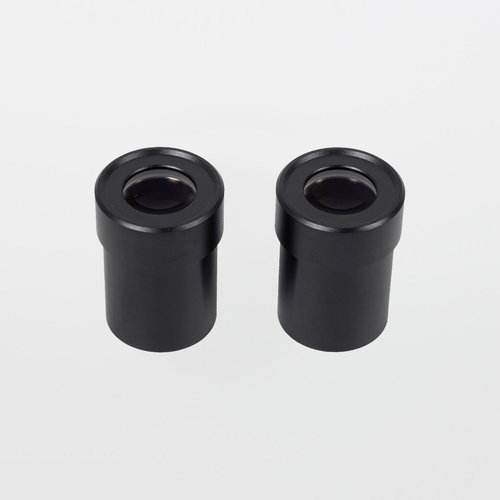
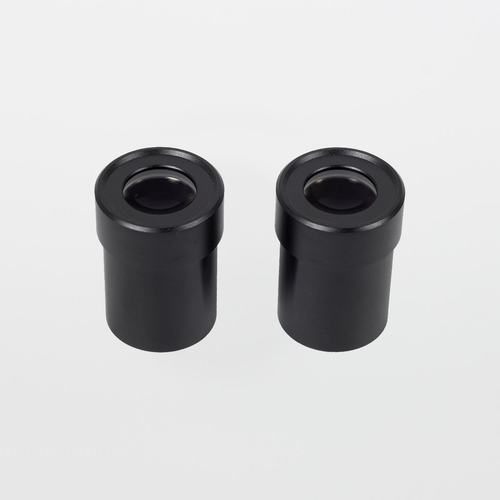
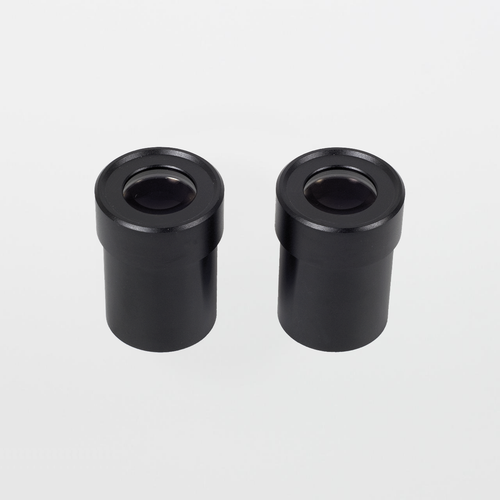
Meiji MA504 Super Widefield 20X Eyepieces (Sold in Pairs)

$280.00
(No reviews yet)
SKU:
MA504
Availability:
7 - 10 Business Days
Shipping:
Calculated at Checkout

Meiji MA504 Super Widefield 20X Eyepieces (Sold in Pairs) — FN 11.5, 25mm Reticle Mount

The Meiji MA504 is a matched pair of 20X Super Widefield eyepieces designed for Meiji stereo microscope inspection platforms where higher confirmation power is required. With a Field Number (FN) of 11.5 and a 25mm reticle mount, MA504 supports high-detail viewing and reticle-based verification workflows used in cleanroom QA/QC, electronics inspection, precision assembly, and defect review stations.

Configuration note: MA504 is designed for Meiji EMZ (Zoom), EMT (Turret), and EMF (Fixed) stereo microscope families and is not compatible with High Eyepoint models. Always confirm your microscope configuration before standardizing eyepieces across benches.

Specifications:
  • Magnification: 20X
  • Type: Super Widefield eyepieces (paired)
  • Field Number (FN): 11.5
  • Reticle mount: 25mm
  • Outer diameter (O.D.): 30.5mm
  • Compatibility (manufacturer-stated): EMZ (Zoom), EMT (Turret), EMF (Fixed) stereo microscopes
  • Compatibility note: Not compatible with High Eyepoint models
Where MA504 Fits in Cleanrooms and Laboratories (and Why)

In controlled environments, microscope performance is often limited by confirmation requirements and repeatable interpretation, not by the microscope body. A 20X eyepiece set is typically chosen when operators need stronger confirmation on fine defects (e.g., small particles, edge damage, micro-scratches, solder/lead features) and when standardized reticle-based checks support QA decision-making.

Typical program fit: MA504 is a common upgrade path for inspection benches and rework stations where higher eyepiece magnification improves defect confirmation and reduces “borderline call” variability across operators and shifts.

As magnification increases, perceived brightness and field coverage typically decrease; validate your illumination geometry (ring, oblique, coaxial/vertical where applicable) and define a consistent bench configuration as part of document control.

About the Manufacturer: 

Meiji Techno supports modular microscope configurations where eyepieces, auxiliary lenses, illumination, and stands are selected to match the inspection task. This modular approach aligns well with controlled environments that require standardized bench builds, traceable configuration control, and consistent operator outcomes.

MA504 Features:
  • 20X Super Widefield eyepiece set for higher-detail confirmation
  • FN 11.5 field specification for controlled widefield presentation
  • 25mm reticle mount to support measurement/verification reticles (reticle sold separately)
  • Matched pair for consistent left/right viewing performance
  • Designed for EMZ/EMT/EMF stereo microscopes (confirm configuration); not compatible with High Eyepoint models
MA504 Benefits:
  • Stronger defect confirmation: supports fine-feature review without changing the microscope body.
  • Verification readiness: reticle mount supports standardized checks when measurement is part of the SOP.
  • Bench consistency: paired eyepieces support repeatable viewing conditions across stations.
  • Quality discipline: helps reduce borderline calls by improving visual confidence at the bench.
Common Applications:
  • Cleanroom inspection benches (particles, scratches, edge/relief inspection)
  • Electronics inspection and rework (fine features and confirmation checks)
  • Medical device component inspection and QA verification
  • Precision manufacturing inspection (burrs, coating irregularities, micro-defects)
  • Reticle-based visual checks when measurement is part of the SOP
Optics Cleaning (Recommended for Eyepieces)

Eyepieces are high-touch optics and frequently accumulate oils and residue films that reduce contrast and can create inspection artifacts. Use optical-grade swabs and low-lint wipers to minimize fiber shedding and reduce scratch risk on coated optical surfaces.


Link to Meiji MA504 Product Details:
Click Here

Other Similar Products Available From SOSCleanroom.com

Notes: Need help balancing 20X confirmation power vs. brightness and scan coverage, or adding a reticle for standardized checks? Open the SOSCleanroom Technical Vault tab above for a practical selection checklist and optics-care discipline guidance.

SOSCleanroom supports microscopy programs with responsive technical support, compatible accessories, and optical cleaning supplies designed for controlled environments.

Product page updated: Jan. 21, 2026 (SOS Technical Staff)

© 2026 SOS Supply. All rights reserved.

The Technical Vault
By SOSCleanroom
Last reviewed: Jan. 21, 2026 | Audience: cleanroom operations, QA/QC, lab managers, manufacturing engineering, EHS
20X Eyepieces as a Controlled Input: When Higher Confirmation Power Helps—and When It Hurts
Meiji MA504 — FN 11.5, 25mm reticle mount, bench standardization checklist, and optics-care discipline
Stereo inspection workflows Reticles & verification Optics cleaning discipline
The one-paragraph answer

MA504 is a paired 20X Super Widefield eyepiece set designed for Meiji EMZ/EMT/EMF stereo microscope families to increase perceived detail for defect confirmation and reticle-based verification. In practice, 20X eyepieces improve outcomes when defects are small enough that confirmation at lower power drives false passes or “borderline calls.” However, higher eyepiece power can also reduce scan coverage and perceived brightness—so MA504 should be standardized with illumination strategy and a defined “scan vs. confirm” workflow, not installed ad hoc.

Compatibility control: MA504 is not compatible with High Eyepoint models. Treat eyepiece part numbers as configuration-controlled items in QA/QC environments.

Operational problem MA504 is solving
  • Borderline inspection calls: small defects that are hard to confirm at lower eyepiece power.
  • Rework verification delays: repeated “back-and-forth” review because confirmation is not decisive.
  • Non-standard bench builds: different eyepiece configurations across stations create interpretation variability.
  • Reticle workflow gaps: measurement/verification steps require a reticle-ready eyepiece mount.
Microscopy education: stereo microscope engineering vs. compound microscope engineering

Stereo microscopes are engineered with two optical paths to provide a 3D image that supports inspection and hands-on manipulation. They excel at surface inspection, edge relief, and assembly/rework tasks where depth perception is part of the job. In stereo workflows, eyepieces are frequently used as a configuration lever to tune confirmation power and operator comfort.

Compound microscopes are engineered around a single optical axis optimized for higher magnification analytical viewing (often slides) with transmitted illumination. In compound microscopy, objective selection and illumination/condenser tuning typically drive outcomes more than eyepiece changes.

Practical takeaway: For defect inspection and rework, stereo systems + controlled eyepiece selection (scan vs confirm) often improve throughput. For slide-based analysis, compound platforms are typically the correct architecture.

How to qualify 20X eyepieces for inspection benches (selection checklist)

Treat eyepieces as a controlled input. The “right” eyepiece is the one that improves decisions without slowing inspection or increasing fatigue. Use the checklist below to standardize MA504 across benches.

Qualification checklist (SOP + QA alignment)
  • Define scan vs confirm: use lower power to scan; define when operators switch to 20X for confirmation.
  • Illumination validation: confirm brightness and contrast at the target magnification range with your lighting geometry.
  • Defect library: validate against known-good and known-defect standards so decisions are comparable across shifts.
  • Reticle workflow: if measurement checks exist, define reticle type, calibration method, and document control expectations.
  • Operator ergonomics: standardize IPD/diopter setup and posture; fatigue drives decision drift.
  • Change control: lock eyepiece part number (MA504) and bench configuration in controlled documentation.
Metrics glossary (quick interpretation)
  • Field Number (FN): relates to observable field diameter; higher FN generally supports more viewing area (system dependent).
  • Reticle mount: MA504 accepts a 25mm reticle; confirm reticle spec before purchase.
  • 20X tradeoff: more detail, less scan coverage per glance; SOP should define when to switch to confirmation power.
Optical cleaning and contamination control (eyepiece-focused)

Eyepieces are high-touch optics. Oils, glove residue, and particulate can create haze and contrast loss that is often misread as a product defect—especially at higher confirmation power. Use optical-grade swabs and low-lint wipers to minimize fiber shedding and reduce scratch risk on coated surfaces.

Suggested eyepiece-cleaning SOP insert (template-style)
  1. Inspect for loose particles; remove with an approved blower/air method before wiping.
  2. Use a fresh optical swab or low-lint wiper; apply minimal approved solvent to the swab (damp, not dripping).
  3. Wipe gently in one direction; avoid aggressive pressure and repeated scrubbing.
  4. Replace swab/wiper frequently; do not reuse a loaded cleaning surface.
  5. Cover the microscope when idle; store away from airflow paths and chemical vapor sources.

Artifact control tip: If “defects” appear inconsistent between operators, inspect and clean eyepieces first—smudges and residue films can mimic haze, scratches, or particulate on the part.

Source basis
  • SOSCleanroom product listing context (positioning and bench-standardization intent for Meiji eyepieces).
  • Meiji MA504 manufacturer page (FN 11.5, 30.5mm O.D., 25mm reticle mount, and compatibility notes).
  • Common inspection microscopy best practices: scan vs confirm workflow design, ergonomics standardization, reticle discipline, and optics cleaning controls.
Compliance note: This Technical Vault article is provided for educational support. Always follow facility SOPs, QA requirements, and validation/qualification plans.
Document control: Rev. Jan. 21, 2026 (SOS Technical Staff)
© 2026 SOS Supply. All rights reserved.