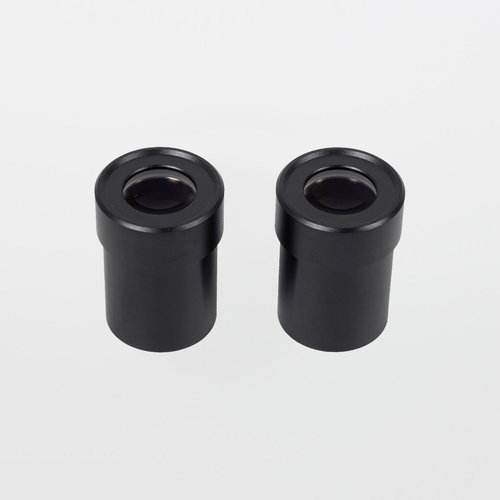
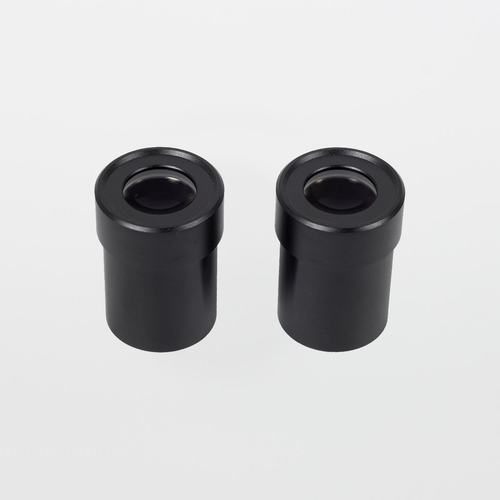
Meiji MA519 Super Widefield 10X Focusing Eyepiece (Sold as Each)

$260.00
(No reviews yet)
SKU:
MA519
Availability:
7 - 10 Business Days
Shipping:
Calculated at Checkout

Meiji MA519 Super Widefield 10X Focusing Eyepiece (Sold as Each) — FN 21.0, 25mm Reticle Mount

The Meiji MA519 is a 10X Super Widefield focusing eyepiece used on Meiji stereo microscope platforms when you want to fine-tune focus at the eyepiece for repeatable, comfortable viewing. With a wide presentation (FN 21.0) and a 25mm reticle mount, MA519 supports inspection and reticle-based verification workflows while helping operators dial-in best focus and reduce fatigue across long sessions.

Compatibility note: MA519 is designed for Meiji EMZ (Zoom), EMT (Turret), and EMF (Fixed) stereo microscope families and is not compatible with High Eyepoint models. Confirm your microscope configuration and eyepiece tube spec before ordering. :contentReference[oaicite:1]{index=1}

Specifications:
  • Magnification: 10X
  • Type: Super Widefield focusing eyepiece
  • Field Number (FN): 21.0 
  • Outer diameter (O.D.): 30.5mm
  • Reticle mount: 25mm (reticles sold separately) 
  • Compatibility (manufacturer-stated): EMZ / EMT / EMF stereo microscopes 
  • Compatibility note: Not compatible with High Eyepoint models 
  • Sales unit (SOSCleanroom): Sold as each (select quantity required)
Where MA519 Fits in Cleanrooms and Labs (and Why)

In cleanroom inspection and lab work, microscope repeatability often comes down to operator setup discipline. A focusing eyepiece supports consistent “best focus” and helps compensate for small differences in operator eyesight and viewing posture—reducing rework, reducing borderline calls, and improving comparability across benches.

Typical program fit: MA519 is a strong choice for inspection benches and rework stations where operators need widefield scanning (FN 21.0) and repeatable focus tuning—especially when multiple users share the same microscope during a shift.

If your workflow requires standardized measurements, MA519’s 25mm reticle mount supports reticle-based verification when paired with the correct reticle specification and calibration method per SOP. 

MA519 Features:
  • 10X Super Widefield presentation with FN 21.0
  • Focusing eyepiece design to help operators fine-tune best focus and reduce fatigue
  • 25mm reticle mount for verification/measurement reticles (sold separately) 
  • Designed for Meiji EMZ / EMT / EMF stereo microscope families (not high-eyepoint) 
MA519 Benefits:
  • Better bench repeatability: supports consistent focus setup across operators and stations.
  • Reduced re-checks: improved focus control helps limit borderline calls driven by poor setup or fatigue.
  • Verification readiness: reticle mount supports SOP-driven checks when measurement is required.
  • Cleanroom-friendly standardization: configuration control is easier when eyepiece specs are locked and documented.
Common Applications:
  • Cleanroom inspection benches (particles, scratches, edge condition, surface defects)
  • Electronics inspection and rework (fine feature viewing with repeatable focus setup)
  • Medical device component inspection and QA verification
  • Precision manufacturing review and incoming inspection
  • Reticle-based verification steps (with correct reticle + calibration control)
Optics Cleaning (Recommended for Eyepieces)

Eyepieces are high-touch optics. Oils and residue films reduce contrast and can create inspection artifacts. SOSCleanroom recommends optical-grade swabs and low-lint wipers to minimize fiber shedding and protect coated surfaces during routine cleaning.


Link to Meiji MA519 Product Details / Datasheet:
Click Here

Other Similar Products Available From SOSCleanroom.com

Notes: Need help standardizing eyepiece configuration (focus setup, reticle use, and bench-to-bench consistency)? Open the SOSCleanroom Technical Vault tab above for a practical checklist and optics-care discipline guidance.

SOSCleanroom supports microscopy programs with compatible accessories, responsive support, and optical cleaning supplies built for controlled environments.

Product page updated: Jan. 21, 2026 (SOS Technical Staff)

© 2026 SOS Supply. All rights reserved.

The Technical Vault
By SOSCleanroom
Last reviewed: Jan. 21, 2026 | Audience: cleanroom operations, QA/QC, lab managers, manufacturing engineering, EHS
Focusing Eyepieces as a Controlled Input: How MA519 Improves Setup Repeatability at the Bench
Meiji MA519 — FN 21.0, 25mm reticle mount, configuration control, and optics-care discipline
Stereo inspection workflows Reticles & verification Optics cleaning discipline
The one-paragraph answer

Meiji MA519 is a 10X Super Widefield focusing eyepiece specified at FN 21.0 with a 25mm reticle mount and 30.5mm outer diameter, designed for Meiji EMZ/EMT/EMF stereo microscope families and not compatible with High Eyepoint models. :contentReference[oaicite:11]{index=11} In real inspection programs, focusing eyepieces are valuable because they reduce setup variability across operators—helping teams achieve repeatable “best focus,” reduce fatigue, and improve comparability of inspection decisions across benches and shifts.

Cleanroom reality: Many “microscope issues” are actually setup and cleanliness issues—incorrect diopter/focus procedure, inconsistent lighting geometry, or dirty eyepieces creating defect-like artifacts.

Operational problem MA519 is solving
  • Operator-to-operator focus drift: benches shared across a shift produce inconsistent “best focus” without a controlled procedure.
  • Fatigue and re-checks: poor setup increases eye strain and drives repeated inspections of the same feature.
  • Verification workflow needs: reticle mount supports reticle-based checks when required (with calibration discipline).
  • Artifact-driven false defects: eyepiece contamination (oils/films/particulate) looks like haze or defects—especially in high-sensitivity reviews.
Microscopy education: stereo microscope engineering vs. compound microscope engineering

Stereo microscopes are engineered with two independent optical paths that deliver a true 3D image. This architecture supports hands-on inspection and manipulation where depth judgment matters (edges, relief, tool placement, surface condition). In stereo inspection, eyepieces are a practical configuration lever because they affect widefield scanning, perceived detail, and operator comfort without changing the microscope body.

Compound microscopes use a single optical axis optimized for higher magnification analytical viewing (often slide-based) using transmitted illumination. In compound workflows, objective selection and illumination/condenser tuning typically dominate outcomes more than eyepiece choice.

Practical takeaway: For cleanroom inspection and rework, stereo systems plus disciplined eyepiece setup (diopter/focus procedure) often deliver the largest improvement in decision repeatability.

Best-practice setup for focusing eyepieces (SOP-ready)
Suggested SOP insert (template-style)
  1. Set bench lighting to your standard geometry (ring/oblique/coaxial) and lock intensity at the defined level.
  2. Set the microscope to a mid magnification typically used for inspection setup.
  3. Adjust IPD (interpupillary distance) for a single fused image; set eyecups as appropriate for the operator/PPE.
  4. Focus the microscope on the part using the main focus control with one eye/side as your reference.
  5. Without changing the main focus, use the focusing/diopter control to bring the other side to best focus.
  6. Record the “neutral” settings if your program uses multiple operators; re-validate at shift change or when users rotate.

Audit tip: If defect decisions vary across operators, verify (1) lighting geometry, (2) eyepiece cleanliness, then (3) diopter/focus procedure before changing optics or magnification.

Reticles and verification discipline (25mm mount)

MA519 includes a 25mm reticle mount. :contentReference[oaicite:12]{index=12} If reticles are used for verification or inspection criteria, treat the reticle and its calibration method as controlled items (document control, calibration interval, and training).

  • Define intent: pass/fail limit checks vs. dimensional measurements.
  • Calibration method: specify stage micrometer or camera/metrology reference and record the standard used.
  • Change control: do not swap reticles between benches without re-validation if measurements are regulated by SOP.
Optical cleaning and contamination control (eyepiece-focused)

Eyepieces are high-touch optics. Oils, glove residue, and particulate can create haze and contrast loss that operators misread as defects. Use optical-grade tools designed to minimize fiber shedding and reduce scratch risk on coated surfaces.

Suggested eyepiece-cleaning SOP insert (template-style)
  1. Remove loose particles with an approved blower/air method before wiping.
  2. Use a fresh optical swab or low-lint wiper; apply minimal approved solvent (damp, not dripping).
  3. Wipe gently in one direction; avoid aggressive pressure and repeated scrubbing.
  4. Replace swab/wiper frequently; do not reuse a loaded cleaning surface.
  5. Cover the microscope when idle; store away from airflow paths and chemical vapor sources.
Source basis
  • SOSCleanroom product listing context (sold-as-each presentation and cleanroom inspection intent).
  • Meiji MA519 product page and MA519 datasheet (FN 21.0, 30.5mm O.D., 25mm reticle mount, compatibility notes). :contentReference[oaicite:13]{index=13}
  • Common inspection microscopy best practices: bench standardization, operator setup discipline, reticle document control, and optics cleaning controls.
Compliance note: This Technical Vault article is provided for educational support. Always follow facility SOPs, QA requirements, and validation/qualification plans.
Document control: Rev. Jan. 21, 2026 (SOS Technical Staff)
© 2026 SOS Supply. All rights reserved.