The Technical Vault
Microscope Stand Selection for Cleanroom and Controlled Environments
Focus: Stability, repeatability, contamination control
Application: Inspection, assembly, QA documentation
Why the stand is part of the measurement system
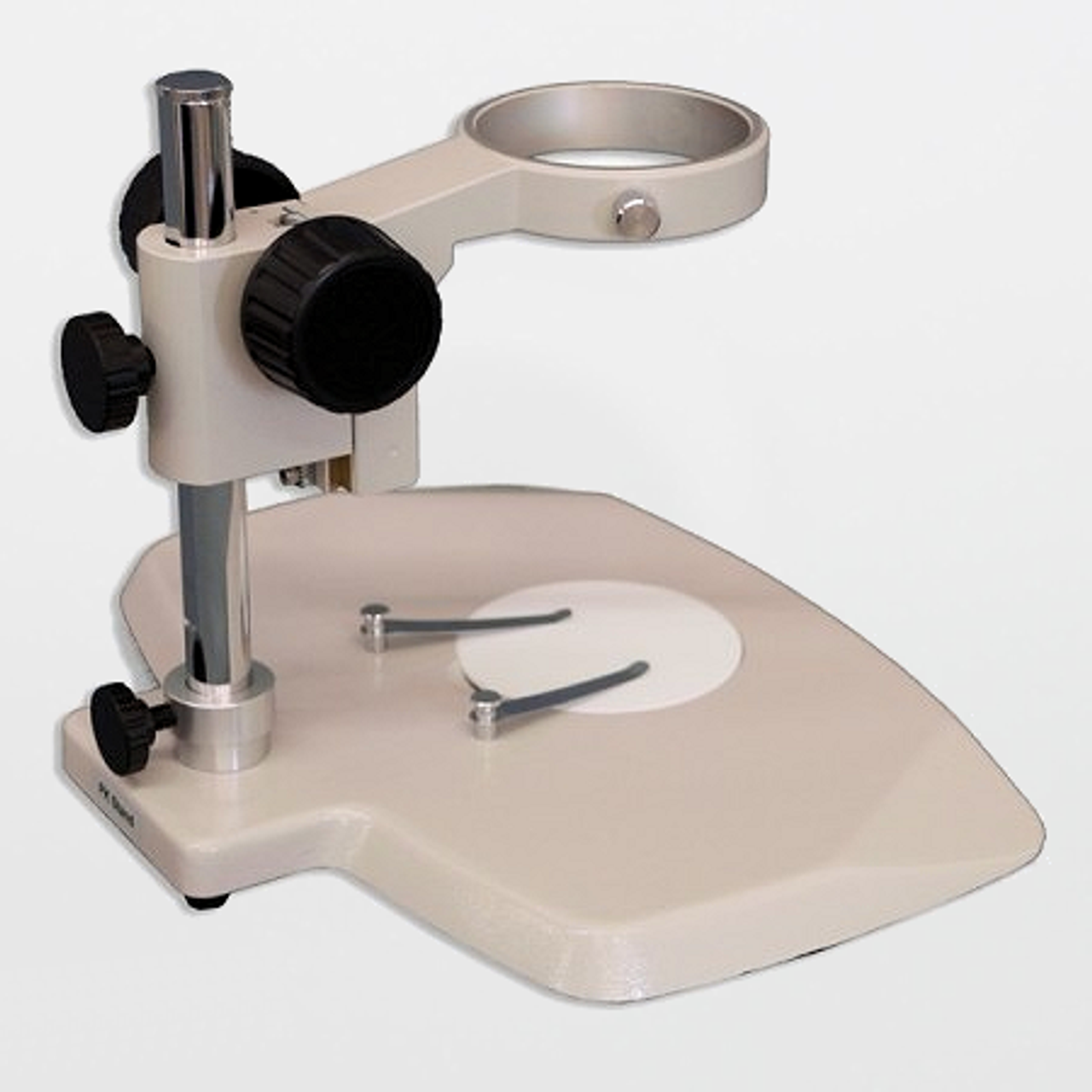
In controlled environments, microscopes are often treated as “optics + illumination,” but the stand is the platform that governs how consistently operators can reproduce a viewing condition. A stable pole-and-base architecture helps maintain working distance, reduces vibration during focus changes, and supports repeatable inspection outcomes—especially when inspection steps are tied to quality records.
Pole stands and extended working distance
Pole stands are commonly selected when operators need vertical clearance for fixtures, parts trays, or delicate assemblies. The PK stand’s extended pole height supports comfortable ergonomics and helps keep hands and tools positioned below the optical head—useful when your SOP requires controlled movements and minimal overreach.
Contamination-control angle: reduce “unnecessary touches”
The fastest way to raise risk in a controlled environment is to create avoidable handling—touching knobs repeatedly, repositioning parts because the station is unstable, or moving samples in and out of view to “find focus.” A stand that holds position and focuses smoothly helps reduce that churn.
The stage plate is not just cosmetic
Reversible black/white plates support practical contrast management. When operators can quickly improve contrast without changing lighting or moving the sample, inspection becomes faster and more consistent—two attributes that matter in both production throughput and deviation prevention.
Cleaning approach: separate “equipment wipe-down” from “optical cleaning”
-
Base, knobs, pole, stage area: treat as touch surfaces; wipe per SOP using cleanroom-grade wipers appropriate for your chemistry program.
-
Optical glass: clean with optical-grade swabs and controlled solvent technique to avoid streaking and residue transfer.
-
Workflow discipline: wipe before shift start (baseline), after maintenance/adjustment, and after any contamination event (glove tear, spill, or contact with non-controlled items).
When to consider coarse & fine focus
If you routinely inspect higher-detail features or work at higher magnification, fine focus reduces repeated coarse movements and can improve operator control. In practice, that can mean fewer “overshoots,” less vibration, and fewer re-handling events of the sample.
SOSCleanroom technical perspective
A clean microscope station is a system: stand stability, correct illumination, controlled cleaning supplies, and appropriate PPE all work together. SOSCleanroom supports that system approach with Meiji components, Texwipe cleaning products, and cleanroom PPE options—plus manufacturer documentation access for validation and internal qualification.
© 2026 SOS Supply. All rights reserved.