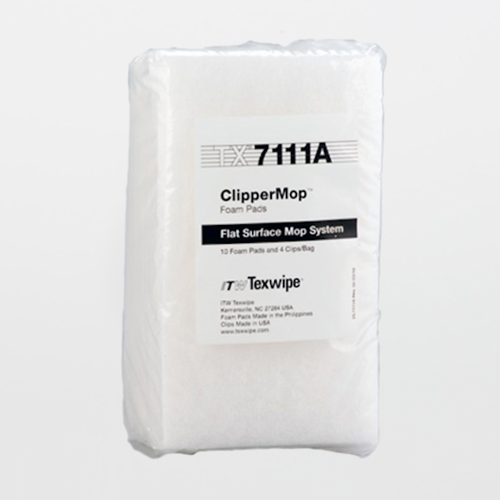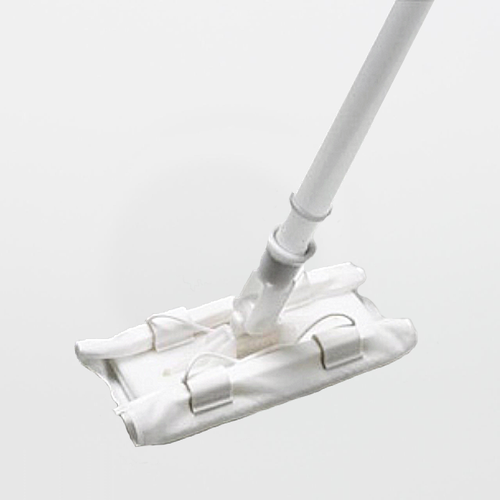
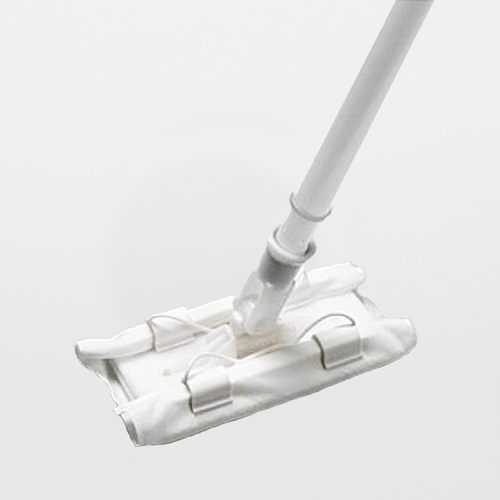
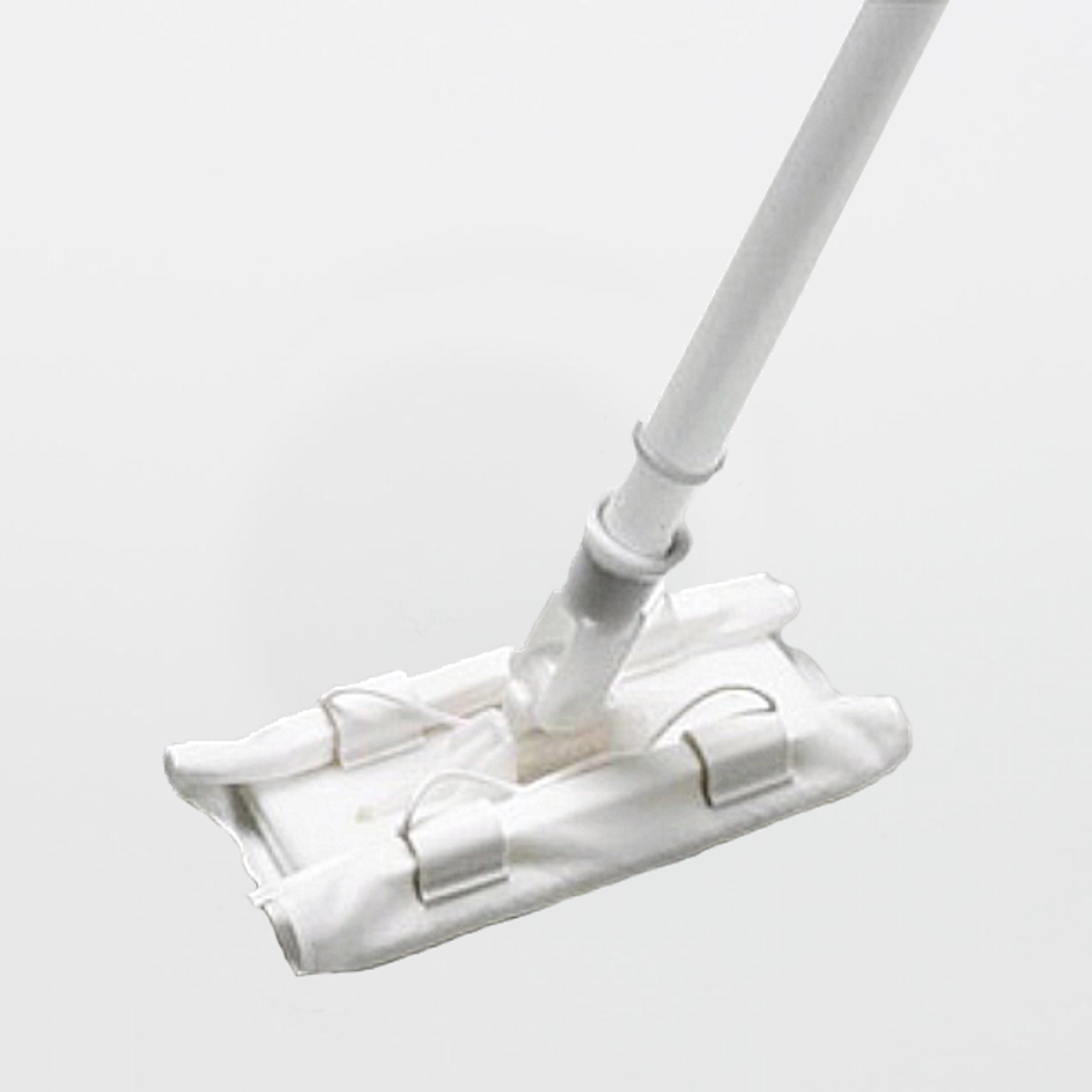
Texwipe TX7102 ClipperMop with 7" x 4" Head Assembly and Telescoping Handle

$186.09
(No reviews yet)
SKU:
TX7102
Availability:
14-21 Business Days
Shipping:
Calculated at Checkout
Type:
Dry Mop
Texwipe TX7102 ClipperMop™ Cleanroom Mop Kit — 7" x 4" Head Assembly with Telescoping Handle (Uses 9" x 9" Wipers)
TX7102 is a cleanroom-compatible mopping system for flat vertical and horizontal surfaces where technicians need consistent wipe-and-mop execution without introducing new mop-cover materials into a validated program. The 7" x 4" low-profile, swivel head is designed to clamp standard 9" x 9" cleanroom wipers using non-abrasive clips, helping teams standardize one wiper family for both surface wiping and mopping routes.

For over 35 years, SOS and Texwipe have been close partners, and SOSCleanroom is the authorized Master Distributor of ITW Texwipe for the United States market. That relationship matters in critical environments: it supports continuity of supply, stable product lineage, and faster access to manufacturer documentation for qualification, change control, and audit readiness.

Published configuration (TX7102)
  • System type: ClipperMop™ cleanroom mop kit (head assembly + telescoping handle)
  • Mop head size: 7" x 4" (18 cm x 10 cm)
  • Wiper format used on head: Standard 9" x 9" cleanroom wipers (dry, pre-wetted, sterile or non-sterile per published guidance)
  • Mop head construction (as published): Celcon® thermoplastic head with four polyethylene clips tethered with nylon fasteners
  • Pad layer (as published): Flexible polyester foam pad to help the loaded wiper conform to uneven surfaces
  • Handle extension range (as published): 2'5" to 4'5" (also shown as 29" to 53")
  • Packaging (as published): 1 mop kit per case; double-bagged with bag-within-a-bag cleanroom packaging (supports inner-bag wipe-down before introduction)
  • Sterilization compatibility (as published): Gamma irradiation, chemicals, vaporized hydrogen peroxide (VHP) or ethylene oxide (EO)
  • Cleanroom environment (as published): ISO Class 3–7 (also shown as ISO Class 3–8 in some legacy documentation); EU Grade A–D; Class 1–10,000 (also shown as Class 1–100,000 in some legacy documentation)
Configuration note for QA change control
Published handle construction varies by document generation. One widely used legacy datasheet specifies a powder-coated steel telescoping handle; newer ClipperMop series documentation lists a telescoping fiberglass handle model (TX7122). If your program is sensitive to handle composition (particles, corrosion, chemical exposure, or ESD considerations), confirm the current shipped configuration under your site change-control process before standardizing.

How the ClipperMop system supports critical cleaning routes
  • Standardize the contact layer: The same validated cleanroom wiper family can be used for benches/equipment and for mopping, reducing the number of materials your site must qualify and inventory.
  • Clip-based loading: Non-abrasive clips secure one or multiple wipers to the head. Frequent wiper replacement supports strict cleaning protocols and reduces re-deposition risk.
  • Low-profile access: The swivel head and compact footprint help reach under equipment edges, around carts, and into confined spaces such as antechambers, isolator exteriors, and gowning areas.
  • Solution application/removal: Published use includes applying and removing cleaning solutions and disinfectants. Route quality is driven by wet-load control, pass pattern discipline, and change-out rules.

Practical cleanroom use guidance (technicians and engineers)
  • Define a wet-load target: Over-wetting causes streaking/filming and can spread residues into seams and transitions. Standardize wringing method, dwell time, and solution volume per route segment.
  • Use repeatable pass patterns: Overlap passes and maintain consistent direction. Random scrubbing increases re-deposition and makes deviations harder to investigate.
  • Wiper change-out is the control knob: Replace the loaded wiper at defined area/time limits and whenever you see streaking, visible loading, or loss of glide. Extending wiper life is a common root cause of residue carryover.
  • Stage clean vs. used hardware: Once the route begins, treat the mop as a “dirty tool.” Keep used wipers and accessories segregated to avoid cross-contamination back into clean staging.
  • Edge control: Avoid forcing wet wipers into door thresholds, drains, or floor seams where residues can accumulate. Use a defined detailing tool where your SOP requires it.

Process-control table (high-impact variables)
Control point What to standardize Failure symptom if missed
Wiper loading method Single vs. multiple wipers; fold pattern; clip engagement check Slippage, uneven contact, missed coverage, edge drag
Wet-load and wring Pickup volume, wring force, dwell time before use Streaking/filming, chemical residue, puddling
Route design Direction, overlap, boundary rules (doors, thresholds) Re-contamination streaks, inconsistent results between shifts
Change-out limits Max area/time per loaded wiper; hard-stop triggers Residue carryover, particle re-deposition, “sticky” floor feel

Published wiper recommendations (common validation pairings)
Below is a published pairing table intended to help teams select compatible Texwipe wipers that are commonly validated in controlled environments for wipe-and-mop workflows.
Category Texwipe wiper Product name (as published) Notes for TX7102 workflows
Dry wipers TX1010 Vectra® Alpha® 10 Common for low-residue wipe/mop where consistency is prioritized
Dry wipers TX1012 Alpha® 10 Frequent pairing for controlled wiping and mopping routes
Dry wipers TX1050 Vectra® AlphaSorb® 10 Higher absorbency use cases; qualify residue and dry-down time
Dry wipers TX1052 AlphaSorb® 10 Absorbency-driven workflows; validate change-out interval
Dry wipers TX1060 Vectra® HoneyComb® 10 Textured pickup profiles; qualify for fiber/particle sensitivity
Dry wipers TX1009 AlphaWipe® Broad-use pairing for wipe-and-mop standardization
Dry wipers TX1013 AlphaWipe® Alternative AlphaWipe configuration; validate against SOP targets
Dry wipers TX2412 AlphaSorb® HC High-absorbency cleanup; control residue and contact time
Dry wipers TX3215 SterileWipe™ AS 10 Sterile workflow pairing where sterile wipers are required
Dry wipers TX3210 SterileWipe™ HS II Sterile route control; validate packaging transfer method
Dry wipers TX609 TechniCloth® Common facility-grade pairing; align to room grade
Dry wipers TX612 TechniCloth® Alternative TechniCloth configuration; validate vs. SOP
Pre-wetted (IPA blends) TX1084 QuanSat™ with Vectra® QuanTex™ Published with 70% IPA; control dry-down and residue risk
Pre-wetted (IPA blends) TX8513 QuanSat™ with Vectra® Quantum® 100 Published with 70% IPA; control wet-load consistency
Pre-wetted (IPA blends) TX1039 AlphaSat® with AlphaWipe® Published with 70% IPA; common for wipe-and-mop standardization
Pre-wetted (IPA blends) TX1041 TechniSat® Published with 70% IPA; align to room grade and residue tolerance
Pre-wetted (IPA blends) TX1065 TechniSat® Published with 70% IPA; validate for streaking/film potential
Pre-wetted (IPA blends) TX1051 PolySat® Published with 70% IPA; confirm material compatibility with chemistry set
Pre-wetted (IPA blends) TX3285 Sterile AlphaSat® 10 Sterile pre-wetted pairing for aseptic programs
Pre-wetted (IPA blends) TX3252 Sterile AlphaSat® with AlphaSorb® HC Sterile, higher absorbency workflows; validate residue and dry time
Pre-wetted (IPA blends) TX3214 Sterile TechniSat® Sterile pre-wetted pairing; validate transfer method into room
Pre-wetted (IPA blends) TX3213 SterilePolySat® Sterile polymer wiper pairing; align with chemistry compatibility
Pre-wetted (IPA blends) TX1057 AlphaSat® with Vectra® AlphaSorb® 10 Published with 10% IPA; qualify for residue-sensitive programs
Pre-wetted (IPA blends) TX1046 AlphaSat® with Vectra® Alpha® 10 Published with 6% IPA; supports lighter solvent load where required
Pre-wetted (IPA blends) TX1086 QuanSat™ with Vectra® QuanTex™ Published with 6% IPA; validate against your disinfectant rotation
Pre-wetted (IPA blends) TX8488 TechniSat® Published with 6% IPA; qualify for streaking/film risk

Common failure modes 
  • Streaking / film residue: Typically from uncontrolled wet load, chemistry incompatibility with floor finish, or extending wiper change-out too long. Prevent with wet-load targets, defined wring method, and hard-stop change-out rules.
  • Residue carryover between zones: Triggered by poor staging discipline (clean vs. used) or route shortcuts. Prevent with zone-separated carts, labeled buckets, and one-direction route logic.
  • Particle re-deposition: Caused by reusing loaded wipers or dragging a drying wiper across previously cleaned areas. Prevent with overlap discipline and frequent wiper replacement.
  • Clip loading errors: Partial clip engagement or uneven folds can cause edge drag, missed coverage, and slippage. Prevent with a standardized fold pattern and a quick “four-clip check” before entering the room.
  • Corner/threshold contamination: Forcing wet wipers into seams can trap residues. Prevent with edge control and a defined detailing tool for transitions.

Storage and handling best practices
  • Keep the kit in original cleanroom packaging until introduction; leverage bag-within-a-bag wipe-down practices if your SOP allows.
  • Stage clean kits, clean wipers, and prepared solutions in a designated clean area; segregate used wipers immediately after the route begins.
  • Inspect head edges, clips, and fasteners routinely for embedded debris, damage, or looseness that could compromise coverage or introduce contaminants.
  • Store dry and protected; avoid placing heavy items on the head assembly where deformation can change contact pressure and streak behavior.
Documentation 
SOS-hosted Texwipe datasheet (DS-7102, Effective: December 2009): Click Here
Texwipe manufacturer Technical Data Sheet (ClipperMop™ Series, US-TDS-058 Rev. 11/21): Click Here
Texwipe manufacturer page (TX7102): Click Here
If you have any questions please email us at Sales@SOSsupply.com or give us a call at (214)340-8574.
Check out our AI ChatBot powered by SOSCleanroom data libraries - give it a try!
THIS IS NEW FOR 2026!
Last updated: January 9, 2026
© 2026 SOS Supply. All rights reserved.
The Technical Vault Cleanroom Mopping Systems & Techniques (Applied Use Case: Texwipe™ TX7102 ClipperMop™ — 7" x 4" Small-Head Kit)

Purpose & Scope

The Texwipe™ TX7102 ClipperMop™ is a compact mop kit built around a 7" x 4" head assembly, making it ideal for tight, detail zones where full-size floor mops are impractical—equipment bases, cart wheels paths, narrow corridors, thresholds, and perimeter edges. This Technical Vault entry focuses on technique and tool-control behaviors that drive outcomes: redeposition control, streak prevention, and cross-zone discipline.

Visual Aids (Technique, Zoning, Lifecycle)

Use this graphic as a quick training and SOP reinforcement tool: unidirectional strokes, zone-based tool control, and mop head lifecycle discipline.

Cleanroom mopping technique (unidirectional vs figure-8), cleanroom zoning map concept, and mop head lifecycle diagram

Implementation note: Diagram intent is educational. Align technique, zoning, and change-out rules to your facility SOP and validated cleaning program.

Published Configuration (TX7102)

  • System type: ClipperMop™ small-head cleanroom mop kit
  • Head assembly size: 7" x 4"
  • Handle: telescoping handle
  • Type: dry mop kit (covers/refills determine the working media)

Important: cleanroom suitability and any sterility requirements are typically driven by the cover/refill (media + packaging + handling), not the handle/frame kit alone. Confirm cover media and packaging configuration when standardizing.

Why the 7" x 4" Format Is a Control Advantage (Not Just “Smaller”)

In narrow or obstructed areas, full-size mops often “ride up,” clip equipment, or force operators into short, uncontrolled strokes. The 7" x 4" head size allows deliberate lane control and improved access without over-wetting. This reduces the likelihood of: chemistry pooling, drag marks, and cross-zone transfer when moving between thresholds and work zones.

Technique Guidance (Detail-Zone Cleaning)

Stroke Discipline

  • Prefer unidirectional passes and avoid backtracking over cleaned lanes with a loaded cover.
  • Use controlled overlap (10–20%) and keep the head flat to avoid edge redeposition.
  • Work in short lanes sized to the zone; do not “wander” with the mop in tight spaces.

Saturation Control (Tight Areas Load Quickly)

  • Load the cover to damp-to-wet, not dripping—pooling is common in corners and low-airflow zones.
  • Detail zones accumulate residue; plan more frequent cover changes than open floor areas.
  • If your chemistry program requires dwell + removal, define the removal step clearly to prevent haze.

Telescoping Handle Management (Hidden Contamination Risk)

Telescoping joints and locking collars can trap dried chemistry and debris. Incorporate periodic wipe-down and inspection of adjustment points into the cleaning tool SOP to reduce transfer to gloves during in-process adjustments.

Common Failure Modes (What to Train Out)

  • Corner haze/streaking: typically over-wetting and pooling; correct with controlled loading and shorter lanes.
  • Redeposition: re-entering cleaned areas with a loaded cover; change covers and keep lane discipline.
  • Drag marks at thresholds: riding the head edge or excessive pressure; keep head flat and reduce downforce.
  • Cross-zone transfer: using one kit across zones/chemistries; label and segregate tools by area and chemistry.
  • Handle joint contamination: dried chemistry in telescoping joints; prevent with wipe-down and inspection.

Storage, Segregation & Handling

  • Keep covers/refills in original cleanroom packaging until point-of-use.
  • Store the kit dry and protected; do not leave wet covers on the head between shifts unless controlled and justified by SOP.
  • Assign the kit to a specific zone and label it (room + chemistry). Small mops are easy to cross-use unless controlled.
  • Inspect head edges and attachment points for burrs/sharp features that can abrade covers and increase shedding.

Frequency & Standards Context (ISO & USP)

Cleaning frequency is typically established as a risk-based program supported by SOPs, training, and effectiveness monitoring. ISO-classified operations generally expect documented rationale and repeatable execution. USP-regulated compounding spaces commonly maintain routine floor cleaning schedules and strict tool segregation aligned to the facility’s contamination control strategy.

SOP & Audit Readiness Checklist (Small-Head Kits)

  • Define technique: stroke direction, overlap, and acceptable wetness (no dripping).
  • Define cover change-out logic for detail zones (often more frequent than open floors).
  • Segregate by zone and chemistry; label storage and transport to prevent cross-use.
  • Include telescoping joint wipe-down/inspection steps for operator-controlled handle adjustments.
  • Document training and periodic effectiveness review (visual inspection + EM trends, as applicable).

Disclaimer: This Technical Vault content is provided for educational purposes only. Manufacturer instructions, facility SOPs, and site-specific risk assessments must always take precedence. Sterility, cleanroom suitability, and quantitative contamination metrics are determined by the complete system configuration (including covers/refills and packaging) and validated site practice.

© SOSCleanroom. All rights reserved.