Texwipe TX7112 ClipperMop 7" Replacement Head (HEAD ONLY)

$154.48
(No reviews yet)
SKU:
TX7112
Availability:
10 - 14 Business Days
Shipping:
Calculated at Checkout
Type:
Dry Mop
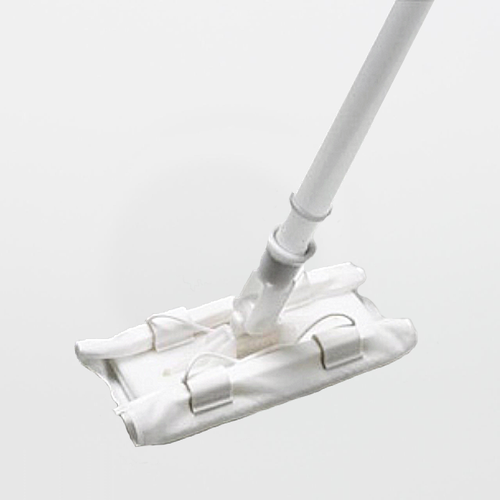
Texwipe TX7112 ClipperMop™ 7" Replacement Head (Head Only) — 7" x 4" (17.8 cm x 10 cm), Non-Sterile
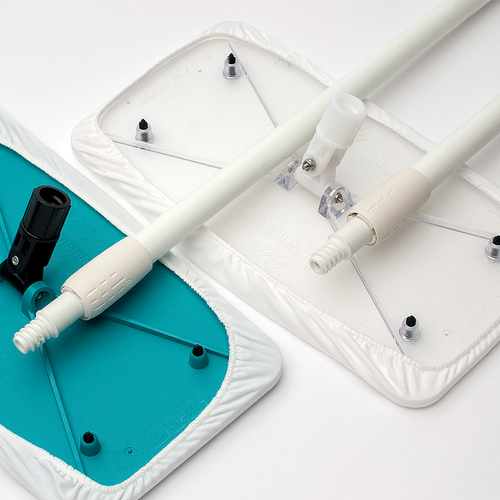
TX7112 is the 7" x 4" replacement head assembly for the Texwipe ClipperMop™ system (used with the TX7102 7" ClipperMop kit). It restores the head geometry and clip interface so technicians can continue using validated cleanroom wipers as a mop substrate, supporting frequent substrate changes and consistent contact on floors, walls, ceilings, isolators, hoods, and confined areas.

For over 35 years, SOS and Texwipe have been close partners, and SOSCleanroom is the authorized Master Distributor of ITW Texwipe for the United States market. That relationship matters in critical environments: it supports continuity of supply, stable product lineage, and fast access to the manufacturer documentation your QA/QC team expects.

Published configuration (TX7112)
  • Product type: ClipperMop™ replacement head assembly (head only)
  • Head size: 7" x 4" (17.8 cm x 10 cm)
  • Sterility: Non-sterile
  • Head construction (system description): Celcon® thermoplastic mop head with clips and a flexible polyester pad for improved wiping efficiency
  • Clip system (system description): Four polyethylene clips tethered to the head with nylon fasteners for securing one or multiple wipers
  • Compatible wiper sizes (ClipperMop series): Standard 9" x 9" or 12" x 12" cleanroom wipers (selected per process and surface)
  • Use with: TX7102 7" ClipperMop™ kit (head + handle assembly)
  • Packaging: 1 replacement mop head / case
  • SOSCleanroom selling unit: Case (1 replacement head)
Low-linting intent — and the reality check
The ClipperMop™ attachment method is designed so wipers can be secured without abrasive hardware and with frequent changes aligned to strict cleaning protocols. Even so, no wiping setup is truly free of particle and fiber risk. Treat the head, clips, and the selected wiper as a contamination-controlled assembly: control when it is opened, where it is staged, and what surfaces it contacts between passes.

How TX7112 supports critical cleaning (system-level intent)
Design element Why it matters in critical environments Operator control point
Tethered clip system (polyethylene clips + nylon fasteners) Enables frequent wiper changes without qualifying dedicated mop covers; supports protocol compliance through fast substrate replacement Replace wipers at defined limits; keep clips fully seated to avoid slippage and chatter
Flexible polyester pad (conformability) Helps the wiper conform to minor surface irregularities, improving contact uniformity and reducing missed lanes Avoid over-pressure (a common cause of streaking and redeposition); let the pad do the conforming
7" x 4" small head geometry Improves access in tight spaces and near equipment exteriors; supports controlled edge work and reduced collision risk Use deliberate lane overlaps; avoid rapid direction changes that can flick droplets or drag contaminants

Practical cleanroom use guidance (technicians and engineers)
  • Use wipers you already qualify: ClipperMop™ is intended to use standard cleanroom wipers (9" x 9" or 12" x 12"). Standardize by process: one wiper family for surface wiping and mopping can reduce variables in investigations.
  • Frequent substrate changes are the point: The tethered clip approach supports frequent wiper replacement. Define a change-out trigger (time, area covered, visible load, or solution carryover) and enforce it.
  • Lane control: Work in one direction with controlled overlap. Avoid “back-and-forth” scrubbing unless your SOP explicitly calls for it (and then follow with a controlled finishing pass).
  • Pressure discipline: Too much pressure increases streaking, forces contaminants into surface texture, and accelerates abrasion on the wiper and pad.
  • Clip engagement check: Before entering the controlled area, confirm each clip is fully seated and the wiper corners are captured consistently to prevent slipping and chatter.

Compatibility and chemical-use notes (qualification-focused)
  • Wiper compatibility: Designed to use standard 9" x 9" or 12" x 12" cleanroom wipers (dry, pre-wetted, sterile, or non-sterile selections are process-dependent).
  • Solution/disinfectant compatibility: Published use includes applying and removing solutions and disinfectants. Residue performance and streaking are primarily governed by the selected wiper and the chemistry; qualify the full assembly under your conditions.
  • Sterility planning: TX7112 is non-sterile. If your program requires sterile introduction, select sterile components and follow your facility’s sterile transfer and documentation requirements.
  • Sterilization methods (system statement): The ClipperMop™ system is published as compatible with sterilization by gamma irradiation, chemicals, vaporized hydrogen peroxide (VHP), or ethylene oxide (EO). Confirm compatibility for your exact configuration and SOP.

Cleanroom environment (ClipperMop™ series, as published)
Published environment Operational interpretation Best practice
ISO Class 3 – 7 Designed for controlled environments where low particle and residue control are required Define introduction method (bagging, wipe-down, pass-through) and audit it
Class 1 – 10,000 Supports use in high-stringency programs when paired with qualified substrates and SOP discipline Use controlled strokes; change substrates frequently to avoid redeposition
EU Grade A – D Applicable across aseptic support areas depending on sterility state and local procedures Align sterility state (sterile/non-sterile) with room classification and transfer controls

Common failure modes 
  • Streaking / film: Usually from over-wetting, poor dwell control, or using a wiper/chemistry pairing that leaves residue. Reduce solution load, control dwell time, and qualify the substrate/chemistry combination.
  • Redeposition / cross-contamination: Common when operators reuse the same wiper too long or move between zones without changing substrates. Enforce zone discipline and frequent substrate changes.
  • Wiper slippage from clips: Typically from incomplete clip seating or inconsistent corner capture. Perform a clip engagement check before entry and after any collision/contact event.
  • Pad degradation / uneven contact: Over time, the pad can deform or become loaded. Replace the head assembly when contact becomes inconsistent or when the pad no longer conforms.
  • Particle pickup from staging: Placing the head on uncontrolled surfaces (carts, floors, cardboard) can load particles that then transfer to critical areas. Stage on controlled surfaces only and keep the assembly bagged until use.

Storage and handling best practices
  • Keep the replacement head in original packaging until introduced into the controlled environment.
  • Protect the clip interface from impacts; clipped hardware that is bent, loose, or contaminated can drive slippage and redeposition risk.
  • Store away from cardboard dust and maintenance debris; use a clean drawer or sealed tote appropriate to your gowning/transfer flow.
  • Before use, inspect the head, clips, and pad; if the pad is deformed or loaded, replace the head assembly rather than forcing performance.
Documentation 
SOS-hosted Texwipe datasheet (DS-7102, Effective: December 2009): Click Here
Texwipe manufacturer page (TX7112): Click Here
Texwipe ClipperMop™ Series Technical Data Sheet (US-TDS-058, Rev. 11/21): Click Here
If you have any questions please email us at Sales@SOSsupply.com or give us a call at (214)340-8574.

Check out the AI ChatBot powered by SOSCleanroom data libraries - give it a try!
 
THIS IS A NEW FEATURE FOR 2026!

Last updated: January 9, 2026
© 2026 SOS Supply. All rights reserved.