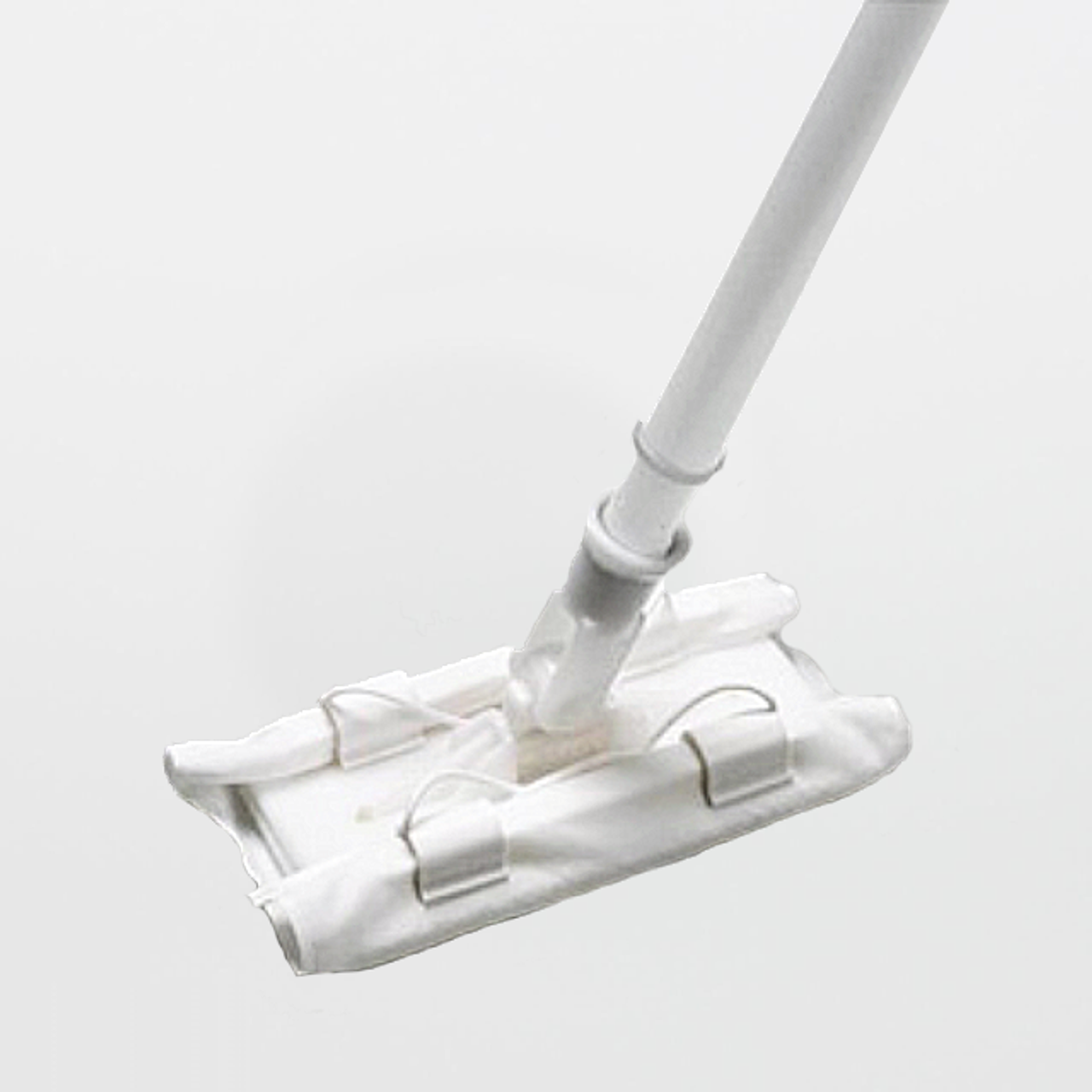
Texwipe TX7103 ClipperMop with 11" x 4" Head Assembly and Telescoping Handle

$203.02
(No reviews yet)
SKU:
TX7103
Availability:
Stock Item
Shipping:
Calculated at Checkout
Type:
Dry Mop
Quantity Option (Each):
1 Mop
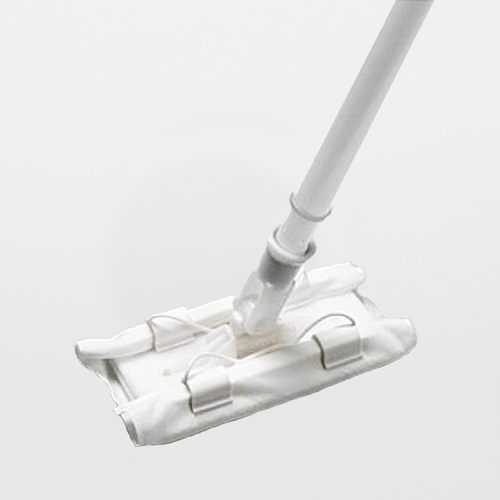
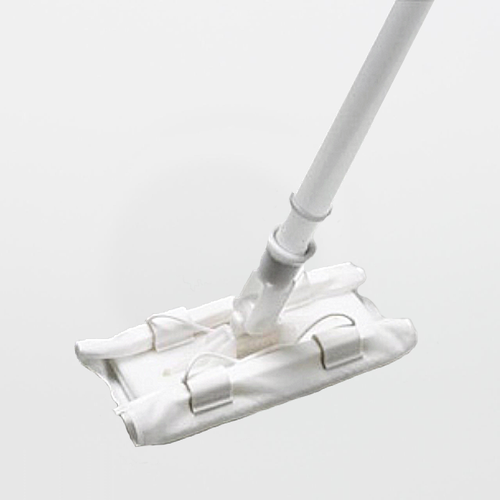
Texwipe TX7103 ClipperMop™ Cleanroom Mop Kit — 11" x 4" Head Assembly with Telescoping Handle
TX7103 is a compact cleanroom mop kit built for controlled cleaning in tight spaces where standard floor mops are too large or too imprecise. The ClipperMop™ system is typically used for small floor areas, corners, and hard-to-reach zones around equipment bases, carts, pass-throughs and perimeter edges. Its smaller 11" x 4" head supports deliberate, technician-controlled strokes that help reduce streaking and redeposition when applying and removing cleaning solutions in critical environments.

For over 35 years, SOS and Texwipe have been close partners, and SOSCleanroom is the authorized Master Distributor of ITW Texwipe for the United States market. That relationship matters when you are standardizing mopping systems: it supports continuity of supply, stable product lineage, and fast access to manufacturer documentation your QA/QC team expects.

Published configuration (TX7103)
  • System type: ClipperMop™ small-head cleanroom mop kit
  • Head assembly size: 11" x 4"
  • Handle: Telescoping handle (length range not published in the provided link text)
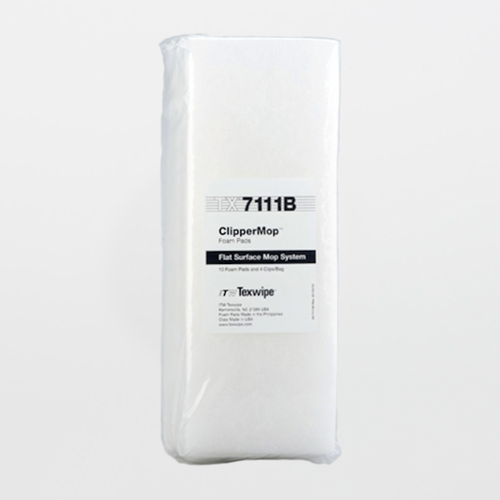
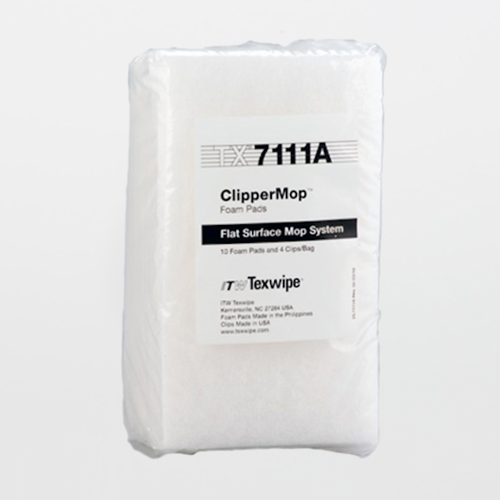
  • Cover compatibility: Uses ClipperMop™ replacement covers/refills designed for the 11" x 4" head (verify the exact cover part numbers used at your site)
  • Sterility: Not stated for TX7103 in the provided link text. If sterile mopping is required, use sterile covers and validated sterile handling rather than assuming sterility readiness.
  • Cleanroom environment: Not stated for TX7103 in the provided link text. Confirm intended ISO class guidance in the Texwipe ClipperMop™ documentation before standardizing.
  • Packaging: Not published in the provided link text. Confirm bagging/cleanroom packaging details on the SOS product page and manufacturer literature.
Small head, big contamination impact
Compact mops are often used where contamination risk is highest: corners, equipment bases and perimeter zones that collect residue and particles. The primary control variable is technique. A small head makes it easier to keep strokes deliberate and to change covers more often, which reduces redeposition and streaking.

Practical cleanroom use guidance (technicians and engineers)
  • Use ClipperMop for “detail zones”: Standardize it for corners, equipment bases, toe-kicks, pass-through thresholds, carts, and perimeter edges. Do not use it as a substitute for full-area floor mopping unless your SOP is built around small-area cleaning.
  • Control the stroke: Use short, overlapping, unidirectional passes. Avoid back-and-forth scrubbing which re-releases captured soil and increases streaking.
  • Change covers aggressively: Detail zones load quickly. Treat the cover as a limited-capacity capture media and change at each zone break or when you see drag lines, haze or visible loading.
  • Keep the head flat: Riding the leading edge concentrates pressure and can leave track marks. A flat head maintains consistent contact and more uniform wetting.
  • Segregate by chemistry: If you rotate disinfectants (quats, peroxides, sporicides, alcohols), dedicate covers/tools by chemistry family to reduce residue interactions and unintended neutralization.
  • Glove discipline: Change gloves before handling fresh covers and avoid solvent-wet gloves contacting the handle grip and head interface.

Compatibility and solution-use notes
  • Chemical compatibility: The kit-level chemical compatibility is driven by the specific cover material you select (polyester, foam, etc.) and the chemistry concentration/contact time. Qualify your exact disinfectant set under site conditions to prevent haze, tackiness and residue.
  • Residue control: In tight zones, over-wetting and pooling are common. Use controlled loading (damp-to-wet, not dripping) and follow any required rinse/final wipe steps defined in your SOP.
  • Surface sensitivity: Around coated equipment and painted bases, avoid abrasive pressure. If you see scuffing, reduce pressure and confirm the cover media is appropriate for that surface finish.
  • Telescoping handle management: Keep the handle lock mechanisms clean and dry. Residue in telescoping joints can bind, shed debris, and transfer contamination to gloves.

Typical performance characteristics 
Quantitative “typical” contamination metrics (particles/ions/NVR) are not published at the kit level in the provided link text. Use the Texwipe ClipperMop™ technical data sheet and the specific cover media documentation to set change-out rules and qualification limits.
Property Typical value Test method (as published)
Head size 11" x 4" Not stated
Handle type Telescoping Not stated
Best-fit application Detail-zone cleaning (perimeter/corners/equipment bases) Use practice

Typical contamination characteristics 
Property Typical value Test method (as published)
Particles / ions / NVR (kit-level) Not published for TX7103 in the provided link text Not stated
Primary contamination risks to control Residue/film, redeposition, and cross-transfer between zones Process-dependent

Common failure modes 
  • Streaking / haze in corners: Often from over-wetting and pooling where airflow is low. Prevent with controlled loading and short, deliberate strokes that do not flood edges.
  • Redeposition: Detail zones load covers quickly. Prevent by changing covers frequently and avoiding re-entering clean zones with a loaded cover.
  • Drag marks at thresholds: Usually from riding the head edge or pushing too hard. Prevent by keeping the head flat and reducing pressure across seams/door tracks.
  • Residue carryover: Caused by chemistry mixing or no rinse where required. Prevent by tool segregation by chemistry and following validated rinse/final wipe steps.
  • Handle joint contamination: Telescoping joints can collect dried chemistry and shed debris. Prevent with routine wipe-down and inspection of locking surfaces.

Storage and handling best practices
  • Keep mop heads and replacement covers in original cleanroom packaging until point-of-use; avoid staging opened covers near traffic corridors.
  • Store the kit dry and protected; do not leave wet covers on the head between shifts (odor, residue and microbial risk in non-sterile workflows).
  • Assign the mop to a zone and label it (room/chemistry). Small mops move easily and are frequently cross-used unless controlled.
  • Inspect the head edges for burrs or sharp features that can abrade covers and increase shedding.
Documentation 
SOS product page (TX7103): Click Here
SOS-hosted Texwipe datasheet (ClipperMop™ System, includes TX7103): Click Here
Texwipe manufacturer page (ClipperMop™ / TX7103): Click Here
If you have any questions please email us at Sales@SOSsupply.com or give us a call at (214)340-8574.

OR check out the AI ChatBot powered by SOSCleanroom data libraries - give it a try!
 
THIS IS NEW FOR 2026!

© 2026 SOS Supply. All rights reserved.
The Technical Vault Cleanroom Mopping Systems & Techniques (Applied Use Case: Texwipe™ TX7103 ClipperMop™ — 11" x 4" Small-Head Kit)

Purpose & Scope

The Texwipe™ TX7103 ClipperMop™ is a compact cleanroom mop kit designed for detail-zone cleaning where full-size floor mops are too large or imprecise—corners, perimeter edges, thresholds, equipment bases, carts, and pass-through areas. The small head format supports deliberate, technician-controlled strokes that help reduce streaking and redeposition when applying or removing cleaning solutions in critical environments.

Visual Aids (Technique, Zoning, Lifecycle)

Use this graphic as a quick training and SOP reinforcement tool: unidirectional strokes, zone-based tool control, and mop head lifecycle discipline.

Cleanroom mopping technique (unidirectional vs figure-8), cleanroom zoning map concept, and mop head lifecycle diagram

Implementation note: Diagram intent is educational. Align technique, zoning, and change-out rules to your facility SOP and validated cleaning program.

Published Configuration (TX7103)

  • System type: ClipperMop™ small-head cleanroom mop kit
  • Head assembly size: 11" x 4"
  • Handle: telescoping handle
  • Type: dry mop kit (covers/refills determine the working media)

Important: sterility level, cleanroom class suitability, and quantitative contamination metrics are typically defined at the cover/refill level (media + packaging), not the kit level. Confirm the exact cover media, packaging, and any sterile handling requirements in your site documentation before standardizing.

Why Small-Head Mops Are High-Impact in Contamination Control

Compact mops are frequently deployed in zones that accumulate residue and particles: corners, wall-floor junctions, and equipment bases. These areas often have reduced airflow and are prone to pooling. The key control variable is technique—short, deliberate strokes, controlled loading (damp-to-wet, not dripping), and frequent cover change-out to minimize redeposition.

Technique Guidance (Detail-Zone Cleaning)

Stroke Discipline

  • Use unidirectional strokes where possible; avoid reworking the same lane with a loaded cover.
  • Maintain controlled overlap (10–20%) and avoid “scrubbing” behavior that increases redeposition risk.
  • Do not flood corners—pooling is a primary cause of haze/streaking in low-airflow zones.

Saturation Control

  • Load covers to damp-to-wet, not dripping.
  • Follow any rinse / final wipe steps required by your disinfectant program and SOP.
  • Detail zones load covers quickly—plan for more frequent cover change-out than open floor areas.

Telescoping Handle Management (Hidden Contamination Risk)

Keep handle lock mechanisms clean and dry. Dried chemistry and residue in telescoping joints can bind, shed debris, and transfer contamination to gloves during adjustment. Incorporate joint wipe-down and inspection into the cleaning tool SOP.

Common Failure Modes (What to Train Out)

  • Streaking / haze in corners: typically from over-wetting and pooling; correct with controlled loading and shorter lanes.
  • Redeposition: detail zones load covers quickly; change covers frequently and do not re-enter clean lanes with a loaded cover.
  • Drag marks at thresholds: often from riding the head edge or excess pressure; keep head flat and reduce downforce.
  • Residue carryover: chemistry mixing or skipping rinse steps; segregate tools by chemistry and follow validated sequences.
  • Handle joint contamination: dried chemistry in telescoping joints; prevent with routine wipe-down and inspection.

Storage, Segregation & Handling

  • Keep covers/refills in original cleanroom packaging until point-of-use.
  • Store the kit dry and protected; do not leave wet covers on the head between shifts unless the workflow is specifically controlled and justified by SOP.
  • Assign the kit to a specific zone and label it (room + chemistry). Small mops are easy to cross-use unless controlled.
  • Inspect head edges and attachment points for burrs/sharp features that can abrade covers and increase shedding.

Disclaimer: This Technical Vault content is provided for educational purposes only. Manufacturer instructions, facility SOPs, and site-specific risk assessments must always take precedence. Sterility, cleanroom suitability, and quantitative contamination metrics are determined by the complete system configuration (including covers/refills and packaging) and validated site practice.

© SOSCleanroom. All rights reserved.