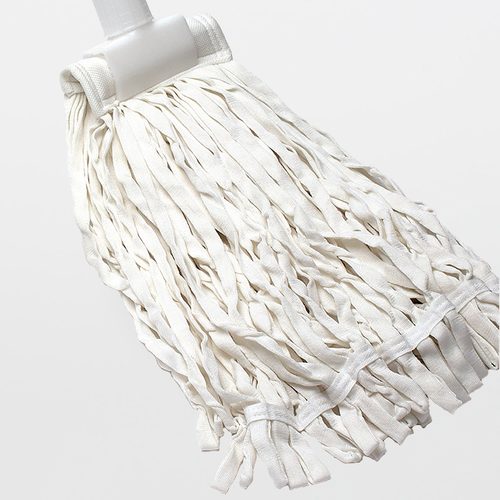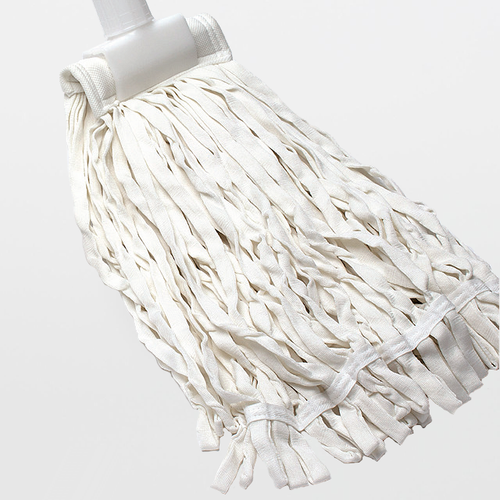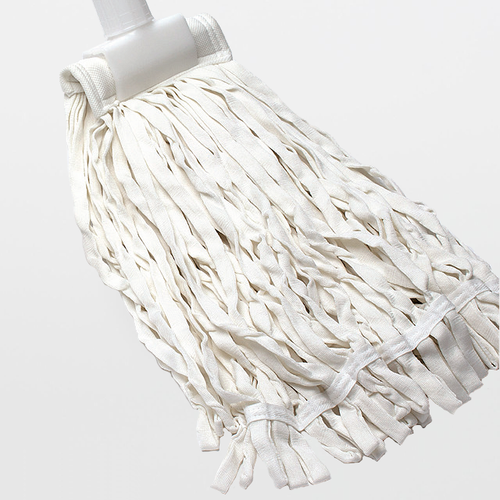
Texwipe TX716R BetaMop Tubular Polyester String Replacement Heads (Refills)

$325.67
(No reviews yet)
SKU:
TX716R
Availability:
7 - 10 Business Days
Shipping:
Calculated at Checkout
Quantity Option (Case):
6 Polyester String Mop Heads
Type:
Dry Mop
Texwipe TX716R BetaMop™ Polyester String Replacement Mop Heads (Refills) — Tubular 100% Polyester, 6/Case
TX716R is a set of replacement mop heads for the Texwipe BetaMop™ floor-cleaning system. The refill head is a knitted, 100% polyester string design constructed from tubular polyester strands to deliver high sorptive capacity while supporting low fiber and particle release for controlled-environment floor maintenance. Use it for routine floor cleaning, applying and removing disinfectant solutions, and spill control where mop technique and solution discipline directly impact residue, redeposition, and cleanliness outcomes.

For over 35 years, SOS and Texwipe have been close partners, and SOSCleanroom is the authorized Master Distributor of ITW Texwipe for the United States market. That relationship matters when you are standardizing critical-environment mopping: it supports continuity of supply, stable product lineage, and fast access to the manufacturer documentation your QA/QC team expects.

Published configuration (TX716R)
  • Product type: BetaMop™ polyester string mop head refill
  • Head construction: Knitted 100% polyester; tubular/continuous-filament polyester strands (tubular string format)
  • Capacity: 1.3 liters/head
  • Motion control: Tailbands on the head for improved control during passes and turns
  • Packaging: 6 heads/case; non-sterile; double-bagged (as published)
  • System compatibility: Designed for BetaMop™ hardware (e.g., TX7106/TX7125 fiberglass, TX7092 stainless steel) and most wring-bucket systems; compatible with other cleanroom string-mop handles designed for string mops
  • Cleanroom handling: Mop heads are cleanroom laundered and packaged (as published)
  • Autoclave: Autoclave safe / steam autoclave sterilizable (as published). If sterile use is required, consider the sterile BetaMop™ polyester string refill option (STX716R) rather than relying on in-house sterilization.
  • Cleanroom environment: ISO Class 3–7; EU Grade A–D (as published). Sterile is recommended for EU Grade A–B environments (as published).
  • Rewash cycles: Can be rewashed up to 10x (as published)
Low fiber and particle release — and the reality check
This refill head is designed for critical environments with low fiber and particle release (as published). Even so, no floor mop is truly zero-shedding or zero-residue in real use. The biggest contamination drivers are usually technique and chemistry: over-wetting, dirty solution, wringer carryover, and dragging a loaded head across a clean zone.

Practical cleanroom use guidance (technicians and engineers)
  • Zone control first: Assign dedicated mop heads by room/zone and by chemistry (e.g., disinfectant vs. rinse) to prevent cross-transfer. Do not move a used head from a lower-class area into a higher-class area.
  • Two-bucket discipline: When your SOP allows, use a two-bucket method (one for clean solution, one for rinse/soil capture) to reduce redeposition and streaking. Single-bucket methods are higher risk for film formation and carryback.
  • Control wetness: Over-saturation is a common root cause of residue, pooling at seams, and long dry times. Wring to a consistent damp condition (repeatable number of wringer strokes or a timed wring), then maintain that state across the work area.
  • Pass pattern: Use controlled overlapping passes (10–20% overlap) and keep the head moving. Avoid stopping and pivoting on the floor, which creates drag marks and concentrated residue lines.
  • Edge control: Keep the head and strings off walls and door seals to avoid loading fibers/paint fines, then transferring them back onto the floor.
  • Change-out frequency: Treat the head as a consumable. Replace when it becomes visibly loaded, when solution turns cloudy, or at defined area coverage limits per SOP. If you can smell or feel chemical buildup, you are likely redepositing a film.
  • Clamp and handle hygiene: The quick-open clamp is an efficiency advantage, but it is also a contamination trap if not cleaned. Inspect the clamp interface during head changes; remove trapped debris and dry residues before reloading.

Compatibility and process notes
  • Disinfectants and cleaning solutions: TX716R is intended for applying and removing solutions including disinfectants (as published). If your site uses quats, peroxides, sporicides, or alcohol blends, qualify the full process (bucket, wringer, concentration control, and rinse step) to prevent visible film, sticky floors, or residue that can trap particles.
  • Autoclave vs. sterile supply: Autoclave safe is not the same as sterile-at-point-of-use. If a sterile mop head is required for the task, use a sterile product option with published sterility assurance and packaging controls (e.g., sterile BetaMop™ refill variants) rather than relying on ad hoc repackaging and in-house cycles.
  • Rewash and reuse: If you plan to rewash (up to 10x as published for this style family), control detergent selection, rinse quality, and drying. Residual surfactant and hard-water salts are common causes of streaking and post-dry haze.
  • Surface risk: On high-gloss epoxy and coated floors, reduce drag by maintaining consistent dampness. Excess pressure and over-wringing can increase abrasion and leave directional marks that look like contamination.

Typical performance characteristics 
These are published attributes intended to support process planning and qualification (not a substitute for your site-specific validation).
Property Published value Method / notes (as published)
Absorbent capacity 1.3 liters/head Manufacturer published attribute
Autoclave safe Yes Manufacturer published attribute
Rewash cycles Up to 10x Manufacturer published attribute for this style family
Recommended cleanroom range ISO Class 3–7; EU Grade A–D Manufacturer published environment guidance

Typical contamination characteristics 
Property Published value Method / notes (as published)
Fiber and particle release Low (qualitative; not quantified) Manufacturer describes low contamination characteristics; no quantitative table published in the linked datasheets
Sterile option controls (if sterile product is selected) Sterile versions are gamma irradiated to a Sterility Assurance Level of 10-6 (as published for sterile BetaMop™ products) Manufacturer sterile documentation and certifications are referenced by Texwipe for sterile BetaMop™ offerings

Common failure modes 
  • Streaking / drag marks: Typically driven by inconsistent dampness, over-wringing, stopping on the floor, or pushing a loaded head too far. Prevent with controlled saturation, overlap discipline, and defined area limits per head.
  • Residue / film formation: Often caused by chemistry carryover, dirty solution, or no rinse step where one is needed. Prevent with two-bucket discipline (when permitted), concentration control, and documented rinse practices.
  • Redeposition: When soil captured by the head returns to the floor due to infrequent solution changes or re-entering clean zones with a used head. Prevent with zone segregation and change-out rules.
  • Fiber release from mechanical abuse: Triggered by catching strings on floor drains, grates, or sharp edges, or by aggressive scrubbing on rough floors. Prevent by inspecting the route, avoiding snag points, and replacing damaged heads immediately.
  • Cross-contamination at the clamp: Debris trapped in the clamp interface can seed particles into clean zones. Prevent with routine clamp cleaning and inspection during each head change.

Storage and handling best practices
  • Keep refills in original double-bag packaging until point-of-use; stage only what you need for the shift to reduce exposure and handling.
  • Store sealed cases off the floor, away from chemical vapors and cardboard dust sources; do not stage open bags in high-traffic gowning corridors.
  • If reusing, implement a defined laundry and rinse process with controlled water quality; dry fully before rebagging to prevent odor, residue, and microbial growth.
  • After use, remove the head without dragging strings across adjacent clean surfaces; contain immediately for laundering or disposal per SOP.
Documentation 
SOS-hosted Texwipe datasheet (BetaMop™ II Mop System, Effective: February 2013): Click Here
SOS-hosted Texwipe technical data sheet (BetaMop™ Series TDS, includes TX716R): Click Here
Texwipe manufacturer TDS (BetaMop™ Series, TEX-LIT-TDS-002-11/21): Click Here
Texwipe manufacturer page (TX716R): Click Here
If you have any questions please email us at Sales@SOSsupply.com or give us a call at (214)340-8574.

OR check out the AI ChatBot powered by SOSCleanroom data libraries - give it a try!
 
THIS IS NEW FOR 2026!

© 2026 SOS Supply. All rights reserved.