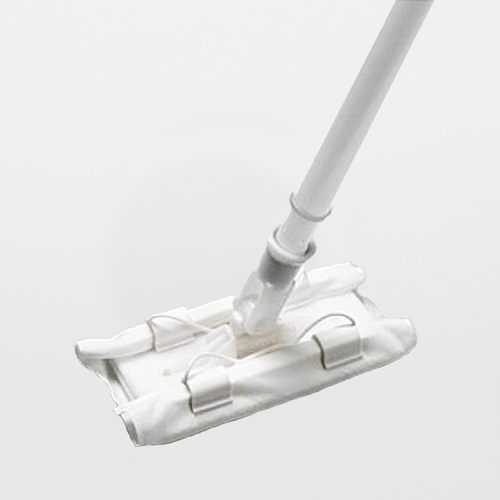
Texwipe TX7113 ClipperMop 11" Replacement Head (HEAD ONLY)

$160.02
(No reviews yet)
SKU:
TX7113
Availability:
10 - 14 Business Days
Shipping:
Calculated at Checkout
Type:
Dry Mop
Texwipe TX7113 ClipperMop™ Replacement Head Assembly — 11" x 4" Head (Non-Sterile)
TX7113 is the replacement head assembly for the Texwipe ClipperMop™ system, used to secure one or multiple cleanroom wipers for controlled wiping of floors, walls, ceilings, isolators, hoods, and other confined areas. The ClipperMop head is designed to attach standard 12" x 12" cleanroom wipers (ClipperMop 11" size system) so teams can standardize on validated wipers while maintaining disciplined, repeatable mopping mechanics.

For over 35 years, SOS and Texwipe have been close partners, and SOSCleanroom is the authorized Master Distributor of ITW Texwipe for the United States market. That relationship matters in critical environments: it supports continuity of supply, stable product lineage, and fast access to the manufacturer documentation your QA/QC team expects.

Published configuration (TX7113)
  • Part number: TX7113
  • Component: ClipperMop™ replacement head assembly only (non-sterile)
  • Head size (as published): 11" x 4" (27.9 cm x 10 cm)
  • System compatibility: For use with the 11" ClipperMop™ kit (TX7103)
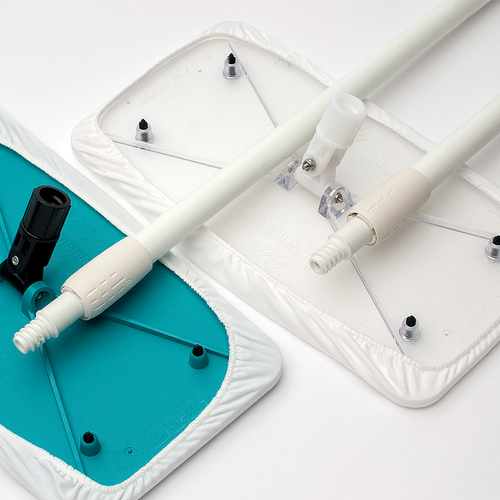
  • Head construction (as published): Celcon® thermoplastic mop head with tethered clips
  • Clips/fastening method (as published): Four non-abrasive polyethylene tether clips secured with nylon fasteners for rapid wiper changes
  • Conformable backing (as published): Flexible polyester pad (also referenced as a replaceable polyester foam pad in ClipperMop documentation)
  • Case packaging (as published): 1 replacement head / case
  • Cleanroom environment (as published for ClipperMop series): ISO Class 3–7; EU Grade A–D
Control point: the wiper is the “wear surface”
TX7113 is the tool head, but your wiper selection and change frequency drive contamination control. No wiper is truly zero-lint. Use qualified low-linting cleanroom wipers, load them without overhandling, and change them before they redeposit residue or drag particles across the surface.

System compatibility map (build and maintain your ClipperMop™)
Component Part number(s) What it does Published packaging
Replacement head assembly (this item) TX7113 Restores the ClipperMop™ head assembly for continued wiper-based mopping 1 replacement head / case
Compatible kit (11" head system) TX7103 ClipperMop™ kit with 11" x 4" head assembly and telescoping handle 1 kit / case
Replacement pads (11" ClipperMop™) TX7111B Polyester replacement pads/kit used with the 11" ClipperMop™ size 10 pads & fasteners per bag; 10 bags / case (as published)
Replacement clips/fasteners TX7102C Polyethylene tether clips and nylon screws for TX7102/TX7103/TX7112/TX7113 4 clips / bag; screws per bag; 20 bags / case (as published)

Practical cleanroom use guidance (technicians and engineers)
  • Wiper loading discipline: Pre-stage a clean stack, load the wiper with minimal folding/handling, and secure all four clips so edges do not flap (flapping edges shed and redeposit).
  • Wet control: If using pre-wetted wipers or applying solution, aim for “damp-cleaning” rather than saturation. Over-wet mopping drives streaking, slows dry-down, and can mobilize residues.
  • Stroke mechanics: Use straight, overlapping strokes. Rotate/flip the wiper face to a clean area before you see gloss change, drag, or visible residue lines.
  • Edge/constraint areas: In corners, around legs, and under lips, slow down and keep the head low-profile and flat. Do not “roll” the head onto the edge of the thermoplastic body.
  • Change frequency: Treat the wiper as single-use per defined zone/segment (per CCS). When in doubt, change early; reusing a loaded wiper is a common root cause of recontamination.
  • Post-use containment: Remove the wiper without snapping it (snap aerosolizes). Bag-out per waste stream, then wipe down/contain the tool before leaving the room or moving zones.

EU GMP Annex 1 alignment notes (how this supports a CCS)
  • Risk-based CCS execution: A wiper-based mop head supports defined “single-pass” or “defined-segment” wiping strategies in aseptic/sterile manufacturing where redeposition risk must be controlled.
  • Validated cleaning/disinfection: Pair the head with qualified wipers and your validated disinfectant set (including sporicidal rotation where required). Follow validated contact times and avoid re-wetting already-cleaned zones.
  • Material transfer discipline: Keep TX7113 in original packaging until use, stage in a controlled transfer bin, and prevent cross-zone transport without defined wipe-down/bag-out steps.
  • Documentation and traceability: Standardize on a defined tool build (head + clips + pads + wiper type) so deviations and investigations can tie back to known configurations.

Compatibility and wipe-down notes
  • Wiper compatibility (as published): ClipperMop™ is designed for standard 9" x 9" or 12" x 12" cleanroom wipers; the 11" system is commonly paired with 12" x 12" wipers.
  • Dry vs. pre-wetted use (as published): The system may be used with dry or pre-wetted wipers (and sterile or non-sterile wipers, depending on your program requirements).
  • Sterilization compatibility (as published for ClipperMop system): ClipperMop documentation describes compatibility with sterilization by gamma irradiation, chemicals, vaporized hydrogen peroxide (VHP), or ethylene oxide (EO). Qualify TX7113 under your site conditions before standardizing.
  • Autoclave: Not stated for TX7113 replacement head assembly. Use only when an autoclave-rated configuration is explicitly published and qualified by your CCS/SOP.

Technical snapshot (SEO-friendly reference)
Attribute Published value Notes (qualification context)
Head size 11" x 4" (27.9 cm x 10 cm) Build your CCS around the wiper size and the surface segment length per change
Head body material Celcon® thermoplastic (as published) Confirm chemical compatibility with your disinfectant set before deployment
Clip design 4 polyethylene tether clips with nylon fasteners (as published) Clip engagement is a primary contamination-control step (prevents drag, flapping, redeposition)
Wiper modes Dry, pre-wetted, sterile or non-sterile wipers (as published) Select sterile/pre-wetted based on zone grade, CCS, and validated cleaning process
Cleanroom environment ISO Class 3–7; EU Grade A–D (as published for series) Use within your validated mopping SOP, zoning, and environmental monitoring strategy

Common failure modes 
  • Streaking / residue lines: Typically from over-wet wipers, insufficient contact time discipline, or pushing solution rather than removing it. Prevent with controlled wetting and defined “clean-to-dirty” passes.
  • Wiper slippage / flapping edges: Caused by incomplete clip engagement or torn wiper corners. Prevent by securing all four clips and replacing wipers at the first sign of tearing.
  • Particle shedding / redeposition: Usually from reusing loaded wipers or dragging a saturated wiper across dry surfaces. Prevent with early change frequency and segment-based cleaning.
  • Cross-zone carryover: Tool moved between areas without defined wipe-down/bag-out. Prevent with transfer discipline aligned to your CCS and room zoning rules.
  • Static attraction (low humidity): Can pull fines to the wiper face and then redeposit. Prevent by following site ESD/ionization controls and avoiding rapid rubbing of plastics against garments.

Storage and handling best practices
  • Keep TX7113 in original packaging until introduction into the controlled area.
  • Stage the head assembly in a dedicated, clean transfer bin; avoid placing it on floors, carts with mixed-use tools, or non-qualified shelving.
  • Inspect clips and the pad interface before each use; damaged clips or pad surfaces are a frequent cause of wiper instability and redeposition.
  • Maintain tool segregation by zone (or implement validated wipe-down/bag-out) to prevent cross-contamination between areas.
Documentation 
SOS-hosted Texwipe datasheet (ClipperMop™ DS-7102, Effective: December 2009): Click Here
Texwipe ClipperMop™ Technical Data Sheet (US-TDS-058 Rev. 11/21): Click Here
Texwipe manufacturer page (TX7113): Click Here
Last updated: January 9, 2026
If you have any questions please email us at Sales@SOSsupply.com or give us a call at (214)340-8574.

Check out the AI ChatBot powered by SOSCleanroom data libraries - give it a try!
 
THIS IS A NEW FEATURE FOR 2026!

© 2026 SOS Supply. All rights reserved.
The Technical Vault Detail-Zone Tool Control (Applied Use Case: Texwipe™ TX7113 ClipperMop™ 11" Replacement Head — Head Only)

Purpose & Scope

The TX7113 is the replacement head for the ClipperMop™ 11" platform—used for detail cleaning, controlled lane work, and perimeter areas where slightly wider coverage than a 7" head is needed without moving to a full-size flat mop. In these applications, head condition directly influences pressure distribution, edge contact, and lane consistency.

Visual Aids (Technique, Zoning, Lifecycle)

Use this graphic as a training reinforcement tool: unidirectional strokes, zone-based tool control, and head lifecycle management.

Cleanroom mopping technique (unidirectional vs figure-8), cleanroom zoning map concept, and mop head lifecycle diagram

Implementation note: Head-only components are durable, but still require inspection, segregation, and controlled handling in critical zones.

Why an 11" Head Is a Control Point (Not Just “Bigger”)

The wider the head, the more sensitive the system becomes to flatness and alignment. An 11" head bridges more surface area, which is helpful for controlled lanes—but it also means that even minor warping or residue buildup can create visible striping or uneven wetting. Head inspection and seating discipline become increasingly important as width increases.

  • Pressure distribution: small deviations are magnified across a wider contact zone.
  • Edge contact: consistent seam cleaning depends on head geometry and alignment.
  • Lane consistency: head flatness supports repeatable overlap and uniform appearance.

Inspection Points (Before Use & During Troubleshooting)

  • Flatness: confirm the head sits flat across its full width; warping causes rail lines.
  • Edges/corners: inspect for nicks or burrs that can snag media or prevent seam contact.
  • Attachment interface: ensure secure coupling to the handle and stable head control.
  • Residue traps: inspect seams and fastening points for dried chemistry buildup.
  • Retention function: confirm pads/covers stay secure through full strokes and repositioning.

Technique Implications (11" ClipperMop Head)

  • Unidirectional lanes: maintain consistent overlap (typically 10–20%) to prevent missed strips.
  • Head-flat discipline: avoid edge riding during turns or repositioning.
  • No backtracking with loaded media: reposition without dragging used material across cleaned surfaces.
  • Controlled pressure: excessive downforce can exaggerate streaking on wider heads.

Storage, Segregation & Cross-Zone Prevention

Larger heads are often shared to “save time,” but sharing increases cross-contamination risk. A simple control model—dedicate, label, and protect—reduces both risk and investigation workload.

  • Dedicate by room/zone: avoid moving heads between rooms unless SOP defines decontamination.
  • Protected storage: off-floor, off-wall racks or carts.
  • Routine wipe-down: include head body and fastening points in cleaning SOP.

Objective Replacement Criteria (When to Retire an 11" Head)

  • Warping: loss of flatness causing persistent striping or uneven wetting.
  • Edge damage: burrs or deformation that interfere with seam and corner contact.
  • Interface wear: looseness at handle connection or retention failure.
  • Persistent residue: dried chemistry buildup that cannot be removed via SOP-defined cleaning.

SOP & Audit Readiness Checklist (11" ClipperMop Heads)

  • Define inspection points (flatness, edges, interfaces, residue traps, retention).
  • Define head wipe-down and protected storage rules.
  • Dedicate and label heads by room/zone and chemistry family where applicable.
  • Define objective retirement criteria (warping, damage, looseness, residue).
  • Include head condition in root-cause analysis for streaking and lane defects.

Disclaimer: This Technical Vault content is provided for educational purposes only. Manufacturer instructions, facility SOPs, and site-specific risk assessments must always take precedence. Cleanroom suitability and contamination performance are determined by the complete system configuration (head + pads/covers + chemistry + handling) and validated site practice.

© SOSCleanroom. All rights reserved.