The pre-wetted wipe that prevents “dirty solvent” failures: controlling wetness, carryover, and repeatability with FREE-SAT 7" x 7" (70% IPA / 30% DIW)
The Technical Vault | By SOSCleanroom
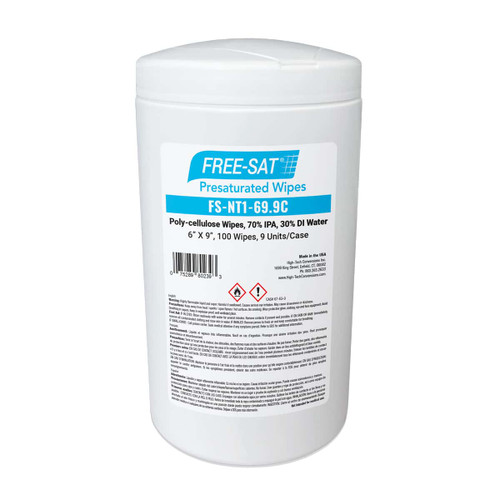
In controlled cleaning, the wipe rarely causes the first mistake. The solvent workflow does: over-wetting a surface, re-dipping into a shared reservoir, dragging dissolved soil into a second feature, or letting a “damp” wipe become a flooded interface that dries into a film line. FREE-SAT 7" x 7" Poly-cellulose Presaturated Wipers (70% IPA / 30% DI Water) are built to reduce those failure modes with a controlled, repeatable wetting condition and a one-hand, resealable dispensing format.
The control advantage is consistency. When wetness, handling, and wipe presentation are standardized, the cleaning step is less likely to drift into “technique by habit,” and more likely to stay inside a defined process window across shifts.
The Operational Problem It Solves
Pre-wetted wipes exist to prevent the highest-frequency contamination errors:
- Inconsistent wetness: “damp” varies by operator when solvent is applied manually.
- Cross-contamination: re-dipping or using a shared reservoir turns clean solvent into a soil transport mechanism.
- Carryover into seams and corners: over-wet wiping floods joints and spreads dissolved residues.
- Uncontrolled exposure: open solvent containers increase evaporation, dilution drift, and handling risk.
FREE-SAT’s resealable tub presentation supports a tighter workflow: remove one wipe, close the tub, clean the surface, then discard. No re-dip loop, no “mystery wetness,” and fewer opportunities to spread what you are trying to remove.
What It’s For
FREE-SAT 7" x 7" wipes are used for wiping surfaces and equipment in a lab or controlled environment, and for removing residues such as disinfectants, adhesives, and process films using the 70% IPA / 30% DI water blend.
They are also commonly used for cleaning notebooks, phones, and other supplies introduced into controlled areas, where the practical requirement is “clean it without creating a new residue line.”
Decision Drivers (What Buyers Should Care About First)
- Controlled wetness: pre-saturation reduces operator-to-operator variability and helps prevent over-wet flooding that dries into film.
- 70% IPA / 30% DIW behavior: water content can improve wetting and removal of certain soils, but can increase spotting risk on sensitive optics if over-wet and allowed to dry unevenly.
- Poly-cellulose nonwoven: designed to be tough, absorbent, and abrasion resistant for routine wipe-downs.
- Dispensing discipline: resealable tub supports one-hand removal and faster close-out, reducing “wipe exposure time.”
- Traceability posture: lot-to-lot traceability supports investigations when results drift.
Materials and Construction: Practical Implications
FREE-SAT uses a nonwoven poly-cellulose wipe pre-saturated with 70% IPA / 30% DI water. In practice, the material choice matters less than the interaction between fabric, saturation level, and technique.
Pre-wet reality: a pre-wetted wipe reduces one failure mode (manual wetting variability) but can introduce another if operators treat it like a “rinse cloth.” The control is defined use: wipe, lift, discard — not repeated rubbing until dry-down marks appear.
Terminology discipline: no wipe is truly lint-free. The operational goal is low-linting behavior under your actual surface finish, pressure, and stroke discipline. If you scrub aggressively over sharp edges or burrs, any fabric can become a particle generator.
Safety posture: IPA blends are flammable. Pre-wetting reduces open-bottle handling, but does not remove facility requirements for ventilation, ignition-source control, and approved storage practices.
Specifications in Context
| SKU |
FS-NT1-77 |
| Wipe size |
7" x 7" |
| Saturation |
70% IPA / 30% DI Water |
| Material |
Nonwoven poly-cellulose |
| Packaging |
Tub: 100 wipes | Case: 12 tubs (1200 wipes) |
| Cleanroom positioning |
ISO 5–6 (as positioned on the product page) |
Treat performance claims as process inputs, not guarantees. In controlled work, the controlling variables are wetness level, pressure, stroke pattern, and discard timing — especially when cleaning around seams, labels, adhesives, and high-energy polymer surfaces.
Cleanliness and Performance: What Matters Operationally
-
Wetness control beats “more solvent”: if a meniscus forms ahead of the wipe, you are spreading soil. Tighten the method: shorter strokes, lighter pressure, and faster discard.
-
70/30 dry-down behavior: the water fraction can slow evaporation and increase spotting risk on optics and glossy finishes. If spotting is observed, reduce dwell time, reduce wipe pressure, and consider a defined finishing step (process-dependent).
-
Edge control and redeposition: use parallel, overlapping passes and lift off the surface at the end of each stroke. Avoid back-and-forth “polishing” with a loaded section of the wipe.
-
Controlled handling: keep the tub closed between pulls, stage only the working wipe, and avoid laying pre-wetted wipes on benches where they collect ambient contamination.
Why Packaging and Traceability Matter
The tub format supports disciplined use: open, remove one wipe, close. That reduces wipe exposure time and limits evaporation compared with “open stack” practices.
Lot traceability is the investigation tool. When residue results drift or a cleaning step starts leaving film lines, lot traceability helps you separate consumable variation from technique drift, solvent grade changes, or upstream soil changes.
Best-Practice Use: Operator-Level Discipline
- Work cleanest to dirtiest. Define the boundary so you do not drag soils across the entire surface.
- Use one-direction, parallel, overlapping passes. Avoid circular scrubbing unless your SOP requires it.
- Do not re-wet with external solvent. The wipe is already saturated; adding solvent is a common cause of pooling and streaking.
- Flip or refold to a fresh contact area early. Once the wipe section becomes glossy or draggy, it is likely loaded.
- Close the tub between pulls. Treat “open time” as a contamination variable you control.
Common Failure Modes—and How to Prevent Them
- Streaking or film after dry-down: usually over-wetting and reworking the same area. Prevent with shorter strokes, lighter pressure, and faster discard.
- Spotting on glossy finishes or optics-adjacent parts: water fraction plus uneven evaporation. Prevent with reduced dwell time and avoiding flooded edges.
- Cross-contamination: touching the wipe to benches or gloves, or leaving the tub open. Prevent with closed-tub discipline and clean staging.
- Technique drift: “one wipe does everything” behavior. Prevent with defined wipe-per-task rules and documented work instructions.
Closest Competitors (Limited and Relevant)
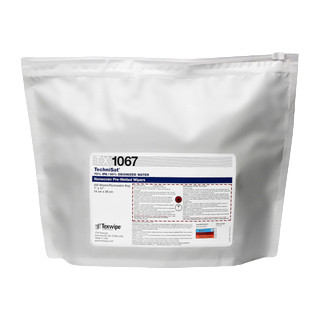
Texwipe TechniSat-style pre-wetted wipes (70% IPA families): a strong comparator when you want cleanroom-brand documentation depth and similar alcohol blends. Compare packaging format (tub vs. pouch), wipe construction, and your residue/spotting acceptance endpoint.
Kimtech pre-saturated 70% IPA wipes: a common alternative in labs and controlled environments. Compare extractables posture, wipe durability, and how the dispensing format supports your handling discipline.
Where This Product Fits in a Controlled Cleaning Program
FREE-SAT 7" x 7" 70/30 is a practical “routine control” wipe: equipment wipe-downs, bench and cart cleaning, general residue removal, and controlled introduction cleaning (notebooks, phones, tools) where the primary risks are wetness inconsistency and cross-contamination from shared solvent handling. If your endpoint becomes validation-sensitive (trace residues, method-defined sampling, TOC/HPLC recovery), separate cleaning wipes from sampling consumables and follow a written sampling protocol matched to the analytical method.
Source basis
- SOSCleanroom product page: FREE-SAT 7" x 7" Poly-cellulose Presaturated Wipers, 70% IPA / 30% DI Water (SKU, packaging, material, applications, cleanroom positioning, traceability statements).
- Controlled-environment best practices applied: one-direction strokes, overlap discipline, wetness control, discard/rotation discipline, and separation of cleaning tools vs. sampling tools in validation-sensitive workflows.