Texwipe TX3360 HPLC Cleaning Validation Kit for 12 Samples

$127.75
(No reviews yet)
SKU:
TX3360 KIT
Availability:
Stock Item
Shipping:
Calculated at Checkout
Quantity Option (Kit):
12 Vials with 12 Blank Labels and 30 (TX718) Swabs Per Kit
Quantity Option (Case):
18 Kits Per Case
Type:
Dry Swab
Family:
TOC Validation
Material:
Polyester

Texwipe TX3360 HPLC Cleaning Validation Kit for 12 Samples (TX718 Alpha Polyester Sampling Swabs + 40 mL Vials)

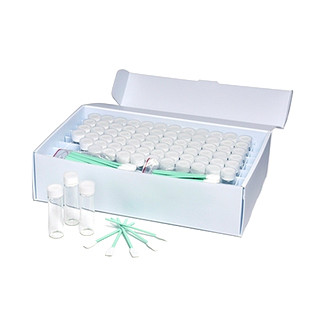
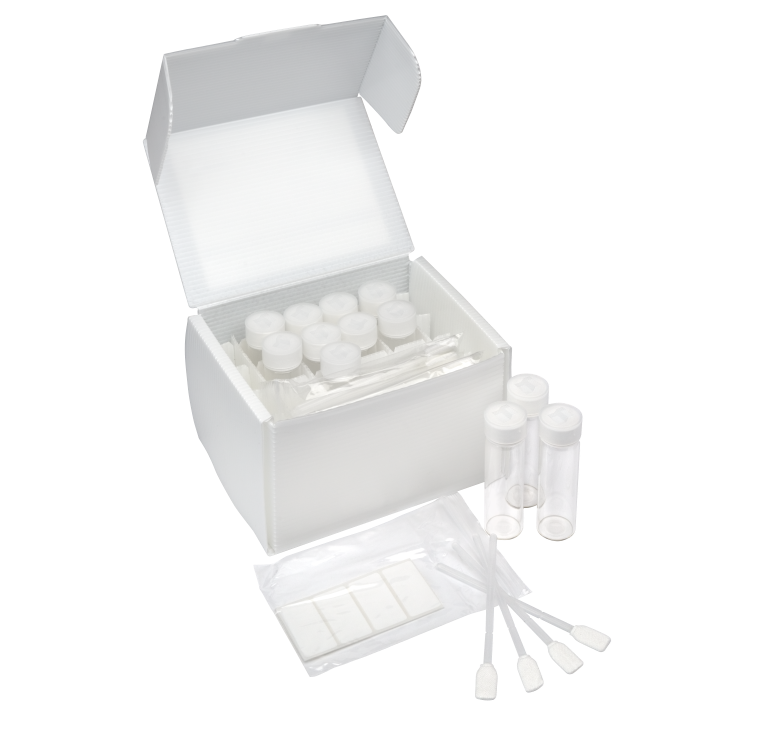
Texwipe TX3360 is an organized HPLC/UV-Vis cleaning validation sampling kit built to reduce sampling variability, handling contamination, and chain-of-custody gaps when collecting surface residue samples for chromatography-based analysis. Each kit combines pre-washed 40 mL clear borosilicate glass vials with bonded septa caps, TX718 large Alpha® polyester knit sampling swabs with a notched break-away handle, and cleanroom-compatible vial labels—all assembled in a clean, double-bagged format inside a cleanroom-compatible polypropylene box for secure transport from production to the lab.

Validation-program note: TX3360 is widely selected when teams need repeatable, audit-friendly surface sampling for HPLC/UV-Vis (and related chromatography/separation techniques) and want the sampling kit to behave like a controlled input—not a variable that can distort recovery, blanks, and trace residue decisions.

Specifications:
  • SKU: TX3360 KIT
  • Kit purpose: Surface & cleaning validation sampling kit for HPLC/UV-Vis residue analysis workflows
  • Kit includes (per kit): (12) 40 mL clear vials with bonded septa caps; (30) TX718 large Alpha® polyester sampling swabs; (12) blank vial labels
  • Kit packaging: Double-bagged kit packed in a cleanroom-compatible polypropylene box
  • Quantity option (Kit): 12 vials with 12 blank labels and 30 (TX718) swabs per kit
  • Quantity option (Case): 18 kits per case
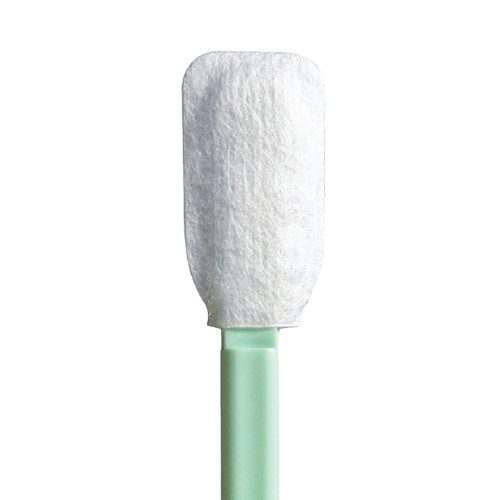
  • Swab head material (TX718): Polyester knit (low titanium dioxide), low-linting system (process-dependent; no swab is truly “lint-free” in every condition)
  • Swab head bond (TX718): Thermal (no adhesive)
  • Handle material (TX718): 100% polypropylene, translucent, notched break-away design
  • Vial/cap design: One-piece cap-and-septum design; polyethylene over-cap protects septum surface until analysis
  • Septum thickness: 1.34 mm (0.053")
  • Shelf life: 5 years from date of manufacture (non-sterile)
  • Storage conditions: Ambient 59°F (15°C) to 86°F (30°C)
  • Weight: 1.00 lb
  • Availability: Stock item

TX718 Swab Dimensions (included in TX3360)

  • Head width: 12.70 mm (0.500")
  • Head thickness: 4.20 mm (0.165")
  • Head length: 25.70 mm (1.012")
  • Handle width: 5.20 mm (0.205")
  • Handle thickness: 3.00 mm (0.118")
  • Handle length: 101.80 mm (4.008")
  • Total swab length: 127.50 mm (5.020")
  • Design notes: Flat large head paddle, long handle; notched break-away transfer

Typical Cleanliness Metrics (TX718 component, for method suitability context)

Metric Typical value
Non-volatile residue (NVR), IPA extractant 0.0075 mg/swab
Typical ion extractables (examples) Sodium 0.0055 µg/swab; Potassium 0.0054 µg/swab; Phosphate 0.0049 µg/swab; Nitrate 0.0041 µg/swab

These are typically presented as analytical results to support risk assessment and method suitability (not necessarily acceptance limits for every lot). Your protocol should define what is critical based on analyte, extraction volume, and reporting threshold.

About the Manufacturer: 

Texwipe (an ITW company) designs cleaning validation consumables as engineered sampling tools—not commodity swabs. For chromatography-driven cleaning validation, the goal is to control background contribution, control transfer steps, and reduce operator-to-operator variability so your results reflect the equipment and process residue, not the sampling kit.


TX3360 combines controlled kit organization (vials, swabs, labels, transport container) with TX718 sampling swabs built for organic solvent-based sampling and a thermal bond (no adhesive) construction to help minimize contamination pathways that can interfere with low-level residue work. SOSCleanroom (SOS) supports contamination-control programs with reliable kit availability, consistent documentation handoff expectations, and practical selection support so teams can standardize a repeatable cleaning validation sampling workflow without last-minute substitutions.

TX3360 Features:
  • Organized validation kit format: Vials, sampling swabs, and labels packaged together for controlled sampling logistics
  • Double-bagged packaging: Helps reduce handling-driven contamination risk during staging and transfer
  • Cleanroom-compatible transport container: Polypropylene box designed for secure movement from production to lab
  • Pre-washed borosilicate glass vials: 40 mL clear vials with bonded septa caps
  • One-piece cap-and-septum design: Supports cleaner extraction and sample handling; polyethylene over-cap protects septum until analysis
  • Notched break-away handle: Allows swab head placement into the vial with minimal handling and contamination
  • Thermal bond swab construction: No adhesive at the head/handle interface (reduces adhesive-related contamination risk pathways)
  • Low titanium dioxide polyester knit head (TX718): Designed for solvent-based sampling and residue collection
  • Translucent polypropylene handle (TX718): No colorants; designed to reduce potential interferences and improve chemical resistance
  • Lot coding: Traceability and quality control support
TX3360 Benefits:
  • More defensible cleaning validation data: Reduces “sampling as the unknown variable” in HPLC/UV-Vis residue investigations
  • Lower contamination risk during transfer: Double-bagging, protected septa, and controlled kit organization reduce common handling errors
  • Improved repeatability: Notched break-away handle supports consistent head transfer into vials with minimal touchpoints
  • Better method robustness: Thermal bond construction (no adhesive) helps reduce contamination pathways that can distort blanks and trace-level results
  • Operational speed: Kit-based staging reduces time spent assembling vials, labels, and transport materials at point of use
  • Audit readiness support: Cleaner chain-of-custody execution through labeling discipline and lot traceability
Common Applications:
  • Pharmaceutical and biotech cleaning validation sampling for HPLC/UV-Vis residue analysis
  • Medical device and life-sciences controlled environment surface sampling for chromatography-based methods
  • Hard-to-reach equipment geometry sampling (ports, grooves, corners, hinges, drain features, transfer chutes)
  • Surface preparation and targeted residue investigation where controlled sampling logistics matter
  • Protocol-driven swab sampling where chain-of-custody and transport control are required from production to laboratory
Best-Practice Use:
  • Control the sampling map: Define sampling locations and area size (templates help), then keep it consistent across runs.
  • Dampen—do not soak: Wet the swab head with the validated diluent/solvent; avoid over-wetting that can wick up the shaft and add variability.
  • Use consistent strokes: Apply unidirectional, overlapping strokes with controlled pressure to improve repeatability and recovery defensibility.
  • Handle discipline: Treat the notch as a boundary. Avoid touching below it. After sampling, snap at the notch and allow the head to drop into the vial; cap immediately.
  • Label immediately: Apply vial identification at the point of collection to reduce mix-ups and protect chain-of-custody.
  • Transport cleanly: Maintain double-bagging and keep the container closed during movement to the lab.
  • Manage hold times: Define and follow protocol hold times and storage conditions (ambient 59°F to 86°F) for extracted samples.
Selection Notes (When TX3360 Is the Right Fit)
  • Designed for HPLC/UV-Vis workflows: Choose TX3360 when your cleaning validation protocol uses chromatography-based residue quantitation (HPLC/UV-Vis and related separation techniques) and you want controlled kit logistics to reduce sampling-driven variability.
  • Kit-based control vs. “build your own” sampling set: TX3360 is designed to standardize vials, swabs, labels, and transport in one controlled format—helpful when multiple operators, shifts, or sites must execute the same protocol.
  • 12-sample coverage: The kit is configured to support 12 sampling areas per kit. If your protocol maps more areas, plan kit quantities and collection flow accordingly.

Link to Texwipe Technical Datasheet:
Click Here
Texwipe.com PDF: Click Here

Notes: Need qualification context for Texwipe TX3360 HPLC cleaning validation sampling—including swab recovery studies, defined sampling area templates, extraction volume considerations, and blank-control logic for HPLC/UV-Vis? Use the Technical Vault tab above for practical technique guidance and protocol-minded sampling details aligned to controlled environments.

SOSCleanroom.com supports contamination-control programs with cleanroom consumables in stock, fair pricing, and responsive technical support—backed by customer service that understands real cleanroom and validation workflows.

Product page updated: Jan. 6, 2026 (SOS Technical Staff)

© 2026 SOS Supply. All rights reserved.

The Technical Vault
By SOSCleanroom
Last reviewed: January 6, 2026
Texwipe TX3360 HPLC cleaning validation kit (12-sample): chain-of-custody sampling discipline when residue limits approach method sensitivity
Practical solutions in a critical environment

In HPLC-based cleaning validation, sampling error often originates before analysis. Variability is typically driven by technique, wetness control, handling, and chain-of-custody breakdowns. As limits tighten, the sampling system effectively becomes part of the analytical method.

TX3360 standardizes the sampling system by combining pre-washed borosilicate vials, bonded septa caps, labels, and a validated swab platform (TX718) into a single kit. This reduces handling steps and improves traceability from sampling point to analytical result.

What is this kit used for

TX3360 is used for surface sampling in HPLC/UV-Vis cleaning validation and related protocols requiring controlled recovery and traceability. It supports quantification of residues such as APIs, detergents, or process chemicals using validated analytical methods.

Why consider this kit
  • System-based approach reduces handling variability and assembly errors.
  • Pre-washed vials and protected septa reduce contamination risk.
  • TX718 polyester swab supports repeatable surface contact.
  • Published contamination baselines support method development.
  • Double-bagged packaging supports controlled introduction.
  • Lot traceability supports investigations and validation work.
Materials and construction

Swab: TX718 polyester knit head; thermal bond; polypropylene handle

Vials: 40 mL pre-washed borosilicate glass

Caps: bonded septa with polyethylene over-cap

Labels: cleanroom-compatible for traceability

Specifications in context

Performance depends on contact mechanics, wetness control, and extraction consistency. Geometry affects coverage and repeatability, while handle rigidity influences pressure control. The objective is consistent recovery, not aggressive cleaning.

Attribute TX3360 / TX718
Kit contents12 vials, 30 swabs, 12 labels
Swab materialPolyester knit
HandlePolypropylene
Head bondThermal
Best-practice use

Treat sampling as a controlled process. Establish the sampling map, fixed area, wetness method, stroke pattern, and discard criteria. Consistency drives defensible recovery data.

  • Use defined sampling areas
  • Apply damp—not saturated—swab technique
  • Use consistent stroke patterns
  • Control transfer and vial handling
  • Maintain chain-of-custody records
Common failure modes
  • Over-wetting and residue spreading
  • Inconsistent sampling technique
  • Improper handling or contamination
  • Delayed labeling or capping
  • Unqualified recovery methods
Critical environment fit

TX3360 is suited for validation programs where sampling consistency and traceability are required to support defensible analytical results under regulatory or audit conditions.

Last reviewed: January 6, 2026
© 2026 SOSCleanroom