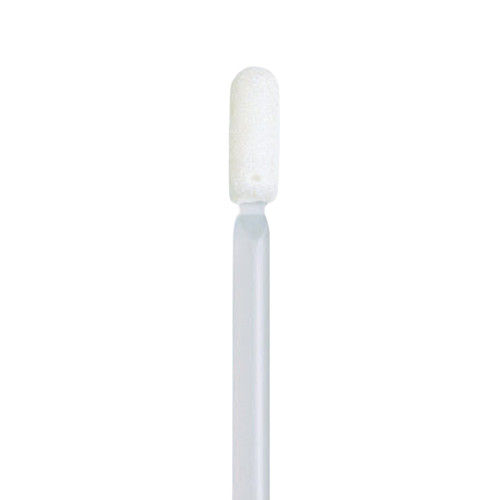
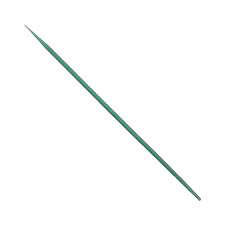
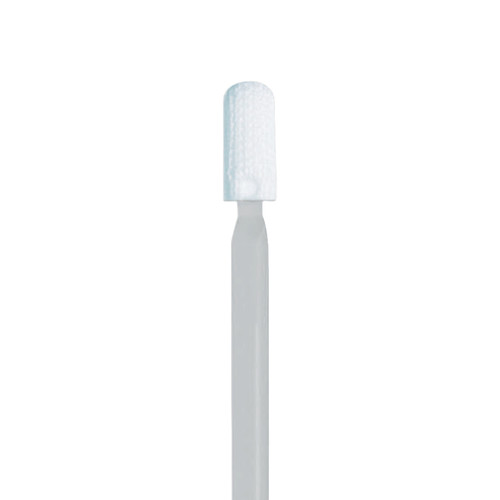
Texwipe TX769E ESD-safe Stick Cleanroom Pick Swab: micro-tip control for particle pickup, edge cleaning, and defect rework
Practical solutions in a critical environment
The jobs that cause the most rework are the ones nobody wants to touch: a single particle in a recess, a fiber caught on an edge, a speck sitting in a slot, or residue at the intersection of two surfaces where a standard swab head bridges over the geometry. Operators then “chase the defect” with improvised tools, over-wet cleaning, or repeated wiping that spreads contamination instead of removing it.
TX769E is positioned as an ESD-safe pick-and-clean tool with micro tips designed for controlled removal in tight features. In practice, it is the kind of tool you stage for “one-and-done” corrective actions: pick, lift, carry out, and dispose, without turning the task into a solvent bath or a smear event. This is also where program discipline matters; keeping the same qualified tool in your kit reduces operator improvisation and keeps rework outcomes stable.
Nothing is truly lint free in every condition; low-linting outcomes depend on technique and surface condition, including edge sharpness, burrs, solvent load, contact pressure, and stroke discipline.
Where a pick swab beats a wipe
Use a micro-tip pick when the defect mechanism is geometric: particles trapped in a corner, debris at a slot edge, or residue at a seam. A wipe can clean the “surface story” while leaving the “feature story” behind.
What is this swab used for
TX769E is used for precision particle pickup and targeted cleaning in tight geometries where conventional foam or knit swabs are too large or too compliant to control. Common uses include:
- Lifting and removing small particles from recesses, grooves, and slots
- Detail work at intersecting surfaces, seams, and edges where residue collects
- Controlled rework on sensitive assemblies where over-wetting is a risk
- ESD-aware handling environments where tool choice is part of the control plan
Operationally, it is most useful as a “defect correction tool” paired with standard swabs and low-linting wipes that handle broad-area cleaning and boundary control.
Why should customers consider this swab
- Micro-tip access: Designed for fine features where standard swab heads bridge over geometry or collapse unpredictably.
- ESD-aware selection gate: Appropriate when the workcell requires ESD-safe tooling choices and you need a pick tool that fits the control plan.
- Rework control: Supports “pick and remove” behavior that reduces repeated wiping, re-deposition, and smear patterns.
- Process repeatability: A consistent pick tool reduces improvisation (tape, toothpicks, unqualified probes) that undermines audit defensibility.
- Program stability through SOSCleanroom and ITW Texwipe: SOSCleanroom’s long-standing relationship with ITW Texwipe supports continuity of supply and documentation discipline so qualified kits stay qualified after replenishment.
Materials and construction
TX769E is an ESD-safe stick-style pick tool with micro tips intended for controlled particle pickup and detail cleaning. The handle platform is designed to give the operator precise angle and pressure control, and the micro-tip end is intended to reach into small features without flooding the area or forcing broad contact.
Practical note: with any pick-style tool, the key contamination control variable is not “absorbency.” It is contact control. That means limiting repeated touches, avoiding dragging across sensitive surfaces, and treating the tool as single-use once it has captured debris.
Specifications in context
The specifications that matter most for a micro-tip pick swab are tip geometry, stiffness, and controllability in your specific feature set. If the tip is too stiff, it can scratch or push debris deeper. If it is too compliant, it may fold and smear residue. The right choice is the tip that lets you lift contamination out in a controlled motion while keeping your glove, sleeve, and knuckles away from the critical surface.
| Attribute |
TX769E (in-use interpretation) |
| Tool type |
ESD-safe stick / pick swab with micro tips |
| Primary mechanism |
Pick and lift (particle pickup), detail contact, controlled edge work |
| Best-fit geometry |
Slots, grooves, seams, corners, small recesses, edge transitions |
| Selection gate |
Use when ESD control and micro-tip access are required |
Cleanliness metrics
Pick tools are typically selected for geometry and control, but cleanliness background still matters when you are working near optics, sensors, microelectronics interfaces, or residue-sensitive assemblies. If your process has extractables limits (ionic, NVR, or TOC), align the tool choice to your method and document set, and use blank controls in the workflow to characterize background contribution.
Why “not specs” matters in practice: the contribution you see on the part depends on how the tool is used. Wetness, stroke count, contact pressure, and whether the tool is re-touched across “clean” areas can drive more variability than the consumable itself. Build stop conditions into the SOP and train to them.
Validation-sensitive workflows
If you are sampling for TOC or setting strict residue limits, treat pick tools as part of the measurement system. Use controlled staging, single-use behavior, and documentation capture (lot, operator, solvent, and area) to keep results defensible.
Packaging, sterility and traceability
In critical environments, packaging is a contamination control, not a convenience. Stage only what you will use and keep the remainder sealed. For ESD-sensitive workcells, ensure the tool is stored and staged under the same ESD control plan you apply to components and work surfaces.
- Line-side discipline: open packaging only as long as needed; do not stage open tools where airborne particulate can load the tips.
- Traceability discipline: capture lot identifiers when the action is tied to investigations, yield events, or customer returns.
- Sterility note: ESD-safe and “clean” does not mean sterile. If point-of-use sterility is required, select a sterile product intentionally and segregate it through receiving, storage, and staging.
Best-practice use
Treat TX769E as a controlled-contact instrument. The goal is to remove the defect while minimizing collateral contact and preventing re-deposition.
Operator technique module
- “Damp” solvent technique: If solvent is used, use micro-dosing. Wetting should be damp, not dripping. A pick tool is easy to over-wet, and that is how solvent creeps under parts, into seams, and into connectors. If you see pooling, stop and reset the method.
- Stroke count logic: Prefer single, deliberate contacts. For residue removal, use short single-direction strokes with overlap and stop early. If the tip loads or begins to leave a film, discard and switch tools rather than increasing pressure.
- Geometry control: Approach a slot or groove with the tip aligned to the feature direction. Pull contamination out of the recess rather than pushing it deeper. Use the stick length to keep gloves and sleeves out of the work zone and maintain a consistent angle.
- Pressure guidance: Use minimal pressure. The objective is lift and capture, not scraping. Too much force can smear residues, mar soft coatings, or drive debris into corners.
- Solvent compatibility framing: IPA is common where validated, but compatibility is process-specific. Validate solvent and dwell time against coatings, plastics, labels, adhesives, and any ESD coatings on work surfaces.
- Handling discipline: Avoid re-dipping into shared solvent. Use controlled dispense or single-use aliquots. Do not set a used tool down and reintroduce it to a clean area.
- Disposal and documentation cues: Treat the tool as single-use once it has contacted the defect area. For QA-relevant events, capture the tool lot, solvent lot, operator, and defect location so investigations are evidence-based.
Common failure modes
- Over-wetting: solvent creep into seams and connectors, tide marks on drydown, and rework that gets worse after “cleaning.”
- Working past the stop condition: repeated contacts with a loaded tip re-deposit contamination and smear films into corners.
- Excess pressure: scraping behavior that risks surface damage, pushes debris deeper into a feature, or changes the defect signature under inspection.
- Poor ESD discipline: using the right tool but staging it or handling it outside the ESD control plan, which defeats the intent of the selection gate.
- Uncontrolled substitution: swapping to improvised picks or nonqualified tools that lack traceability and consistent construction.
Closest competitors
For ESD-aware pick tools and micro-tip cleaning instruments, the real differentiators are mechanism and controls: tip geometry, stiffness, ESD posture, packaging discipline, traceability, and whether the supplier provides stable documentation over time.
- Contec precision swabs and controlled-environment picks (selected ESD-aware configurations): often positioned for detail cleaning and controlled environments. Compare tip geometry, handling control, and documentation support to your workcell requirements.
- Puritan controlled-environment specialty swabs and picks (selected anti-static or ESD-intent tools): evaluate construction controls, packaging discipline, and whether traceability posture fits investigation needs.
- Berkshire cleanroom swabs for detail work (small-head families): typically emphasize wiping mechanisms more than pick mechanisms. Use them when you need wipe-style contact; use a micro-tip pick when geometry access is the limiting factor.
Critical environment fit for this swab
TX769E fits best in an ESD-controlled detail-cleaning kit where the work routinely involves tight geometry, defect rework, and sensitive assemblies. In ISO-classified environments, align technique and staging discipline with your contamination risk model and classification context (ISO 14644-1). In FDA-regulated manufacturing environments, the defensibility comes from controlled procedures: trained technique, documented stop conditions, and traceable consumables.
SOSCleanroom supports critical-environment programs with continuity of supply, fast shipping, and responsive customer service. Combined with ITW Texwipe’s documentation posture, that stability helps customers avoid forced substitutions and keeps qualified rework and cleaning methods stable across replenishment cycles.
Source basis
SOSCleanroom product page (TX769E): https://www.soscleanroom.com/product/swabs/texwipe-tx769e-esd-safe-stick-cleanroom-pick-swab-with-micro-tips-anti-static-pick-swab/
International Organization for Standardization (ISO) cleanroom classification context (ISO 14644-1:2015): https://www.iso.org/standard/53394.html
FDA (Food and Drug Administration): https://www.fda.gov/
ASTM (American Society for Testing and Materials): https://www.astm.org/
IEST (Institute of Environmental Sciences and Technology): https://www.iest.org/
SOSCleanroom is the source for this Technical Vault entry.
Briefed and approved by the SOSCleanroom (SOS) staff.
Last reviewed: January 5, 2026
© 2026 SOSCleanroom