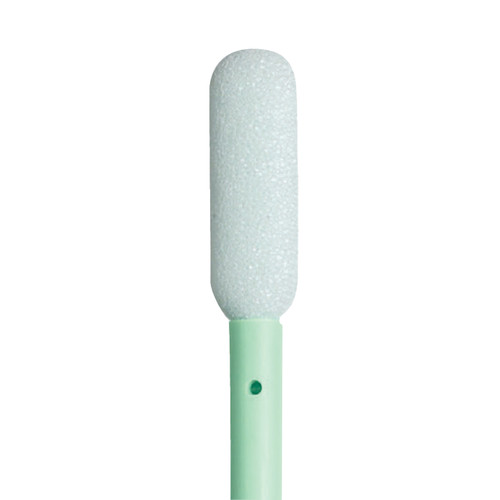
Texwipe TX726 CrushTube Swab 91% IPA 9% DIW Solution

$71.75
(No reviews yet)
SKU:
TX726 BOX
Availability:
Stock Item
Shipping:
Calculated at Checkout
Quantity Option (Box):
50 Swabs Per Box
Quantity Option (Case):
10 Boxes of 50 Swabs Per Case
Type:
Pre-Wet Swab
Swab Family:
CrushTube
Swab Material:
Polyester

Texwipe TX726 CrushTube™ Swab 91% IPA / 9% DIW Solution (Pre-Wet Point-of-Use Precision Cleaning Swab)

Texwipe TX726 CrushTube™ is a pre-wetted cleanroom swab engineered to reduce solvent-handling variability during precision spot cleaning in controlled environments. The CrushTube system uses a 100% polyester (hydro-entangled) nonwoven head attached to an internal vial containing 91% IPA / 9% DIW solution inside a protective casing. When the internal vial is crushed, the swab head becomes saturated for point-of-use application—helping teams avoid open solvent bottles, shared reservoirs, and over-wetting that can drive streaking or inconsistent results on sensitive features. Each swab is individually packaged in cleanroom-compatible materials and lot coded for traceability and quality control.

Pre-wet control note: TX726 keeps the IPA solution separated from the swab head until activation, supporting a more repeatable wetting event and making it easier to standardize spot-clean steps without carrying extra solvent containers.

Specifications:
  • SKU: TX726 BOX
  • Type: Pre-Wet Swab
  • Swab family: CrushTube™
  • Swab material: Polyester
  • Head material: 100% polyester (hydro-entangled) nonwoven
  • Solution: 91% IPA / 9% DIW
  • Reservoir volume (design note): 0.50 mL of 91% isopropyl alcohol / 9% DIW
  • Packaging (box): 50 swabs per box
  • Packaging (case): 10 boxes of 50 swabs per case (500 swabs/case)
  • Packaging controls: Individually packaged in cleanroom-compatible material; lot coded for traceability and quality control
  • Head width: 8.3 mm (0.33")
  • Head length: 10.0 mm (0.39")
  • Handle material: Ampule with 91% IPA / 9% DIW in a polymer sleeve
  • Handle width: 9.5 mm (0.37")
  • Handle length: 44.0 mm (1.73")
  • Total swab length: 47.6 mm (1.89")
  • Handle color: Transparent
  • Weight: 0.60 lbs
  • Shipping note: Consumer Commodity ORM-D shipment — UPS Ground shipping only; plan replenishment accordingly
  • Industries: Automotive, Biologics, Food Manufacturing, Microelectronics, Pharmaceuticals, Semiconductor
About the Manufacturer: 

Texwipe (an ITW company) designs cleanroom swabs as engineered process tools, with attention to materials, cleaning, packaging, and repeatable geometry. In the CrushTube™ format, the key control is point-of-use solvent delivery: the IPA/DIW solution is isolated until activation, supporting consistent wetting while reducing common failure points tied to open containers, shared reservoirs, and re-dipping behaviors.


SOSCleanroom (SOS) supports this manufacturing discipline with continuity of supply and documentation-focused support to help customers avoid last-minute substitutions and keep precision cleaning steps stable across shifts, sites, and replenishment cycles.

TX726 Features:
  • Solution separated until activation: IPA solution stays isolated from the head until the internal vial is crushed
  • Controlled point-of-use wetting: crush the vial to release 91% IPA / 9% DIW and saturate the swab tip
  • Precision spot cleaning: integrated solvent delivery eliminates the need for an extra solvent container at the wipe point
  • Individually packaged: cleanroom-compatible packaging supports transport and clean handling
  • Lot coded: traceability and quality control support receiving, investigations, and change control
  • Polyester nonwoven head: 100% polyester (hydro-entangled) material head designed for controlled cleaning
  • Compact format: integrated tube design supports tool-side cleaning and maintenance tasks in tight spaces
TX726 Benefits:
  • Reduced solvent-handling risk: helps avoid open-bottle evaporation, shared-reservoir contamination, and inconsistent wetting from squeeze bottles
  • More repeatable spot-clean results: consistent activation and integrated solvent delivery support standardized cleaning steps
  • Cleaner workflow at the wipe point: fewer accessories (no separate cup/bottle) reduces clutter and handling opportunities
  • Better control on sensitive features: helps limit over-wetting and pooling that can drive streaking on optics and high-finish surfaces (process-dependent)
  • Audit-friendly traceability: lot coding supports documentation expectations for controlled environments
Common Applications:
  • Solvent cleaning and maintenance of ion emitter tips
  • Cleaning of grooves, tracks, slots, and other small spaces
  • Removing adhesive buildup and residue from tight wipe points
  • Solvent cleaning of sensitive surfaces such as optical assemblies (use controlled wetness and stroke discipline)
  • Portable, point-of-use wipe-down tasks where carrying an open solvent container is undesirable
Best-Practice Use:
  • Activate at point of use: peel open the package only when ready to clean; crush the inner vial, then tip the swab to fully wet the head before contact.
  • Control wetness: pre-wetted does not mean dripping—avoid pooling that can spread dissolved soils and leave dry-down marks.
  • Use defined strokes: straight-line, overlapping passes reduce redeposit risk; avoid circular scrubbing unless your SOP requires it.
  • For ion emitter tips: turn off power, insert the wetted swab end onto the emitter point, slowly rotate, withdraw, and repeat until deposits are removed; allow IPA to evaporate before restoring power.
  • Change-out discipline: discard when the tip loads, drag increases, or residue is visible; do not attempt to extend use by re-wetting from external sources.
  • Flammability controls: follow facility procedures for storage, ventilation, and ignition-source control due to IPA content.
Selection Notes (TX726 vs. Other Options)
  • Choose CrushTube when point-of-use control matters: TX726 is ideal when you want an integrated swab + solvent system to reduce handling variables and eliminate re-dipping.
  • Choose bulk solvent workflows when coverage is large: for wide-area wipe-downs, a pre-wetted wiper or controlled dispensing system may be more efficient than a single-tip pre-wet swab.
  • Shipping planning matters: because TX726 ships as an ORM-D Consumer Commodity, plan for UPS Ground-only and adjust replenishment timing for critical programs.
  • Sterile vs. non-sterile: treat TX726 as non-sterile unless your SOP defines a validated sterile pathway; aseptic workflows typically require sterile consumables and sterile barrier packaging.

Link to Texwipe Technical Datasheet:
Click Here
Texwipe.com PDF: Click Here

Notes: Want operator-level guidance for TX726 (activation timing, wetness control, stroke discipline on optics, and change-out rules that prevent streaks and redeposit)? Open the SOSCleanroom Technical Vault tab above for practical technique guidance used in real precision-cleaning workflows.

SOSCleanroom.com supports contamination-control programs with best-in-class cleanroom consumables in stock, fair pricing, and responsive technical support—backed by customer service that understands real wipe points, qualification expectations, and repeatable cleaning methods.

Product page updated: Jan. 5, 2026 (SOS Technical Staff)

© 2026 SOS Supply. All rights reserved.

The Technical Vault
By SOSCleanroom
Point-of-use wetting control 91% IPA / 9% DIW (0.50 mL reservoir) Glass ampule inside protective sleeve Optics + ion emitter maintenance workflows
Texwipe TX726 CrushTube™ Swab: Precision cleaning with a controlled solvent “dose,” not an open cup
A pre-wet system designed to reduce drift: no re-dipping, no shared reservoirs, no “how wet was it this time?” debates.
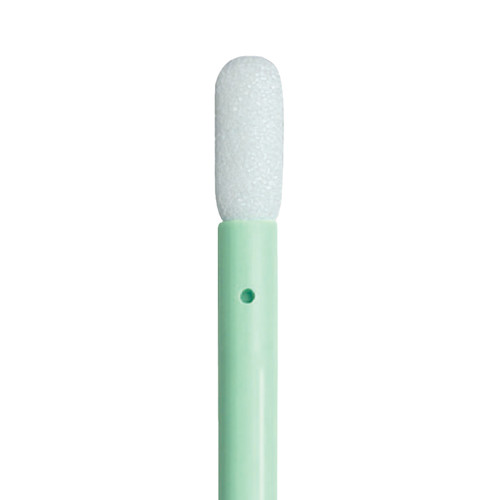
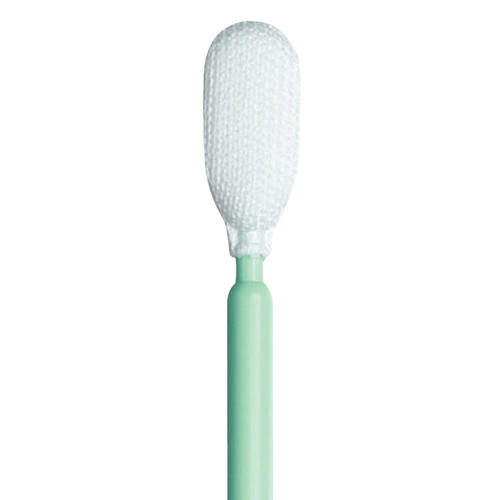
Texwipe TX726 CrushTube Swab (polyester tip with integrated solvent ampule in protective sleeve)
TX726 CrushTube™: polyester tip + integrated IPA/DIW ampule for point-of-use activation.
1) Practical solutions in a critical environment

TX726 exists for a very specific failure mode in cleanrooms and precision assembly: small-feature spot cleaning that “should be simple,” but becomes inconsistent because solvent handling is inconsistent. Open cups invite airborne fallout. Squirt bottles and re-dipping can over-wet. Over-wetting drives streaks, tide marks, and redeposition, especially on smooth or coated surfaces where the solvent front moves faster than the operator expects.

The CrushTube™ design shifts the process from “operator judgment” to “controlled activation.” The 91% IPA / 9% deionized water solution stays isolated until you crush the internal vial, then tip the swab so the head saturates for point-of-use application. That helps teams standardize spot-clean steps without staging an extra solvent container at the workbench.

2) What is this swab used for
  • Solvent cleaning and maintenance of ion emitter tips (static eliminators), where controlled wetness and clean handling reduce variability.
  • Cleaning grooves, tracks, slots, channels, and other small spaces where wipes bridge over features and miss the true contact surface.
  • Removing adhesive buildup and tacky residues in confined geometry where flooding increases spread and redeposit risk.
  • Solvent cleaning sensitive surfaces such as optical assemblies where a controlled damp tool is preferred over a free-liquid application.
3) Why should customers consider this swab
  • Point-of-use activation: Solvent remains separated until the vial is crushed—reducing evaporation loss and “stale solvent” staging risk.
  • No secondary solvent container: Helps eliminate open cups and re-dipping behaviors that pull particles into solvent and create inconsistent wetness.
  • Defined solvent quantity: Integrated 0.50 mL reservoir supports a more repeatable “dose” than a bottle squeeze or cup dip.
  • Packaging discipline: Individually packaged in a peel-apart sleeve to support “open only when ready” handling.
  • Traceability support: Lot coded for traceability and quality control—useful when a residue recurrence needs investigation.
  • Low-linting intent (practically applied): Built for controlled environments, but nothing is truly lint-free in every process condition—technique and surface condition drive outcomes.
4) Materials and construction

TX726 uses a polyester swab head and integrates a solvent ampule inside a protective sleeve. The system is designed so the head stays dry (and protected) until activation. When you squeeze the outer tube, the internal vial is crushed; you then tip the swab to wet the head before contacting the target feature.

This construction is particularly relevant in optics and precision assemblies because it reduces the “shared solvent” contamination pathway and helps standardize wetness. It also adds a practical safety variable: an internal glass vial is intentionally broken during activation, so the operator should treat the tool as a controlled instrument and follow facility handling rules for glass/solvent devices.

5) Specifications in context

With pre-wetted spot-cleaning, geometry drives control. A compact form factor helps stabilize hand position and contact angle, especially on tracks and slots where a longer swab can lever and chatter. The integrated reservoir also changes how you manage wetness: you are not “adding solvent,” you are distributing a fixed solvent volume into the head and onto the surface with disciplined strokes.

Attribute TX726 (published)
Swab type Pre-wet swab (CrushTube™ system)
Head material Polyester
Head width 8.3 mm (0.33")
Head length 10.0 mm (0.39")
Handle / body Ampule with 91% IPA / 9% DIW in a polymer sleeve
Handle width 9.5 mm (0.37")
Handle length 44.0 mm (1.73")
Total swab length 47.6 mm (1.89")
Handle color Transparent
Solution 91% IPA / 9% DIW
Reservoir volume (design note) 0.50 mL of 91% isopropyl alcohol / 9% DIW
6) Cleanliness metrics

TX726 is a solvent-integrated device. For critical optics, bonding surfaces, or any process where residue and ionic background are controlled parameters, treat cleanliness as a qualification gate. The TX726 product data reviewed provides physical characteristics and use directions but does not publish TX726-specific ion extractables or TX726-specific NVR values in a contamination table.

Typical ion extractables
Ion TX726 typical value
All ionsNot published for TX726 in the technical data reviewed
Typical NVR
Extractant TX726 typical value
DI waterNot published for TX726 in the technical data reviewed
IPANot published for TX726 in the technical data reviewed
Practical interpretation
If your process has a “dries clean” requirement, define the endpoint (lighting, inspection angle, time-to-dry, allowable haze), then qualify TX726 on your actual substrate and feature geometry. Pre-wet control reduces variability, but it does not eliminate the need to qualify residue behavior.
7) Packaging, sterility and traceability
  • Packaging: 50 swabs per box; 10 boxes per case (500 swabs/case).
  • Individual packaging: Each swab is individually packaged in a cleanroom-compatible peel-apart sleeve to reduce pre-use handling and support point-of-use opening.
  • Sterility status: Non-sterile (treat as non-sterile unless your SOP specifies a validated sterile pathway).
  • Traceability: Lot coded for traceability and quality control.
  • Shipping / storage reality: Contains flammable IPA; follow facility handling rules and plan for ground-shipping constraints where applicable.
  • Country of origin (manufacturer statement): Not stated in the TX726 technical data sheet reviewed. (Do not assume U.S. origin for Texwipe swabs unless the manufacturer explicitly confirms it for the specific SKU.)
8) Best-practice use

TX726 performs best when you treat it like a controlled cleaning instrument, not a general-purpose swab. Your two main control levers are (1) activation timing and wetness stabilization, and (2) stroke discipline to prevent redeposit as the solvent flashes off.

Operator-level swabbing technique module
  • Open only when ready: Keep the swab sealed until the moment of use. This protects the head and preserves the point-of-use intent.
  • Activation discipline: Crush the inner vial by squeezing the outer sleeve, then tip the swab to allow the solution to wet the head before first contact.
  • Damp control (avoid flooding): The goal is damp contact, not pooling. If the first touch leaves a wet halo, pause and let the solvent distribute in the head before proceeding on critical optics.
  • Single-direction strokes with overlap: For tracks/slots, maintain a stable entry angle and use overlapping passes. Avoid “scrubbing loops” unless your written procedure requires it.
  • Rotate the contact face: When the face shows pickup or drag begins, rotate to a cleaner face or discard. Do not re-contact a “clean” area with a used face.
  • Do not stage an activated swab: Once activated, use immediately. Do not set it on a bench or carry it exposed between areas.
  • Safety note: The internal glass vial is intentionally broken during activation. Follow facility rules for handling solvent/glass devices, and discard if the sleeve is damaged or compromised.
9) Common failure modes
  • Over-wetting and flooding: Drives streaks and tide marks on smooth surfaces and increases the chance of redeposition as IPA flashes off.
  • Re-touching cleaned areas with a used face: A classic “it looked clean, then it wasn’t” pathway—especially on optics where redeposit shows under angled light.
  • Inconsistent activation wetting: Crushing the vial but not tipping/wetting fully before contact can create patchy cleaning and inconsistent performance.
  • Poor contact angle in grooves/slots: Bridging across edges instead of contacting the true surface leaves residues in the feature base.
  • Ignoring flammability / handling controls: TX726 is a solvent-integrated tool; storage, staging, and disposal need to align with facility rules for flammable liquids.
10) Closest competitors

The closest “competitor” to TX726 is often a different workflow choice: pre-wet integration versus dry swab + controlled solvent dispensing. These are common alternates teams evaluate depending on feature size and wetness control strategy:

  • Texwipe TX712A (dry CleanFoam® rectangular head): A dry, thermally bonded foam swab used with operator-dispensed solvent. Strong when you need more reach, more scrubbing force, or a different solvent than the CrushTube system provides.
  • Texwipe TX707A (dry larger CleanFoam® rectangular head): Useful when the area is larger and a compact CrushTube form factor becomes inefficient.
  • Texwipe Specialty Swab alternatives (non pre-wet): Specialty tip shapes can be a better match when access geometry (not solvent control) is the limiting factor.
11) Critical environment fit for this swab

TX726 is a strong fit for controlled environments where small-feature precision cleaning must be repeatable across operators: microelectronics, semiconductor support tasks, optics assembly/maintenance, and any process where open solvent containers create contamination and variability risk.

SOSCleanroom (SOS) emphasizes continuity of supply and documentation discipline for customers running critical contamination-control steps. ITW Texwipe’s CrushTube concept aligns with that mindset: it is designed to reduce the number of uncontrolled variables in day-to-day cleaning (staging, re-dipping, over-wetting) while supporting lot-coded traceability. In practice, that helps keep your cleaning outcomes stable when the same step is executed by different technicians on different shifts.

Standards and regulatory expectations do not replace your qualification, but they reinforce the core principle: if a cleaning step is critical to yield or product safety, it must be controlled, trained, and verified within your quality system (see ISO/FDA/ASTM/IEST resources in Source basis).

12) SOSCleanroom note about SOP's

The Technical Vault is written to help customers make informed contamination-control decisions and improve day-to-day handling technique. It is not your facility’s Standard Operating Procedure (SOP), batch record, or validation protocol.

Customers are responsible for establishing, training, and enforcing SOPs that fit their specific risks, products, equipment, cleanroom classification, and regulatory obligations. Always confirm material compatibility, cleanliness suitability, sterility requirements, and acceptance criteria using your internal quality system and documented methods.

If you adapt any technique guidance from this entry, treat it as a starting template. Your team should review and approve the final method, then qualify it for your specific surfaces, solvents, cleanliness limits, inspection methods, and risk profile. In short: use these best-practice suggestions to strengthen your SOPs—not to replace them.

13) Source basis
  • SOSCleanroom product page (SKU): https://www.soscleanroom.com/product/spotlight-videos/optical-cleaning/texwipe-tx726-crushtube-swab-91-ipa-9-diw-solution/
  • Manufacturer product page: https://www.texwipe.com/crushtube-tx726
  • Manufacturer specialty swabs technical data sheet (includes CrushTube™): https://www.texwipe.com/images/uploaded/documents/swabs/Texwipe-Specialty-Swabs-TDS.pdf
  • SOS-hosted PDF copy (TX726 technical data sheet): https://www.soscleanroom.com/content/texwipe_pdf/726.pdf
  • Manufacturer PDF (TX726 TDS, alternate source): https://www.texwipe.eu/Content/Images/uploaded/documents/Swabs/TDS_TX726_en.pdf
  • ISO (International Organization for Standardization): https://www.iso.org/standard/53394.html
  • FDA (Food and Drug Administration): https://www.fda.gov/
  • ASTM (American Society for Testing and Materials): https://www.astm.org/
  • IEST (Institute of Environmental Sciences and Technology): https://www.iest.org/
SOSCleanroom is the source for this Technical Vault entry.
Briefed and approved by the SOSCleanroom (SOS) staff.
If you have any questions please email us at Sales@SOSsupply.com
Last reviewed: January 6, 2026
© 2026 SOSCleanroom