Why eye protection matters in contamination control
In controlled environments, PPE selection is only half the equation. The other half is handling: where items are staged, when they are donned, and how often operators touch/adjust them.
ISO cleanroom operations guidance emphasizes an operations control program that includes personnel management and a gowning program. Eye protection should be treated as part of that program: introduced cleanly, donned consistently, and adjusted in a way that minimizes face/hood contact.
What this SKU is (manufacturer-published attributes)
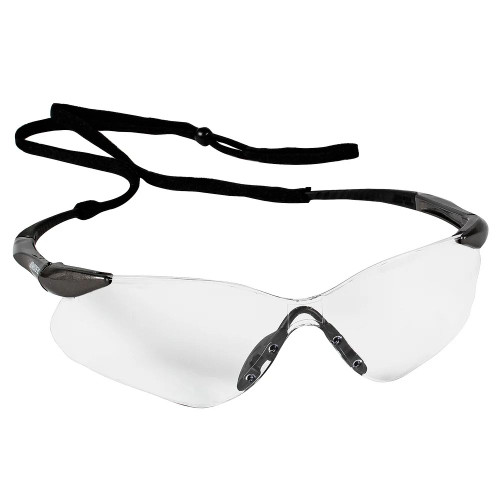
Code 29111 is specified as Clear, Anti Fog with Gun Metal frame/temple styling and 89% VLT.
The manufacturer sheet lists a frameless design, base curve 8, polycarbonate lens, and 99.9% UVA/UVB/UVC protection.
Specifications in context (useful for receiving & standardization)
| Attribute |
29111 (Nemesis VL) |
Published basis |
| Lens / coating |
Clear, Anti Fog |
Manufacturer spec sheet |
| VLT |
89% |
Manufacturer spec sheet |
| Frame / temples |
Gun Metal |
Manufacturer spec sheet |
| Frame type |
Frameless |
Manufacturer spec sheet |
| Base curve |
8 |
Manufacturer spec sheet |
| Materials |
Polycarbonate lens; nylon frame/temple; Empilon nosepiece |
Manufacturer spec sheet |
| UV protection |
99.9% UVA/UVB/UVC |
Manufacturer spec sheet |
| Standards |
ANSI Z87.1 (2010 noted); CE EN 166:2001 (code applicability noted) |
Manufacturer spec sheet |
| Case packaging |
12 pair/box; 12 boxes/case (manufacturer sheet) |
Manufacturer spec sheet |
Cleanroom donning education (ISO-first, then Annex 1 overlay)
ISO-driven intent: minimize operator-driven variability
- Stage clean-side: keep eyewear in the gowning area; avoid placing it on uncontrolled benches or carts.
- Don early enough to avoid re-touching: put eyewear on before final glove donning (where your SOP allows) so you can adjust temples and fit without repeated face/hood contact later.
- Handle by temples: avoid touching lens surfaces to reduce smears and the need for cleaning inside the clean zone.
- Treat as a “contact-point” item: repeated adjustments are a contamination pathway. SOPs should specify when adjustments are permitted and what to do if eyewear is dropped or contaminated.
Annex 1 overlay (aseptic / sterile manufacture): personnel focus is stricter
Annex 1 expectations elevate personnel controls: training, gowning qualification, and behaviors that reduce microbial and particulate contamination risk. In practice, this typically means:
- Stronger emphasis on aseptic technique and limiting touchpoints around the face/hood seal region.
- Defined actions for deviations (fogging, improper fit, accidental lens contact) and when to exit/re-gown.
- Cleaning methods that avoid re-depositing residues or introducing fibers/particles onto lenses.
Bottom line: eyewear selection supports compliance, but donning discipline drives contamination control. Use ISO to structure the program; apply Annex 1 rigor where aseptic processing requires it.
Anti-fog performance: what to control operationally
- Avoid abrasive wiping: it can degrade anti-fog coatings and increase hazing.
- Use a compatible wipe/cleaning method: follow your site SOP for lens cleaning to limit residue and scratching.
- Treat fogging as a behavior signal: it often indicates fit/venting issues (mask seal, hood placement) that should be corrected earlier in the donning sequence.
Common failure modes (and how to prevent them)
- Repeated adjustment after gloving: adjust fit earlier; minimize face/hood contact.
- Lens smears leading to over-cleaning: handle by temples; keep lenses off surfaces.
- Fogging during critical tasks: verify donning order (hood/mask fit) and correct airflow/fit issues per SOP.
- Cross-area transfer: do not shuttle eyewear between uncontrolled and controlled zones without a defined cleaning/re-introduction step.
Ansell (KleenGuard) + SOSCleanroom: what changes for customers
SOSCleanroom is expanding its KleenGuard offering in alignment with Ansell’s portfolio stewardship: clearer product mapping, cleaner documentation flow, and improved availability planning for customers standardizing PPE across multiple controlled environments.
When your program requires consistency across sites, standardize by SKU, verify against manufacturer-published specs, and enforce a repeatable donning/handling method.
Source basis (primary references first)
- Manufacturer spec sheet (V30 Nemesis VL; includes code 29111): https://cdn3.evostore.io/documents/fusion_us/fus_us_29111_spec.pdf
- SOSCleanroom product page (SKU/UPC/seller listing context): https://www.soscleanroom.com/product/apparel/kleenguard-nemesis-vl-safety-glasses-clear-anti-fog-case-12/
- ISO 14644-5:2025 (operations / gowning program context): https://www.iso.org/standard/88599.html
- EU GMP Annex 1 (sterile manufacture / personnel controls context): https://health.ec.europa.eu/system/files/2022-08/20220825_gmp-an1_en_0.pdf
- Ansell KleenGuard Nemesis family context: https://www.ansell.com/us/en/products/kleenguard-nemesis-safety-glasses
SOSCleanroom is the source for this Technical Vault entry.
Briefed and approved by the SOSCleanroom (SOS) staff.
If you have any questions please email us at Sales@SOSsupply.com
Last reviewed: Jan. 14, 2026
© 2026 SOSCleanroom