Technical Vault: KleenGuard™ Nemesis™ VL Safety Glasses 29111
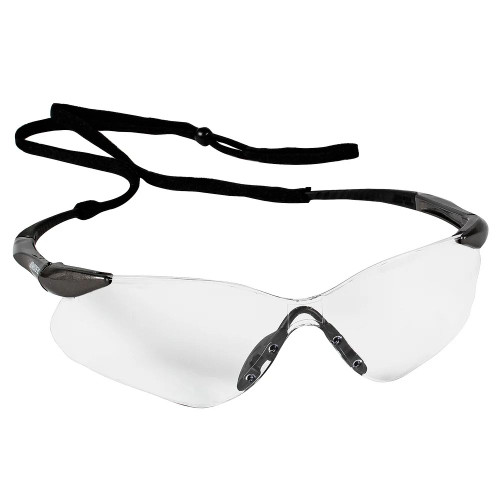
The KleenGuard™ Nemesis™ VL Safety Glasses 29111 are reusable, non-prescription industrial safety glasses designed for workers who need clear optical performance, advanced fog resistance, high-impact eye protection, ultraviolet filtration, wraparound coverage, and lightweight comfort. This configuration uses a clear anti-fog polycarbonate lens, frameless construction, gunmetal temples, a soft ventilated nosepiece, and soft-grip temple contact points.
This Technical Vault entry consolidates the product’s identity, lens properties, anti-fog technology, impact classification, optical characteristics, fit system, use conditions, cleaning requirements, controlled-environment considerations, inspection criteria, storage practices, and limitations. Final PPE selection must be based on the employer’s documented hazard assessment and the requirements of the specific work area.
Technical summary: Clear anti-fog, frameless safety eyewear with 89% visible light transmission, ANSI/ISEA Z87.1-2020 compliance, Z87+ high-velocity impact performance, KleenVision™ anti-fog technology, anti-fog performance exceeding the EN 166 “N” fog-resistance test, 99.9% UVA/UVB/UVC filtration, wraparound coverage, soft Comfort Touch temple tips, ventilated soft nosepiece, and an included neck cord.
Product Identification:
- Manufacturer: Ansell
- Brand: KleenGuard™
- Product family: Nemesis™ VL Safety Glasses
- Manufacturer code: 29111
- SOSCleanroom SKU: 29111
- UPC: 036000291117
- Product type: Reusable, non-prescription industrial safety glasses
- Lens color: Clear
- Lens coating: Anti-fog with scratch-resistant hardcoat
- Anti-fog technology: KleenVision™
- Visible light transmission: 89%
- Lens material: Polycarbonate
- Frame style: Frameless, no-brow design
- Frame and temple color: Gunmetal
- Frame and temple material: Nylon per legacy SKU-specific manufacturer documentation
- Nosepiece material: Empilon / flexible thermoplastic elastomer per legacy SKU-specific documentation
- Lens geometry: High-base-curve wraparound design
- Base curve: Base curve 8 in legacy SKU-specific literature; 8.25 in current Ansell family documentation
- Nosepiece: Soft flexible nose pad with ventilation notch
- Temple design: Flexible arms with Comfort Touch soft-grip tips
- Included accessory: Neck cord
- Size: One size
- RightCycle™ eligibility: Yes, subject to current program availability and acceptance requirements
- SOSCleanroom selling quantity: 12 safety glasses per case
Standards and Protective Performance
Current Ansell documentation identifies the Nemesis VL family as manufactured to comply with ANSI/ISEA Z87.1-2020 and as Z87+ high-velocity impact rated. The Z87+ designation applies to high-impact protective eyewear that has met the applicable impact-performance requirements of the standard.
Legacy SKU-specific documentation for product code 29111 may reference ANSI Z87.1:2010 and CE certification to EN 166:2001. The current Ansell standard reference should be used as the principal current product-family statement, while legacy references may remain relevant when reviewing historical certificates, supplier files, or lot-specific documentation.
| Standard or Rating |
Technical Meaning |
| ANSI/ISEA Z87.1-2020 |
Current U.S. occupational eye and face protection standard referenced by Ansell for the Nemesis VL product family |
| Z87+ |
High-impact designation under the applicable ANSI/ISEA performance requirements |
| ANSI Z87.1:2010 |
Legacy standard reference appearing in earlier SKU-specific manufacturer documentation |
| EN 166:2001 |
Legacy European eye-protection certification reference associated with SKU 29111 documentation |
| EN 166 “N” fog-resistance test |
Current Ansell literature states that KleenVision™ anti-fog performance exceeds this fog-resistance test |
| 99.9% UVA / UVB / UVC filtration |
Polycarbonate lens filtration intended to help reduce occupational ultraviolet exposure |
KleenVision™ Anti-Fog Technology
Lens fogging occurs when warm, moisture-containing air contacts a cooler lens surface and condenses into small droplets. These droplets scatter light and can reduce visibility, create glare, obscure fine detail, and encourage workers to remove or repeatedly adjust their eye protection.
The Nemesis VL 29111 uses a clear KleenVision™ anti-fog lens treatment intended to limit the formation of vision-obscuring moisture droplets. Ansell describes KleenVision™ as a premium coating engineered to deliver anti-fog performance 100 times greater than the ANSI Z87.1-2020 “X” mark requirement and to exceed the EN 166 “N” mark test for resistance to fogging.
- Helps maintain clearer vision in humid work environments
- Supports visibility during transitions between warm and cool areas
- Helps manage fogging associated with masks, respirators, hoods, and protective garments
- Can reduce repeated eyewear removal, wiping, and adjustment
- Supports more consistent use of required eye protection
- Helps reduce work interruption caused by moisture-obscured lenses
Anti-Fog Performance Limitations
Anti-fog performance reduces the likelihood and duration of fogging but does not guarantee that the lens will remain completely fog-free under every condition. Performance can be affected by temperature differential, humidity, perspiration, airflow, respirator exhaust, contamination, cleaning technique, coating wear, and chemical exposure.
- Do not assume anti-fog performance eliminates the need for proper fit and ventilation
- Check respirator valves, mask fit, hood placement, and airflow direction when repeated fogging occurs
- Avoid applying household anti-fog chemicals unless approved for the lens coating
- Do not polish or aggressively scrub the anti-fog surface
- Replace eyewear when the coating becomes damaged, hazy, uneven, or ineffective
- Use only approved cleaning methods that preserve optical clarity and coating integrity
Clear Lens and 89% Visible Light Transmission
The clear lens provides approximately 89% visible light transmission. This high-transmission configuration is intended primarily for indoor work and other environments where natural color recognition, inspection accuracy, and clear visibility are required.
Clear lenses reduce overall color distortion compared with tinted lens options and are commonly selected for manufacturing, laboratories, inspection, assembly, maintenance, warehousing, cleanroom-support operations, and other tasks performed under normal indoor lighting.
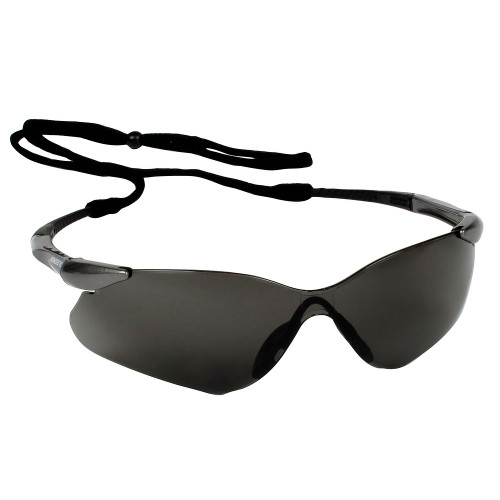
Selection note: A clear lens does not provide glare reduction comparable to smoke, mirror, or polarized eyewear. Outdoor work in intense sunlight may require a properly selected tinted configuration while maintaining the required impact and optical protection.
Polycarbonate Lens Construction
Polycarbonate is commonly used in industrial safety eyewear because it combines low weight, impact resistance, optical transparency, and ultraviolet filtration. The Nemesis VL lens also incorporates a scratch-resistant hardcoat and anti-fog treatment to support longer usable service under routine workplace conditions.
| Lens Characteristic |
Practical Benefit |
| Polycarbonate construction |
Combines low weight, impact performance, optical transparency, and ultraviolet filtration |
| Clear lens |
Supports natural color recognition and indoor task visibility |
| 89% visible light transmission |
Provides high light transmission for normally illuminated indoor work |
| KleenVision™ anti-fog coating |
Helps limit visibility loss caused by condensation and moisture droplets |
| Scratch-resistant hardcoat |
Helps preserve usable lens clarity during routine industrial handling |
| 99.9% UVA / UVB / UVC filtration |
Helps reduce occupational ultraviolet exposure |
Frameless No-Brow Design
The Nemesis VL uses an extra-lightweight frameless design that removes the conventional upper brow frame found on many safety spectacles. This configuration reduces visual obstruction, lowers overall eyewear bulk, and helps limit interference with hard-hat suspension systems and other headborne PPE.
- Reduces upper-frame visual obstruction
- Supports improved upward peripheral vision
- Helps reduce interference with hard-hat suspension components
- Provides a lower-profile fit beneath hoods and head coverings
- Reduces overall eyewear weight for prolonged use
- Creates a broad continuous lens area without a heavy conventional frame
Base Curve and Wraparound Coverage
Legacy SKU-specific literature lists a base curve of 8, while current Ansell family documentation identifies a base curve of 8.25. These values describe the same general high-wrap lens geometry and reflect differences in documentation precision rather than a materially different product configuration.
The curved lens extends around the sides of the face to increase peripheral coverage. Actual protective coverage depends on facial dimensions, product fit, eyewear position, head movement, compatibility with other PPE, and the direction and energy of the workplace hazard.
Soft Nosepiece and Sweat Management
The Nemesis VL uses a soft, flexible nosepiece designed to improve wearer comfort and help maintain eyewear position. A ventilation notch helps direct perspiration away from the eyes and may reduce moisture accumulation around the bridge of the nose.
- Flexible contact surface helps reduce concentrated pressure
- Ventilation notch supports airflow around the nose bridge
- Design helps channel perspiration away from the eyes
- Soft contact helps limit downward slippage
- Low-profile geometry supports extended wear
- Nosepiece condition should be included in routine inspection
Comfort Touch Temple System
Flexible temple arms with Comfort Touch soft-grip tips are designed to minimize pressure during extended use and help keep the glasses from sliding. Temple flexibility can improve fit across a range of head shapes while reducing the rigid pressure associated with harder, less compliant temple designs.
- Flexible temple arms accommodate a range of facial and head dimensions
- Soft-grip tips help maintain stable eyewear positioning
- Reduced contact pressure supports longer wear periods
- Low-profile temples can improve compatibility with hard hats and hoods
- Temple position should be checked when earmuffs or respirators are worn
- Included neck cord helps retain the glasses when temporarily removed
Recommended Applications and Industries
- Manufacturing and production operations
- Assembly, inspection, picking, checking, and quality-control tasks
- Laboratory and technical work
- Cleanroom-support and controlled-environment operations
- Construction and facility maintenance
- Oil, gas, petrochemical, and energy operations
- Warehousing, shipping, receiving, and material handling
- Equipment servicing and preventive maintenance
- Humid production environments
- Temperature-variable work areas
- Tasks requiring masks, respirators, hoods, or protective headgear
- Indoor work requiring clear lenses and natural color recognition
- General occupational eye protection where spectacle-style coverage is appropriate
PPE Compatibility and Fit Assessment
Safety glasses must be evaluated as part of the complete PPE system. Hard hats, respirators, face shields, hearing protection, hoods, masks, and protective garments can change eyewear position, redirect airflow, create pressure points, or reduce protective coverage.
- Confirm that hard-hat suspension systems do not displace the glasses
- Ensure temple arms do not interfere with tight-fitting respirator seals
- Check for pressure or leakage beneath earmuff cushions
- Verify that masks and respirators do not direct excessive warm air toward the lens
- Confirm compatibility with face-shield brackets and visors
- Ensure the glasses remain secure during bending, climbing, walking, and equipment operation
- Check upward and peripheral vision through the full required range of movement
- Do not force the glasses over prescription eyewear unless the combination has been specifically evaluated
Hazard Assessment Guidance
The employer should identify the source, type, direction, frequency, duration, and severity of each eye hazard before selecting protective eyewear. Spectacle-style protection may be appropriate for general impact and particle hazards but may not provide sufficient enclosure for liquid splash, fine dust, aerosols, or multidirectional exposure.
| Hazard |
Selection Consideration |
| Flying particles and general impact |
Confirm that Z87+ spectacle-style protection provides adequate coverage for the identified hazard |
| Chemical splash |
Use chemical-splash goggles or another appropriately enclosed protector |
| Fine dust or aerosol |
Evaluate goggles or other protection with greater enclosure |
| Full-face splash or impact |
Add an appropriate face shield while retaining required primary eye protection |
| Welding, cutting, or brazing radiation |
Use task-specific filter lenses and welding protection with the required shade |
| Laser radiation |
Use wavelength-specific laser eyewear with verified optical density |
| Bright exterior sunlight |
Evaluate a suitable tinted lens rather than this clear 89% VLT configuration |
Controlled Environment Considerations
Safety certification and cleanroom suitability are separate determinations. ANSI impact compliance does not establish sterility, cleanroom classification, low particle release, low outgassing, disinfectant compatibility, or suitability for aseptic processing.
The Nemesis VL 29111 is reusable industrial eyewear and is not supplied sterile or represented as cleanroom-certified. Before introducing it into a controlled area, the facility should evaluate the glasses under its contamination-control strategy, material-qualification process, gowning SOP, cleaning procedure, area-segregation rules, and environmental-monitoring program.
- Assign eyewear by employee or controlled area when practical
- Stage the glasses on the clean side of the gowning process
- Complete fit adjustments before final glove donning when allowed by the SOP
- Handle the glasses by the temples rather than the lens
- Do not place eyewear directly on benches, carts, gowning seats, or critical surfaces
- Do not transfer eyewear between uncontrolled and controlled areas without approved cleaning
- Use only facility-approved cleaning materials and compatible low-lint wipes
- Inspect for haze, residue, scratches, coating damage, and retained contamination
- Define actions for dropped, contaminated, displaced, or repeatedly fogging eyewear
- Replace the glasses when they can no longer be cleaned to the facility’s acceptance criteria
Cleanroom Donning and Handling Guidance
- Inspect the eyewear before entering the gowning sequence.
- Clean or disinfect the glasses according to the approved facility procedure.
- Stage the eyewear in the designated clean-side location.
- Handle the glasses by the temples or approved contact points.
- Don the eyewear at the point specified by the gowning SOP.
- Adjust the nosepiece and temples before final glove donning when permitted.
- Confirm that the glasses do not interfere with the hood, mask, respirator, or face covering.
- Avoid touching or readjusting the eyewear inside the critical work area.
- Follow the defined deviation procedure if the glasses are dropped, displaced, contaminated, or heavily fogged.
Cleaning Procedure
- Wash and dry hands or don clean gloves as required by the work area.
- Inspect the lens for dust, grit, metal particles, dried residue, or other abrasive contamination.
- Remove loose particles using clean air or a gentle water rinse when permitted.
- Apply an approved optical cleaner, mild soap and water, or another validated cleaning solution.
- Wipe gently using a soft, non-abrasive optical tissue, microfiber cloth, or approved cleanroom wiper.
- Avoid aggressive pressure or repeated polishing of the coated lens.
- Rinse where required to remove cleaner residue.
- Dry using a clean, soft, non-abrasive material.
- Inspect the lens, anti-fog coating, temples, mounting points, nosepiece, and safety markings before reuse.
Chemical compatibility note: Strong solvents, aggressive disinfectants, high-pH cleaners, abrasive compounds, and incompatible chemicals may craze polycarbonate, damage the anti-fog coating, weaken the temple system, or alter optical clarity. Where repeated disinfection is required, validate the exact chemical, concentration, contact time, application method, rinse procedure, and cleaning frequency.
Inspection and Replacement Criteria
Inspect the eyewear before each use and after any impact, chemical exposure, abnormal heat exposure, or cleaning process that may affect protection or optical performance. Remove the glasses from service when any condition could reduce fit, clarity, impact performance, or coating function.
- Cracked, chipped, warped, or deformed lens
- Deep scratches or abrasion that interferes with vision
- Persistent haze, clouding, distortion, or discoloration
- Damaged, uneven, peeling, or ineffective anti-fog coating
- Lens mounting damage or looseness at the temple attachment points
- Loose, cracked, bent, or deformed temples
- Damaged, missing, or permanently deformed nosepiece
- Loss of secure fit during normal movement
- Illegible required safety markings
- Exposure to a significant impact event
- Chemical contact that may have degraded the lens or frame components
- Residue that cannot be removed using the approved cleaning process
Storage and Handling
Store the glasses in a cool, clean, and dry location away from direct sunlight, excessive heat, abrasive materials, heavy objects, and chemical vapors. The coated lens should be protected from unnecessary contact during storage and transportation.
- Use an individual protective case, sleeve, or designated storage compartment
- Do not store with sharp tools, loose fasteners, metal parts, or abrasive materials
- Do not place heavy objects on the lens or temples
- Avoid prolonged storage in hot vehicles or near process heat
- Keep away from solvent, adhesive, fuel, and cleaning-chemical vapors
- Store cleaned eyewear separately from contaminated PPE
- Do not allow the coated lens to rest directly against rough surfaces
- Use the neck cord as a retention aid rather than the primary long-term storage method
RightCycle™ Program Consideration
Ansell lists the Nemesis VL product family as eligible for the RightCycle™ Program. Actual eligibility, collection methods, contamination restrictions, geographic availability, minimum quantities, and accepted product conditions should be confirmed with the active program before eyewear is placed into a recycling stream.
Packaging and Selling Unit Clarification
The SOSCleanroom purchase quantity for SKU 29111 is 12 safety glasses per case. Legacy manufacturer logistics documents may reference 12 pairs per inner box and multiple inner boxes per master shipping carton. The larger master-carton quantity should not be presented as the SOSCleanroom customer selling unit unless confirmed by the active inventory and purchasing record.
Important Use Limitations
- Not a sealed chemical-splash goggle
- Not dust-tight or gas-tight eyewear
- Not welding, cutting, brazing, or infrared-radiation protection
- Not laser-protective eyewear
- Not electrical arc-flash or electrically insulating protection
- Not intended for molten-metal splash
- Not intended as sun-glare protection in intense exterior light
- Not supplied sterile
- Not represented as autoclavable
- Not represented as cleanroom-certified or low-shedding eyewear
- Not a substitute for a face shield where full-face protection is required
- Not designed as over-the-glasses eyewear for prescription spectacles
- Not guaranteed compatible with every respirator, hard hat, hood, mask, or hearing protector
- Anti-fog performance does not guarantee completely fog-free vision under every condition
Current and Legacy Documentation Note
Legacy documentation for SKU 29111 may list base curve 8, ANSI Z87.1:2010, CE EN 166:2001, nylon temple construction, Empilon nosepiece material, 89% visible light transmission, and SKU-specific packaging details. Current Ansell product-family literature lists base curve 8.25, ANSI/ISEA Z87.1-2020 compliance, Z87+ high-velocity impact performance, KleenVision™ premium anti-fog performance, and RightCycle™ eligibility. Where certification traceability is required, verify the documentation applicable to the supplied production lot.
Brand and Product Documentation Note
KleenGuard™ protective eyewear was historically marketed through Kimberly-Clark Professional and may appear under Kimberly-Clark Professional, KleenGuard™, Jackson Safety, or Ansell in historical and current documentation. Current product-page content should use the active Ansell portfolio identity while preserving the established KleenGuard™ Nemesis™ VL name and manufacturer code 29111.
Technical Vault Disclaimer
This Technical Vault entry is intended to support product evaluation, procurement, training, controlled-environment planning, and workplace PPE review. It does not replace the manufacturer’s instructions, current product markings, a workplace hazard assessment, an exposure-control plan, cleanroom qualification, facility SOP, or regulatory guidance. Verify current certificates, declarations, chemical-compatibility information, and lot-specific documentation when required by the organization’s quality or safety system.
Technical insight: The Nemesis VL 29111 is strongest where clear indoor visibility, premium anti-fog performance, frameless comfort, upward and peripheral vision, Z87+ impact protection, ultraviolet filtration, and compatibility with masks, hoods, or hard hats must work together.
Technical Vault updated: Jul. 2026 (SOS Technical Staff)
© 2026 SOSCleanroom.com