Why eye protection matters in contamination control
In controlled environments, PPE selection is not only about impact hazards. It is also about reducing operator behaviors that drive contamination
(face touching, frequent adjustments, discomfort-driven removal) and ensuring PPE integrates with hoods, masks/veils, and head coverings.
A lightweight, stable-fit eyewear choice can reduce re-adjustment and support better gowning discipline across shifts.
What this product is
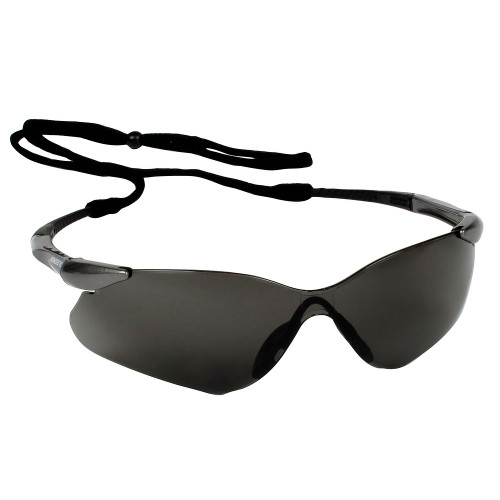
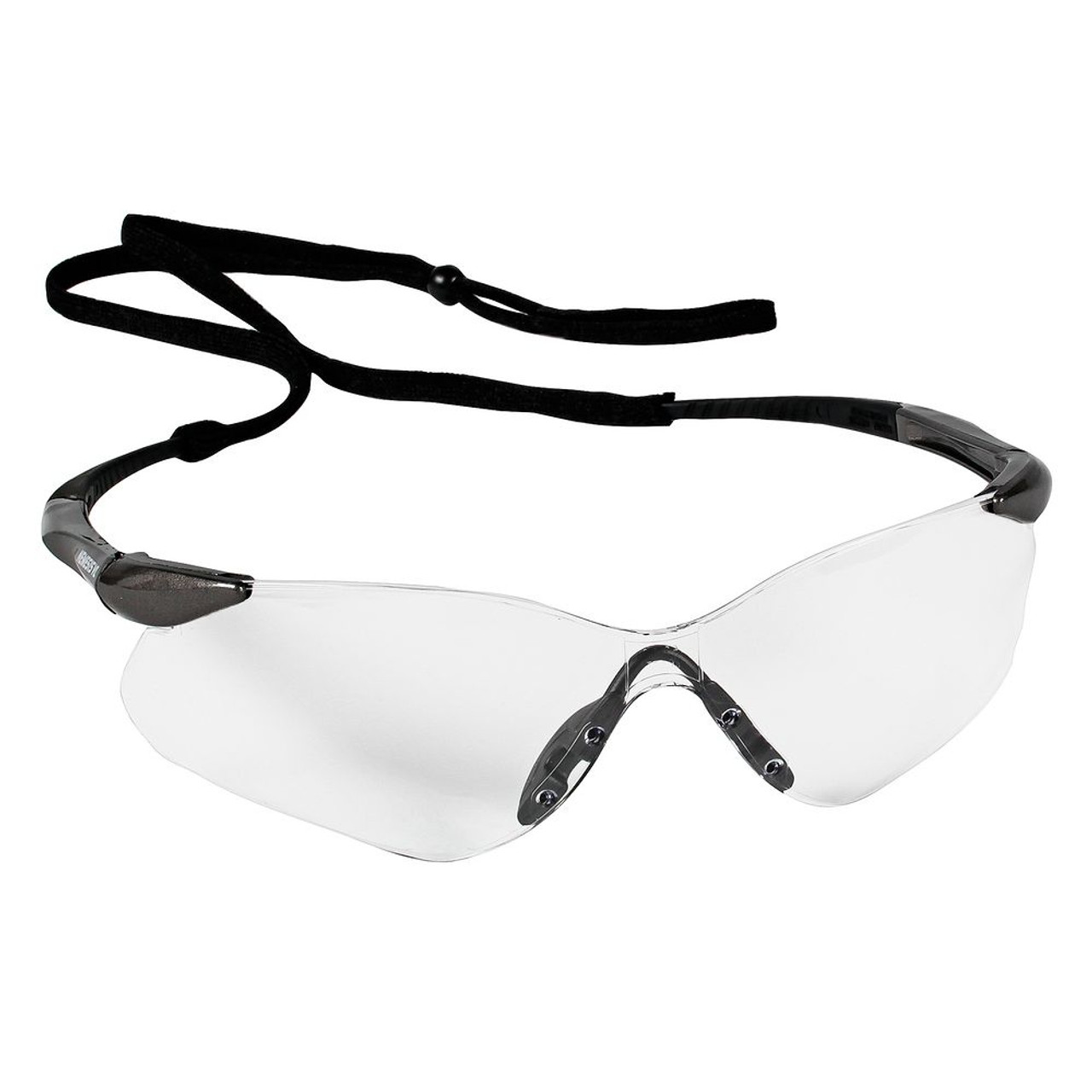
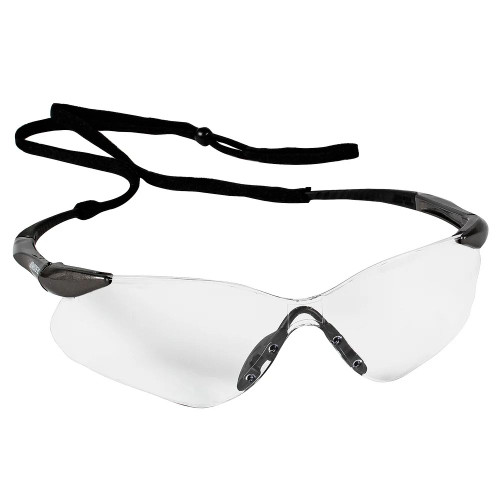
Nemesis VL (code 20470) is a frameless safety eyewear option with a clear polycarbonate lens and gunmetal frame/temples,
specified at VLT 90%. The manufacturer specification lists an impact-resistant polycarbonate lens, base curve 8,
frameless construction, and ratcheted temples.
Why customers consider Nemesis VL (cleanroom + lab lens)
- No-brow design: increases upward peripheral vision and limits interference with hard-hat suspension systems.
- Frameless = lighter weight: helps reduce discomfort-driven removal and re-adjustment.
- Clear lens visibility: VLT 90% supports indoor inspection and documentation tasks.
- Standardized protection: ANSI Z87.1:2010 listed on the manufacturer specification.
Materials, build, and fit mechanics
Manufacturer specification lists: polycarbonate lens, nylon frame/temple,
and an Empilon nosepiece, with a frameless design and
ratcheted temples.
The manufacturer brochure positions Nemesis VL as a frameless option and describes the no-brow geometry as a way to improve upward peripheral vision.
Specifications in context (manufacturer-first)
| Attribute |
20470 (Nemesis VL) |
Why it matters |
| Lens / VLT |
Clear; VLT 90% |
Supports high-visibility indoor tasks and reduces “dim lens” fatigue. |
| Frame / format |
Gun Metal; frameless; ratcheted temples |
Stability and comfort reduce adjustment frequency (contamination behavior driver). |
| Base curve |
8 |
Wraparound geometry improves peripheral coverage and integration with headwear. |
| Materials |
Polycarbonate lens; nylon frame/temple; Empilon nosepiece |
Material selection affects durability and compatibility with cleaners/disinfectants. |
| UV protection |
99.9% UVA/UVB/UVC protection |
Useful for mixed lighting environments and general operator eye protection. |
| Standard |
ANSI Z87.1:2010 |
Baseline standard reference for industrial eye protection selection. |
| Arc flash / IRUV |
Arc flash rated: No; IRUV rated: No |
Do not substitute for specialized arc-flash or IRUV-rated eyewear requirements. |
| Packaging |
Selling unit: 12 pairs |
Supports standardized deployment to a line, shift, or gowning station. |
Cleanliness and controlled-environment handling considerations
Safety glasses are often re-used across shifts. In cleanrooms, that means the risk shifts from “impact hazard” to “handling contamination”:
lenses and temples become touchpoints, and repeated adjustments are a common source of contamination transfer.
- Dedicate or segregate: keep eyewear clean-dedicated or segregated by room/classification when required.
- Control touchpoints: handle by temples; avoid touching lens and face-contact areas.
- Qualified cleaning: validate cleaner/disinfectant compatibility with polycarbonate and any coatings per your SOP.
- Reduce “adjustment frequency”: comfort and fit are contamination-control variables, not just ergonomics.
Packaging, traceability, and receiving
Manufacturer specification lists code 20470 (former code 3013536) with a clear lens and gun metal frame/temples and identifies VLT and key construction attributes.
For receiving, align the delivered label/part number to your approved vendor list, then confirm the correct lens type and configuration for the area in which eyewear will be used.
Donning (gowning) guidance: reducing contamination through sequence and behavior
ISO-first perspective (then Annex 1): build a trained, repeatable gowning program
ISO cleanroom operations guidance emphasizes controlled behavior, training, and disciplined procedures as part of contamination control.
In practice, eyewear is treated as part of the gowning system: don it in a repeatable order, minimize touchpoints, and avoid rework/adjustments after entry.
- Stage before entry: place eyewear in the gowning area so it is not carried through uncontrolled spaces after gowning begins.
- Don with the face system: coordinate eyewear with hood + mask/veil so gaps don’t force repeated adjustments.
- After entry, hands off: if eyewear shifts or fogs, follow your SOP (often: step out rather than adjust in a critical zone).
European Annex 1 (sterile manufacturing) overlay:
Annex 1 explicitly calls out sterile eye coverings (e.g., goggles) and sterile masks for Grade B/Grade A access, and it emphasizes gown integrity checks,
donning technique (avoid contacting the outer surface), and preventing garments from touching the floor. If your operation is Annex 1-governed,
confirm whether your SOP requires sterile goggles/eye coverings rather than non-sterile safety glasses for Grade A/B behavior and interventions.
Common failure modes (what causes contamination or noncompliance)
- Repeated adjustments: drives face-touching and glove contamination transfer.
- Fogging without a plan: if fog is common, select an anti-fog SKU or adjust mask/hood integration per SOP.
- Poor integration with hood/mask: creates gaps that force rework mid-process.
- Unqualified cleaning chemistry: can haze polycarbonate or degrade surfaces; qualify before routine wipe-down.
Closest alternatives (same platform, different performance)
- 29111 Clear Anti-Fog: for mask-driven fogging and humidity transitions.
- 29112 Indoor/Outdoor: for frequent indoor/outdoor transitions (lower VLT than clear).
- Sealed goggles / sterile eye coverings: when your SOP or sterile-grade standard requires enclosed eye protection.
Critical environment fit (when this is the right choice)
20470 is a strong fit for controlled-environment support work and lab/industrial settings that need clear-lens visibility and standardized impact-rated protection,
especially where lightweight comfort reduces adjustment frequency. For Annex 1 Grade A/B aseptic operations, confirm whether sterile eye coverings are required;
if so, select the sterile goggle/eye-covering solution specified by your gowning SOP.
SOSCleanroom note about SOP's
The Technical Vault is written to help customers make informed contamination-control decisions and improve day-to-day handling technique.
It is not your facility’s Standard Operating Procedure (SOP), batch record, or validation protocol.
Customers are responsible for establishing, training, and enforcing SOPs that fit their specific risks, products, equipment, cleanroom classification, and regulatory obligations.
Always confirm material compatibility, cleanliness suitability, and acceptance criteria using your internal quality system and documented methods.
If you adapt any technique guidance from this entry, treat it as a starting template. Your team should review and approve the final method, then qualify it for your specific process.
Use these best-practice suggestions to strengthen your SOPs—not to replace them.
Source basis (manufacturer-first)
- Manufacturer specification (V30 Nemesis VL Safety Eyewear; codes incl. 20470): https://cdn3.evostore.io/documents/fusion_us/fus_us_29111_spec.pdf
- Manufacturer brochure (Nemesis / Nemesis VL overview and features): https://cdn3.evostore.io/documents/fusion_us/fus_kcc_nemesis.pdf
- ISO operations context (cleanroom behavior / operations standard landing page): https://www.iso.org/standard/88169.html
- EU GMP Annex 1 (sterile manufacturing; gowning training + eye coverings/goggles): https://health.ec.europa.eu/system/files/2022-08/20220825_gmp-an1_en_0.pdf
- SOSCleanroom product page (selling unit and availability context): https://www.soscleanroom.com/product/apparel/kleenguard-nemesis-vl-safety-glasses-clear-uncoated-case-12/
SOSCleanroom is the source for this Technical Vault entry.
Briefed and approved by the SOSCleanroom (SOS) staff.
If you have any questions please email us at Sales@SOSsupply.com
Last reviewed: Jan. 14, 2026
© 2026 SOSCleanroom