When “exam grade” still has to grip: using MICROFLEX ComfortGrip CFG-900 to prevent slips, rework, and touch contamination
The Technical Vault | By SOSCleanroom
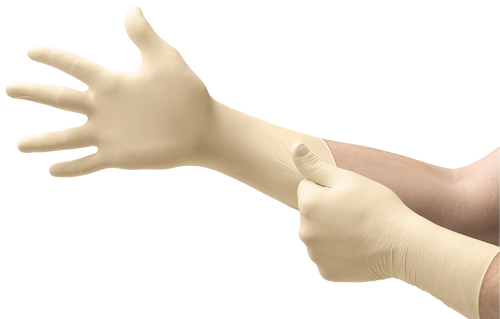
Most glove-related process failures are not “glove tears.” They are grip failures that force operators to pinch harder, reposition parts, or re-handle components — the exact behaviors that drive touch contamination, dropped parts, and inconsistent technique across shifts. The Ansell MICROFLEX ComfortGrip CFG-900 is built for that practical gap: an exam-grade, fully textured latex glove designed to keep control when surfaces are smooth, lightly wet, or handled for long durations.
In controlled workflows, “comfort” is not a nice-to-have. Hand fatigue changes technique, and technique changes contamination outcomes. CFG-900 is best viewed as a stable, repeatable grip platform for routine exams, sample handling, and food-contact tasks where reliable dexterity matters more than chemical protection.
The Operational Problem It Solves
Low-friction handling creates a predictable chain of events: a part slips, the operator re-grips, pressure increases, and contact points multiply. In labs, production support areas, and food-contact handling, those re-grips drive:
- Touch contamination: extra contact cycles increase transfer risk to samples, packaging, and surfaces.
- Variability: different operators compensate differently (more force vs. more wipes vs. more handling), which makes results harder to reproduce.
- Fatigue-driven mistakes: sustained procedures amplify small grip problems into errors and rework.
CFG-900’s fully textured external surface is intended to reduce “slip → re-grip” cycles so the glove helps stabilize technique rather than becoming another variable.
What It’s For
ComfortGrip CFG-900 is positioned as a multi-purpose latex exam glove suitable for standard patient examinations, sample taking and processing, and tasks requiring extra comfort during long, sustained procedures. It is also positioned for food-contact applications in food processing workflows.
Use it where dexterity + grip are the controlling requirements. If your hazard is chemical permeation, high solvent exposure, or ESD control, treat that as a separate selection gate.
Decision Drivers
- Fully textured external surface: intended to maintain grip and reduce re-handling, especially during sustained tasks.
- Exam-grade hole standard (AQL): listed as 1.5 AQL (inspection level I) as a baseline integrity control.
- Thickness tuned for dexterity: palm and finger thickness are specified as typical values to help users balance feel vs. durability.
- Consistency and documentation: audit standard listed as ISO 13485 in the manufacturer data sheet for controlled production discipline.
- Packaging format: 100 per dispenser, 10 dispensers per case supports predictable point-of-use staging.
- Storage discipline: the manufacturer calls out keeping product out of direct sunlight and away from ozone/ignition sources — practical controls that protect elastomer performance over time.
Materials and Construction: Practical Implications
CFG-900 is a latex exam glove with a fully textured external surface. The operational value of full texturing is not cosmetic — it changes how much pinch force is required to maintain control. Less pinch force generally means less fatigue and fewer re-grips.
“Comfort” is a process control: in long procedures and repetitive sample handling, fatigue shows up as technique drift. A glove that stays comfortable and controllable reduces the temptation to rush, over-handle, or compensate with excessive force.
Reality check for controlled environments: any glove can become a contamination vector if it is overused, contacted to non-controlled surfaces, or staged improperly. The glove choice is only one layer — your donning, change-out, and staging rules are what keep the method stable.
Latex boundary condition: latex sensitivity and allergy risk are program-level considerations. If your site controls allergens, ensure latex is permitted in the area and follow your facility policy for labeling and segregation.
Specifications in Context
Use specs as functional levers — they predict how the glove will behave in your exact task.
| External glove surface |
Fully textured |
| Length |
245 mm (9.6 in), typical |
| Freedom from holes (AQL) |
1.5 AQL (inspection level I) |
| Palm thickness |
0.13 mm (5.1 mil), typical |
| Finger thickness |
0.16 mm (6.3 mil), typical |
| Tensile strength (before / after aging) |
22 MPa / 20 MPa, typical |
| Elongation at break (before / after aging) |
≥ 700% / ≥ 600%, typical |
| Audit standard (manufacturer listing) |
ISO 13485 |
| Packaging overview |
100 gloves per dispenser; 10 dispensers per case (1,000 gloves per case) |
| Country of origin (manufacturer listing) |
Malaysia |
Treat listed physical and contamination-related results as typical values unless your program defines acceptance limits. In controlled work, your method and your controls define what is acceptable.
Performance Interpretation: What These Numbers Mean Operationally
AQL (1.5): This is an integrity screening posture — not a promise that defects cannot occur. The process control is still your receiving checks, correct sizing, and change-out discipline when a glove is stressed or compromised.
Thickness (0.13 mm palm / 0.16 mm finger): These values predict tactile feedback and how easily operators can maintain light, controlled force. Thinner gloves typically improve dexterity but can be less forgiving of sharp edges; plan the glove architecture to match the part geometry you handle.
Tensile and elongation: These are durability indicators under stretch and aging. Operationally, they matter when gloves are donned repeatedly, when procedures are long, and when operator motion creates consistent stress patterns in fingertips and palms.
Grip as contamination control: Full texturing is intended to reduce re-grips. Fewer re-grips means fewer opportunities to touch the wrong surface, drop a component, or “pinch harder” and tear.
Why Packaging, Storage, and Traceability Matter
Packaging configuration (100 per dispenser; 10 dispensers per case) supports controlled issuance: stage only the quantity required at the point of use and protect the remainder from ambient exposure and handling.
Storage controls are not optional for elastomers. The manufacturer calls out keeping product out of direct sunlight and away from ozone or ignition sources. That guidance is practical: heat, UV, and ozone exposure can accelerate degradation and change feel, tear behavior, and performance consistency over time.
Best-Practice Use: Operator-Level Discipline
- Size for control: gloves that are too small increase fatigue and tear risk; gloves that are too large reduce dexterity and increase touch contamination.
- Change-out rules beat judgment: set triggers (after leaving the controlled area, after touching non-controlled surfaces, after visible contamination, after a time limit for long procedures).
- Stage dispensers correctly: keep open cases/dispenser mouths protected from airflow and splash zones; do not “bench store” loose gloves.
- Grip is not permission to over-force: full texturing reduces slip, but do not compensate by increasing pressure on delicate parts.
- Latex program discipline: follow site allergen policy, labeling, and segregation controls where required.
Common Failure Modes—and How to Prevent Them
- Slip-driven rework: usually poor grip or wet handling without a grip strategy. Prevent by using fully textured gloves when grip is the controlling requirement and enforcing single-touch handling discipline.
- Fatigue-driven technique drift: long procedures lead to rushed movements and extra touches. Prevent with comfort-focused glove selection and scheduled change-outs.
- Tears on sharp edges: thickness helps, but geometry wins. Prevent with upstream deburring, tool use, or a different glove architecture when sharp-edge exposure is routine.
- Latex used in the wrong program: allergen control or latex restrictions are policy gates. Prevent with area-level glove control and clear signage/segregation.
Closest Competitors (Limited and Relevant)
Textured latex exam gloves (category peers): compare grip performance, published physical-property data (AQL, thickness, tensile/elongation), and packaging discipline that supports controlled staging.
Textured nitrile exam gloves: a common alternative when latex policy or sensitivity drives selection. Expect different tactile feel and stretch behavior; qualify for long procedures and fine motor work.
Extended cuff variants: consider when wrist/forearm contact drives contamination risk, but ensure cuff length does not reduce dexterity or increase snagging in tight work envelopes.
Where CFG-900 Fits in a Controlled Program
CFG-900 fits best as a grip-stability exam glove for routine handling, sample processing, and food-contact tasks where re-grips create defects and where sustained comfort protects technique. If your workflow is driven by chemical permeation risk, sterile-field requirements, or ESD controls, select a glove family engineered and documented for that primary hazard and treat ComfortGrip as the “grip solution” only when it is aligned with the program gate.
Source basis
-
SOSCleanroom product page: Ansell MICROFLEX ComfortGrip CFG-900 latex gloves
(link)
-
Manufacturer technical data sheet (PDS): microflex-comfortgrip-cfg-900_pds_us.pdf
(link)
-
Manufacturer product page (model overview): MICROFLEX ComfortGrip CFG-900
(link)