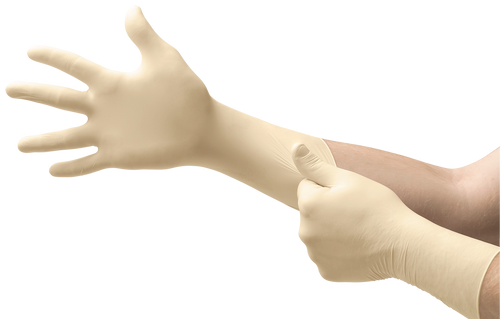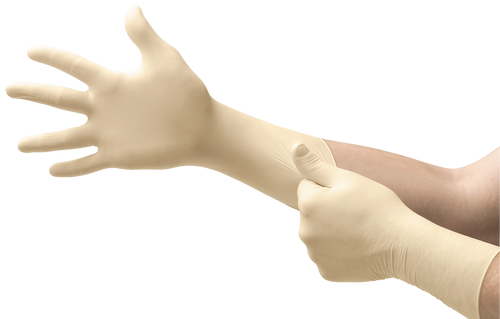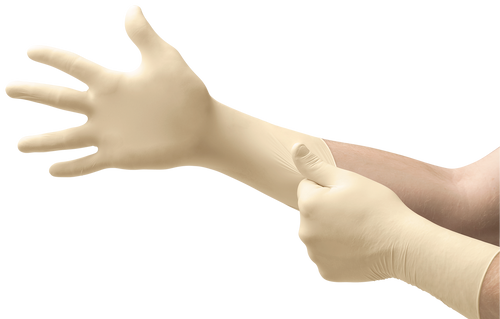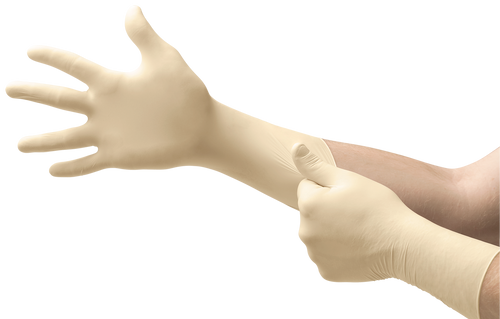
Ansell EV-2050 Microflex Evolution One Gloves Latex

$152.25
SKU: EV-2050 Stock Item
(No reviews yet)
Availability:
Stock Item
Shipping:
Calculated at Checkout

EImportant Availability Notice: Ansell and Kimberly-Clark items, including stock items and those with 7–10 day lead times, may be delayed up to 30 days. Please contact us to confirm availability. Normal shipping is expected to resume by 1st Nov 2026

Ansell MICROFLEX® Evolution One® EV-2050 Powder-Free Latex Exam Gloves (Natural) — Fully Textured Grip and Long-Shift Comfort
Natural Rubber Latex Powder-Free Fully Textured AQL 1.5 Non-Sterile 100/Dispenser · 1000/Case

MICROFLEX® Evolution One® EV-2050 is a powder-free latex exam glove built for dependable comfort during extended wear, with a fully textured exterior for confident grip when handling wet containers, small parts, and routine workflow tools. It is a practical choice for healthcare and life-science operations that value tactile feel and consistent donning in long shifts.

Important caution: This product contains natural rubber latex, which may cause allergic reactions in some users. Validate suitability within your facility’s exposure controls and PPE risk assessment.


Why SOSCleanroom and why Ansell

In critical environments, glove selection is a control point—not a commodity decision. SOSCleanroom positions Ansell as its best-in-class glove line because glove consistency impacts contamination control, operator technique, and audit confidence. SOS does not compromise on glove quality for controlled environments, and we support customers with continuity of supply, responsive support, and repeatable case-level ordering for standardized PPE programs.

Ansell’s MICROFLEX platform is designed around scalable, repeatable manufacturing and documented product performance for single-use glove users who need predictable fit, feel, and grip characteristics over long shifts.


What makes EV-2050 a smart “day-in/day-out” latex exam glove
  • Comfortable latex for extended wear: Soft natural rubber latex supports long-shift comfort and tactile control.
  • Fully textured exterior: A consistent grip profile helps reduce micro-slips that can drive drops, rework, or accidental contact.
  • Powder-free build: Avoids the powder pathway that can complicate housekeeping, residues, and sensitivity concerns.
  • Food handling suitability (as specified by the product data): Appropriate for a variety of food-handling applications where latex is acceptable in the program.
  • Standard cuff length: Designed for general exam and general handling workflows where a longer cuff is not required by the task hazard.

Recommended uses (where this glove fits well)
  • Transferring liquids (routine handling where grip matters)
  • Assembly of parts and general component handling
  • Sample taking and processing in healthcare and life science workflows
  • Weighing and dispensing solid and liquid raw materials in routine programs
  • Standard, moderate-risk examination procedures (non-sterile use cases)

Specifications (published typicals and product controls)
Material Natural rubber latex
Powder content Powder-free
External surface Fully textured
Cuff length Standard
Freedom from holes (Inspection Level I) 1.5 AQL
Length 245 mm / 9.6 in (tested per ASTM D3767 / EN 420)
Palm thickness 0.14 mm / 5.5 mil (tested per ASTM D3767 / EN 420)
Finger thickness 0.15 mm / 5.9 mil (tested per ASTM D3767 / EN 420)
Ultimate tensile strength ≥ 25 MPa (before aging) / ≥ 19 MPa (after aging) per ASTM D412 & D573
Elongation at break ≥ 650% (before aging) / ≥ 600% (after aging) per ASTM D412
Sterility Non-sterile
Antistatic Not tested (per product data sheet)
Country of origin Malaysia (per product data sheet)
Audit standard EN ISO 13485:2012 (per product data sheet)
Packaging 100 gloves per dispenser; 10 dispensers per case; 1000 gloves per case

Size offering: SOSCleanroom ordering options list XS through XXL on this page. The manufacturer product data sheet lists XS through XL. If you are standardizing sizes for a validated program, align the glove size set to your approved procurement spec and confirm the exact ordering code at time of purchase.


Handling discipline (helps your CCS and Annex 1-aligned behaviors)

In aseptic processing and compounding programs, gloves are a front-line contamination control barrier. Even when a glove is not marketed as a sterile cleanroom glove, you can strengthen outcomes by pairing EV-2050 with disciplined technique: glove change timing, touch discipline, controlled material transfer, and documented cleaning/disinfection practices that match your contamination control strategy (CCS).

  • Change control: Define glove change triggers (tears, sticky feel, visible soil, task transitions, and time-based intervals) and train to them.
  • Touch discipline: Treat “clean” and “dirty” contact surfaces differently (outer glove-to-product contact should be intentional and limited).
  • Material transfer: Use staged unpacking and controlled hand-offs to avoid bringing carton dust and outer packaging particulates into higher-control areas.
  • Disinfection compatibility: If your program requires routine glove sanitization/disinfection (e.g., IPA or other validated agents), confirm compatibility and technique per your facility validation.
  • Latex sensitivity controls: For operators or areas with latex restrictions, select a validated latex-free alternative rather than mixing glove types ad hoc.

Storage (per manufacturer guidance): Keep out of direct sunlight; store in a cool, dry place; keep away from ozone sources or ignition.


Documentation

If you have any questions please email us at Sales@SOSsupply.com or give us a call at (214)340-8574.
 
Check out the AI ChatBot powered by SOSCleanroom data libraries - give it a try! THIS IS NEW FOR 2026!
 
Last updated: Oct. 13, 2026
 
© 2026 SOSCleanroom. All rights reserved.
The Technical Vault By SOSCleanroom
Natural Rubber Latex Powder-Free Exam Glove Fully Textured Grip AQL 1.5 Non-Sterile

Ansell MICROFLEX® Evolution One® EV-2050: why this powder-free latex glove is built for grip, tactile control, and consistent handling

Glove problems rarely show up as “the glove failed.” They show up as dropped containers, micro-slips during transfers, smudged labels, contaminated sample handling, or rework that traces back to one preventable mechanism: loss of control at the fingertips. The Ansell MICROFLEX® Evolution One® EV-2050 is designed for routine examination and handling applications where comfort, grip, tactile feedback, and powder-free construction support consistent day-to-day work.

Operations takeaway: EV-2050 combines a fully textured exterior, powder-free natural rubber latex construction, and tactile sensitivity to support repeatable handling. Consistent glove-changing practices, proper fit, and controlled contact remain essential to reducing contamination transfer and handling errors.

Latex allergy warning: This product contains natural rubber latex, which may cause allergic reactions in some individuals. If latex exposure is restricted or prohibited by your facility, select an appropriate non-latex alternative.


Operational context: how examination gloves affect handling consistency

In routine examination, sample preparation, component handling, and controlled workflows, glove selection affects more than hand protection. Grip consistency, comfort, fit, and glove-change discipline can influence handling accuracy, contamination transfer, and operator fatigue.

  • Grip loss: Wet or smooth surfaces can contribute to dropped containers, accidental contact, and unnecessary handling.
  • Comfort drift: Poor fit or discomfort during extended shifts can lead to unnecessary glove changes or continued use beyond an appropriate change-out point.
  • Powder and residue pathways: Powder can contribute to particulate transfer and complicate surface cleanliness.
  • Operator variability: Inconsistent glove fit, friction, and tactile feedback can produce differences in handling technique.

Control point: A properly selected glove supports reliable work, but it does not replace defined procedures for glove changes, surface contact, chemical exposure, and contamination control.


Specifications (SKU controls for RFQs, SOPs, and receiving)
  • Product: Ansell MICROFLEX® Evolution One® EV-2050
  • Product type: Disposable examination glove
  • Material: Natural rubber latex
  • Powder: Powder-free
  • Exterior: Fully textured
  • Sterility: Non-sterile
  • Freedom from holes: AQL 1.5 (Inspection Level I)
  • Length: 245 mm / 9.6 inches (ASTM D3767 / EN 420)
  • Palm thickness: 0.14 mm / 5.5 mil
  • Finger thickness: 0.15 mm / 5.9 mil
  • Antistatic performance: Not tested, according to the referenced product data
  • Audit standard: EN ISO 13485:2012 (as listed in the referenced product data)
  • Country of origin: Malaysia (per referenced product data)
  • Packaging: 100 gloves/dispenser; 10 dispensers/case; 1,000 gloves/case

Documentation rule: Confirm current manufacturer specifications, regulatory documentation, and product labeling before establishing acceptance criteria or incorporating this glove into a controlled purchasing program.


Performance characteristics (manufacturer-published values)
  • Ultimate tensile strength before aging: ≥ 25 MPa
  • Ultimate tensile strength after aging: ≥ 19 MPa
  • Elongation at break before aging: ≥ 650%
  • Elongation at break after aging: ≥ 600%
  • Palm thickness: 0.14 mm / 5.5 mil
  • Finger thickness: 0.15 mm / 5.9 mil
  • Freedom-from-holes quality level: AQL 1.5, Inspection Level I
  • Exterior finish: Fully textured
  • Powder: Powder-free construction

Performance interpretation: AQL describes a sampling-based quality measure for barrier defects, not a guarantee that every glove is free of defects. Thickness, strength, and elongation values establish performance characteristics but do not establish suitability for every chemical, procedure, or contamination-sensitive process.


What EV-2050 is designed to do (typical use cases)
  • Routine non-sterile examination procedures
  • Sample taking and sample processing
  • Liquid transfers and general laboratory handling
  • Weighing and dispensing solids and liquids
  • Assembly and general component handling
  • Handling smooth containers and routine tools where textured grip is beneficial
  • Selected food-handling applications where natural rubber latex is permitted by facility policy

Grip-focused design: The fully textured exterior supports controlled handling of containers, components, and tools, particularly where smooth or wet surfaces make grip consistency important.


Materials and construction: practical implications
  • Natural rubber latex: Provides flexibility and tactile sensitivity for tasks requiring controlled finger movements. Latex allergy risks must be addressed within the facility's PPE program.
  • Powder-free design: Eliminates glove powder as a potential source of particulate and residue transfer, although other contamination pathways remain.
  • Fully textured exterior: Provides additional friction during handling and can reduce unnecessary re-gripping of smooth or wet objects.
  • Standard examination glove length: Suitable for routine tasks requiring conventional wrist coverage, subject to task-specific hazard assessment.
  • Non-sterile configuration: Intended for applications that do not require sterile gloves at the point of use.

Handling consideration: Glove materials and surface characteristics influence performance, but glove-changing frequency and contact discipline remain primary controls against cross-contamination.


Best-practice use (reduce contamination transfer and handling errors)
  1. Confirm appropriate selection: Verify that natural rubber latex is permitted and that EV-2050 meets the requirements of the task and facility PPE program.
  2. Select the correct fit: Use the appropriate glove size to maintain tactile sensitivity without excessive stretching or loose material.
  3. Control donning: Don gloves with clean, dry hands and inspect for visible tears or defects before beginning work.
  4. Establish contact boundaries: Avoid touching phones, keyboards, door handles, and unrelated surfaces with gloves used for controlled work.
  5. Use controlled handling technique: Maintain appropriate grip pressure, particularly when handling wet containers or delicate components.
  6. Define change-out triggers: Replace gloves after contamination, contact with non-controlled surfaces, damage, or when moving between incompatible tasks.
  7. Escalate protection when necessary: Use task-approved gloves with different materials, thicknesses, or cuff lengths when chemical exposure or coverage requirements change.
  8. Dispose correctly: Remove and discard used examination gloves according to applicable facility waste-handling procedures.

Method standardization tip: Define glove selection, donning procedures, change-out triggers, and contact boundaries in the SOP. Repeatable operator practices reduce unnecessary variability between shifts.


Misuse controls & when not to use EV-2050
  • If latex exposure is restricted: Do not use natural rubber latex gloves where facility policies, allergy controls, or patient requirements prohibit them. Select an appropriate non-latex alternative.
  • If sterility is required: EV-2050 is non-sterile and must not replace gloves designated for sterile or aseptic procedures.
  • If chemical resistance is critical: Verify glove compatibility using manufacturer chemical permeation and degradation information for the actual chemical, concentration, and exposure duration.
  • If extended wrist or forearm coverage is needed: Use an appropriately specified longer-cuff glove.
  • If ESD control is mandatory: Antistatic performance is listed as not tested. Select gloves qualified for the facility's ESD requirements.
  • If contamination limits are stringent: Do not assume a powder-free examination glove meets cleanroom particle, extractable, or ionic cleanliness requirements without supporting documentation.

Selection rule: Powder-free construction, textured grip, and examination-glove classification do not automatically establish suitability for sterile processing, ISO-classified cleanrooms, chemical protection, or ESD-controlled applications.


Packaging, dispensing, and inventory consistency

EV-2050 is packaged with 100 gloves per dispenser and 10 dispensers per case, providing a total of 1,000 gloves per case. Standardized packaging supports repeatable purchasing, point-of-use distribution, and consistent PPE issuance.

  • Point-of-use availability: Position dispensers where approved glove changes are performed.
  • SKU consistency: Maintain the correct glove family, size, and material across replenishment orders.
  • Lot identification: Retain available case or lot information when required for traceability, investigations, or quality-system procedures.
  • Storage controls: Follow manufacturer storage guidance and protect unopened dispensers from conditions that could degrade the material.

Procurement takeaway: Standardizing the exact glove SKU and dispenser configuration reduces unintended substitutions and supports consistent operator expectations.


Alternative glove selection (when requirements change)
  • Powder-free nitrile examination gloves: A primary alternative when natural rubber latex exposure must be avoided, subject to task-specific performance and compatibility requirements.
  • Thicker examination gloves: Consider when additional durability is required and the resulting change in dexterity is acceptable.
  • Extended-cuff gloves: Consider when the task requires additional wrist or forearm coverage.
  • Cleanroom-processed gloves: Use when documented particle, extractable, packaging, or environmental classification requirements exceed those of conventional examination gloves.
  • Sterile examination or cleanroom gloves: Select where sterile-point-of-use or aseptic processing requirements apply.

Selection principle: Match the replacement glove to the actual reason for substitution, whether latex restrictions, contamination limits, chemical exposure, cuff coverage, or handling performance.


Where EV-2050 fits in a controlled program

EV-2050 is best positioned as a routine, non-sterile examination and handling glove for applications where tactile control, comfortable fit, and textured grip support daily operations. Typical environments include laboratories, general component handling, sample processing, and approved non-sterile examination tasks.

Program limitation: EV-2050 should not be treated as a sterile cleanroom glove, an ESD-qualified glove, or a universally chemical-resistant glove without the documentation and qualification appropriate to the specific process.


Why buy Ansell MICROFLEX® Evolution One® from SOSCleanroom
  • Product selection support: SOSCleanroom helps customers identify appropriate glove materials, configurations, and application requirements.
  • Configuration consistency: Purchasing by exact SKU, size, and case quantity helps reduce unintended substitutions across departments and facilities.
  • Documentation support: We help customers locate relevant manufacturer product information for purchasing and quality-system review.
  • One-cart procurement: Combine examination gloves with compatible wipers, swabs, cleaning solutions, and other facility consumables used in your daily operations.

Manufacturer documentation (authoritative references)
  • Ansell official website: Click Here
  • SOSCleanroom product information: Click Here
  • EV-2050 technical specifications: Refer to the current Ansell MICROFLEX® Evolution One® EV-2050 product data sheet for manufacturer-published performance values and applicable documentation.

If you have any questions please email us at Sales@SOSsupply.com or give us a call at (214)340-8574. OR check out the AI ChatBot powered by SOSCleanroom data libraries - give it a try! THIS IS NEW FOR 2026! © 2026 SOSCleanroom. All rights reserved.