The glove that quietly controls errors: why EV-2050 is built for long-shift grip, tactile work, and consistent powder-free handling
The Technical Vault | By SOSCleanroom
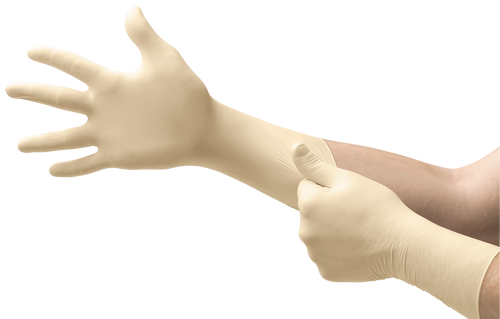
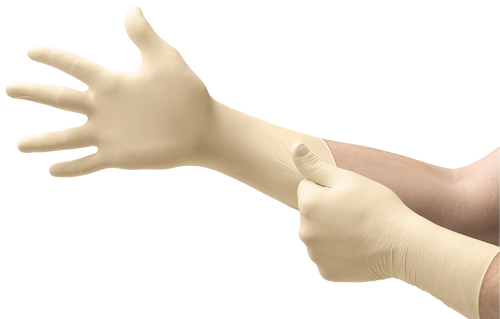
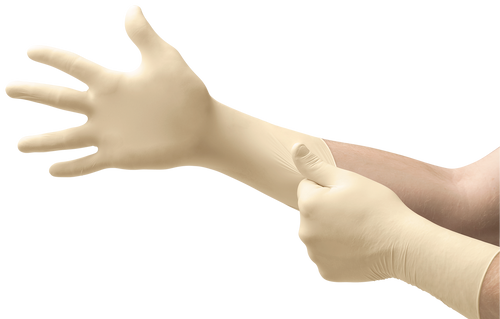
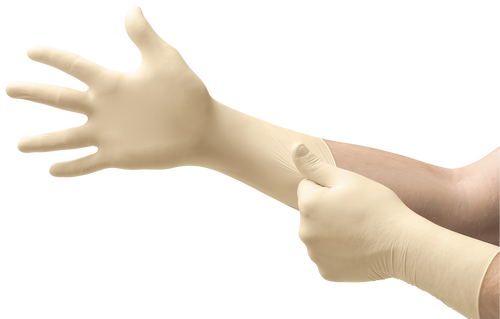
Glove problems rarely show up as “the glove failed.” They show up as dropped containers, micro-slips during transfers, smudged labels, contaminated sample handling, or rework that traces back to one preventable mechanism: loss of control at the fingertips. The Ansell MICROFLEX® Evolution One® EV-2050 is built for the day-in/day-out reality of routine exam and handling work where comfort, grip, and tactile feedback matter more than marketing claims — and where a powder-free build helps reduce a common residue pathway.
Important caution: this product contains natural rubber latex, which may cause allergic reactions in some users. If latex exposure is controlled or prohibited in your program, treat that as a selection gate, not a preference.
The Operational Problem It Solves
In routine controlled workflows, the highest-cost glove failures are usually small and cumulative:
- Grip loss on wet or smooth surfaces that drives drops, accidental contact, or extra handling.
- Comfort drift over long shifts that leads to frequent doffing, inconsistent donning, or “one more task” with a contaminated glove.
- Powder/residue pathways that complicate housekeeping, surface cleanliness, and sensitivity concerns.
- Inconsistent glove behavior (fit, feel, friction) that turns technique into variability across operators and shifts.
EV-2050 targets these failure modes with a powder-free latex build and a fully textured exterior designed for repeatable handling under routine wet-work and general component handling.
What It’s For
EV-2050 is a powder-free natural rubber latex exam glove positioned for routine handling where tactile feel and grip consistency support safe, repeatable work. Typical uses include liquid transfers, assembly and general component handling, sample taking and processing, weighing and dispensing solids and liquids, and standard non-sterile examination procedures.
It is also described as appropriate for a variety of food-handling applications where latex is acceptable within the program’s controls. If your facility restricts latex in food handling, follow the facility policy first.
Decision Drivers
- Fully textured exterior: improves grip consistency on wet containers, smooth plastics, and routine tools — reducing micro-slips that drive drops and rework.
- Powder-free build: removes a common particulate/residue pathway that can complicate cleanliness and sensitivity concerns.
- Latex feel for long shifts: soft natural rubber latex is often selected when tactile feedback and dexterity matter across extended wear.
- Defined quality screen (AQL 1.5): freedom-from-holes inspection level provides a baseline for “routine exam” risk management (not a substitute for task-specific risk assessment).
- Program compatibility: non-sterile, standard cuff length, and common dispenser/case configuration support standardized PPE issuance.
- Latex exposure control is mandatory: if latex allergy risk or latex prohibition exists, choose a nitrile alternative and align to the program’s exposure controls.
Materials and Construction: Practical Implications
Material: natural rubber latex. In practice, latex is often chosen for tactile sensitivity and comfort over long wear. The tradeoff is program-level latex risk management: facilities must address latex sensitivity/allergy controls, labeling, and substitution rules where required.
Powder-free: powder is not “just a convenience” variable. In controlled environments, powder can act as a transport mechanism for residues and can complicate housekeeping and surface cleanliness. Powder-free construction supports cleaner handling discipline.
Fully textured exterior: texture changes friction behavior. Operationally, that means fewer grip compensations (extra squeeze force, double gripping, “re-seat” motions) that increase contact risk and fatigue.
Reality check: gloves reduce contamination transfer risk; they do not eliminate it. The dominant control is still technique — when you change gloves, how you avoid touching non-clean surfaces, and whether you treat “glove contact” as a controlled boundary.
Specifications in Context
| SKU / Series |
EV-2050 (MICROFLEX® Evolution One®) |
| Material |
Natural rubber latex |
| Powder |
Powder-free |
| Surface |
Fully textured exterior |
| Freedom from holes |
AQL 1.5 (Inspection Level I) |
| Length |
245 mm / 9.6 in (tested per ASTM D3767 / EN 420) |
| Thickness |
Palm 0.14 mm / 5.5 mil; Finger 0.15 mm / 5.9 mil |
| Strength |
Ultimate tensile strength ≥ 25 MPa (before aging) / ≥ 19 MPa (after aging); elongation at break ≥ 650% (before aging) / ≥ 600% (after aging) |
| Sterility |
Non-sterile |
| Antistatic |
Not tested (per product data sheet) |
| Audit standard |
EN ISO 13485:2012 (per product data sheet) |
| Country of origin |
Malaysia (per product data sheet) |
| Packaging |
100 gloves per dispenser; 10 dispensers per case; 1,000 gloves per case |
Operational interpretation: AQL and strength data help you set baseline expectations for routine exam/handling work, but the real control point is how your program defines glove-change triggers, contact boundaries, and task-specific escalation (double-gloving, longer cuffs, or nitrile substitution).
Performance and Risk: What the “Numbers” Mean on the Floor
-
AQL (freedom from holes): this is a screening framework for barrier defects, not a promise that a glove is “fail-proof.” For higher-risk tasks (chemical splash risk, high-consequence contamination), raise controls through task design, glove-change frequency, and inspection discipline.
-
Thickness and dexterity: ~5.5–5.9 mil thickness supports durability while still preserving tactile control. Too thin can tear; too thick can reduce fine-motor control and increase drops. EV-2050 sits in a practical middle ground for routine use.
-
Texture as an error-reduction feature: texture reduces the “grip compensation” behaviors that add contamination risk (re-gripping, slipping, touching adjacent surfaces). This is especially relevant for wet vials, sample containers, and smooth packaging.
-
Latex program risk: latex sensitivity is a real operational constraint. If your program cannot tolerate latex exposure, treat nitrile substitution as the correct control rather than trying to “manage around” the material.
Why Packaging and Case Standardization Matter
EV-2050 is packaged 100 gloves per dispenser, 10 dispensers per case (1,000 gloves per case). In controlled programs, packaging is not administrative — it is how you enforce repeatable issuance and reduce ad hoc substitutions.
Practical control: standardize dispenser placement at points of use, enforce “one-task boundary” rules (change gloves after leaving the controlled boundary), and record case/lot identifiers when glove changes correlate with investigations, audits, or recurring contamination events.
Best-Practice Use: Operator-Level Discipline
- Define glove-change triggers: after touching non-clean surfaces; after spills/splashes; after contact with adhesive/grease; after leaving the work zone; and on a time cadence when tasks are repetitive.
- Donning control: don with dry hands, avoid overstretching the cuff, and inspect quickly for obvious tears before entering critical handling steps.
- Wet-work discipline: texture helps, but do not “chase grip” by squeezing harder. If you lose grip, stop and reset your handling method; extra force increases tear risk and contact errors.
- Avoid cross-contamination loops: do not touch keyboards, phones, door handles, or pen bodies with “work gloves.” Change before you re-enter the process.
- Latex exposure controls: if any operator sensitivity exists, follow the facility policy (substitution, labeling, segregation, and training). Do not improvise.
- Escalate when the hazard changes: for higher splash risk, chemical exposure, or extended forearm coverage, move to the glove architecture your SOP specifies (thicker, longer cuff, or different polymer).
Common Failure Modes — and How to Prevent Them
- Microtears from “grip compensation”: prevent by using texture as intended, resetting technique, and changing gloves when control drops.
- Contamination transfer from “one more task” behavior: prevent with hard glove-change boundaries and point-of-use availability (dispensers where work happens).
- Latex sensitivity events: prevent with program controls (substitution rules, labeling, training) and immediate escalation when sensitivity is reported.
- Assuming “powder-free” means “no residue risk”: prevent with clean handling and change discipline; powder-free removes one pathway, not all pathways.
Closest Competitors (Practical Alternatives)
Nitrile powder-free exam gloves (general category): the primary alternative when latex exposure is restricted or allergy risk is a concern. Selection comes down to grip under wet conditions, tactile feel, and whether the nitrile formulation maintains comfort across long shifts.
Other MICROFLEX exam lines (latex or nitrile families): alternatives typically vary by thickness, cuff length, and texture pattern. If your failure mode is tearing, move thicker; if it is cuff exposure, move longer; if it is grip on wet surfaces, prioritize texture and fit consistency.
Where EV-2050 Fits in a Controlled Program
EV-2050 is best treated as a routine, non-sterile exam/handling glove for workflows where tactile control and textured grip reduce day-to-day handling errors: sample handling, general component handling, routine weighing/dispensing, and moderate-risk exam tasks. For aseptic or sterile-point-of-use requirements, select the sterile PPE controls specified by the SOP. For ESD-sensitive environments, note that this glove is listed as not tested for antistatic behavior in the product data; if ESD control is mandatory, choose the glove architecture and verification standard your ESD program requires.
Source basis
- SOSCleanroom product page: Ansell MICROFLEX® Evolution One® EV-2050 (description, recommended uses, and published specifications including AQL, thickness, strength, packaging, and country of origin).