Technical Vault: Ansell HyFlex® 72-400 Cut Resistant and Food Processing Industrial Gloves
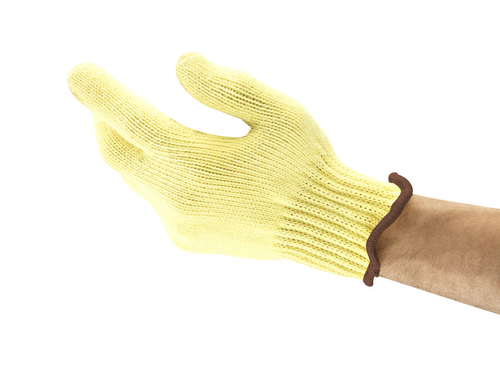
The Ansell HyFlex® 72-400, formerly known as VersaTouch® 72-400, is a durable medium-duty food processing glove engineered for workers who need ANSI A6 cut resistance, EN ISO F cut classification, abrasion resistance, food handling compliance, secure fit, ambidextrous practicality, and repeated-use durability. It combines a fiber glass / HPPE / stainless steel / polyester / Lycra® liner, 10-gauge knitted construction, and a knitwrist cuff.
This Technical Vault summarizes the verified construction, standards, food processing profile, cut performance, sizing guidance, application guidance, inspection points, storage notes, and use limitations for the HyFlex® 72-400.
Vault summary: Durable medium-duty food processing cut glove with fiber glass, HPPE, stainless steel, polyester, and Lycra® liner, 10-gauge blue knitted construction, ambidextrous fit, ANSI A6 cut resistance, ANSI abrasion level 3, EN 388 3X4XF, latex-free and silicone-free materials, and 24 pieces/carton packaging.
Core Product Data
| Manufacturer |
Ansell |
| Brand / Product Family |
HyFlex® |
| Model |
72-400 |
| Former Name |
VersaTouch® 72-400 |
| Product Type |
Durable medium-duty food processing glove with advanced cut resistance |
| Primary Protection Profile |
Cut resistance, abrasion resistance, food processing protection, secure fit, and mechanical handling protection |
| Primary Industry |
Food processing |
| Recommended Uses |
Defeathering and skinning; slicing, cutting and chopping; steaming, frying and roasting; marinating; storing packed meats; storing and transportation; equipment maintenance and repair |
Construction & Materials
| Construction |
Knitted |
| Gauge |
10 gauge |
| Liner Material |
Stainless steel, fiber glass, HPPE, polyester, Lycra® |
| Liner Color |
Blue |
| Coating |
Uncoated |
| Cuff Style |
Knitwrist |
| Hand Design |
Ambidextrous |
| Latex Free |
Yes |
| Silicone Free |
Yes |
| Antistatic |
No |
| Specific Needs |
Food |
Dimensions, Sizing & Packaging
| Length |
260–267 mm / 10.23–10.5 in |
| SOS Stocked Numeric Sizes |
7, 8, 9, 10 |
| Approximate Letter Size Range |
Small, Medium, Large, XL |
| Packaging |
24 pieces/carton |
Ansell Glove Sizing Guide
Proper glove sizing helps improve comfort, dexterity, grip control, and protection. To measure your glove size, wrap a tape measure around the widest part of your dominant hand, just below the knuckles, excluding the thumb.
| Letter Size |
Palm Circumference |
Metric Range |
Common Numeric Size |
| XS |
5.5–6 in |
14–15.2 cm |
6 |
| S |
6.5–7 in |
16.5–17.8 cm |
7 |
| M |
7.5–8 in |
19.1–20.3 cm |
8 |
| L |
8.5–9 in |
21.6–22.9 cm |
9 |
| XL |
9.5–10 in |
24.1–25.4 cm |
10 |
| XXL |
10.5–11 in |
26.7–27.9 cm |
11 |
Fit note: This SOS product page lists numeric sizes 7, 8, 9, and 10. A properly sized cut-resistant food processing glove should feel secure without restricting hand movement. Oversized gloves can reduce control around knives, tools, and equipment components, while undersized gloves can increase hand fatigue and accelerate wear.
Performance Standards & Compliance
| ANSI/ISEA 105-2024 Abrasion Resistance |
Level 3 |
| ANSI/ISEA 105-2024 Puncture Resistance |
X / not reported |
| ANSI/ISEA 105-2024 Cut Resistance |
A6 |
| EN 388 |
3X4XF |
| EN ISO Cut Classification |
F |
| CE Category |
Category II |
| Food Handling |
Satisfies relevant FDA food handling requirements |
| Washing Temperature |
90°C / 194°F |
Standards note: EN 388 3X4XF describes mechanical performance. The “X” in the circular blade cut position means that the ISO cut letter should be used for cut classification. For this glove, the reported ISO cut letter is F.
EN 388 Code Breakdown
| EN 388 Position |
Rating |
Performance Area |
| 1st digit |
3 |
Abrasion resistance |
| 2nd digit |
X |
Circular blade cut resistance not reported / not applicable in the code |
| 3rd digit |
4 |
Tear resistance |
| 4th digit |
X |
Puncture resistance not reported / not applicable in the code |
| Letter |
F |
ISO cut resistance classification |
ANSI Rating Interpretation
| ANSI Rating |
Practical Meaning |
| Cut Level A6 |
High cut protection for food processing tasks such as slicing, cutting, chopping, skinning, and blade-adjacent handling when matched to the actual hazard. |
| Abrasion Level 3 |
Moderate abrasion resistance for repeated handling and food processing use. |
| Puncture X |
Puncture performance is not reported in the ANSI code. Do not use as needle or fine-puncture protection. |
Food Processing Performance Profile
| Feature |
Technical Role |
User Benefit |
| Fiber glass and stainless steel reinforcement |
High cut-resistant fiber structure |
ANSI A6 / EN ISO F cut resistance for demanding food processing tasks |
| HPPE, polyester, and Lycra® blend |
Flexible support structure |
Comfort, fit, and flexibility during repeated processing tasks |
| Ambidextrous design |
Reversible hand fit |
Simplifies glove replacement and helps reduce waste in processing areas |
| Machine washable construction |
Designed for repeated laundering with caustic cleaners |
Supports long wear life when facility laundering procedures are followed |
| Blue liner color |
Food processing visibility profile |
Supports visual identification and food-area PPE management |
Recommended Use Environments
| Application Area |
Why 72-400 Fits |
| Defeathering and skinning |
A6 cut resistance and flexible fit support cut-prone food processing tasks. |
| Slicing, cutting, and chopping |
High cut rating helps protect workers during repetitive blade-adjacent handling. |
| Steaming, frying, and roasting support tasks |
Durable food processing construction supports handling tasks around prepared or processed food operations; it is not a primary heat glove. |
| Storing packed meats and transportation |
Ambidextrous design, secure fit, and durable laundering performance support repeated handling tasks. |
| Equipment maintenance and repair |
Cut resistance and abrasion performance support controlled maintenance tasks around processing equipment. |
Suitable For
- Defeathering and skinning
- Slicing, cutting, and chopping
- Steaming, frying, and roasting support tasks
- Marinating
- Storing packed meats
- Storing and transportation
- Equipment maintenance and repair
- Food processing cut-protection tasks
- Meat, poultry, fish, fruit, and vegetable processing applications where validated by the facility
- Facilities requiring ambidextrous, latex-free, and silicone-free food processing gloves
Not Recommended For
- Chemical immersion or validated chemical breakthrough protection
- Liquidproof barrier protection unless worn under a compatible outer glove
- Moving blade hazards or powered cutting tools
- Needle, hypodermic, or ultra-fine puncture hazards
- Primary heat protection, flame exposure, or high-heat handling
- Electrical protection or ESD-controlled applications requiring validated ESD PPE
- Impact protection
- Sterile cleanroom processing unless separately validated for the controlled environment
- Tasks beyond the glove’s ANSI A6 / EN ISO F cut protection rating
Selection Guidance
Select the HyFlex 72-400 when the job requires a glove that prioritizes food processing cut protection, ANSI A6 cut resistance, EN ISO F cut classification, ambidextrous practicality, laundering durability, and flexible comfort. It is best matched to food processing cutting, slicing, chopping, skinning, product handling, transportation, and equipment maintenance tasks where a cut-resistant knit glove is appropriate.
| Choose 72-400 When You Need |
Consider Another Glove When You Need |
| ANSI A6 / EN ISO F cut protection for food processing |
Liquidproof, chemical-resistant, or disposable food-contact outer glove protection |
| Ambidextrous glove practicality |
Dedicated left/right ergonomic cut gloves or coated grip gloves |
| Machine-washable food processing glove construction |
Sterile cleanroom, impact, thermal, ESD, or chemical-specific PPE |
| Latex-free and silicone-free construction |
Needle puncture protection or moving blade protection |
Inspection Before Use
- Inspect the glove body for cuts, holes, broken yarns, fraying, thinning, or stretched-out areas.
- Check fingertips, thumb crotch, palm, and high-contact zones for excessive wear or fiber damage.
- Confirm the glove is clean and free from visible contamination before food processing use.
- Check that the knitwrist cuff is intact and provides a secure fit.
- Do not use gloves that have contacted unknown chemicals, incompatible cleaning agents, or uncontrolled contaminants.
- Remove damaged or contaminated gloves from food processing areas according to site procedures.
- Replace gloves when cut resistance, fit, cleanliness, or structural integrity is compromised.
Storage & Handling Notes
- Store gloves in a clean, dry location away from excessive heat, direct sunlight, ozone, sharp objects, ignition sources, and contamination sources.
- Keep gloves separated from chemicals, non-food-contact materials, dirty tools, and uncontrolled contaminants.
- Use clean, dry hands when donning gloves to maintain hygiene and fit.
- Follow facility procedures for laundering, sanitation, glove reuse, foreign-material control, and disposal.
- When used with an outer glove, verify compatibility, fit, food-contact status, and donning/doffing procedure.
Cleanroom & Controlled Environment Note
The HyFlex 72-400 is a food processing cut-resistant glove, not a sterile cleanroom glove. For controlled environments, evaluate the glove against particulate, extractable, linting, laundering, packaging, food-contact, and gowning requirements before approval. Use cleanroom-qualified gloves when the process requires validated low-particle, sterile, or cleanroom-specific hand protection.
Technical FAQs
What is the cut level of the HyFlex 72-400?
The glove is rated ANSI Cut Level A6 and carries an EN ISO cut level F classification under EN 388 3X4XF.
What was this glove formerly called?
The HyFlex 72-400 was formerly known as VersaTouch® 72-400.
What materials provide cut resistance?
Ansell lists the liner as stainless steel, fiber glass, HPPE, polyester, and Lycra®.
Is this glove ambidextrous?
Yes. The HyFlex 72-400 is ambidextrous, which means each glove can be worn on either hand.
Is this glove coated?
No. The HyFlex 72-400 is an uncoated knitted cut-resistant food processing glove.
Is this glove latex free and silicone free?
Yes. Ansell and SOS product data list the HyFlex 72-400 as both latex free and silicone free.
Critical Use Limitations
The HyFlex 72-400 is designed for food processing cut-resistant hand protection. It is not intended for chemical immersion, liquidproof barrier protection, electrical protection, primary thermal protection, impact protection, moving blade hazards, needle puncture protection, sterile cleanroom use, or tasks beyond its ANSI A6 / EN ISO F cut rating. Final glove selection should be based on documented hazard assessment, blade type, cut force, processing task, sanitation procedure, outer-glove requirements, laundering method, foreign-material control, glove fit, and replacement frequency.
Technical insight: The HyFlex 72-400 is strongest where high cut resistance, food processing compliance, ambidextrous practicality, and repeated laundering durability are required; for liquid, chemical, sterile, thermal, impact, or needle-puncture hazards, select a glove system engineered for that specific exposure.
Product page updated: Mar. 2026 (SOS Technical Staff)
© 2026 SOSCleanroom.com