When hazards stack, gloves fail fast: how RINGERS® R075 is built for chemical splash, impact strikes, and sharp-edge handling in one task
The Technical Vault | By SOSCleanroom
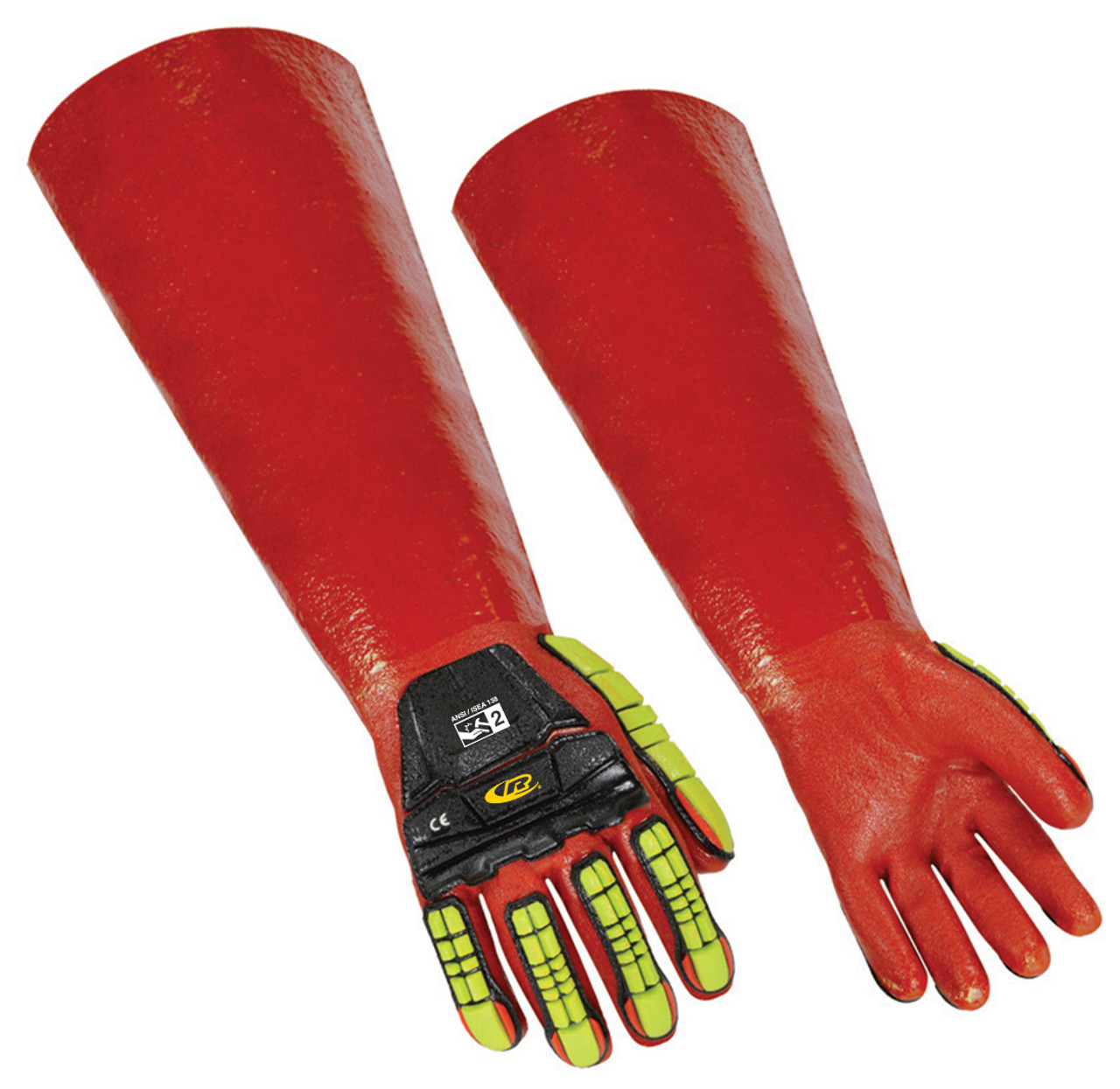
The fastest way to get hurt — or to contaminate a work area — is treating a “stacked hazard” job like three separate jobs. Spill cleanup, chemical transfer, or wet maintenance often combines liquid exposure, impact risk from tools and pinch points, and sharp edges from damaged hardware or debris. RINGERS® R075 is designed for that reality: a waterproof PVC coating, extended long-gauntlet coverage, and TPR impact protection that reaches across the knuckles and fingers so the glove can stay in the task instead of becoming the failure point.
Reliability is part of the control plan. SOSCleanroom supports programs that need consistent availability, documentation discipline, and stable sourcing so teams are not forced into “close enough” substitutions midstream.
The Operational Problem It Solves
R075 is for wet, messy, high-risk work where three mechanisms drive most glove failures:
- Liquid pathways: splash, drip, and smear routes that move chemicals beyond the intended work zone.
- Impact strikes: knuckle and finger-back hits during slips, tool contact, pinch events, and awkward carry.
- Sharp handling: jagged edges and debris during cleanup, repair, and “wet maintenance” that can escalate from abrasion to cuts quickly.
The design intent is to keep protection continuous across those exposures instead of forcing operators to choose between “chemical glove” and “impact glove” while the job is already underway.
What It’s For
R075 is positioned for wet, messy, and high-risk tasks where chemical contact, impact hazards, and sharp materials can occur together. Typical uses include chemical mixing/loading, spill or leak cleanup, maintenance and infrastructure work, and oil-and-gas-adjacent tasks (drilling, assembly/completion, hydraulic repair), plus plating/coating/sealing/painting support.
It is sold as a case of 24 pairs (sizes 8, 10, and 12).
Decision Drivers (What Buyers Should Care About First)
- Waterproof PVC coating: reduces liquid ingress and supports wet cleanup and handling where drip paths and splash are expected.
- Impact coverage where strikes actually happen: TPR protection extends across the top of hand and finger backs (F3 Technology™ positioning) to reduce strike energy reaching the hand.
- Long gauntlet coverage: protects wrist and lower forearm zones that are often exposed during pour, wipe, and carry operations.
- Documented protection framing: chemical positioning references EN 374-1 Type A (match to your chemical list, concentration, temperature, and SDS).
- Mechanical baseline: cut rating A3 and abrasion rating 4 support jagged handling and repeated contact in wet work.
- Operational sizing and changeout discipline: the “right glove” fails if the wrong size drives finger fatigue, grip loss, or early tearing; size selection and inspection cadence are part of the safety control.
Specifications in Context
| SKU |
R075 |
| Pack |
Case (24 pairs) |
| Type |
Impact-resistant glove |
| Coating |
PVC (waterproof) |
| Cut / Abrasion |
Cut rating A3; abrasion rating 4 |
| Color |
Red |
| Sizes |
8, 10, 12 |
Practical reading: long-gauntlet coverage is most valuable when the hazard is not just contact at the palm — it is splash and drip travel. Impact protection matters most when it extends beyond knuckles to fingers, because many real strikes are not “square hits.” And chemical claims always require matching your actual chemical and conditions to the tested list.
Protection Claims in Context: What to Verify Before You Put It in Service
Chemical positioning (EN 374-1 Type A): Type A indicates performance against multiple standard test chemicals under defined test conditions. Operationally, the only safe interpretation is “verify against your SDS and your chemical list.” Concentration, temperature, mixtures, and contact time change outcomes — and field use is not a lab test.
Impact positioning (TPR coverage): Impact injuries frequently occur across knuckles and finger backs during slips, tool strikes, and pinch events. The value is coverage that stays in place while gripping and carrying, not just a badge on the glove.
Heat contact note (EN 407 level 1 contact heat): Treat this as limited, short-contact resistance. It is not a license for prolonged high-heat handling. If heat exposure is part of your standard job, validate the glove for that exposure mode.
Best-Practice Use: Operator-Level Controls That Prevent Failures
- Define the task class: mixing/transfer vs. cleanup vs. wet maintenance. Set a glove changeout rule for each class, including “stop work” triggers.
- Inspect before chemical contact: check coating integrity (cuts, tears, pinholes) before entering chemical contact tasks.
- Use the gauntlet intentionally: position sleeves and gauntlet overlap so splash routes do not run into the glove opening.
- Keep grip and dexterity honest: if the glove forces excess squeeze force, fatigue and slips rise — and impacts rise with them. Size correctly and do not “make it work.”
- Plan containment and disposal: treat contaminated gloves as contaminated materials; align removal and disposal to your site’s chemical safety and waste procedures.
Common Failure Modes—and How to Prevent Them
- Using a “chemical-rated” glove without matching the chemical list: prevent with SDS matching and a written glove selection matrix.
- Skipping inspection before wet chemical tasks: prevent with a quick pre-task check for coating cuts and seam damage.
- Forearm exposure during splash work: prevent by choosing gauntlet length for the splash zone and controlling sleeve/gauntlet overlap.
- Wearing past damage: prevent with changeout triggers tied to coating damage, grip loss, or visible degradation.
Where This Glove Fits in a Controlled Program
R075 is a strong fit for wet, chemical-adjacent tasks where impact risk and sharp handling occur in the same workflow: spill response, transfer and cleanup, and maintenance where tools and jagged hardware are part of the job. It is most effective when paired with a defined chemical list match, inspection and changeout rules, and sizing discipline that keeps dexterity and grip stable across a shift.
Source basis
- SOSCleanroom product page: “Ansell Waterproof Gloves Ringers R075 PVC-Coated Long Gauntlet-Style Impact” (SKU, case pack, cut/abrasion ratings, coating, sizes, and description claims including EN 374-1 Type A and EN 407 level 1 contact heat note).
- Manufacturer positioning on the page: TPR impact protection (F3 Technology™), waterproof PVC coating, and long gauntlet coverage (summary and intended-use framing).
- Operational best-practice guidance derived from standard glove program controls: chemical matching to SDS, inspection and changeout rules, and task-based selection discipline.