The Technical Vault
By SOSCleanroom
ANSI Cut Level A3
EN ISO Cut Level C
15-Gauge Precision
INTERCEPT™ Technology
FORTIX™ Abrasion Resistance
Touchscreen Compatible
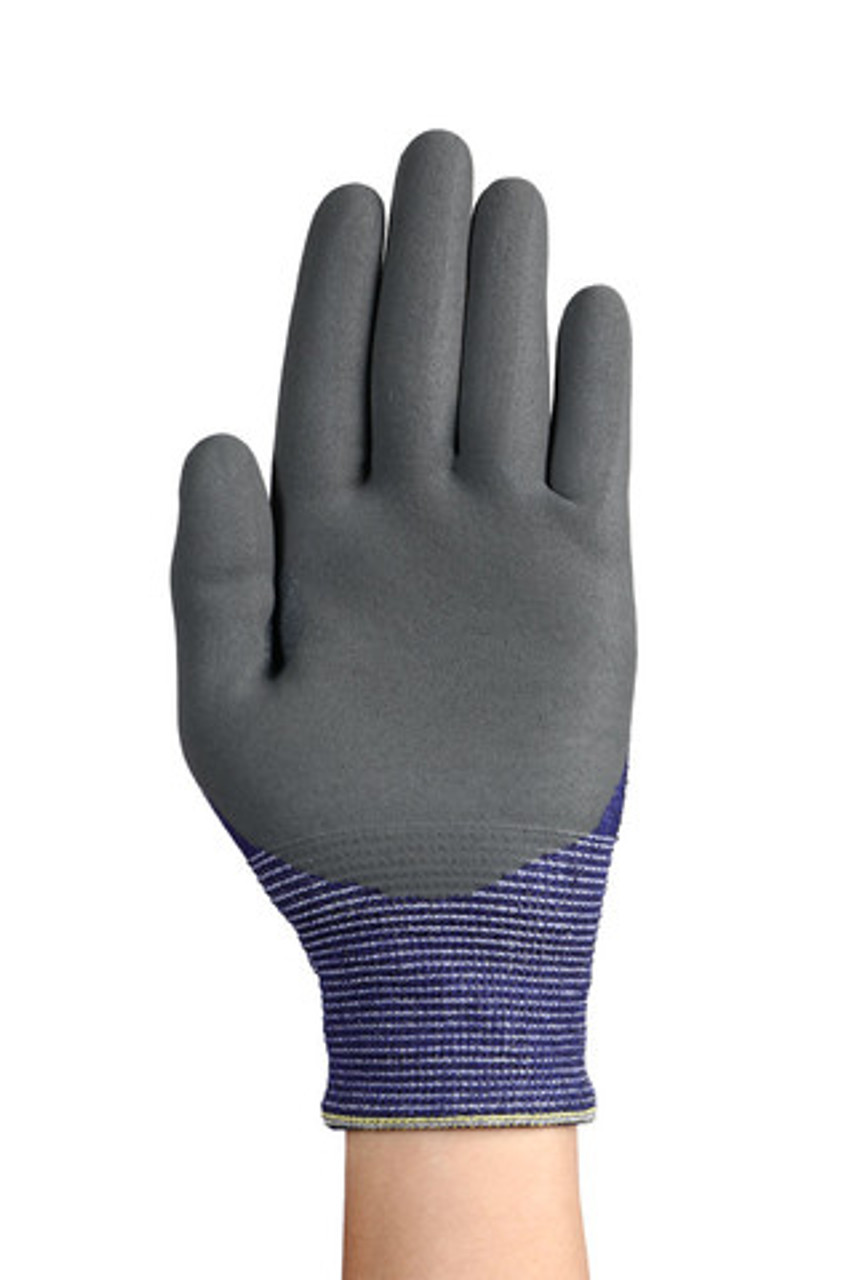
Ansell HyFlex® 11-561: lightweight cut protection engineered for precision industrial handling
Ansell HyFlex® 11-561 is a 15-gauge industrial cut-resistant glove designed to address a common manufacturing challenge: protecting workers from sharp components while preserving the dexterity required for accurate, repetitive handling. The glove combines INTERCEPT™ Cut Resistance Technology with a nitrile palm coating, improved FORTIX™ Abrasion Resistance Technology, and reinforced thumb-crotch construction.
Operations takeaway: HyFlex 11-561 is designed for workstations where cut resistance, dexterity, and durability must operate together. Its ANSI A3 / EN ISO C performance supports approved sharp-material handling tasks, while the lightweight liner and touchscreen-compatible construction help minimize unnecessary glove removal and handling interruptions.
Industrial safety context: balancing protection with precision handling
Cut-resistant gloves are an important part of hand-protection programs in automotive manufacturing, metal fabrication, equipment assembly, and maintenance operations. Workers may handle hundreds of components during a shift, including sheet metal, stamped parts, machined components, and materials with unfinished edges.
Heavy protective gloves may provide substantial mechanical protection, but excessive bulk can reduce finger mobility and tactile feedback. Conversely, lightweight general-purpose gloves may provide insufficient protection against the sharp edges encountered during industrial production.
HyFlex 11-561 addresses this tradeoff through a thin, engineered knitted liner and a strategically applied gripping surface. The product is positioned as a lightweight ANSI A3 / EN ISO C glove for operations where both mechanical protection and controlled handling matter.
Control point: A cut rating is not a universal guarantee against injury. The appropriate glove depends on edge sharpness, applied force, contact angle, task repetition, and the possibility of other hazards. Employers should assess the actual task before approving a glove.
Specifications (SKU controls for RFQs, safety programs, and receiving)
- Product: Ansell HyFlex® 11-561
- Product Category: Lightweight industrial cut-resistant glove
- Construction: 15-gauge knitted liner
- Liner Technology: INTERCEPT™ Cut Resistance Technology
- Liner Material: Reinforced HPPE-based yarn construction
- Liner Color: Dark blue
- Coating Material: Nitrile
- Coating Color: Gray
- Coating Coverage: Palm coated
- Additional Reinforcement: Reinforced thumb crotch
- Coating Technology: FORTIX™ Abrasion Resistance Technology
- Cuff: Knitwrist
- ANSI Cut Resistance: ANSI/ISEA 105-2024 Level A3
- EN ISO Cut Resistance: Level C
- Mechanical Protection: EN 388:2016 + A1:2018, 4X42C
- Thermal Marking: EN 407:2020, X1XXXX
- General Glove Standard: EN ISO 21420:2020
- PPE Classification: Category II under applicable EU PPE requirements
- Antistatic: Manufacturer lists antistatic properties; confirm specific ESD requirements separately
- Touchscreen Compatibility: Yes
- Silicone-Free: Yes
- Sizes: 5, 6, 7, 8, 9, 10, 11, 12
- Length: 210-285 mm (8.27-11.22 inches), depending on size
- Packaging: 12 pairs/bag; 12 bags/carton; 144 pairs/carton
- Manufacturer Washing Guidance: Up to 3 washing cycles at 40°C (104°F), subject to current instructions for use
Documentation rule: For controlled procurement and industrial safety programs, verify required protective ratings, product configuration, acceptable size range, and manufacturer documentation before approving a glove for standardized use. Reference the current Ansell Product Data Sheet rather than relying only on distributor summaries.
Performance characteristics (manufacturer-published protective ratings)
- ANSI/ISEA 105-2024 Cut Resistance: A3
- EN ISO 13997 Cut Resistance: Level C
- EN 388:2016 + A1:2018: 4X42C
- EN 388 Abrasion Resistance: Level 4
- EN 388 Coupe Cut: X (no reported applicable numerical level)
- EN 388 Tear Resistance: Level 4
- EN 388 Puncture Resistance: Level 2
- EN 388 ISO 13997 Cut Resistance: Level C
- EN 407:2020: X1XXXX (limited Level 1 contact-heat performance; other thermal properties are not established by this marking)
- ANSI Abrasion: Level 4, shown in the SOS-hosted manufacturer datasheet
- Cut-Resistant Yarn: Next-generation HPPE yarn developed with INTERCEPT™ technology
- Improved FORTIX™ Technology: Ansell's current product documentation reports 2x greater abrasion resistance against specified competitive gloves under standardized testing
- Lightweight Construction: Ansell reports approximately 20% lower weight than standard ANSI A3 / EN ISO C rated gloves in its comparison
- Cut Performance Comparison: Ansell reports 2x greater cut resistance compared with similar gloves manufactured using standard HPPE yarn
- Touchscreen Use: Compatible with multiple consumer and industrial touchscreen devices
Performance interpretation: Ansell's relative performance claims are based on specified comparison products and laboratory conditions. The 20% lighter design and 2x cut/abrasion resistance claims do not mean that every individual application will produce the same improvement. Laboratory ratings should always be evaluated alongside actual operating conditions.
Engineered liner construction: INTERCEPT™ yarn and 15-gauge design
The liner is the foundation of HyFlex 11-561's mechanical cut resistance. Ansell uses INTERCEPT™ Cut Resistance Technology incorporating engineered HPPE-based yarns to deliver protective performance while maintaining a relatively thin, flexible structure.
HPPE, or high-performance polyethylene, is commonly selected for cut-resistant textile constructions because of its strength-to-weight characteristics. By engineering the yarn structure and overall knit, manufacturers can improve resistance to cutting forces without depending exclusively on thicker glove materials.
The 15-gauge knit contributes to the glove's close-fitting design. This supports finger articulation, tactile feedback, and accurate handling of small or irregularly shaped components.
Construction takeaway: The glove's protection comes from the engineered yarn and textile structure, not simply its thickness. Choosing the correct cut rating is more important than assuming that a heavier glove always provides better protection.
FORTIX™ nitrile coating: abrasion resistance, grip, and durability
HyFlex 11-561 uses a gray nitrile palm coating designed to support grip and resist mechanical wear in demanding handling environments. Its FORTIX™ technology focuses on improving coating durability during repetitive contact with workpieces, equipment, and abrasive surfaces.
Unlike a fully coated glove, the palm-dipped construction leaves much of the back of the hand uncoated. This supports breathability and flexibility while concentrating gripping performance in the areas that contact parts and tools.
Ansell's updated manufacturer documentation identifies an improvement in abrasion performance through FORTIX™ technology. Because abrasion is a frequent cause of glove replacement, improved coating durability may support longer service life and fewer interruptions in suitable handling applications.
Coating limitation: A nitrile-coated industrial glove is not automatically a chemical-protective glove. The thin palm coating and exposed knitted liner do not establish a continuous chemical barrier. Use dedicated chemical-resistant gloves when the hazard assessment requires chemical protection.
Reinforced thumb crotch: controlling a common high-wear point
The thumb-crotch area, located between the thumb and index finger, experiences repeated friction during gripping, tool handling, and component positioning. It is a common location for accelerated coating wear and mechanical fatigue.
HyFlex 11-561 incorporates reinforcement in this high-contact area to help resist premature wear during repetitive handling tasks. This feature is particularly relevant for operations involving tools, irregularly shaped metal components, and frequent grasping movements.
Inspection point: Include the thumb crotch in routine glove inspections. Reinforcement improves durability but does not eliminate wear. Replace gloves when this area shows tearing, exposed liner damage, or a loss of structural integrity.
What HyFlex 11-561 is designed to do (typical use cases)
- Handle sharp metal parts, panels, and components during industrial manufacturing
- Support light-duty stamping operations and component transfer
- Perform final assembly of automotive and industrial products
- Inspect mechanical parts with sharp or unfinished edges
- Handle components requiring precision, flexibility, and tactile control
- Perform suitable equipment maintenance involving mechanical handling hazards
- Apply finishes to materials and manufactured products where chemical hazards have been separately assessed
- Operate compatible touchscreens, scanners, and digital workstation terminals
- Support repetitive handling operations where abrasion resistance and grip are important
Application fit: HyFlex 11-561 is primarily intended for industrial cut protection and precision handling. It should not be substituted for a higher-rated cut glove, an electrical insulating glove, a dedicated chemical glove, or a qualified sterile/cleanroom glove without a separate evaluation.
Best-practice use (reduce cut exposure, wear, and handling errors)
- Evaluate the cutting hazard: Identify edge sharpness, required handling force, blade contact potential, and the type of workpiece.
- Confirm the protection level: Verify that ANSI A3 / EN ISO C provides adequate protection for the operation and does not conflict with other PPE requirements.
- Choose the correct size: Select a properly fitting glove that supports finger movement and secure control of parts and tools.
- Inspect before each use: Look for worn fingertips, damaged palm coating, holes, broken yarns, and deterioration of the reinforced thumb crotch.
- Maintain controlled handling: Avoid unnecessary sliding or dragging of sharp parts across the glove surface.
- Protect coating performance: Remove gloves from service when contamination, coating damage, or wear affects gripping ability.
- Use touchscreen compatibility appropriately: Verify performance with the actual device and keep glove surfaces sufficiently clean for accurate operation.
- Apply approved laundering practices: Follow current manufacturer instructions, including washing limits and inspection after cleaning.
- Replace damaged gloves: Retire gloves that no longer satisfy site inspection criteria.
Method standardization tip: Define the accepted glove SKU, cut-resistance rating, available sizes, inspection criteria, replacement triggers, and permitted cleaning practices in the PPE work instruction. Consistent selection and use help reduce variations between operators and shifts.
Misuse controls & when not to use HyFlex 11-561
- If higher cut resistance is required: Do not assume A3/C protection is sufficient for severe blade, glass, or high-force cutting hazards. Choose a glove meeting the assessed hazard level.
- If significant puncture hazards exist: Verify puncture resistance separately. A high abrasion or tear rating does not automatically indicate high puncture protection.
- If chemical protection is required: The nitrile palm coating does not establish whole-hand chemical barrier protection. Use a glove documented for the specific chemical exposure.
- If flame or arc-flash protection is required: HyFlex 11-561 should not be treated as an arc-rated or flame-resistant glove. Its EN 407 marking does not establish those protections.
- If electrical shock is possible: Do not use as a substitute for voltage-rated insulating gloves.
- If an ESD-controlled environment requires qualification: Confirm compliance with the facility's electrostatic-control program. A general antistatic claim does not replace documented ESD testing or certification.
- If ISO cleanroom or sterile use is required: Select gloves with appropriate cleanroom processing and sterility documentation. Industrial mechanical ratings do not establish contamination-control suitability.
- If gloves may become entangled in machinery: Follow the equipment's operating procedures and risk assessment. Gloves may be unsuitable around exposed rotating components.
- If coating or liner damage is present: Remove the glove from service rather than continuing to use a compromised protective product.
Recommended industrial glove pairings (hazard-aligned selection)
Industrial facilities often require different glove types across assembly, maintenance, electronics, and fabrication operations. Standardizing each workstation around the correct protective performance helps avoid unnecessary substitutions and mismatches between hazards and PPE.
Why this matters: Industrial glove families are engineered for different hazards. A cut-resistant glove does not automatically provide flame resistance, ESD compliance, electrical insulation, or chemical protection. Review the current datasheet and site PPE requirements for every substitution.
Wear life, inspection, and replacement considerations
The service life of HyFlex 11-561 depends on contact pressure, surface roughness, sharp-edge exposure, task frequency, coating contamination, and laundering practices. No universal number of shifts or handling cycles guarantees that the glove will retain its original performance.
- Coating abrasion: Inspect the palm and fingertips for thinning, worn surfaces, or missing coating.
- Thumb-crotch wear: Monitor the reinforced area between the thumb and index finger for tearing or excessive friction damage.
- Liner integrity: Check for cuts, holes, broken yarns, and exposed damaged fibers.
- Grip deterioration: Replace gloves when contamination or surface wear reduces reliable component handling.
- Fit and comfort: Retire gloves that have become stretched, distorted, or improperly fitting.
- Laundering: Ansell lists up to three washing cycles at 40°C; follow the current instructions and inspect after each cycle.
- Documentation: Use the facility's established inspection and replacement criteria rather than an unsupported fixed lifespan.
Inspection takeaway: A glove's laboratory cut rating applies to the tested product under defined conditions. Physical damage, contamination, excessive wear, or improper care may compromise continued performance. Routine inspection is essential.
Manufacturing and packaging sustainability considerations
Ansell includes HyFlex 11-561 within its Ansell Earth product information program, providing additional context about manufacturing and packaging characteristics. These details can support supplier questionnaires and procurement sustainability reviews.
- Manufacturing energy: Ansell reports production in a facility operating with 83% renewable energy.
- Waste diversion: Manufacturer information identifies Intertek certification for diversion of more than 99% of facility waste from landfill.
- Management systems: Ansell identifies accredited environmental and energy management systems at the manufacturing facility.
- Shipping cartons: Manufacturer documentation identifies a minimum 45% recycled material content in the shipper case.
- Packaging optimization: Ansell reports carton-size optimization intended to improve shipping efficiency.
Procurement note: These are manufacturer-reported manufacturing and packaging attributes. They do not mean the gloves themselves are biodegradable, recyclable in ordinary waste systems, or suitable for unrestricted reuse. Consult current Ansell sustainability documentation for formal reporting.
Why buy Ansell HyFlex® 11-561 from SOSCleanroom
- Authorized Ansell sourcing: SOSCleanroom supports industrial and critical-environment customers with genuine Ansell protective equipment and purchasing assistance.
- Correct SKU selection: Order the exact HyFlex 11-561 model with appropriate sizes and packaging to reduce unwanted substitutions.
- Flexible purchasing: SOSCleanroom offers individual pairs, 12-pair bags, and full 144-pair cases.
- Manufacturer documentation: Access current Ansell specifications and technical documents for product qualification and supplier review.
- Application assistance: Compare HyFlex and ActivArmr models to identify options matched to different mechanical or specialty hazards.
- Centralized procurement: Source multiple glove types and industrial consumables through SOSCleanroom to simplify recurring purchasing.
Manufacturer documentation (authoritative references)
- SOSCleanroom HyFlex 11-561 Product Page: Click Here
- Current Ansell HyFlex 11-561 Product Data Sheet: Click Here
- SOSCleanroom-Hosted Ansell HyFlex 11-561 Datasheet: Click Here
- Ansell Official HyFlex 11-561 Product Information: Click Here
Documentation update notice: The SOS-hosted manufacturer datasheet references up to 20% greater abrasion durability compared with a previous technology version. Ansell's newer manufacturer documentation reports 2x greater abrasion resistance compared with specified competitive gloves under standardized December 2025 laboratory testing. These figures use different comparison bases and should not be treated as conflicting measurements of the same test. For current product qualification, use the latest Ansell documentation and confirm specifications for the supplied product.
If you have any questions please email us at Sales@SOSsupply.com or give us a call at (214)340-8574.
OR check out the AI ChatBot powered by SOSCleanroom data libraries - give it a try! THIS IS NEW FOR 2026!
Last reviewed: Oct. 13, 2026 (SOS Technical Staff)
© 2026 SOSCleanroom. All rights reserved.