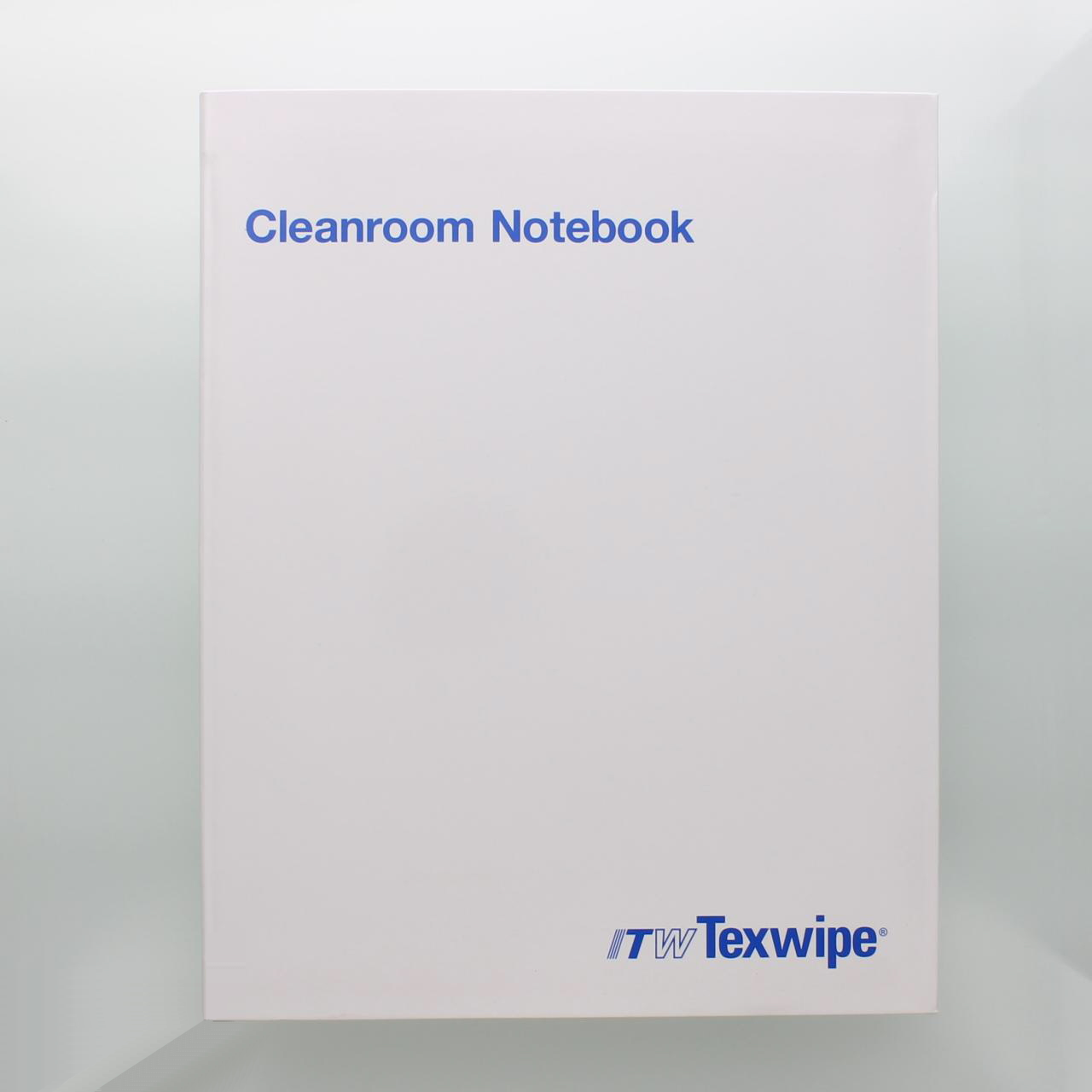
Product image shown from the SOSCleanroom listing.
1) Practical solutions in a critical environment
In controlled environments, documentation is not “office supply.” It is a handled, moved, opened, closed, set down, and sometimes wiped object that can quietly
introduce contamination signatures: paper dust, fibers, ink smearing, cover abrasion, and edge debris. TX5708 is built for situations where a notebook must behave
like a controlled record and still remain compatible with cleanroom handling discipline.
This format is often selected when you need traceable, reviewable entries for investigations, engineering changes, deviations, facility work orders,
and lab notebooks that may be retained as part of a documented quality system.
2) What this product is used for
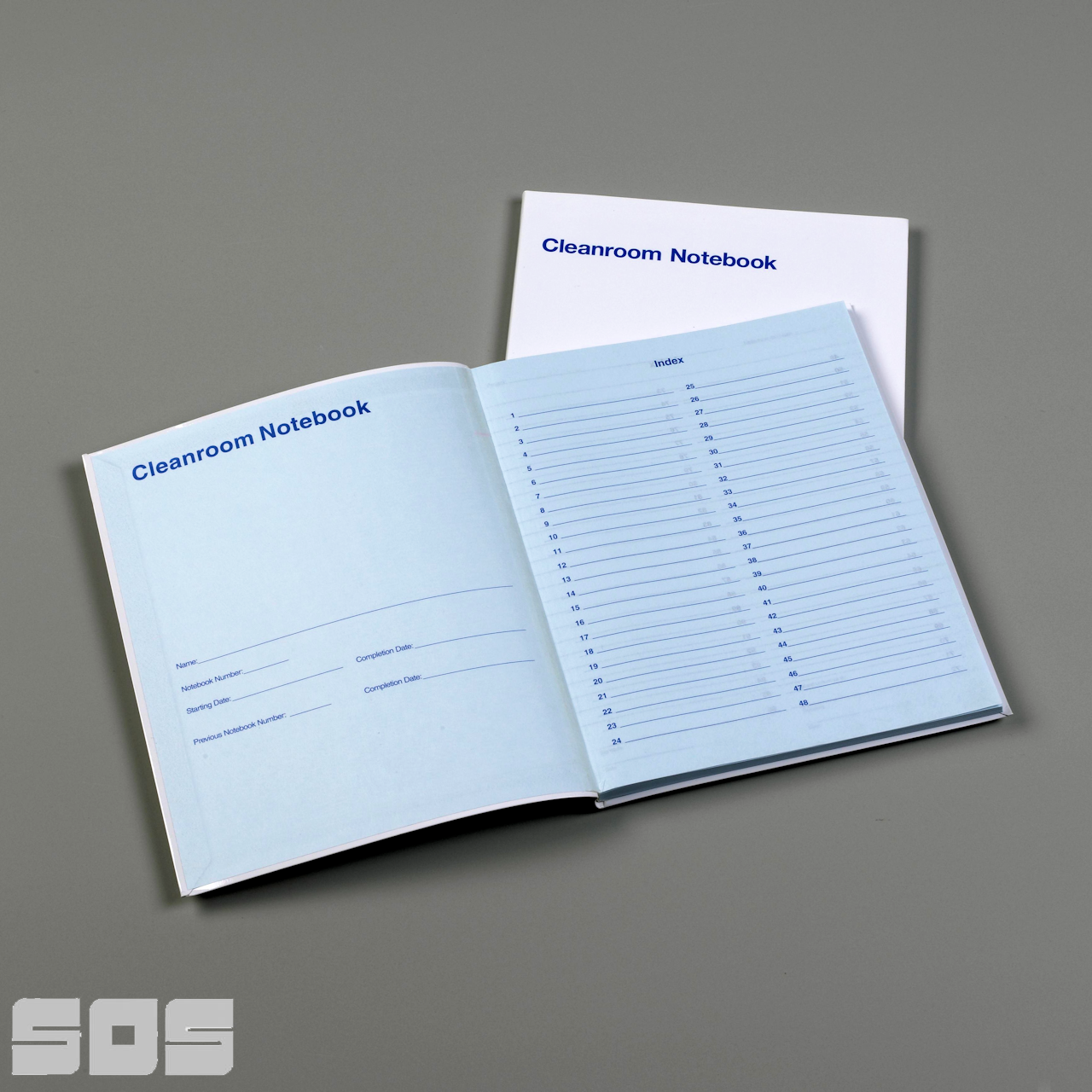
- Permanent-bound laboratory notebook use where entries must be retained, reviewed, and referenced later.
- Critical recordkeeping in cleanrooms and controlled manufacturing.
- Legal-style recording support: individually numbered pages, an index for retrieval, and signature/date lines.
- GLP-aligned documentation workflows in critical laboratory and manufacturing environments (manufacturer positioning).
3) Why customers consider this product
- Designed to serve as a legal document: numbered pages, index, and identification fields reduce record ambiguity during reviews.
- Dual “signature” and “date” lines at the base of each page support controlled sign-off behavior.
- Sewn pages with silicone-free thread and a Mylar® gloss film laminate cover for durability and reduced handling fallout.
- Cleanroom processed and double packaged to support controlled introduction practices.
- Typical contamination data published (particles and ion extractables) for risk-based selection conversations.
4) Materials, composition, and build
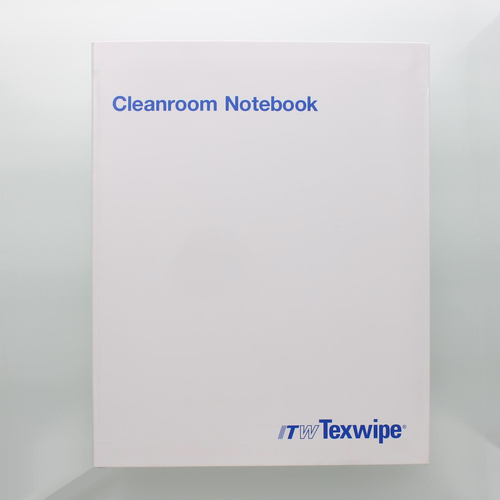
TX5708 is a hard-bound, permanent-bound “flexi-cover” notebook with pages sewn using silicone-free thread. The cover is protected with a Mylar® gloss film laminate,
described by Texwipe as chemical resistant. The notebook is described as made with low particle cleanroom paper and is cleanroom processed and double packaged.
Practical receiving cue: treat the spine and cover edges as inspection points. Quarantine visibly damaged notebooks rather than “using them up” in cleaner areas.
5) Specifications in context
| Attribute |
TX5708 |
| Manufacturer / brand | ITW Texwipe (TexWrite®) |
| Notebook type | Permanent-bound cleanroom notebook (hard-bound; sewn pages) |
| Size | 8.5" x 11" |
| Paper color | Blue |
| Ruling | College-ruled |
| Page count | 100 pages (including index/identification pages), with 96 numbered pages |
| Identification fields | Notebook identification; project and notebook lines; index for retrieval |
| Signature control | Dual “signature” and “date” lines |
| Thread | Silicone-free thread |
| Cover protection | Mylar® gloss film laminate; described as chemical resistant |
| Cleanroom processing | Cleaned and double packaged in a cleanroom environment |
| Cleanroom environment guidance | ISO Class 3–8; Class 1–100,000; EU Grade A–D |
| Autoclave guidance | Autoclaving not recommended |
| Packaging | 10 notebooks / box (case) |
| Sterility | Not stated in published TDS listing |
| Country of origin | Made in USA |
| ESD / static-control claims | Not published |
6) Performance and cleanliness considerations
Texwipe publishes typical contamination characteristics as representative analyses (not specifications).
Typical contamination characteristics (published as typical, not specifications)
| Metric |
Typical value |
Referenced test method |
| Particles (> 0.5 µm) | 4.8 million particles/m² | Texwipe TM5 |
| Sodium (ion extractable) | 85 ppm | Texwipe TM12 |
| Chloride (ion extractable) | 50 ppm | Texwipe TM12 |
Note: Texwipe states these values are typical analyses and not specifications.
Solvent resistance of printed ruling and fields is not stated in the published source basis for TX5708; treat compatibility as a qualification activity (pen/marker selection + dry time + wipe contact).
7) Packaging, sterility, traceability, and country of origin
- Packaging: 10 notebooks per box (case).
- Cleanroom handling: described as cleaned and double packaged in a cleanroom environment.
- Traceability by design: numbered pages, an index, and identification lines reduce “missing page” questions during audits.
- Sterility: not stated in published TDS listing.
- Autoclave: autoclaving not recommended.
- Country of origin: Made in USA.
8) Best-practice use
- Assign by zone: keep each notebook dedicated to a room, tool cart, or line.
- Standardize writing tools: qualify a cleanroom-compatible pen/marker for legibility and smear resistance.
- Dry-time discipline: require a short dry time before page turns, signatures, or closing.
- Handle the cover like a contact surface: set it down only on clean, defined locations.
- Record control behaviors: use the index and numbered pages as intended; avoid loose inserts unless your quality system defines how they are controlled.
9) Common failure modes
- Smearing and offset transfer: driven by writing instrument choice and fast page turns.
- Cover edge abrasion debris: repeated sliding across stainless shelves; define storage pockets/holders.
- Record integrity gaps: skipping the index or identification fields creates investigation friction.
- Uncontrolled movement between areas: define transfer controls before moving notebooks into cleaner spaces.
10) Closest competitors
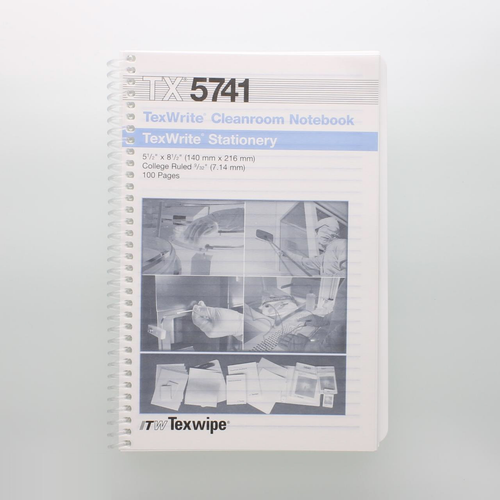
Common alternatives include cleanroom notebook programs from Micronova and Berkshire, plus other Texwipe TexWrite notebook formats when the primary driver is form factor rather than the legal-document layout.
11) Critical environment fit for this product
Texwipe lists TX5708 for ISO Class 3–8 (also Class 1–100,000 and EU Grade A–D). This aligns with documentation tasks where notebooks must remain readable and durable under cleanroom handling discipline.
For over 35 years, SOS and Texwipe have been close partners, and SOSCleanroom is the authorized Master Distributor of ITW Texwipe for the United States market.
12) SOSCleanroom note about SOPs
The Technical Vault is written to help customers make informed contamination-control decisions and improve day-to-day handling technique.
It is not your facility’s Standard Operating Procedure (SOP), batch record, or validation protocol.
Customers are responsible for establishing, training, and enforcing SOPs that fit their specific risks, products, equipment, cleanroom classification, and regulatory obligations.
Always confirm material compatibility, cleanliness suitability, sterility requirements, and acceptance criteria using your internal quality system and documented methods.
If you adapt any technique guidance from this entry, treat it as a starting template. Your team should review and approve the final method, then qualify it for your specific surfaces, solvents, cleanliness limits, inspection methods, and risk profile.
13) Source basis
SOSCleanroom is the source for this Technical Vault entry.
Briefed and approved by the SOSCleanroom (SOS) staff.
If you have any questions please email us at Sales@SOSsupply.com
Or give us a call at (214)340-8574.
If you need additional information please try our SOSCleanroom specific AI ChatBot which draws from our extensive cleanroom specific libraries.
Last reviewed: May 4, 2026
© 2026 SOSCleanroom