Texwipe TX5800 TexWrite MP10 White and Blue 8.5" x 11" Ultraclean Documentation Material

$352.20
(No reviews yet)
SKU:
TX5800
Availability:
7 - 10 Business Days
Shipping:
Calculated at Checkout
Quantity Option (Case):
5 Reams Per Case (100 Sheets Per Ream)
Texwipe TX5800 TexWrite® MP10 Ultraclean Documentation Material — 8.5" x 11", White/Blue (Synthetic, Cellulose-Free)
TX5800 TexWrite® MP10 is a high-performance documentation material built for ultraclean manufacturing environments that cannot tolerate cellulose contamination. Unlike conventional paper, MP10 uses a 100% synthetic substrate (Teslin®) engineered for extremely low particle generation, strong print performance, and reduced smearing/bleed behavior in controlled documentation workflows.

For over 35 years, SOS and Texwipe have been close partners, and SOSCleanroom is the authorized Master Distributor of ITW Texwipe for the United States market. That partnership matters when documentation materials are part of a controlled program: consistent product lineage, continuity of supply, and dependable access to manufacturer documentation for qualification and audit readiness.

Where technicians and engineers use TX5800
  • Workstation instructions and visual aids where lamination is undesirable and cellulose paper is prohibited.
  • Equipment manuals, controlled work instructions, and point-of-use job packets inside critical areas.
  • Note taking and data recording on carts, benches, and inside hoods where office paper is a contamination risk.
  • A clean, smooth, disposable work surface or separator (short-duration use where wiping/cleaning is controlled by SOP).
  • ESD-sensitive environments where antistatic/low ESD potential documentation materials are preferred.
Why MP10 exists
Many “paper problems” in cleanrooms are not paperwork problems — they are cellulose particle contamination, toner shedding, smearing, and uncontrolled material migration. MP10 is designed to minimize those risks while keeping documentation practical at the point of use.

Published configuration 
  • SKU: TX5800
  • Sheet size: 8.5" x 11" (21.6 cm x 28 cm)
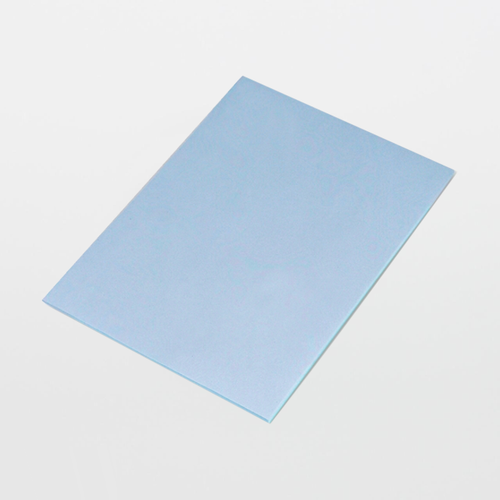
  • Color: White on one side / distinctive blue coating on the other side
  • Material/substrate: Teslin® (100% synthetic; cellulose-free, latex-free)
  • Packaging (case): 5 reams per case (100 sheets per ream)
  • Availability: 7 - 10 Business Days
  • Listed weight: 13.00 lbs
  • Cleanroom environment: ISO Class 3–8 (Class 1–100,000); EU Grade A–D
  • Country of origin: Made in USA

Key performance characteristics 
The values below are published as typical analyses for TexWrite® MP10. Use them to support risk assessment and qualification planning, not as acceptance criteria.
Property Typical value Why it matters on the floor
Basis weight 172 g/m² Stiffer, durable sheet for handling, posting, and workstation instruction use.
Caliper 10.0 mil Helps resist tearing and reduces curl sensitivity during normal handling.
Opacity 98% Supports readability and print contrast for controlled forms and instructions.
Surface resistivity (TM14 @ 55% RH) 6.9 × 10⁸ ohms Low ESD potential / antistatic intent for ESD-sensitive documentation zones.
Particles (>0.5 µm) 0.98 million particles/m² Helps reduce “paper dusting” risk versus conventional cellulose papers.
Ion extractables: Sodium 200 ppm Useful for contamination risk reviews where ionic contribution is evaluated.
Ion extractables: Chloride 40 ppm Useful for contamination risk reviews where chloride sensitivity is a concern.

Compatibility notes (IPA/DI wipe-down tolerance)
  • Water behavior (manufacturer): MP10 is described as water-resistant and hydrophobic (repels water). That helps with incidental moisture exposure and reduces wicking compared with cellulose paper.
  • IPA wipe-down (not published as a pass/fail spec): IPA wipe-down tolerance for printed content and long contact times is not presented as a formal specification. If your SOP requires IPA wipe-down for material transfer, qualify under your process (solvent strength, contact time, wipe material, and dry-down).
  • DI/water wipe-down (not published as a pass/fail spec): Even with a hydrophobic substrate, water can still create handling issues (curl, stuck sheets, toner offset). Validate for your use case if aqueous wipe-down is required.
  • Printer/copier compatibility (manufacturer): Compatible with inkjet, laser, and toner-based printers and photocopiers; designed for minimal bleeding/smearing when properly processed.

Particle-shedding risk management 
  • Keep reams sealed: Open only what the shift needs. Exposed stacks pick up airborne deposition and edge scuffing.
  • Avoid fanning in airflow: Separate sheets slowly. Fast separation increases abrasion and can mobilize debris.
  • Dedicated document zone: Keep documentation off process benches and away from product first-air. Use a clean tray or controlled writing board.
  • Glove discipline: Do not handle sheets with solvent-wet gloves. Wet gloves drive smearing/transfer and can leave residues after dry-down.
  • Static awareness: In low humidity, sheets can attract fines. Store flat in a closed bin and minimize rubbing against garments.

Common failure modes
  • Smearing / toner offset: Usually caused by insufficient toner set time, high stack pressure, or solvent-wet gloves. Mitigation: allow print cool-down, reduce stack pressure, enforce glove moisture control.
  • Ink transfer / “ghosting”: Can occur with heavy writing pressure or early stacking. Mitigation: use qualified writing instruments, allow dry time, avoid tight stacking immediately after writing.
  • Edge scuffing debris: Even synthetic sheets can generate fines if edges are abraded in carts/bins. Mitigation: keep stacks square, avoid sliding sheets on rough surfaces, store flat and covered.
  • Residue films: Over-wetting with IPA/disinfectants (or wiping on contaminated benches) can leave films. Mitigation: controlled wipe wetness, clean staging surfaces, complete dry-down before use.
  • Static attraction: Low RH can attract particles to sheets. Mitigation: closed storage, minimal rubbing, and adherence to facility ESD/environment controls.

Storage and handling best practices
  • Segregate MP10 from office paper to prevent accidental crossover into controlled areas.
  • Store flat in original packaging; keep in a closed drawer/bin rather than open shelving near traffic paths.
  • Standardize printer settings and acceptance checks (legibility, toner adhesion, no offset transfer after cool-down) if used for controlled records.
  • If used as a disposable separator/work surface, define a use-time limit and disposal pathway in the local SOP to prevent unintended reuse.
Documentation
SOS-hosted ITW Texwipe datasheet (DS-5800, Effective: December 2009): Click Here
Texwipe manufacturer page (TX5800): Click Here
Texwipe Technical Data Sheet PDF (TexWrite® MP10, CuR6 / Rev.01-07/18): Click Here
Texwipe TechNote PDF (Autoclaving Synthetic and Cellulose-Based Paper, July 2017): Click Here
If you have any questions please email us at Sales@SOSsupply.com or give us a call at (214)340-8574.
Check out the AI ChatBot powered by SOSCleanroom data libraries - give it a try!
 
THIS IS NEW FOR 2026!

© 2026 SOS Supply. All rights reserved.
The Technical Vault
By SOSCleanroom
Cellulose-free synthetic documentation sheets White front / blue back visual control Stated for ISO Class 3–8 environments Low-ESD-potential documentation material (typical resistivity published)
Texwipe TX5800 TexWrite® MP10 (8.5" x 11") — synthetic, cellulose-free documentation material for ultraclean manufacturing
For over 35 years, SOS and Texwipe have been close partners, and SOSCleanroom is the authorized Master Distributor of ITW Texwipe for the United States market—supporting continuity of supply and documentation discipline in critical environments.
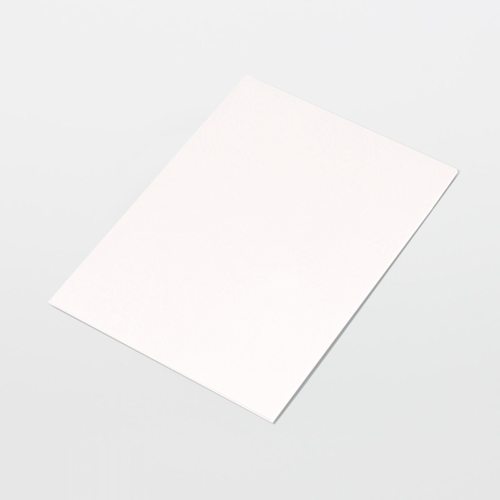
Texwipe TX5800 TexWrite MP10 cleanroom documentation sheets (white/blue)
Reference image shown on SOSCleanroom product listing for TX5800.
1) Practical solutions in a critical environment

In many high-sensitivity process areas, “paper” becomes a contamination source long before people notice it. Standard cellulose sheets can shed particles and fibers, smear ink, and create a lamination habit that adds another layer of adhesive risk and handling steps. TX5800 TexWrite MP10 is positioned for documentation needs where the process cannot tolerate cellulose contamination and where teams want consistent print/write performance while keeping documentation physically in the controlled area.

Common real-world uses include: workstation instructions posted at benches (without lamination), equipment manuals staged near tools, line-side checklists, and controlled-area data capture where pages must stay legible during glove handling and routine cleaning activity nearby.

2) What this product is used for
  • Writing, printing, and photocopying in controlled environments.
  • Workstation instructions where teams want to avoid lamination steps.
  • Equipment manuals, job travelers, and line-side checklists.
  • A clean, smooth, disposable work surface or separator sheet during assembly or inspection tasks.
  • Visual control: blue back / white front to help distinguish controlled-area documentation from conventional paper.
3) Why customers consider this product
  • Cellulose-free substrate: selected for operations that explicitly want to avoid cellulose contamination sources.
  • Reduced smear and better toner behavior: supports legibility for batch records, checklists, and line-side instructions (manufacturer-described).
  • Printer compatibility: described as compatible with inkjet, laser, and toner-based printers and photocopiers.
  • Low-ESD-potential positioning: manufacturer describes low ESD potential and publishes a typical surface resistivity value.
  • Cleanroom packaged, blue/white visual control: supports receiving segregation and helps prevent “wrong paper” events.
4) Materials, composition, and build

TX5800 is described by Texwipe as a cellulose-free, latex-free, ultraclean 100% synthetic sheet made from Teslin® substrate with a microporous sponge structure. The sheet is white on one side with a distinctive blue coating on the other side.

This construction is intended to limit cellulose-related particle/fiber concerns and improve usability: reduced ink/toner issues, better tear resistance, and predictable handling under glove use.

5) Specifications in context

The values below are published as typical characteristics (not specifications).

AttributeTX5800 (published)
Sheet size / color8.5" x 11" (21.6 cm x 28 cm), white/blue (blue on one side)
Material100% synthetic substrate (Teslin®); cellulose-free; latex-free
Basis weight (typical)172 g/m²
Caliper (typical)10.0 mil
Opacity (typical)98%
Surface resistivity (typical; at 55% RH)6.9 x 10⁸ ohms (test method cited by Texwipe)
Printer / copier compatibility (claimed)Inkjet, laser, toner-based printers and photocopiers
Cleanroom environment guidanceISO Class 3–8; Class 1–100,000; EU Grade A–D
6) Performance and cleanliness considerations

TX5800 is designed to address the “paper” portion of contamination risk by removing cellulose from the substrate and publishing typical contamination and performance characteristics.

Cleanliness metric (typical)Published valueWhy it matters in use
Particles (>0.5 µm)0.98 million particles/m²Useful for comparing documentation materials when particle shedding has historically shown up on optics, wafers, or sensitive assemblies.
Typical ions (extractables)Sodium: 200 ppm; Chloride: 40 ppmSupports ionic contamination discussions in electronics, optics, and certain regulated manufacturing controls.

ESD handling note: Texwipe describes TX5800 as having low ESD potential. The product listing does not claim compliance to a specific ESD control program standard; confirm with your ESD program owner if formal conformance statements are required.

Solvent/cleaner behavior: specific resistance to IPA, ethanol, quaternary disinfectants, or other cleaners is not stated in the source basis. Qualify legibility using your actual process chemicals and gloves.

7) Packaging, sterility, traceability, and country of origin
  • Packaging configuration: 100 sheets per ream/pack; 5 reams per case; 500 sheets per case.
  • Packaging statement: described as cleanroom packaged.
  • Sterility: not stated as sterile. The material is described as autoclavable.
  • Traceability: COA/COC details not stated in source pages. Request the exact documentation package at time of order if required.
  • Country of origin: not published in the listed source basis for TX5800.
8) Best-practice use
  • Receiving & segregation: keep cases sealed until released by QA/receiving; store separate from conventional office paper.
  • Print control: designate printers/copiers for controlled-area documentation where possible.
  • Writing instruments: qualify smear resistance and dry time with your chosen instruments under your actual handling conditions.
  • Batch record discipline: if operators frequently tear pages, consider staging a separator sheet under the active page.
  • Autoclave use: follow the manufacturer TechNote and run a controlled qualification (legibility, dimensional stability) before releasing to production.
9) Common failure modes
  • Paper mix-up: conventional paper introduced into the controlled area. Prevent with segregated storage and TX5800’s blue back visual cue.
  • Smear/illegibility after exposure: caused by unqualified pens/markers, wet-glove handling, or nearby cleaning activity.
  • Toner shedding or printer-origin particles: can be mistaken for stationery shedding; control through printer maintenance and logging.
  • Autoclave surprises: curling, warping, or legibility changes if the cycle is not qualified.
  • Uncontrolled lamination/taping: TX5800 is often selected specifically to reduce this need.
10) Closest competitors

Common alternatives include Berkshire, Contec, and Micronova cleanroom documentation papers. Confirm substrate type, published particle/ionic data, printer performance, and environmental suitability in each manufacturer’s current datasheets.

11) Critical environment fit for this product

TX5800 is explicitly positioned for controlled environments that cannot tolerate cellulose contamination and is listed for ISO Class 3–8 (also Class 1–100,000 and EU Grade A–D).

The consistent packaging format (100 sheets per pack; 5 packs per case) supports count-based receiving and controlled issue to production lines.

12) SOSCleanroom note about SOPs

The Technical Vault is written to help customers make informed contamination-control decisions. It is not your facility’s SOP, batch record, or validation protocol.

Customers are responsible for establishing SOPs that fit their specific risks, products, equipment, cleanroom classification, and regulatory obligations.

If you adapt any technique guidance from this entry, treat it as a starting template to be reviewed and approved by your team before implementation.

13) Source basis
SOSCleanroom is the source for this Technical Vault entry. Briefed and approved by the SOSCleanroom (SOS) staff.
If you have any questions please email us at Sales@SOSsupply.com
Or give us a call at (214)340-8574.
If you need additional information please try our SOSCleanroom specific AI ChatBot which draws from our extensive cleanroom specific libraries.
Last reviewed: May 5, 2026
© 2026 SOSCleanroom