Texwipe TX7046 Stainless Steel Cart for Texwipe Mop Buckets

$1,040.05
(No reviews yet)
SKU:
TX7046
Availability:
45-60 Business Days
Shipping:
Calculated at Checkout
Type:
Dry Mop
Texwipe TX7046 Stainless Steel Cart for Mop Buckets — 19" W x 28" L (48 cm x 71 cm), Non-Marking Casters
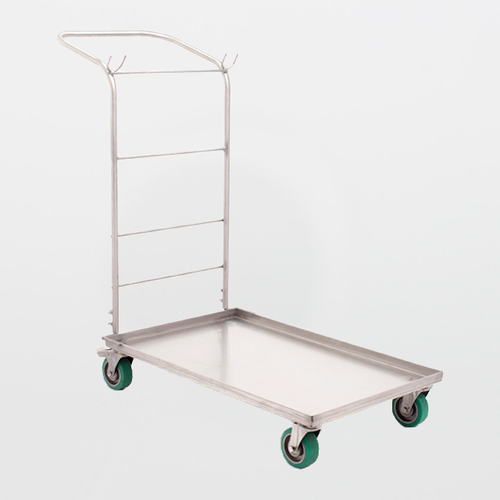
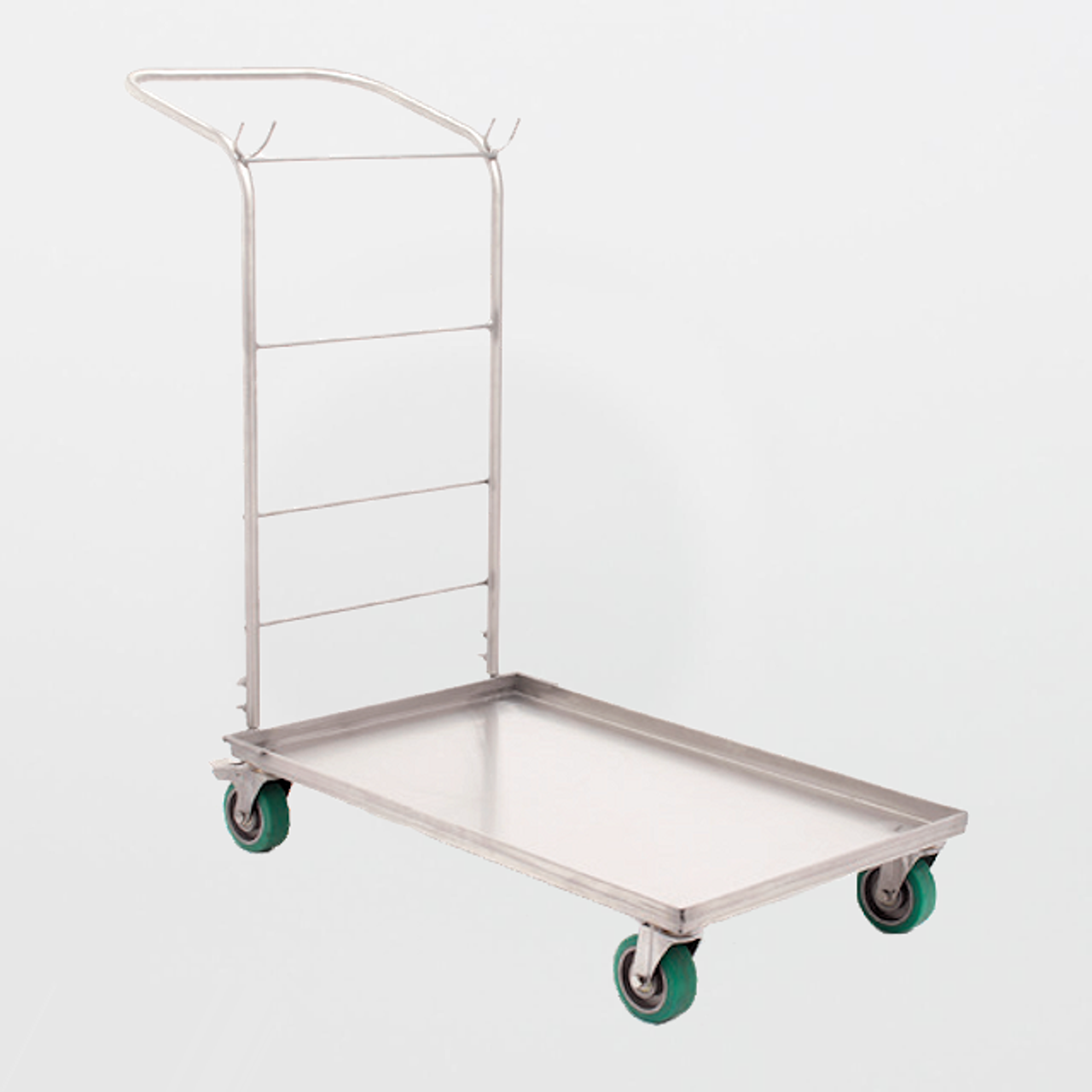
TX7046 is a stainless steel cart/trolley with casters designed to transport Texwipe rectangular bucket systems used with cleanroom flat mops. In critical environments, a dedicated cart helps keep the “wet path” controlled: buckets stay secure, spills are captured, and the mop system can be moved without dragging buckets across floors or staging them on uncontrolled surfaces.

For over 35 years, SOS and Texwipe have been close partners, and SOSCleanroom is the authorized Master Distributor of ITW Texwipe for the United States market. That relationship matters when you are standardizing mop hardware in critical environments: it supports continuity of supply, stable product lineage, and fast access to the manufacturer documentation your QA/QC team expects.

Published configuration (TX7046)
  • Component: Stainless steel cart/trolley with casters (cart only)
  • Cart dimensions: 19" W x 28" L (48 cm x 71 cm)
  • Material: Stainless steel (published as Type 304 stainless steel for the cart family)
  • Casters: Non-marking casters
  • Edge control: Protective edge/side to keep buckets in place and capture spills
  • Mop security: Holders for the mop handle to secure the mop while not in use
  • Bucket fit (published): Fits 2 stainless steel rectangular buckets or 3 plastic rectangular buckets
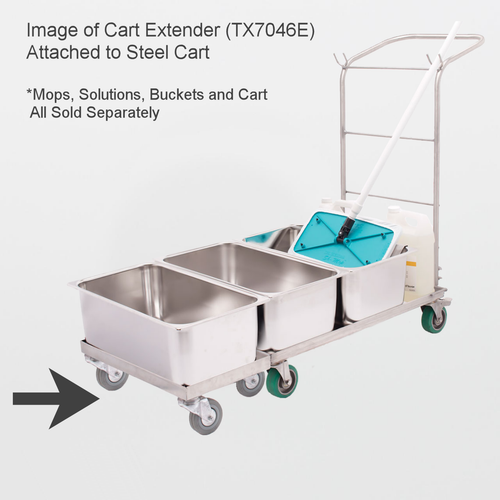
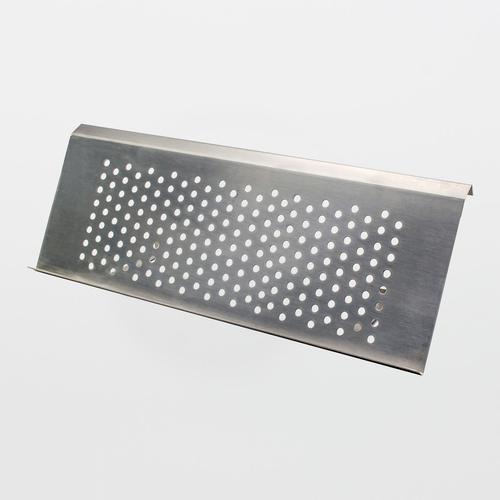
  • 3-bucket stainless option: Use cart extender TX7046E to form a 3-bucket system using stainless steel buckets
  • Packaging: 1 cart per case
  • Cleanroom environments (published for cart family use): ISO Class 3–7 (Class 1–100,000); EU Grade A–D
  • Autoclave: Autoclave safe, including casters at 250°F (121°C) for 20 minutes (confirm fit to your validated cycle and load)
  • Food industry: Approved for use in the food industry (as listed on SOSCleanroom)
  • Shelf life: Unlimited (published for AlphaMop™ buckets/wringers/carts)
  • Made in the USA: Yes (as published on Texwipe product page)
Why the cart is a contamination-control component — not just “convenience hardware”
In critical environments, carts reduce uncontrolled contact, uncontrolled staging, and uncontrolled spill response. A dedicated cart supports repeatable movement, consistent zoning (chemistry/room segregation), and cleaner transitions between wet cleaning and dry recovery steps. Treat the cart as part of the cleaning system and maintain it to the same discipline as buckets and mop heads.

Compatibility and bucket system planning
Use this table to plan bucket count and configuration before you standardize a mopping program (especially when zoning by chemistry or area).
Configuration What TX7046 supports (published) Typical program intent
Two-bucket stainless cart setup Fits 2 stainless steel rectangular buckets Common “wash/rinse” or “apply/remove” workflow with stronger spill and residue control
Three-bucket plastic cart setup Fits 3 plastic rectangular buckets Zoning by chemistry (cleaner/disinfectant/neutralizer) or by room segment
Three-bucket stainless setup (expanded) Attach TX7046E extender to form a 3-bucket system using stainless buckets Higher control when stainless is preferred and a 3-stage workflow is required by SOP
Mop platform alignment Listed for use with AlphaMop™; SOSCleanroom also lists compatibility with BetaMop bucket systems (rectangular buckets) Prevents mixed-hardware drift (bucket/wringer/cart misalignment) that causes operator workarounds and inconsistent cleaning

Autoclave and wipe-down notes
  • Autoclave (published condition): Cart and casters are published as autoclave safe at 250°F (121°C) for 20 minutes. If your facility uses different cycles (longer dwell, higher temperature, heavier loads), qualify before standardizing.
  • External wipe-down discipline: Wipe down high-touch areas (push points, mop-handle holders, protective edge) and caster housings where splash and residue accumulate.
  • Dry-time control: After wipe-down or sterilization, allow complete dry time before returning to service to reduce residue filming and to prevent slip hazards.
  • Chemistry segregation: If you run different disinfectants/cleaners, dedicate carts by chemistry family when your contamination control plan calls for it.

Practical cleanroom use guidance (technicians and engineers)
  • Route planning: Move the cart along defined travel paths and avoid parking in airflow-critical zones or directly adjacent to open product/assemblies.
  • Spill capture discipline: The protective edge helps capture spills, but it does not replace response steps. If a spill occurs, stop movement, contain at the cart, and execute your validated spill SOP (avoid rolling through the spill).
  • Handle storage is intentional: Use the built-in mop handle holders so the handle does not contact walls, ceilings, or benches. This reduces unintended residue transfer.
  • Caster hygiene: Casters are a common hidden vector for residue carryover. Inspect for build-up and clean per SOP at the end of shift or when moving between zones.
  • Low-lint system thinking: The cart is usually used with low-lint mop covers and cleanroom wipers. Maintain the same discipline you apply to covers: frequent change-out, controlled wetting, and avoiding “dry dragging” that can redeposit residues.

Common failure modes 
  • Residue carryover via casters: Rolling through wet chemistry zones or spill areas can transport residues. Prevent with route control, spill stops, and caster cleaning intervals.
  • Cross-zone mixing: One cart used across different rooms/grades without segregation can drive cross-contamination risk. Prevent with dedicated carts, clear labeling, and storage controls.
  • Bucket instability from misfit hardware: Using non-matching bucket sizes or staging buckets outside the protective edge can cause slosh and spill. Prevent by confirming bucket compatibility and maintaining the intended bucket count.
  • Build-up at the protective edge: Dried chemistry and debris can accumulate where spills are captured. Prevent with end-of-run rinse/wipe practices and periodic deep cleaning per SOP.
  • Autoclave/wet storage corrosion risk (process-driven): Leaving chemistry on stainless surfaces before sterilization or storing damp can create films and staining. Prevent with pre-clean before sterilization and full dry time before storage.

Maintenance and inspection checklist (audit-friendly)
Checkpoint What to look for Action
Casters Residue build-up, damaged wheels, rough rolling Clean per SOP; replace worn casters if rolling becomes uneven or if wheel surfaces are damaged
Protective edge / spill capture zones Dried chemistry films, trapped debris Wipe and rinse (if permitted) after use; schedule periodic deep cleaning
Mop handle holders Residue at contact points; loose retention Clean and verify retention; do not allow handles to contact uncontrolled surfaces
Cart frame Dents, sharp edges, damage that can trap residues Remove from service if damage creates a cleanability concern

Storage and handling best practices
  • Stage carts in designated, clean storage locations—not in corridors, mechanical rooms, or high-traffic entry points where wheels can pick up uncontrolled debris.
  • Keep the cart dry when stored to reduce film formation and to minimize residue attraction on caster surfaces.
  • If the cart is dedicated to a specific room/grade, label it clearly and maintain segregation controls to reduce cross-zone movement.
  • When changing chemistries or moving between areas, follow your validated changeover steps (wipe-down, dry time, and documentation if required).
Documentation 
SOS-hosted Texwipe AlphaMop™ TDS (includes buckets/wringers/carts; 2014): Click Here
SOS-hosted Texwipe BetaMop® TDS (for related bucket systems; 2014): Click Here
Texwipe manufacturer page (TX7046): Click Here
Texwipe manufacturer TDS (AlphaMop™ Series, US-TDS-067 Rev. 3/22): Click Here
Last updated: January 9, 2026
If you have any questions please email us at Sales@SOSsupply.com
or give us a call at (214)340-8574.

Check out our AI ChatBot powered by SOSCleanroom data libraries - give it a try!
 
THIS IS A NEW FEATURE FOR 2026!

© 2026 SOS Supply. All rights reserved.
The Technical Vault Mobile Bucket Transport & Zoning Control (Applied Use Case: Texwipe™ TX7046 Stainless Steel Cart for Texwipe Mop Buckets)

Purpose & Scope

The TX7046 is a stainless steel cart designed to transport Texwipe mop buckets. In controlled environments, carts are not just convenience—they are a potential cross-zone contamination vector. This Technical Vault entry focuses on the controls that make carts defensible in ISO-classified and USP-regulated spaces: zone dedication, wheel/undercarriage cleaning, high-touch mapping, and staging discipline for clean vs. used tools.

Visual Aids (Technique, Zoning, Lifecycle)

Use this graphic to reinforce zone boundaries and tool lifecycle control. Mobile carts should be treated like footwear: they move contamination unless controlled.

Cleanroom mopping technique, zoning control, and mop tool lifecycle diagram

Implementation note: If your facility uses zoning, cart movement rules must be explicit and enforced.

Zoning Control (The #1 Cart Requirement)

Carts are often the missing piece in otherwise strong mopping SOPs. If a cart moves freely between rooms, it can defeat the logic of dedicated mop heads, covers, and buckets. Strong programs apply one of these models: (1) dedicated cart per zone or (2) controlled cross-zone entry with defined decontamination steps.

  • Best practice: dedicate carts by zone/room and label clearly.
  • Threshold rules: if crossing is required, define wheel wipe-down and frame wipe-down steps.
  • Staging boundaries: define where carts may park so they do not drift into cleaner zones.

Wheels & Undercarriage (Where Contamination Hides)

Wheel treads and fork housings are continuous floor-contact points and often carry residues through door tracks and thresholds. Undercarriage surfaces collect splash and drip residues. If these areas are not defined in a cleaning schedule, they become chronic cross-contamination sources.

  • Routine wipe-down: wheel forks/housings and lower rails (where splashes accumulate).
  • Periodic deep clean: remove trapped debris from wheel interfaces; inspect for buildup.
  • Movement triggers: require wheel cleaning after perimeter/entry cleaning phases.

High-Touch Mapping (The Simple SOP Upgrade)

Define and clean the surfaces that operators touch most. Carts are frequently touched with gloves that then touch: mop handles, clean consumable packs, door hardware, and equipment. The goal is to eliminate the “cart rail → glove → clean tool” transfer chain.

  • Push points/handles: wipe at least once per shift (or per task) based on program risk.
  • Upper rails/staging surfaces: treat like bucket rims—high transfer potential.
  • Bucket contact points: where buckets sit should be included (splash + residue accumulation zone).

Staging Discipline (Clean vs. Used Tools)

The most common cart-related deviation is staging “clean” items on uncontrolled surfaces. Define cart staging rules: what may be placed on the cart, what must remain packaged, and where used items go.

  • Segregate zones on the cart: one area for clean items, one for returns/used tools (if your workflow requires both).
  • Protect sterile packs: keep sterile items closed until point-of-use; avoid placing opened packs on rails/shelves.
  • Manage glove behavior: if gloves touch cart rails, define whether gloves must be changed before handling sterile items.

Stainless Steel Cart Control Points

  • Durable and cleanable: stainless supports repeated cleaning, but residues must be removed before they dry into films.
  • Seams and welds: include in inspection and cleaning—common residue retention points.
  • Hardware/joints: inspect periodically for looseness; wobble increases debris retention and safety risk.
  • Dry storage: if carts are wet-cleaned, ensure they are dried before storage in cleaner zones.

Objective Maintenance & Retirement Criteria

  • Wheel performance: wobble, binding, or residue buildup that cannot be removed by SOP-defined cleaning.
  • Surface damage: burrs/sharp edges that snag wipes or abrade gloves.
  • Loose fasteners: joints that won’t hold torque or create vibration/debris retention points.
  • Persistent films: dried chemistry residue that repeatedly transfers to gloves or buckets.

SOP & Audit Readiness Checklist (Bucket Carts)

  • Define zoning model: dedicated cart per zone or controlled entry with decontamination steps.
  • Define wheel/undercarriage cleaning and inspection frequency (not just “wipe the cart”).
  • Define high-touch wipe-down points (push points, rails, staging surfaces, bucket contact points).
  • Define staging rules for clean vs. used items and glove management behavior.
  • Define maintenance triggers (wheel drift, burrs, looseness, persistent residue films).

Disclaimer: This Technical Vault content is provided for educational purposes only. Manufacturer instructions, facility SOPs, disinfectant label directions, and site-specific risk assessments must always take precedence. Cleaning and disinfection programs in controlled environments should be validated/qualified according to your quality system.

© SOSCleanroom. All rights reserved.