Texwipe TX7046E AlphaMop Stainless Steel Cart Extender (Extender Part ONLY)

$375.45
(No reviews yet)
SKU:
TX7046E
Availability:
45-60 Business Days
Shipping:
Calculated at Checkout
Type:
Dry Mop
Texwipe TX7046E AlphaMop™ Stainless Steel Cart Extender — Converts TX7046 into a 3-Bucket System
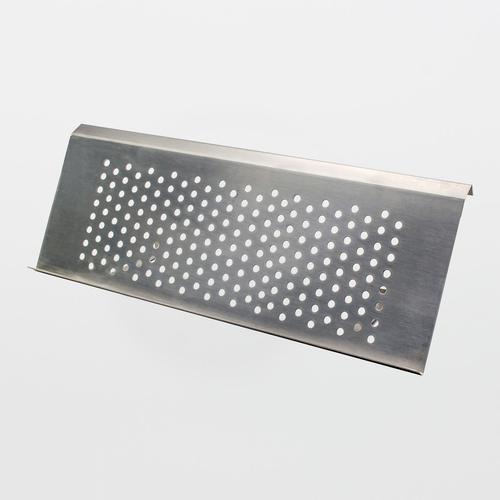
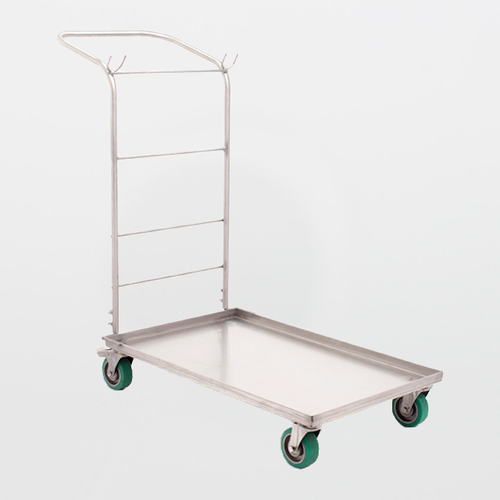
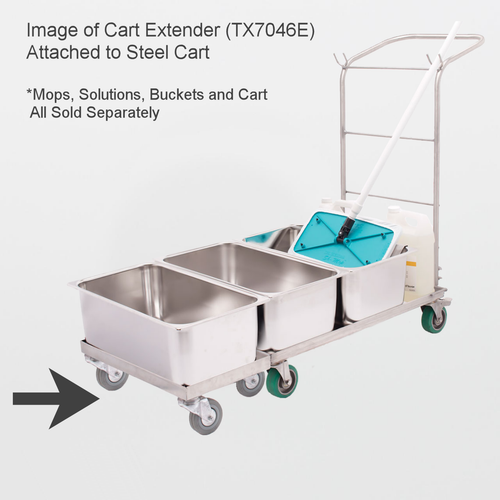
TX7046E is a stainless steel cart extender with casters designed to expand the Texwipe TX7046 cart/trolley into a three-bucket transport system for controlled cleaning workflows (e.g., wash/rinse/disinfect, or detergent/disinfectant/DI rinse segmentation). In critical environments, the value is not just mobility — it is process discipline: keeping solutions physically segregated, minimizing cross-contact, and reducing the chance of dragging a contaminated bucket back into your clean zone.

For over 35 years, SOS and Texwipe have been close partners, and SOSCleanroom is the authorized Master Distributor of ITW Texwipe for the United States market. That relationship matters when you are standardizing mop hardware for critical environments: it supports continuity of supply, stable product lineage, and fast access to the manufacturer documentation your QA/QC team expects.

Published configuration (TX7046E)
  • Part number: TX7046E
  • Product type: Stainless steel cart extender with casters (extender part only)
  • Material: Stainless steel (Type 304), as published in the AlphaMop™ Series Technical Data Sheet
  • Dimensions: Manufacturer TDS lists 19" W x 11.5" L (48 cm x 29 cm); SOSCleanroom product listing states 19.25" x 11.5" (48 cm x 29 cm)
  • Packaging: 1 extender per case
  • Weight (as listed by SOSCleanroom): 15.00 lbs
  • Compatibility note: For use with AlphaMop rectangular mop buckets; do not use with round BetaMop buckets
  • Key function: Converts Texwipe’s TX7046 cart into a 3-bucket system; stainless steel with casters
  • Features & benefits (as listed): Protective side to keep buckets in place, captures spills, approved for use in the food industry
  • Applications (as published for the system): Cleaning walls, ceilings, and floors; applying and removing solutions including disinfectants; ISO Class 3–7 environments
Why the 3-bucket build matters in critical environments
Many mop failures are not mop-cover problems — they are process-control failures (solution carryover, wrong bucket order, reusing a dirty wringer, or rolling casters through a transition zone). A dedicated third bucket supports cleaner segregation logic and makes your cleaning SOP easier to audit and enforce.

Practical cleanroom use guidance (technicians and engineers)
  • Define the bucket logic before rollout: Assign each position a single purpose (example: Bucket A = detergent, Bucket B = disinfectant, Bucket C = DI rinse) and label clearly on the bucket and cart. Do not let teams invent their own order shift-to-shift.
  • Control transitions: Park the cart in a defined staging area. Avoid rolling casters across tacky mats, gowning thresholds, or sticky residues that can accumulate on wheels and redeposit particulates.
  • Spill discipline: If a bucket drips or sloshes, treat it as a contamination event for the cart and wheels. Wipe down the cart frame and casters per site SOP before returning to service.
  • Separate “dirty” and “clean” wringing behavior: Keep wringing and solution loading away from product/assembly areas. Even with spill-capture design, the highest risk is splash/aerosol during wringing and transport.
  • Standardize inspection points: At the start of each shift, verify caster rolling smoothness, fastener integrity, and that bucket edges are seated and not rocking (a common spill precursor).

Process setup table (example workflows)
Use this as a planning template. Your site SOP, material compatibility, and validation requirements control final configuration.
Bucket position Common assignment Control objective
1 Detergent / cleaner Loosen and lift residues before disinfection
2 Disinfectant Maintain correct contact time and reduce bioburden
3 DI rinse / neutralizer (if required) Reduce chemical residue and prevent film/streak carryover

Compatibility and wipe-down notes
  • Intended use context: TX7046E is published for use within the AlphaMop™ system where solutions (including disinfectants) are applied and removed during cleaning operations.
  • Chemical exposure: Not published as a SKU-specific chemical compatibility chart for TX7046E. If your program uses aggressive chemistries or high-chloride products, qualify the cart hardware and caster performance under your conditions before standardizing.
  • Wipe-down technique: Wipe frame members, caster forks, and wheel tread surfaces — not just the flat rails. Pay special attention to crevices where residues dry and flake.

Qualification checklist (useful for QA/QC and validation planning)
Check Why it matters What to document
Bucket fit and stability Prevents slosh/spill events and unplanned floor contamination Bucket model used, seating method, load condition, acceptance criteria
Caster cleanliness and tracking risk Casters can transport residues/particulates between zones Cleaning frequency, inspection points, replacement triggers
Solution segregation discipline Wrong order or reuse can defeat the whole 3-bucket intent Labeling scheme, bucket order, changeout interval, training record
Spill response procedure Reduces time-to-control and prevents spread Immediate actions, re-clean method, disposition/return-to-service criteria

Common failure modes 
  • Cross-contamination between buckets: Typically caused by wrong bucket order, reusing a wringer/glove between solutions, or letting mop heads drip across buckets. Prevent with fixed bucket logic, labeled positions, and glove/tool discipline.
  • Caster tracking and residue redeposit: Wheels can accumulate sticky residues (disinfectant films, cleaner buildup) and transport them into cleaner zones. Prevent with defined parking/staging, caster wipe-down, and periodic wheel inspection/maintenance.
  • Spill events during transport: Often driven by overfill, fast turns, uneven floors, or buckets not seated. Prevent with fill-level limits, slow movement, and pre-use stability checks.
  • Corrosion staining or surface dulling: Not published as a TX7046E-specific compatibility outcome; however, high-chloride exposures and poor rinse practices can contribute to cosmetic staining on stainless hardware. Prevent with SOP-defined rinse/neutralization (when required) and timely wipe-down.

Storage and handling best practices
  • Keep the extender in clean packaging until it is introduced to the controlled area (or until it completes your incoming cleaning/qualification process).
  • Store dry and protected from chemical overspray; residue buildup on casters is easier to prevent than to remove.
  • Do not stack heavy items on caster assemblies during storage; it can cause flat-spotting or misalignment that shows up as poor rolling performance.
  • If you maintain separate “graded” mop systems by room classification, label the cart/extender as part of the same controlled set (do not float hardware between grades).
Documentation 
SOS-hosted Texwipe datasheet (AlphaMop™ Series Technical Data Sheet — includes TX7046E bucket/wringer/cart table): Click Here
Texwipe manufacturer page (TX7046E): Click Here
Texwipe manufacturer PDF (AlphaMop™ Series Technical Data Sheet): Click Here
Last updated: January 9, 2026
If you have any questions please email us at Sales@SOSsupply.com or give us a call at (214)340-8574.

Check out the AI ChatBot powered by SOSCleanroom data libraries - give it a try!
 
THIS IS A NEW SOSCLEANROOM.COM FEATURE FOR 2026!

© 2026 SOS Supply. All rights reserved.