A “bucket” is a process tool: why the TX7054 seamless stainless design reduces dilution drift, residue carryover, and mop-program variability
The Technical Vault | By SOSCleanroom
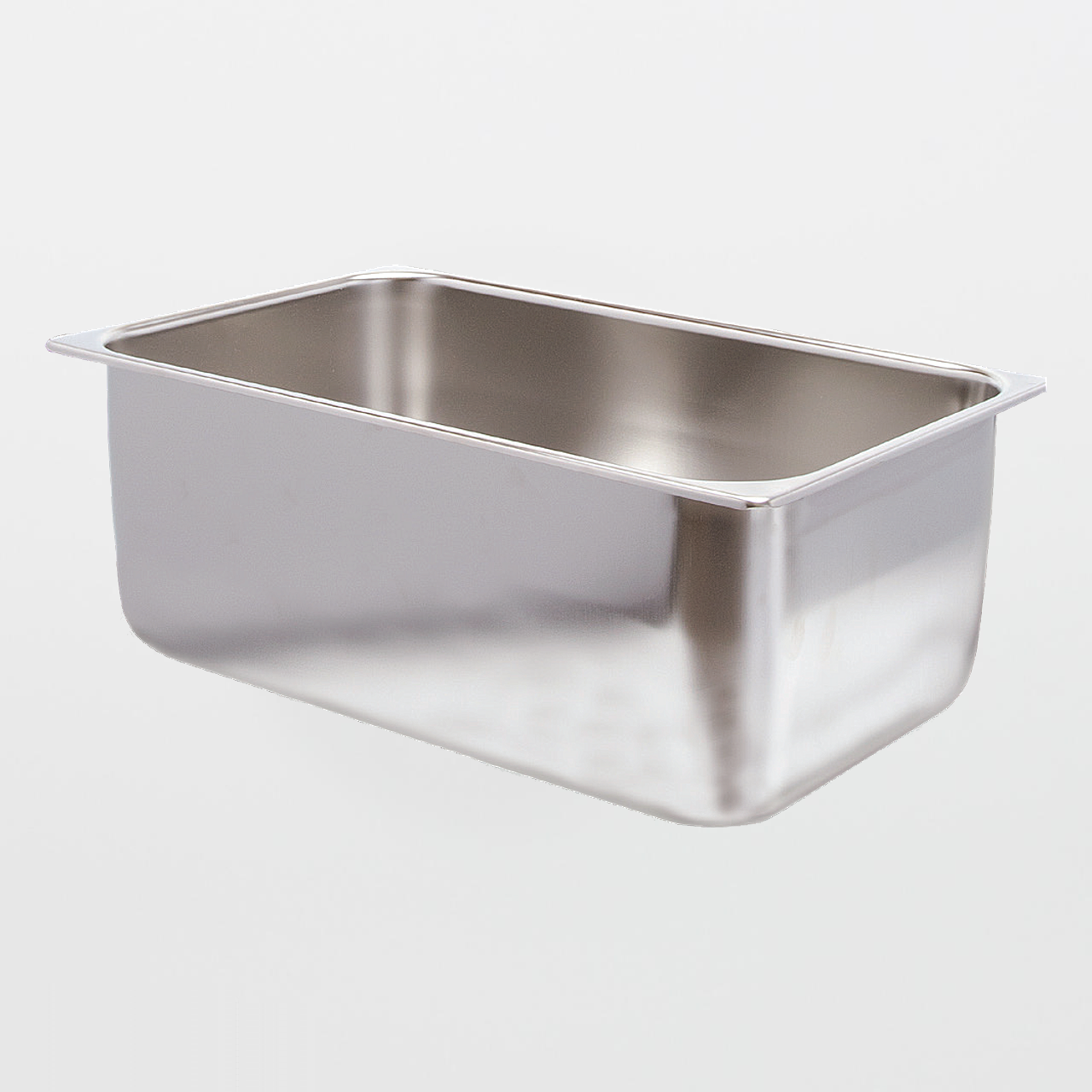
In controlled-environment cleaning, the most common “mop failures” aren’t caused by the mop head. They come from the solution workflow: inconsistent dilution, cross-contact between chemistries, residue dried inside the bucket, or sloppy staging that turns rinse into re-deposition. The Texwipe TX7054 AlphaMop Stainless Steel Rectangular Bucket is built to stabilize that part of the process — a seamless 304 stainless bucket with interior volume marks for repeatable dilution and a geometry designed for flat-mop wet cleaning programs where bucket cleanliness and handling discipline directly affect floors, walls, and ceilings.
Reliability is part of the control plan. SOSCleanroom’s long-standing relationship with Texwipe is centered on continuity of supply, documentation discipline, and lot-level traceability — operational safeguards that help sites avoid unqualified substitutions when cleaning performance is under qualification or investigation.
The Operational Problem It Solves
The bucket is where many programs quietly lose control. Three failure patterns show up repeatedly:
- Dilution drift: “eyeballed” mixes and inconsistent make-up lead to uneven disinfectant performance and inconsistent residue behavior.
- Carryover: a bucket used across chemistries (or across “dirty” and “final” steps) becomes the contamination transport mechanism.
- Residue film and drag-out: dried chemistry inside the bucket or on rims becomes a recurring source of streaking, staining, and downstream transfer.
TX7054’s seamless stainless construction, interior volume marks, and system-fit design are aimed at making the bucket a controlled input — not the uncontrolled variable that forces rework and investigation churn.
What It’s For
TX7054 is designed to support controlled-environment wet cleaning with Texwipe’s AlphaMop system and other common cleanroom flat mops. It is used for solution make-up, controlled dilution, and application/removal of disinfectants and cleaners in critical environments where handling discipline and bucket cleanliness directly affect cleaning outcomes.
Operationally, it is a staging tool for repeatable solution control — particularly when teams run a defined apply/rinse/final (or similar) workflow and need physical separation between buckets to reduce redeposition.
Decision Drivers (What Buyers Should Care About First)
- Seamless 304 stainless construction: selected for durability, cleanability, and reduced “trap points” where dried chemistry becomes a repeating residue source.
- Interior volume marks: supports repeatable dilution and reduces “operator math” variability that shows up later as residue behavior changes.
- Flat-mop program fit: rectangular geometry supports AlphaMop and other flat-mop workflows (published compatibility up to 18" length x 9.5" width maximum).
- Autoclave-safe hardware (as published): useful where heat/steam tolerance is required by the site, with cycle and handling qualification per your SOP.
- Published environment range: positioned for ISO Class 3–7 environments (as published for AlphaMop buckets/system).
- Program discipline support: dedicated-chemistry labeling, multi-bucket staging, and wringer pairing help keep the bucket from becoming the cross-contamination vector.
Materials and Construction: Practical Implications
Material: TX7054 is specified as 100% 304 stainless steel. Operationally, stainless bucket hardware is selected when teams need repeatable solution control, robust wipe-down tolerance (per site practice), and a durable component that can be cleaned to a high standard without deforming, cracking, or absorbing chemistries the way lower-grade plastics can.
Seamless construction: seams and creases are common places where chemistry dries, crystals form, and residues survive “quick rinse” closeout steps. A seamless design reduces trap points and makes cleaning verification simpler — especially when the bucket is part of a validated or inspection-sensitive cleaning program.
Reality check: stainless does not replace discipline. Cross-contact between “dirty” and “final” tools, leaving chemistry to dry in the bucket, or using the rim as a handling surface are still the dominant root causes of residue film and drag-out. The hardware supports control; the SOP delivers it.
Specifications in Context
TX7054 is published as a 7-gallon (28 L) seamless stainless steel rectangular bucket with physical dimensions of 21" L x 13" W x 8" H (53 cm x 33 cm x 20 cm). Packaging is 1 bucket per case.
In practice, these specs translate into three controls:
- Repeatable solution make-up: the capacity and interior volume marks support consistent dilution rather than “close enough” mixing.
- Stable mop handling: the rectangular geometry supports flat-mop wetting and controlled expression workflows.
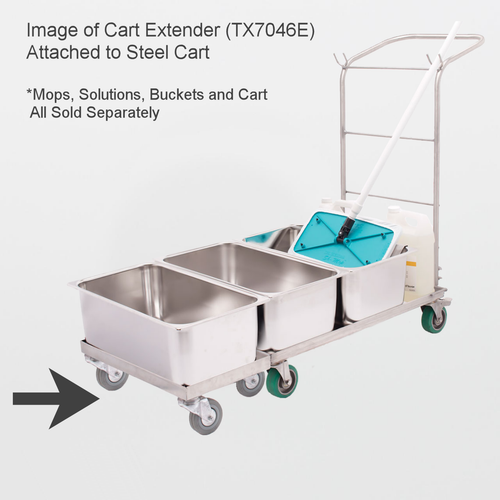
- Workcell staging: the bucket format supports dedicated-chemistry labeling and multi-bucket separation (apply/rinse/final) when the program demands higher control.
Interpretation rule that protects qualification: treat published guidance as the baseline, then confirm fit to your site’s chemistry set, change-out cadence, and acceptance criteria for residue and carryover.
Cleanliness and Performance: What Matters on the Floor
Buckets don’t have “NVR tables,” but they create NVR events when the workflow is uncontrolled. The performance levers with TX7054 are:
- Dilution accuracy: use the interior volume marks to support repeatable dilution. Build solution in the bucket (not in the wringer) to reduce foaming, splash, and concentration drift.
- Dedicated chemistry: assign the bucket to a defined disinfectant/cleaner family (or rotation) and label it per your site practice to reduce residue carryover and unintended mixing.
- Multi-bucket control: for higher-control programs, separate apply/rinse/final physically to reduce redeposition of soils and spent chemistry.
- Closeout discipline: drain per SOP, then clean and dry completely. Residual chemistry left to dry is a common root cause of staining, residue film, and downstream drag-out onto floors.
Why Packaging, Sterility Decisions, and Traceability Matter
TX7054 is a non-sterile bucket hardware component. Sterility is a separate decision driver: if the workflow is aseptic, the control package typically shifts to sterile transfer practices and sterile-compatible tools and packaging systems aligned to the area classification and SOP.
Autoclave tolerance is published as a hardware attribute. Treat that as a materials capability — and confirm your cycle parameters, hot transfer method, dry time, and reintroduction controls with your contamination control or sterility program before standardizing.
A program-protecting note: sterile bucket liners are published as not recommended for TX7054. If a liner is required by local practice, validate an alternative method that does not compromise fit, stability, or cleaning efficacy.
Best-Practice Use: Operator-Level Discipline
- Dedicated-chemistry control: label and segregate the bucket by chemistry (or defined rotation) to reduce carryover and unintended mixing.
- Use volume marks: build solutions in the bucket using interior marks for repeatable dilution. Don’t “top off” without recalculating concentration.
- Transfer control: move by the handle/approved grab points (per your site practice) and avoid rim contact with garments, carts, or floor edges.
- Wringer integration: pair with the rectangular bucket wringer (TX7043) for controlled expression when using compatible mop covers/pads. Avoid over-wringing that can aerosolize droplets or cause splash contamination.
- Two- or three-bucket method: apply / rinse / final (or similar) separation reduces redeposition risk and shortens investigations when results drift.
- End-of-task closeout: drain, clean, and dry completely. Dried chemistry is the fastest way to create recurring film and drag-out.
Common Failure Modes—and How to Prevent Them
- Concentration drift: “eyeballing” dilution or topping off without recalculating leads to inconsistent cleaning and residue behavior. Prevent with volume-mark use and a written make-up method.
- Chemistry cross-contact: one bucket used across incompatible chemistries creates residue carryover and unintended reactions. Prevent with dedicated buckets and labeling.
- Residue film from poor closeout: chemistry left to dry becomes a recurring contamination source. Prevent with drain/clean/dry closeout and inspection triggers.
- Tool staging contamination: rim contact and “dirty tool returns” contaminate solution. Prevent with defined staging zones and one-way dirty-to-clean flow.
Closest Competitors (Limited and Relevant)
Other stainless rectangular cleanroom buckets
Comparable stainless buckets can meet basic needs, but performance differences usually come from seam design, volume-mark practicality, wringer integration, and how the system supports multi-bucket staging.
Cleanroom-grade plastic bucket systems
Viable when chemical compatibility and weight are dominant drivers, but plastics can be more vulnerable to scratching, absorption, and long-term residue retention depending on chemistry and closeout discipline. If residues are driving investigations, stainless is often the more controllable baseline.
Where This Bucket Fits in a Controlled Cleaning Program
TX7054 is best deployed as the controlled solution-make-up and staging bucket in an AlphaMop (or flat-mop) wet cleaning program — especially where dilution repeatability, dedicated-chemistry segregation, and disciplined closeout are required to keep residues and redeposition inside the site’s contamination budget. Pair it with defined solution recipes, defined bucket roles (apply/rinse/final), and wringer expression controls so the bucket supports repeatability instead of creating variability.
Source basis
- SOSCleanroom product page: “Texwipe TX7054 AlphaMop Stainless Steel Rectangular Bucket” (published configuration, dimensions, capacity, compatibility guidance, packaging, and use notes).
- Texwipe AlphaMop system/bucket guidance (interior volume marks, ISO environment positioning, multi-bucket staging references, wringer pairing references, and liner guidance as published).
- General controlled-environment cleaning discipline applied: dedicated-chemistry controls, dilution repeatability, staged tool introduction, and end-of-task closeout to prevent residue film and drag-out.