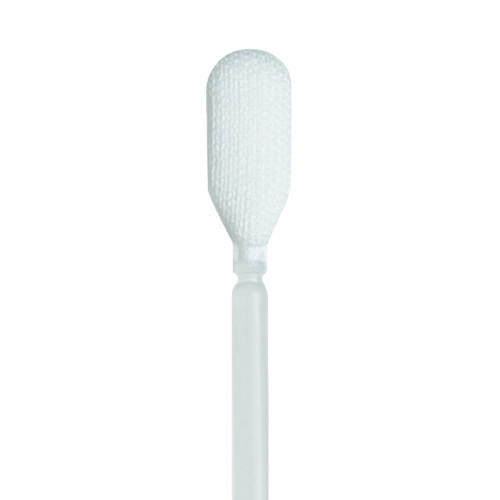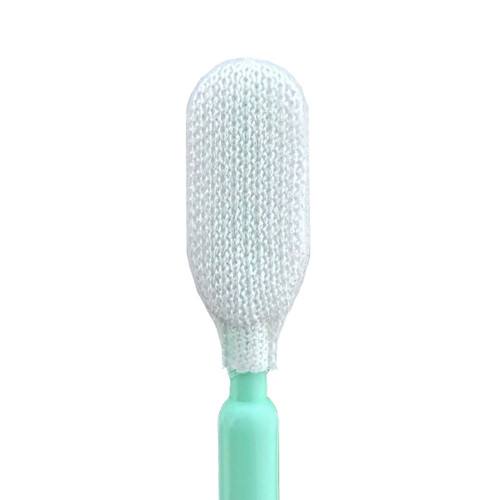
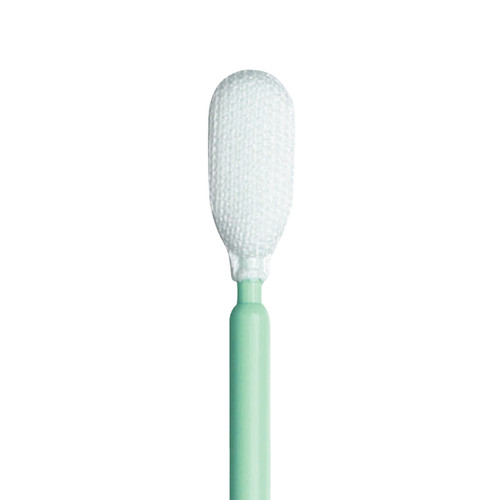
Texwipe TX761 Alpha Polyester Cleanroom Swab with Long Handle

$29.09
(2 reviews)
SKU:
TX761 BAG
Availability:
Stock Item
Shipping:
Calculated at Checkout
Quantity Option (Bag):
100 Swabs Per Bag
Quantity Option (Case):
10 Bags of 100 Swabs Per Case
Type:
Dry Swab
Swab Family:
Alpha
Swab Material:
Polyester
Available Quantity Option: Bag or Case
Bag Unit: 100 Swabs Per Bag
Case Unit: 10 Bags of 100 Swabs Per Case

Texwipe TX761 Long-Handle Alpha Knit Polyester Cleanroom Swab for Precision Cleaning

Texwipe TX761 is a long-reach Alpha® knit polyester cleanroom swab built for precision work where access is tight and background matters—cleaning and sampling in slots, tracks, rails, channels, grooves, and other recessed geometries that punish short tools with poor angles and pressure creep. The extended 100% virgin polypropylene handle helps maintain stable tip control while keeping gloves and sleeves away from the feature. A double-layer knitted polyester head provides predictable sorbency for controlled “damp” solvent technique, helping prevent flooding that can dry into streaks, haze, or tide marks. Complete thermal-bond construction removes adhesive at the bond as a hidden variable, supporting more stable blanks in solvent-heavy and residue-sensitive checks.

TX761 is lot coded for traceability and packaged in silicone-free and amide-free bagging with a standard 100 swabs per bag and 10 bags per case, supporting disciplined staging at the bench and faster root-cause isolation if results drift. No swab is truly lint free; low-linting performance depends on surface condition and operator technique, and ESD or sterile requirements should be addressed by selecting the designated variant rather than relying on a standard swab.

Key reasons to choose TX761 (vs. lower-cost long-handle substitutes):

  • Cleaner, more predictable process behavior in low-background workflows where swab variability can become the signal.

  • Thermal-bond construction eliminates adhesive as an extractables pathway in solvent-heavy use.

  • Long-handle control reduces incidental contact and improves stability in tight geometry.

  • Lot coding and controlled packaging support traceability and investigation discipline (silicone-free, amide-free; 100/bag, 10/case).

  • ITW Texwipe is a preferred platform for critical environments because its contamination-control focus, testing discipline, and quality systems reduce “surprises” and support documentation expectations when results matter.

ITW Texwipe is the contamination-control standard for teams that can’t afford variability. One manufacturer which covers the full workflow—wipers, swabs, mops, cleaning solutions/disinfectants, and cleanroom stationery built around controlled construction, published cleanliness testing, and lot traceability. End users choose Texwipe over look-alikes for one reason: fewer surprises on the floor, faster root-cause work, and easier audit defense.

ITW Texwipe TX761 Features and Benefits:
  • Long-handle swab for cleaning and sampling in recessed features (tracks, slots, channels, grooves, tight corners)
  • Extended reach helps keep gloves and sleeves out of the work zone to reduce incidental contact contamination
  • Double-layer Alpha® knit polyester head delivers predictable sorbency for “damp” solvent technique
  • Controlled solvent application/removal helps reduce flooding, streaks, haze, and film/tide marks
  • Thermal-bonded construction (no adhesive at the bond) helps minimize extractables variability in solvent-heavy use
  • Designed for low-background workflows where the swab should not dominate residue/measurement results
  • 100% virgin polypropylene handle for cleanroom-appropriate durability and tip control
  • Lot coded for traceability and quality control to support investigations and consistent introductions
  • Silicone-free and amide-free bag packaging to reduce common packaging-related unknowns
  • Pack configuration: 100 swabs per bag; 10 bags per case
  • Platform continuity: designated ESD or sterile long-handle variants available when selection gates require them
  • Low-linting performance depends on surface condition and operator technique (no swab is truly lint free)
ITW Texwipe TX761 Applications:
  • Precision spot cleaning of tracks, slots, channels, grooves, rails, and tight corners
  • Cleaning recessed/awkward access points without glove, sleeve, or tool contact near the surface
  • Controlled solvent application (laying down a thin, even “damp” film) in narrow features
  • Controlled solvent removal to prevent flooding, streaks, haze, and film/tide marks
  • Lifting and capturing localized residue lines before they migrate or redeposit
  • Cleaning small mechanical interfaces (gaps, seams, edges, housings) where short swabs force poor angles
  • Cleaning tooling and fixtures with narrow geometry that requires stable tip control
  • Optics-adjacent cleaning where visible artifacts and background are gating concerns
  • Residue-sensitive sampling where swab background must not dominate the measurement signal
  • Surface sampling support for investigations (recording lot codes to maintain traceability)
  • Cleaning validation support (method development, blank-setting, recovery-focused sampling workflows)
  • Environmental monitoring / sterile surface sampling when a sterile long-handle format is required
  • ESD-controlled precision swabbing when static control is a selection gate (use the designated ESD variant)
  • Maintenance/sanitation swabbing in and around food processing areas where non-food-contact cleaning swabs are used
  • Bench-side, line-side touch-up cleaning in controlled environments to remove small defects before inspection
ITW Texwipe TX761 Dimensions:
  • Head Material = Knitted Alpha Polyester
  • Head Width = 6.8 mm (0.268")
  • Head Thickness = 2.8 mm (0.11")
  • Head Length = 16.8 mm (0.661")
  • Handle Material = Polypropylene
  • Handle Width = 3.2 mm (0.126")
  • Handle Thickness = 3.2 mm (0.126")
  • Handle Length = 145.5 mm (5.728")
  • Total Swab Length = 162.3 mm (6.39")
  • Head Bond = Thermal
  • Handle Color = Light Green
  • Design Notes = Flexible Head Paddle; Long Handle


ITW Texwipe TX761 Industries:

Semiconductor

  • Process tool preventive maintenance (PM) spot cleaning in recessed geometries
  • Cleaning tracks, slots, channels, and small recesses on tool components
  • Controlled IPA/solvent application and removal to prevent film lines and residue artifactsMetrology/inspection support cleaning where background and blanks matter
  •  

Microelectronics / Electronics Manufacturing

  • Precision spot cleaning on connectors, housings, and tight mechanical features
  • Rework/repair bench cleaning with controlled solvent wetting
  • Residue removal in small gaps and corners without glove/sleeve contact
  • ESD-controlled operations (use the designated ESD long-handle variant when required)


Optics / Photonics

  • Cleaning grooves, tracks, and recessed features near sensitive optical surfaces
  • Controlled solvent film application/removal to reduce streaks, haze, and tide marks
  • Low-background swabbing in inspection-driven workflows where artifacts trigger rework
  • Tight-geometry cleaning where incidental contact is a primary contamination pathway


Pharmaceutical Manufacturing

  • Surface cleaning in hard-to-access equipment features and small geometries
  • Cleaning validation support workflows (pre-sampling cleaning steps and technique control)
  • Residue-sensitive swabbing where blank stability and traceability are important
  • Controlled application/removal of process fluids during maintenance and changeovers


Biologics / Biotech

  • Surface sampling and cleaning support in controlled environments
  • Precision cleaning of equipment features that cannot be reached reliably with short swabs
  • Solvent/solution-controlled swabbing to prevent spread and redeposition of residues
  • Investigation support where consistent technique and lot traceability help isolate drift


Medical Device

  • Clean assembly area spot cleaning in recessed or awkward device features
  • Surface sampling and cleaning verification in controlled environments
  • Controlled solvent use on small parts/fixtures without flooding and film formation
  • QA/engineering investigations where traceability and baseline control matter


Cleaning validation programs (cross-industry)

  • Surface sampling support where swab background must not dominate the measurement
  • Blank strategy execution (swab + solvent + container background) for method integrity
  • Recovery-focused sampling in validation-sensitive endpoints (e.g., TOC/HPLC/limits-based residue)
  • Technique standardization across shifts (stroke count, overlap, wetness, extraction timing)


Environmental monitoring / sterile controlled sampling workflows

  • Sterile surface sampling where transfer controls and packaging integrity are required
  • Cleaning and sampling in aseptic/controlled areas with documented handling discipline
  • Investigation sampling where lot capture and packaging controls support defensibility


Food processing areas (non-food-contact sanitation support)

  • Maintenance/sanitation spot cleaning in and around food processing areas (non-product contact)
  • Cleaning recessed features on equipment exteriors where controlled swabbing reduces residue carryover
  • Documented sanitation support where third-party certification requirements apply


Compounding / controlled pharmacy environments

  • Cleaning and surface sampling in controlled areas aligned with compounding discipline
  • Recessed-feature cleaning on equipment/fixtures where glove contact is a contamination risk
  • Controlled wetting technique to avoid spreading residues and creating film lines


Aerospace / defense clean assembly and precision sensor builds

  • Precision cleaning of tight features on components and fixtures
  • Controlled solvent application/removal to reduce residue variability before inspection
  • Recessed-geometry cleaning where access and background control are both critical


Analytical / QA laboratories supporting regulated manufacturing

  • Residue-sensitive swabbing for investigations and method development
  • Controlled solvent wetting and extraction timing to maintain consistent blanks
  • Sampling in tight geometries where tool background can overwhelm low-level signals
Link to Texwipe Swab Comparison Chart : Click Here

When “good enough” swabbing starts contaminating the measurement: why TX761 is built for long-reach, low-background work

The Technical Vault  |  By SOSCleanroom

A long-handled swab solves a very specific controlled-environment problem: you need stable contact in a recessed or awkward area, but you cannot afford to trade reach for contamination risk. That shows up in real workflows — cleaning slots and tracks, applying a controlled solvent film, lifting a residue line before it migrates, or taking a surface sample where the swab itself must not become the dominant source of ions or nonvolatile residue (NVR). The Texwipe TX761 Alpha knit polyester cleanroom swab with long handle is designed for that operator reality: extended reach, a double-layer knit head with predictable sorbency, and a thermal bond that removes adhesive as a hidden variable.

Reliability is part of the control plan. SOSCleanroom’s relationship with Texwipe is centered on continuity of supply, documentation discipline, and lot-level traceability — operational safeguards that help teams keep technique consistent across shifts and keep investigations defensible when results drift.

The Operational Problem It Solves

The long handle is not about comfort. It is about preventing the subtle contamination mechanisms that show up later as residue, haze, or unexplained background:

  • Reach without incidental contact: avoid dragging gloves, sleeves, wipe edges, or tools into a recess to “get angle.”
  • Contact control in narrow geometry: keep the head flat and aligned in tracks, slots, and corners instead of corner-loading an edge and smearing soil.
  • Background control: when you are near method limits (visual endpoints, residue checks, ionic screening, or validation sampling), the swab cannot be the largest source of signal.
  • Variability control: substitutions and mixed lots are a common root cause when background drifts and the cleaning step “did not change.”

TX761 is built to reduce avoidable variability through a thermal-bonded construction, published contamination baselines presented as typical values, and packaging and lot coding that support disciplined introductions and investigations.

What It’s For

TX761 is a general-purpose, long-handle cleanroom swab used for precision cleaning and controlled application or removal of process fluids on surfaces that are hard to access with shorter tools. Common use cases include spot cleaning grooves, tracks, slots, and other small spaces; applying and removing lubricants and adhesives in controlled environments; and solvent-assisted cleaning where the operator needs stable, repeatable contact.

In practice, it is most valuable when the risk is not whether you can touch the surface, but whether you can touch it without introducing glove contact, uncontrolled pressure, or solvent flooding that dries as a film line.

Decision Drivers (What Buyers Should Care About First)

  • Thermal bond construction: removes an adhesive pathway at the head bond — a common source of avoidable extractables and inconsistent background in solvent-heavy work.
  • Double-layer knit polyester head: increases sorbency and helps stabilize “damp” technique so the swab holds controlled solvent without becoming a flooding source.
  • Long-handle geometry for access and leverage: supports controlled angle and light, repeatable pressure in recesses where short swabs trigger pressure creep and incidental contact.
  • Low ions and low NVR, with published typical values: supports method development and qualification planning; values are explicitly typical and should be treated as baselines, not universal specification limits.
  • Packaging controls that matter in real programs: silicone-free and amide-free bag packaging and lot coding reduce ambiguity when films, adhesion loss, or background drift must be investigated quickly.
  • Operator verification cues: Texwipe describes trademarked light-green/green handle identifiers (including registration Re. No. 5,343,973 on applicable lines) and “TEXWIPE” embossing as practical traceability cues. Use them as line-side checks alongside approved sourcing and lot controls — without legal conclusions.
  • Platform continuity: when ESD or sterility becomes the gating factor, staying in a matched geometry family (for example, an ESD variant or a sterile long-handle equivalent) can reduce retraining and requalification burden versus switching platforms midstream.

Materials and Construction: Practical Implications

TX761 uses a double-layer knitted Alpha polyester head on a 100% virgin polypropylene handle, joined via thermal bonding. Design notes call out a flexible head paddle with a long handle.

Knit polyester head behavior: Knit polyester is often selected because it can pick up residues across a defined area with controlled friction while resisting snagging and abrasion compared with lower-grade textiles. The “why” is simple: snag events are when fibers and particles typically appear.

Thermal bond as a background-control decision: Removing adhesive at the head bond is not cosmetic. Adhesives are a common hidden variable in extractables behavior and can show up as inconsistent blanks when downstream endpoints are sensitive.

Virgin polypropylene handle: The handle is a contamination-control choice as much as a mechanical one. It supports chemical resistance for many common solvents and reduces shedding risk compared with lower-grade plastics. The long-handle format also reduces the chance of glove contact near the cleaned surface, which is an underappreciated contamination pathway in tight-geometry work.

Low-linting reality check: No swab (and no wiper) is truly free of lint. The practical target is low-linting behavior under your pressure, stroke count, wetness, and surface condition. A swab that behaves well on smooth stainless can behave differently on a sharp-edged groove or a threaded bore. Your technique is part of the contamination budget.

ESD is a separate selection gate: If static control is part of your risk profile, use an ESD-designated swab rather than assuming the base model is adequate. Static-charged tools can attract particles back onto the work and erase the benefit of a controlled cleaning step.

Specifications in Context

TX761’s geometry is designed to deliver reach without losing tip control: 6.8 mm head width, 2.8 mm head thickness, and 16.8 mm head length; 145.5 mm handle length (3.2 mm handle width/thickness); and 162.3 mm overall length. Design notes list a flexible head paddle with a long handle.

In context, those numbers translate into repeatability:

  • Head width and thickness: define the contact patch and how the swab conforms in slots without rolling onto an edge.
  • Head length: influences how much solvent the head can hold before it floods a feature — a primary driver of film lines and streaking in recesses.
  • Handle length: keeps gloves and sleeves out of the work envelope and provides leverage to maintain light, repeatable pressure.

Interpretation rule that protects qualification: published contamination tables should be treated as typical values unless your incoming program or supplier documentation defines specification limits. Use typical values to benchmark and design controls; prove fit in your actual method window.

Cleanliness and Performance Metrics: What the Numbers Mean Operationally

For long-handle swabs, two risks dominate: (1) the swab becomes the major source of ions or NVR and masks true residue levels, or (2) the swab releases particles or fibers under pressure or edge contact. Texwipe publishes typical ionic extractables and NVR values for the Alpha series; use them as baselines for method selection, blank-setting, and qualification planning.

Ionic extractables (typical, µg/swab): TX761 is published at very low, clustered values (for example, 0.01 µg/swab for common species including calcium, chloride, fluoride, magnesium, nitrate, phosphate, potassium, sodium, and sulfate). Operationally, that supports using TX761 as a relatively neutral tool when your controls are tight: field blanks, lot traceability, consistent wetting, and consistent extraction timing.

Nonvolatile residue (NVR, typical, mg/swab): TX761 is published at 0.01 mg/swab with a DI water extractant and 0.03 mg/swab with an IPA extractant. The takeaway is not that the swab is “zero.” It is that extractant choice changes the picture — and your qualification should match your actual solvent system. If IPA is your final solvent, IPA-related residue pathways are often the ones that appear as streaks, haze, or intermittent artifacts.

Qualification language that holds up in real programs: Build controls that match the risk: define a blank strategy (new swab + solvent + container background), align extractants to the process (DI water vs. IPA is not interchangeable), capture lots and storage conditions, and set acceptance language that reflects typical values versus any specification limits documented in supplier programs. The objective is repeatable interpretation, not perfect numbers.

Why Packaging, Sterility Options, and Traceability Matter

TX761 is lot coded for traceability and quality control and is packaged in silicone-free and amide-free bag packaging. Pack configuration is published as 100 swabs per bag (inner bag of 100) and 10 bags per case. That structure supports disciplined introductions: open one bag, stage only the working quantity, and reduce open-time exposure at the bench.

Packaging chemistry is not academic. Silicone transfer and amide-related background signals are common investigation themes in optics, coatings, and residue-sensitive workflows. Silicone-free and amide-free bagging reduces one common “unknown,” and lot coding makes it possible to isolate special-cause variation quickly.

Sterile introduction is a separate decision gate. The sterile long-handle counterpart (commonly referenced as STX761) is described with sterile-handling controls that non-sterile swabs do not provide: individually packaged peel-apart sleeves; lot code and expiration dating; inner packs (for example, 50 sleeves) that are triple-bagged, plus a case liner described as a fourth protective layer; and gamma irradiation validated to a sterility assurance level such as 10−6, with supporting guidance referenced to AAMI practices. Sterile program materials also describe testing for endotoxins, ions, and NVR — the operational difference between “clean” and “clean plus sterile controls.”

Country of origin is part of traceability. Manufacturer documentation commonly lists TX761 as made in the Philippines and notes sterile versions as irradiated in the United States. Where country of origin is compliance-relevant, confirm via lot documentation and your incoming inspection records.

Best-Practice Use: Operator-Level Discipline That Prevents Real Failures

Start by deciding what you are doing: removal (lift and capture), application (deposit a controlled film), or sampling (collect without swab background dominating the signal). Then run the swab like a controlled process, not like a brush.

Baseline controls still apply: work cleanest to dirtiest; use one-direction strokes, not circular scrubbing unless a written procedure requires it; use parallel, overlapping passes; and rotate the head and do not reuse a loaded face.

  • Wetness control (damp, not dripping): Damp lifts and holds. Over-wet floods a feature, spreads soluble residues, and increases film risk as the solvent dries. Define “damp” at the station: dispense method, drain time, and whether blotting is allowed.
  • Face management and single-pass discipline: After a pass, rotate to a clean face before the next pass. In long features, plan rotations: one face for the first segment, rotate for the middle, rotate for the final segment, then discard.
  • No re-dipping into shared reservoirs: Re-dipping cross-contaminates the source and destroys repeatability. If you need more solvent, dispense fresh solvent into a controlled secondary container or use a wetting method that does not back-contaminate the source.
  • Slots and tracks: Align the knit head so contact is even. Avoid corner-loading an edge, which turns the swab into a smear tool and increases snag risk.
  • Internal corners and recesses: Use the long handle to keep gloves away from the feature. If you cannot maintain a consistent angle, stop and change approach rather than increasing pressure.
  • Optics and coatings: The dominant scratch mechanism is often a hard particle trapped between swab and surface. Keep pressure low and constant, limit passes, and keep the head damp so particles stay captured rather than skating.
  • Sampling discipline: If the swab is part of a measurement system, treat it like one: define area, define wetting approach, define stroke count and overlap, define extraction and hold times, and record swab lot codes in the batch record.

Keep authenticity and segregation practical. Texwipe describes trademarked handle identifiers (including registration Re. No. 5,343,973 on applicable lines) and “TEXWIPE” embossing as operational traceability cues. Use them as one layer in a broader system that includes receiving inspection, controlled storage, lot traceability, and trained technique.

Common Failure Modes—and How to Prevent Them

  • Over-wetting and film lines: too much solvent spreads dissolved soil and dries as a tide mark. Prevent with a defined wetting method, defined drain or blot rule, and defined stroke count per face.
  • Reusing a loaded face: once loaded, the knit becomes a smearing tool. Prevent with aggressive face rotation and early discard triggers (drag feel, visible gloss, discoloration).
  • Snagging on burrs and sharp features: snag-resistant design intent is not burr-proof. Prevent with deburring upstream where possible, reduced pressure, controlled approach angle, and shorter strokes in high-risk geometries.
  • Pressure creep: operators increase pressure when results are not immediate. That is how fibers release at edges and coatings get marred. Prevent with pressure guidance, stroke limits, and “fresh swab” escalation triggers.
  • Chemical mismatch: polyester and polypropylene are broadly compatible with common solvents, but aggressive chemistries and long dwell times can change extractables behavior. Prevent with a qualify-in-use check (soak-and-dry, then inspect using your release endpoint) before adopting aggressive blends.
  • Substitution and traceability drift: mixing lots or swapping “similar” swabs is a frequent driver of background drift. Prevent with approved sourcing through SOSCleanroom, controlled storage, lot capture, and line-side identity checks using packaging and Texwipe’s handle and embossing cues as practical traceability identifiers.

Closest Competitors

Berkshire Lab-Tips LTP1465 (long-handled polyester knit swab): a credible like-for-like option in geometry and construction. Berkshire positions LTP1465 with a cleanroom-laundered 100% continuous filament polyester knit head, a long polypropylene handle with a flexible paddle head, and a thermally bonded head, laundered and packaged in an ISO Class 4 environment. Selection logic: consider LTP1465 when your program is standardized on Berkshire documentation and packaging conventions; consider TX761 when you want published Alpha-series typical contamination baselines (ions and NVR) and supplier packaging language aligned with residue-sensitive endpoints.

Contec CONSTIX SP-6N (sealed polyester swab): a credible alternative when a sealed knit head is preferred to reduce exposed-edge fiber pathways. Contec positions sealed polyester heads thermally bonded without adhesives or binders and emphasizes low particles and residue. Selection logic: choose SP-6N when sealed-head construction and edge-path control are the primary need; choose TX761 when long-handle reach plus published low-background baselines best match your method and inspection endpoint.

Where This Swab Fits in a Controlled Cleaning Program

TX761 is best treated as a “core geometry tool” for slots, tracks, recesses, and awkward access points where shorter swabs force poor angles and uncontrolled pressure. It pairs well with low-linting wipes for open surfaces and with smaller head swabs when access is the limiting factor.

Upgrade decisions should be driven by program risk:

  • If the endpoint is validation-sensitive (TOC, HPLC, specific residue limits, or ultra-low background expectations), qualify blanks and recovery under your method window and consider a validation-designated sampling swab family when required.
  • If static control is critical, move to an ESD-designated long-handle swab rather than relying on workarounds.
  • If sterile transfer is required, select a sterile packaged long-handle format with validated sterilization, multi-bagging for transfer, and lot and shelf-life controls aligned to your quality system.
  • If burr risk dominates outcomes in grooves and threads, address upstream hardware prep and consider sealed-head architectures where exposed-edge fiber pathways are the primary concern.

Keep authenticity and segregation practical. Texwipe describes trademarked light-green/green handle identifiers (including registration Re. No. 5,343,973 on applicable lines) and “TEXWIPE” embossing as operational traceability cues. Use those cues as one layer in a broader system that includes receiving inspection, controlled storage, lot traceability, and trained technique — not as a legal conclusion.

Source basis
  • SOSCleanroom product page: “Texwipe TX761 Alpha Polyester Cleanroom Swab with Long Handle” (use cases, product positioning).
  • Texwipe technical data sheet: “Alpha Swab Series” (materials of construction, physical characteristics and dimensions for TX761, packaging configuration, contamination characteristics as typical values, and country-of-origin notes).
  • Texwipe sterile program page: “Sterile Alpha Polyester Swab Series” (sterile packaging approach, irradiation/sterility assurance framing, lot and expiration controls).
  • Texwipe EU manufacturer page: ESD-safe Alpha swab example (registered handle identifier reference and “TEXWIPE” embossing described as operational traceability cues; used here for authenticity/segregation logic).
  • Texwipe product page: TX761D ESD-safe variant (platform-continuity concept for ESD selection gates).
  • Berkshire product sheet: “Lab-Tips LTP1465” (construction, thermally bonded head, flexible paddle head, cleanroom laundering and packaging environment).
  • Contec product data sheet: “CONSTIX Sealed Polyester Swabs SP-6N” (sealed polyester swab construction and category positioning for comparison).
```

2 Reviews Hide Reviews Show Reviews

  • 5
    Awesome product

    Posted by Jbo on 10th Jul 2015

    This is an awesome product it gets in places other things can't and does a terrific job.

  • 5
    Great product, great seller!

    Posted by Zoltan on 20th Mar 2015

    We just love them!

Videos Hide Videos Show Videos