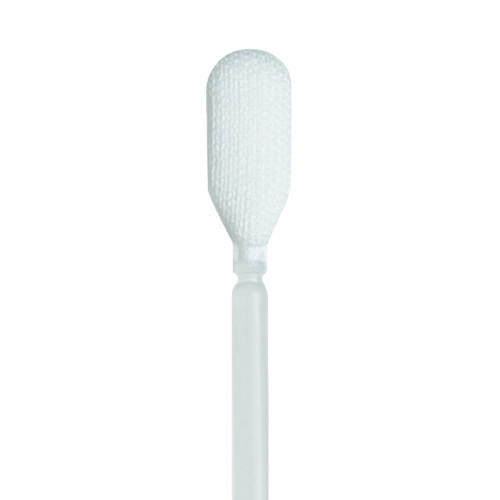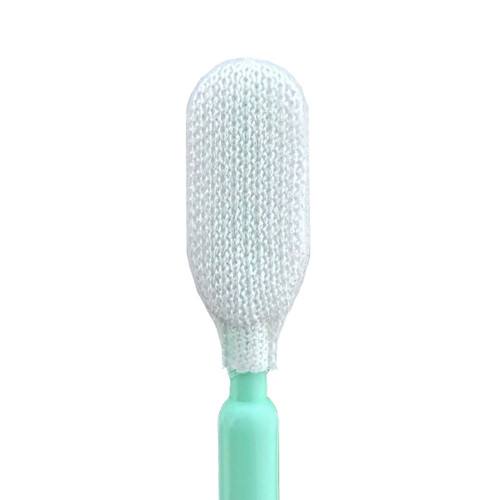
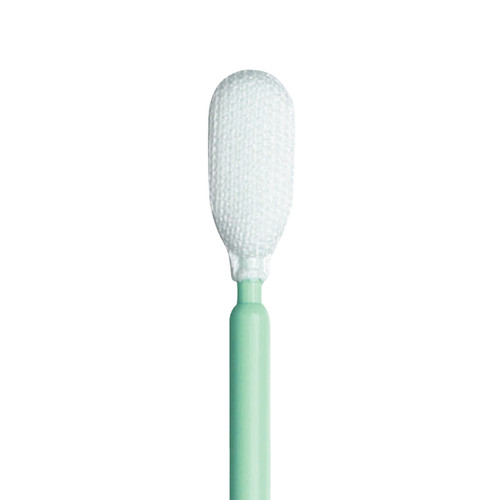
Texwipe TX761 Alpha Polyester Cleanroom Swab with Long Handle

$30.31
(No reviews yet)
SKU:
TX761 BAG
Availability:
Stock Item
Shipping:
Calculated at Checkout
Quantity Option (Bag):
100 Swabs Per Bag
Quantity Option (Case):
10 Bags of 100 Swabs Per Case
Type:
Dry Swab
Swab Family:
Alpha
Head Material:
Polyester
Head Width:
6.8 mm (0.268")
Head Thickness:
2.8 mm (0.11")
Head Length:
16.8 mm (0.661")
Handle Material:
Polypropylene
Handle Width & Thickness:
3.2 mm (0.126")
Handle Length:
145.5 mm (5.728")
Total Swab Length:
162.3 mm (6.39")
Head Bond:
Thermal
More Information:
See Below

Texwipe TX761 Alpha Polyester Cleanroom Swab with Long Handle

Texwipe TX761 is a low-linting (no swab is truly ‘zero-lint’ in every process condition), long-handle Alpha® series polyester knit cleanroom swab used for precision cleaning and controlled solvent application/removal in recessed or hard-to-access features. The double-layer knit polyester head provides predictable sorbency for damp-solvent technique (such as IPA), while thermal-bonded construction (no adhesive at the bond) helps minimize extractables variability in solvent-heavy use. The extended polypropylene handle improves reach and control, helping keep gloves and sleeves out of the work zone to reduce incidental-contact contamination during spot cleaning, touch-up, and residue-sensitive workflows.

Precision-cleaning note: TX761 is widely selected when teams need a long-reach knit polyester swab that can clean tracks, slots, channels, grooves, and tight corners without flooding the feature with solvent, while still supporting lot traceability and repeatable operator technique.

Specifications:
  • Type: Dry cleanroom swab
  • Swab family: Alpha® (polyester knit)
  • Head material: Knitted Alpha® polyester (double-layer knit)
  • Head width: 6.8 mm (0.268")
  • Head thickness: 2.8 mm (0.11")
  • Head length: 16.8 mm (0.661")
  • Handle material: 100% virgin polypropylene
  • Handle width & thickness: 3.2 mm (0.126") nominal
  • Handle length: 145.5 mm (5.728")
  • Total swab length: 162.3 mm (6.39")
  • Head bond: Thermal (no adhesive at the bond)
  • Handle ID: Light-green handle; “Texwipe” embossing used as a practical authenticity/traceability cue on applicable lines
  • Packaging: 100 swabs/bag; 10 bags/case
  • Packaging controls: Silicone-free and amide-free bag packaging (program dependent)
  • Sterility: Non-sterile (select sterile variant if sterility is required)
  • Autoclave compatibility: Autoclave safe in dry heat and steam (process-dependent)
  • Use environments: Commonly used across a wide range of ISO-class cleanrooms and controlled areas (final suitability depends on your process and cleaning method)
  • Country of origin: Typically Philippines (verify on packaging / COO documentation for your lot)
  • Shipping note: Standard shipping (non-hazardous dry swabs)
About the Manufacturer: 

Texwipe (an ITW company) differentiates itself in contamination control by treating swabs as engineered process tools, not commodity sticks. For knit polyester swabs, the performance story starts with material selection and head geometry, then moves to controlled manufacturing (including thermal bonding that avoids adhesives at the bond), cleanroom processing, and packaging choices aligned to residue-sensitive and particle-sensitive workflows.


For long-handle formats like TX761, the goal is operator control: reaching recessed features while minimizing glove/sleeve proximity, controlling wetness (damp film vs. flooding), and maintaining lot-level traceability for programs that trend results and investigate drift. SOSCleanroom (SOS) supports that discipline with a close working relationship with Texwipe focused on continuity of supply, clean documentation handoff, and practical application support—so customers can standardize swabbing materials with predictable performance while maintaining procurement reliability and audit readiness.

TX761 Features:
  • Long-handle swab designed for cleaning and sampling in recessed features (tracks, slots, channels, grooves, tight corners)
  • Extended reach helps keep gloves and sleeves out of the work zone to reduce incidental contact contamination
  • Double-layer Alpha® knit polyester head delivers predictable sorbency for “damp” solvent technique
  • Controlled solvent application/removal helps reduce flooding, streaks, haze, and film/tide marks
  • Thermal-bonded construction (no adhesive at the bond) helps minimize extractables variability in solvent-heavy use
  • Designed for low-background workflows where the swab should not dominate residue/measurement results
  • 100% virgin polypropylene handle for cleanroom-appropriate durability and tip control
  • Lot coded for traceability and quality control to support investigations and consistent introductions
  • Silicone-free and amide-free bag packaging to reduce common packaging-related unknowns (program dependent)
  • Platform continuity: designated low-TOC, ESD, or sterile variants are available when selection gates require them
TX761 Benefits:
  • Low-linting performance: Knit polyester head is designed to help reduce particle and fiber contribution during swabbing (process-dependent)
  • Reach + control: Long handle improves access and angles in tight geometries while reducing glove/sleeve proximity to the surface
  • Cleaner solvent technique: Supports damp-film application/removal to help prevent flooding and streak/film artifacts in narrow features
  • Chemistry compatibility: Polyester knit head and polypropylene handle are commonly used with IPA and many cleanroom-compatible solvents/cleaners (verify compatibility to your chemistry and SOP)
  • Traceability for programs: Lot coding supports trending, change control, and investigations when results drift or defects appear
Common Applications:
  • Precision spot cleaning of tracks, slots, channels, grooves, rails, and tight corners
  • Cleaning recessed/awkward access points without glove, sleeve, or tool contact near the surface
  • Controlled solvent application (laying down a thin, even “damp” film) in narrow features
  • Controlled solvent removal to prevent flooding, streaks, haze, and film/tide marks
  • Lifting and capturing localized residue lines before they migrate or redeposit
  • Cleaning small mechanical interfaces (gaps, seams, edges, housings) where short swabs force poor angles
  • Optics-adjacent cleaning where visible artifacts and background are gating concerns
  • Residue-sensitive sampling and investigation support where swab background must not dominate the measurement signal
  • Cleaning validation support (method development, blank-setting, recovery-focused sampling workflows) using the appropriate sampling/low-TOC variants when required
Best-Practice Use:
  • Open-and-use discipline: Open the bag only when ready to swab; reseal promptly to reduce exposure and maintain cleanliness.
  • Damp, not flooded: If using solvent, aim for a controlled damp head (not dripping) to avoid pushing solvent into seams, joints, and interfaces.
  • Wipe pattern: Use straight-line strokes with consistent pressure; avoid scrubbing motions that can redeposit contamination or snag edges.
  • Rotate faces: Use a clean face/edge for each pass; do not re-wipe with a loaded surface.
  • Control torque: In tight channels, keep the head aligned and avoid twisting that can roll the contact patch and smear residues.
  • Change-out triggers: Replace the swab when the head loads, becomes tacky, frays, or leaves visible streak/residue.
Selection Notes (TX761 vs. Other Options)
  • Standard vs. sterile: Choose TX761 for non-sterile controlled cleaning; step up to the designated sterile long-handle variant when sterile processing and sterile packaging/documentation are required by the workflow.
  • Standard vs. low-TOC sampling (TX761K): If TOC background is a gating concern in cleaning validation, use the designated low-TOC variant built for sampling programs.
  • Standard vs. ESD: If static control is a selection gate at the point of use, choose the designated ESD long-handle option aligned to your ESD program requirements.
  • Long-handle vs. standard length (e.g., TX714A): Choose the long handle when access and glove/sleeve clearance matter; choose a shorter handle when close-in control and higher rigidity are preferred.
  • Need an angled approach: If access requires an angled head geometry, consider an Alpha® flexible angled-head option designed for approach-angle constraints.

Link to Texwipe Technical Datasheet:
Click Here
Texwipe.com PDF: Click Here

Other Similar Products Available From SOSCleanroom.com

Long-Handle & Program Variants

  • TX761K: low-TOC long-handle Alpha® sampling swab option for TOC-sensitive validation workflows
  • TX762: Absorbond long-handle polyester swab option when a nonwoven polyester head is preferred

Other Alpha® Polyester Swab Options

  • TX714A: large Alpha® polyester knit cleanroom swab for broader contact and controlled cleaning
  • TX714K: low-TOC snap swab for surface validation and cleaning validation sampling programs

Notes: Looking for application guidance or qualification context for Texwipe TX761 Alpha polyester cleanroom swabs with long handle? Open the SOSCleanroom Technical Vault tab above for practical swabbing technique (damp-film control, stroke discipline, change-out triggers), selection notes (TX761 vs. low-TOC / sterile / ESD variants), and the documentation details teams typically review when standardizing swabs across ISO-class controlled environments.

SOSCleanroom.com supports contamination-control programs with cleanroom consumables in stock, fair pricing, and responsive technical support—backed by same-day shipping options and customer service that understands real cleanroom workflows.

Product page updated: Jan. 5, 2026 (SOS Technical Staff)

© 2026 SOS Supply. All rights reserved.

The Technical Vault By SOSCleanroom
ISO 14644 Operations Awareness Precision Spot Cleaning Solvent Control (Damp-Film) Residue & Rework Reduction Long-Handle Access Control

Texwipe TX761: what this long-handle Alpha® swab is designed to solve

Texwipe TX761 is a long-handle Alpha® series polyester knit cleanroom swab used for precision spot cleaning and controlled solution application/removal in recessed or hard-to-access features. Teams select TX761 when the process risk is not simply “cleaning,” but how cleaning is performed—reaching slots, channels, grooves, seams, and tight corners without flooding the feature with solvent, without dragging gloves and sleeves into the work zone, and without turning a localized residue into a wider redeposit problem.

TX761 uses complete thermal bond construction (no adhesive at the bond) and a controlled polyester knit head geometry. This supports method consistency in solvent-heavy workflows where adhesive transfer or bond-line extractables would be an unacceptable variable. The extended polypropylene handle improves reach and fine control for operator technique, which is often the dominant factor behind streaking, haze, tide marks, or “cleaning that looks worse than before” on optics-adjacent and residue-sensitive surfaces.

Operations takeaway: TX761 is a process control tool. When you standardize the swab and lock the method (wetness target, stroke pattern, pressure band, and change-out triggers), you reduce rework and increase repeatability across operators and shifts.


ISO-first context: why swabbing belongs in operations control

In ISO-controlled environments, cleanliness is sustained through disciplined operations—personnel practices, material transfer, cleaning methods, maintenance, monitoring, and documentation. Swabbing is not “just a consumable”: it is a defined method with operator-driven variables. If your process outcome is sensitive to residues, particles, or visible artifacts, the swab method should be written and trained as part of your cleanroom operations controls (zone rules, introduction rules, technique, change-out, and disposal).

Control point: Two operators using the same swab can create different outcomes if wetness, pressure, direction changes, or change-out timing are inconsistent. Standardize the method for repeatability.


Specifications (use for RFQs, SOPs, and receiving controls)
  • Type: Dry cleanroom swab
  • Swab family: Alpha® (polyester knit)
  • Head material: 100% polyester knit (Alpha®)
  • Head width: 6.8 mm (0.268")
  • Head thickness: 2.8 mm (0.11")
  • Head length: 16.8 mm (0.661")
  • Handle material: Polypropylene
  • Handle width & thickness: 3.2 mm (0.126") nominal
  • Handle length: 145.5 mm (5.728")
  • Total swab length: 162.3 mm (6.39")
  • Head bond: Complete thermal bond (no adhesive at the bond)
  • Packaging: 100 swabs/bag; 10 bags/case
  • Packaging controls: Silicone-free and amide-free bag packaging (program dependent)
  • Sterility: Non-sterile (select sterile variant if sterility is required)
  • Traceability: Lot coded for traceability and quality control (capture lot per your SOP)
  • Program note: Suitability depends on your process, chemistry, and method controls. Use current manufacturer documentation for any limits (NVR/ions) and lot-specific requirements.

What TX761 is designed to do (process outcomes)

TX761 is commonly selected for:

  • Precision spot cleaning of tracks, slots, channels, grooves, rails, seams, and tight corners
  • Controlled solvent application (thin “damp film” technique) in narrow features where flooding creates rework
  • Controlled solvent removal to limit streaks, haze, and tide marks
  • Localized residue lift and pickup in recessed interfaces before contamination migrates or redeposits
  • Cleaning awkward access points without glove or sleeve contact near the surface
  • Optics-adjacent cleaning where visible artifacts and background contamination are gating concerns

Precision-cleaning note: On optics-adjacent surfaces, most visible artifacts are created by uncontrolled wetness and redeposit, not by the swab alone. The method is the control.


Best-practice use (reduce residue, rework, and changeovers)
  1. Open-and-use discipline: open the bag only when ready to swab; remove one swab at a time; reseal promptly.
  2. Handle-only rule: touch only the handle; keep the tip isolated from gloves, gowning, carton edges, benches, and tools.
  3. Damp, not flooded: if using solvent (e.g., IPA), target a damp film (no dripping) to avoid pushing solvent into seams and interfaces.
  4. Apply to swab, then to surface (typical): wet the swab tip and contact the target to limit uncontrolled solvent migration (follow your SOP).
  5. Directional strokes: use straight-line passes with overlap; avoid scrubbing that redistributes dissolved soils.
  6. Rotate contact faces: use a clean contact patch for each pass; do not re-wipe with a loaded surface.
  7. Control torque in channels: keep the head aligned; twisting rolls the contact patch and smears residues.
  8. Define change-out triggers: replace the swab when it loads, becomes tacky, loses structure, or leaves visible streaks.
  9. Dispose immediately: never set used swabs on benches/carts; discard into the designated waste stream.

Two-pass discipline (when needed): one damp swab to mobilize contamination, followed by a second swab (or approved wipe) to pick up dissolved soils before they dry into a film. This is a common control for residue-sensitive work.


Troubleshooting (most common failure modes)
  • Streaks / tide marks: usually over-wetting, backtracking, or reusing a loaded contact patch. Correct by damp film control, shorter sections, and earlier change-out.
  • Haze after drying: commonly redeposit of dissolved contamination. Reduce backtracking and prevent solvent from pooling in seams or grooves.
  • Particles appear after “cleaning”: often handling contamination (tip touches glove/gown/carton) or excess pressure dislodging material. Tighten handling discipline and reduce pressure.
  • Residue line returns in a groove: contamination/solvent retention in the feature. Work in one direction end-to-end with planned swab changes; do not smear back across the groove.
  • Shift-to-shift inconsistency: method drift. Lock wetness target, stroke count, feature limit per swab, and change-out triggers.

Selection notes (TX761 vs. other program requirements)

TX761 is a non-sterile long-handle knit polyester swab. If your program has additional selection gates, choose the correct variant before writing the SOP.

  • Sterile requirement: if the workflow requires sterile presentation/transfer and sterile documentation, use a designated sterile variant (do not “treat non-sterile as sterile”).
  • TOC-sensitive sampling: if TOC background is a gating concern (cleaning validation / analytical sampling), specify the designated low-TOC long-handle variant (e.g., TX761K) and follow a defined sampling method.
  • ESD selection gate: if static control is mandatory at point-of-use, specify the ESD-safe long-handle variant (e.g., TX761D) aligned to your ESD program controls.
  • Nonwoven preference: if your process requires a nonwoven polyester head behavior, consider an appropriate long-handle nonwoven polyester swab (e.g., TX762) and qualify the method.

Change-control reminder: Switching between standard, low-TOC, ESD-safe, and sterile variants should be handled as a controlled change when the process is validated or defect-sensitive.


Suggested glove pairing (operator contamination control)

When using TX761 in controlled environments, glove selection is a meaningful contamination-control variable. For residue-sensitive and particle-sensitive work, gloves should be cleanroom processed and appropriate for the ISO classification of the point-of-use environment.

Suggested pairing: Ansell 93-311 Nitrilite® Cleanroom Nitrile Gloves (Class 100 / ISO 5)

  • Cleanroom-manufactured/packaged for ISO 5 use where TX761 methods are commonly deployed
  • Supports low particulate / low extractable transfer expectations for precision cleaning and sampling tasks
  • Nitrile formulation helps avoid latex-related concerns while maintaining tactile control for long-handle technique

Final glove selection should be validated against internal SOPs, environmental classification, and process-specific risk assessments.


Documentation (use current manufacturer data for controlled programs)
  • Texwipe TX761 Manufacturer Page: Click Here
  • Alpha® Polyester Knit Swabs TDS (Texwipe PDF): Click Here
  • Texwipe Swab Sampling Proper Procedure (SOS PDF): Click Here
  • Texwipe Swabbing Guide (SOS PDF): Click Here

Why source ITW Texwipe TX761 through SOSCleanroom
  • Configuration control: you get the correct SKU and case pack tied to the item—reducing “equivalent swab” substitutions.
  • Master Distributor support: SOSCleanroom is an ITW Texwipe Master Distributor—supporting correct variant selection (standard vs low-TOC vs ESD-safe vs sterile) and continuity planning.
  • Documentation routing: help locating current manufacturer documentation required by your SOP (TDS, method guidance, traceability expectations).
  • One-cart procurement: pair swabs with compatible wipers, gloves, IPA and cleaning chemistries, and facility supplies to keep method control consistent.

Procurement control point: For validated or defect-sensitive processes, specify “no substitution without written approval” on RFQs/POs and define receiving/lot capture expectations.


Related products (commonly purchased together)
  • TX761K (low-TOC long-handle option for TOC-sensitive validation/sampling workflows)
  • TX762 (Absorbond long-handle polyester option when a nonwoven head is preferred)
  • TX714A (larger Alpha® knit polyester swab for broader contact areas)
  • TX714K (low-TOC snap swab for surface validation and cleaning validation sampling programs)

If you have any questions please email us at Sales@SOSsupply.com or give us a call at (214)340-8574. OR check out the AI ChatBot powered by SOSCleanroom data libraries - give it a try! THIS IS NEW FOR 2026! © 2026 SOSCleanroom. All rights reserved.

Videos Hide Videos Show Videos