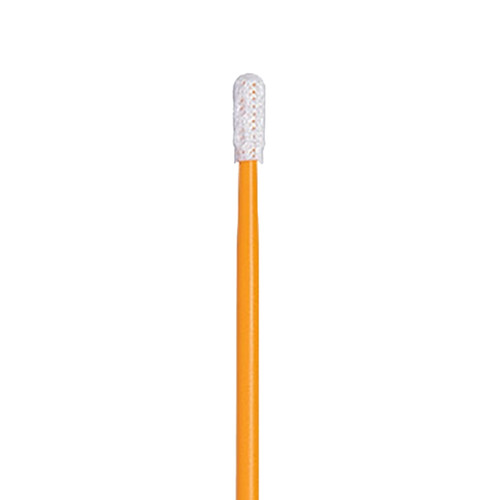
Texwipe TX802 General Purpose Small Flat Paddle Polyester Honeycomb Cleanroom Swab

$64.72
(No reviews yet)
SKU:
TX802 BAG
Availability:
Stock Item
Shipping:
Calculated at Checkout
Quantity Option (Bag):
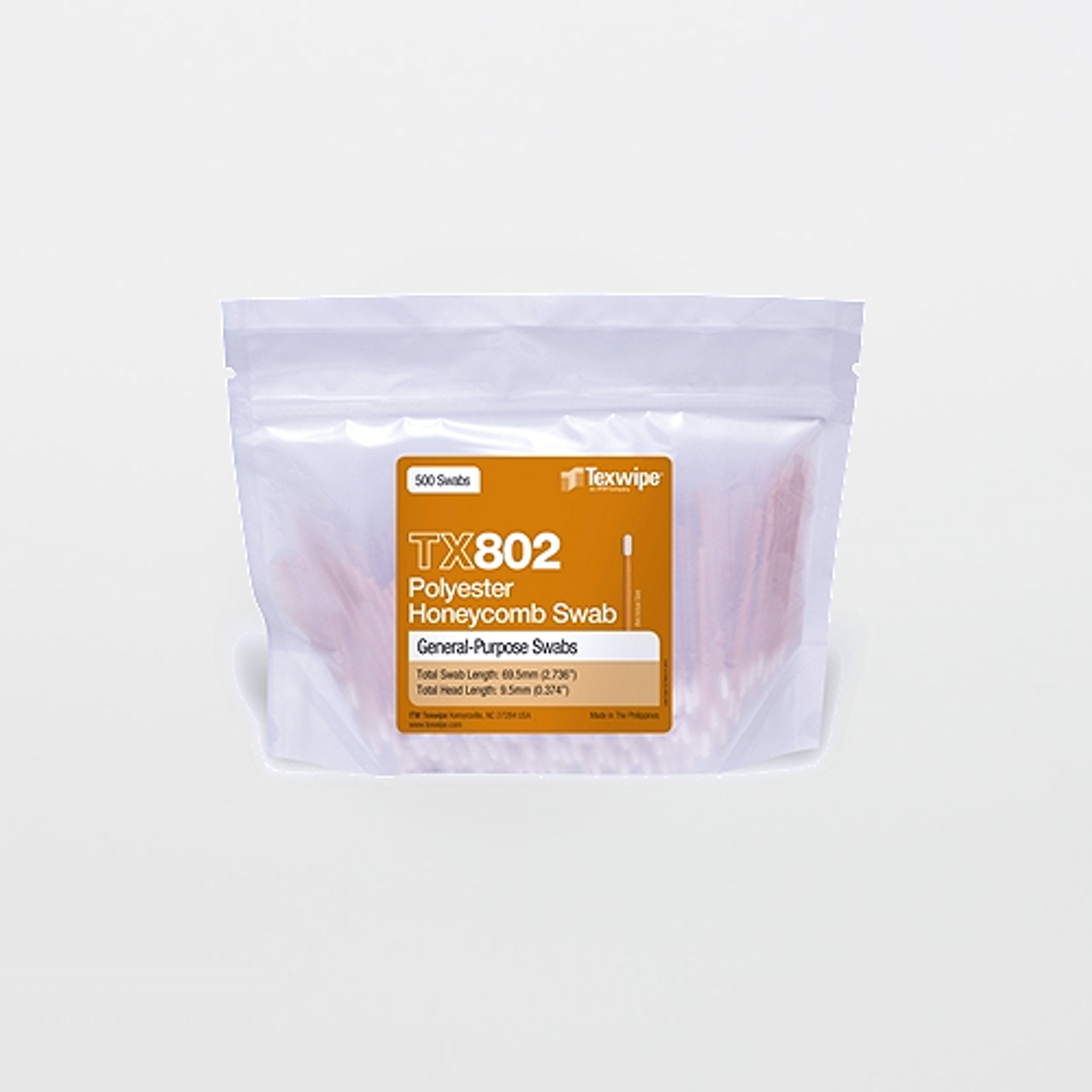
500 Swabs Per Bag
Quantity Option (Case):
5 Bags of 500 Swabs Per Case
Type:
Dry Swab
Swab Family:
General Purpose
Swab Material:
Polyester

Texwipe TX802 General Purpose Small Flat Paddle Polyester Honeycomb Cleanroom Swab

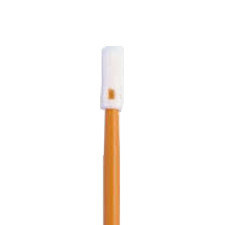
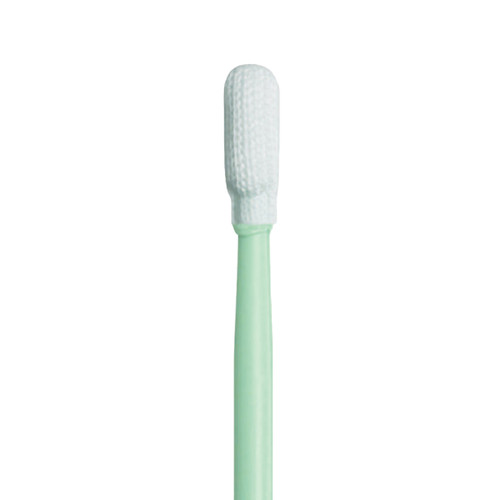
Texwipe TX802 is a general-purpose, small flat paddle polyester honeycomb cleanroom swab designed for hearty pickup, controlled placement, and localized removal of thicker soils in less critical areas. The 100% polyester honeycomb head is thermally bonded (no adhesive) to a polypropylene handle to reduce a common contamination variable associated with low-control applicators. The honeycomb cell structure is engineered to maximize absorbency and capture of larger particles, dirt, and viscous films (think greases, inks, flux residues, paints, and heavy solutions) while maintaining a compact paddle geometry for confined spaces. Like any swab, “low-linting” performance is process-dependent (no swab is truly “zero-lint” in every condition), so best results come from correct wetness control, short strokes, and frequent tip rotation.

Program note: TX802 is widely selected for industrial cleaning and general-purpose application steps where you want an adhesive-free bond line, consistent geometry, lot traceability, and an orange handle for fast visual segregation—helping keep “bench-control” swabs from drifting into higher-control cleanroom processes.

Specifications:
  • SKU: TX802 BAG (bag) / TX802 (case option varies by selection)
  • Swab type: Dry swab (general-purpose / less critical areas)
  • Swab family: General Purpose
  • Head material: 100% polyester honeycomb fabric
  • Head bond: Thermal bond (eliminates adhesive contamination pathway)
  • Handle material: Polypropylene
  • Handle color: Orange (visual segregation / easy identification)
  • Design notes: Small flat paddle
  • Head width: 3.5 mm (0.138")
  • Head thickness: 3.0 mm (0.118")
  • Head length: 9.2 mm (0.413")
  • Handle width: 2.5 mm (0.098")
  • Handle thickness: 2.5 mm (0.098")
  • Handle length: 60.0 mm (2.36")
  • Total swab length: 69.2 mm (2.72")
  • Packaging (bag): 500 swabs per reclosable bag
  • Packaging (case): 5 reclosable bags per case (2,500 swabs/case)
  • Bag attributes: Reclosable, silicone-free bag; lot coded for traceability and quality control
  • Temperature note: Appropriate for use with temperatures less than 410°F (process-dependent)
  • Shelf life (non-sterile): 5 years from date of manufacture
  • Country of origin: Made in the Philippines (per manufacturer TDS)
About the Manufacturer: 

Texwipe (an ITW company) differentiates itself by treating swabs as engineered contamination-control tools—built to consistent tolerances, lot coded for traceability, and manufactured using high-precision automated processes. In the General-Purpose Swab Series, Texwipe emphasizes thermal bonding (to eliminate adhesive variables), silicone-free reclosable packaging (to reduce transfer risk in finishing/printing/adhesive workflows), and clear handle-color segregation to support disciplined use in less critical areas.


SOSCleanroom (SOS) supports this approach through a close working relationship with ITW Texwipe focused on continuity of supply, documentation handoff (lot traceability and supporting paperwork), and practical application support—so customers can standardize on a known swab geometry and construction method while maintaining procurement reliability.

TX802 Features:
  • 100% polyester honeycomb head engineered to maximize absorbency and capture of large particles and dirt
  • Thermal head bond eliminates adhesive contamination risk (adhesive-free bond line)
  • Orange polypropylene handle supports fast visual identification for less critical areas
  • Polypropylene handle offers broad chemical compatibility and resists breakdown with common chemicals
  • Lot coded for traceability and quality control
  • Packaged in a reclosable, silicone-free bag to help reduce silicone transfer risk
  • Compact small flat paddle head for access into confined spaces and controlled placement of thicker solutions
TX802 Benefits:
  • Hearty pickup of thicker soils: Honeycomb cell structure helps retain viscous films and particulate-laden residues (grease, inks, flux residues, paints) rather than skating across surfaces
  • Reduced contamination variables: Thermal bonding removes adhesive as a potential source of extractables or bond-line shedding
  • Segregation control: Orange handle helps keep general-purpose swabs from drifting into higher-control cleanroom steps
  • Chemical compatibility: Polyester + polypropylene construction is commonly selected for broad compatibility with many routine process solutions (verify against your chemistry and SOP)
  • Traceability for investigations: Lot coding and consistent manufacturing tolerances support repeatability, troubleshooting, and documentation expectations
Common Applications:
  • Removing and applying solders and fluxes
  • Applying and removing lubricants, adhesives, and process solutions
  • Cleaning confined spaces containing thick solutions (such as paints or inks)
  • Picking up powders and dust in less critical areas
  • Targeted wipe points where a compact flat paddle head improves access and control
Best-Practice Use:
  • Control wetness: For thick residues, work damp—not dripping. Over-wetting can smear soils and increase spread into seams and joints.
  • Short strokes, rotate often: Use short, deliberate passes; rotate the paddle face after each pass to avoid re-depositing a loaded film.
  • Use straight-line technique: Maintain directional strokes to reduce rework and redeposition (especially with inks, greases, or flux residues).
  • No re-dipping: Never return a used swab to a source solvent bottle. Use single-use aliquots to prevent cross-contamination.
  • Surface-sensitivity caution: Honeycomb texture can be more abrasive than smoother knit tips at the same applied force. For optics, soft coatings, and scratch-sensitive finishes, reduce pressure or select a smoother low-linting knit polyester swab designed for critical cleaning.
  • Segregate by design: Keep TX802 dedicated to less critical areas and explicitly label the SOP scope to prevent swab “process drift.”
Typical Cleanliness Metrics (Manufacturer Testing):

These values represent typical analyses (not specification limits). For regulated programs, confirm background and recovery under your method, solvents, and acceptance criteria.

Typical ion extractables (µg/swab)

Analyte Typical value
Chloride 0.2
Potassium 0.4
Sodium 0.9

Typical nonvolatile residue (NVR), mg/swab

Extractant Typical value
DI water (DIW) 0.02
Isopropyl alcohol (IPA) 0.05
Selection Notes (TX802 vs. Other Options)
  • General-purpose vs. critical cleaning: Choose TX802 for thicker soils in less critical areas. If your priority is the cleanest background for high-control work (sensitive optics, precision coatings, or tight residue limits), a smoother knit polyester cleanroom swab is commonly evaluated.
  • Honeycomb texture vs. smoother tips: Honeycomb can “grab” viscous residues effectively, but the textured structure can increase abrasion risk on delicate surfaces at the same applied force.
  • Segregation as a control: The orange handle is a practical cue for tool control—use it to keep bench-control tasks separated from higher-control swab steps.
  • Thermal bond matters: If your current applicators use adhesive bonds, TX802’s thermal bond can reduce a frequent root cause of unexplained residues and bond-line variability.

Link to Texwipe Technical Datasheet:
Click Here
Texwipe.com PDF: Click Here

Notes: Need technique guidance for using Texwipe TX802 polyester honeycomb swabs in real industrial cleaning workflows (wetness control, short-stroke discipline, segregation controls, and when to upgrade to a smoother low-linting swab)? Open the SOSCleanroom Technical Vault tab above for practical selection context and operator-focused best practices.

SOSCleanroom.com supports contamination-control programs with cleanroom consumables in stock, fair pricing, and responsive technical support—backed by customer service that understands real controlled-environment workflows.

Product page updated: Jan. 6, 2026 (SOS Technical Staff)

© 2026 SOS Supply. All rights reserved.

The Technical Vault
By SOSCleanroom
Last reviewed: January 6, 2026
Texwipe TX802 small flat paddle polyester honeycomb swab: controlled pickup for flux, grease and thick residues in less critical areas
Fast selection check
Choose TX802 when the soil is viscous (flux, grease, inks, thick solutions) and the goal is controlled pickup or application in less critical areas. If the goal is residue-budget control for optics, precision-coated parts, or validation-driven sampling, step up to a higher-control swab family and qualify it to your method.
Practical solutions in a critical environment

Most contamination escapes do not begin in the most controlled step. They start at benches, rework stations, printers and tool staging points, where thick residues get moved from surface to surface and then migrate upstream on gloves, fixtures and handling tools. The risk is not “a hard-to-reach corner.” The risk is repeatable transfer of a film that never fully leaves the workflow.

TX802 is built for that reality: a small, flat paddle head made from 100% polyester honeycomb fabric that is engineered to maximize absorbency and capture larger particles and dirt. The head is thermally bonded to a polypropylene handle, which eliminates adhesive at the bond line and removes one common variable that can complicate rework and cleanup when solvents are involved.

Low-linting outcomes depend on technique and surface condition. No swab is truly lint-free. Edge sharpness, surface roughness, solvent load, contact pressure and stroke discipline govern what you see on the part.

What is this swab used for

Texwipe TX802 is a general-purpose, non-sterile cleanroom swab intended for less critical areas and industrial applications where operators need a compact paddle head to pick up, place, or remove heavier liquids and residues without collapsing the tip.

Typical use cases include removing and applying solders and fluxes, applying and removing lubricants and adhesives, cleaning confined spaces containing thick solutions (such as paints or inks), and picking up powders and dust. The manufacturer positions the polyester honeycomb fabric as appropriate for use at temperatures below 410°F.

Why should customers consider this swab
  • Honeycomb polyester “cell” structure is engineered for hearty pickup and application of adhesives, greases and thicker residues.
  • Thermal bond head construction eliminates adhesive at the bond line, reducing a residue variable in solvent-wet work.
  • Polypropylene handle supports broad chemical compatibility for routine exposure to common process and cleaning solutions.
  • Orange handle supports segregation control so general-purpose swabs do not drift into higher-control steps.
  • Reclosable, silicone-free bag helps reduce silicone-transfer risk in printing, coating and adhesive workflows.
  • Lot coded packaging supports investigations, root-cause work and repeatable qualification habits.
Materials and construction

Head: 100% polyester honeycomb fabric (flat paddle head)

Head bond: thermal bond (no adhesive at the bond)

Handle: polypropylene; compact, stiff format; handle color: orange

Practical implication: the textured honeycomb structure can “grab” viscous soils that smoother knit swabs may skate across. That helps with flux, grease and ink-like residues, but it can be too aggressive for delicate optics, soft coatings or mirror finishes. Treat burrs and sharp edges as a process risk; reduce pressure near edges and do not force the honeycomb face through snag points.

Specifications in context

TX802 is small by design. Its compact paddle head and short overall length support controlled access in shallow housings, edge seams, printer and rework interfaces, and tight tool clearances. Use the head width and length to standardize overlap and stroke count so the process does not drift into scrubbing. Use thickness to manage wetness and pressure distribution. Keep technique “damp,” not dripping, to avoid spreading viscous soils into a larger smear zone.

Attribute TX802
Head material polyester honeycomb
Head width 3.5 mm (0.138")
Head thickness 3.0 mm (0.118")
Head length 9.2 mm (0.413")
Handle material polypropylene
Handle width 2.5 mm (0.098")
Handle thickness 2.5 mm (0.098")
Handle length 60.0 mm (2.360")
Total swab length 69.2 mm (2.720")
Head bond thermal
Handle color orange
Design notes small flat paddle
Cleanliness metrics

The values below represent published typical analyses and are not per-unit specifications. Use them as a baseline for risk assessment, method development and troubleshooting. If your work is film-sensitive or you validate cleaning, qualify the swab with your solvent, your surfaces, your stroke count and your inspection method so the swab does not become the dominant background signal.

Typical ion extractables (µg/swab)
Ion TX802
Chloride0.2
Potassium0.4
Sodium0.9
Typical nonvolatile residue (NVR) (mg/swab)
Extractant TX802
DIW extractant0.02
IPA extractant0.05

Operator takeaway: viscous residues tempt operators to over-wet. Keep the head damp, use short controlled strokes, rotate faces early, and stop when drag increases. If you see a spreading film edge, reduce solvent load and reduce the stroke length so the end-of-stroke does not pool.

Packaging, sterility and traceability
  • Packaging (TX802): 500 swabs/reclosable bag; 5 bags/case; 2,500 swabs/case
  • Bag packaging controls: reclosable, silicone-free bag
  • Sterility: non-sterile (do not treat as a sterile field-entry consumable)
  • Shelf life (series statement): non-sterile 5 years from date of manufacture
  • Traceability cues: lot coded packaging; orange handle supports task segregation; “TEXWIPE” handle embossing is used as a practical identifier in the series
  • Country-of-origin (manufacturer statement): Made in The Philippines
Best-practice use

Treat TX802 like a controlled applicator and collector, not a scrub brush. The goal is localized removal or placement of heavier residues with disciplined wetness control so contamination does not spread. Define stroke count and discard triggers so operators do not “chase” residue by reworking it with a loaded face.

Operator-level swabbing technique module
  • Wetness control for thick soils: Start damp. If solvent is used, apply to the swab and reduce to damp, not dripping. The practical check is one controlled touch to a blot surface to remove excess. Over-wetting turns localized soil into a larger film.
  • Short-stroke logic: Use short, single-direction strokes with overlap. For flux or grease, 2–4 short passes, then rotate to a fresh face. Stop when drag increases or the face looks glossy with soil.
  • Pressure discipline: Use only enough force to keep the paddle flat. Excess pressure can drive residue into seams and can increase abrasion risk, especially with the honeycomb texture.
  • No re-dip rule: Do not re-dip a used swab into a shared solvent bottle. Decant into a small working vessel and refresh it frequently to prevent cross-contamination.
  • Segregation and upgrade path: Keep orange-handle swabs assigned to defined, less critical tasks. If the final surface is inspection-critical, follow with a higher-control, low-linting swab family and a higher-purity solvent per SOP.
  • Handling discipline: Reseal the reclosable bag promptly. Stage only what you need at the bench. Capture lot code in any investigation notes so root cause can be separated from process drift.
Common failure modes
  • Using TX802 for a critical-cleaning step because it is convenient, creating process drift and an avoidable background risk.
  • Over-wetting the head and spreading flux, grease or ink into a larger smear zone.
  • Reworking the same area with a loaded face, causing redeposition and streaking.
  • Excess pressure on delicate surfaces, increasing abrasion risk with the honeycomb texture.
  • Cross-contaminating solvent through re-dipping or shared reservoirs without decant-and-refresh discipline.
Closest competitors

Comparable alternatives are compact polyester swabs intended for applicator-style work where selection hinges on head construction, bond method, published contamination data, packaging discipline and traceability. Compare wetting behavior (flooding risk), snag resistance near edges and whether lot coding and published typicals support investigations.

  • Contec CONSTIX® sealed polyester swab class (SP series): Often positioned for cleaner performance and durability in controlled wiping. Evaluate head sealing, bond mechanism and documentation depth when migrating from bench control toward tighter contamination budgets.
  • Berkshire Lab-Tips® polyester swab class: Knit-based polyester options that programs often evaluate when they want a smoother contact face and more controlled behavior on sensitive hardware.
  • Puritan polyester swab formats (mini/paddle geometries): Comparable access form factors may be available. Confirm bond method, packaging discipline and the availability of contamination data needed for your program.
Critical environment fit for this swab

TX802 is best positioned as a controlled general-purpose swab for less critical areas: bench work, rework, printing, paint touch-up, adhesive and grease handling, and confined-space cleanup where the soil is thick and the goal is containment, not ultra-low background. It helps keep gross residues from becoming chronic particle and film sources that migrate into cleaner steps.

SOSCleanroom’s relationship with ITW Texwipe supports continuity of supply and documentation discipline, which reduces the risk of unplanned substitutions that change wetting behavior and background extractables. That matters in ISO-aligned programs and in regulated environments where documentation expectations often track FDA quality systems and standards-driven methods associated with ASTM and IEST.

Operational support matters, too. Fast shipping and responsive customer service help keep work instructions intact by preventing “make-do” substitutions when schedules tighten.

Source basis
  • SOSCleanroom product page (TX802): https://www.soscleanroom.com/product/swabs/texwipe-tx802-general-purpose-small-flat-paddle-polyester-honeycomb-cleanroom-swab/
  • Texwipe manufacturer product page (TX802): https://www.texwipe.com/polyester-honeycomb-tx802
  • SOS-hosted Texwipe technical sheet (TX801/TX802): https://www.soscleanroom.com/content/texwipe_pdf/801%20802.pdf
  • Texwipe technical data sheet: “General-Purpose Swab Series” (US-TDS-065 Rev.10/21): https://www.texwipe.com/images/uploaded/documents/Swabs/Texwipe-GeneralPurpose-Swabs-TDS.pdf
  • International Organization for Standardization (ISO) reference (ISO 14644-1:2015): https://www.iso.org/standard/53394.html
  • FDA (Food and Drug Administration): https://www.fda.gov/
  • ASTM (American Society for Testing and Materials): https://www.astm.org/
  • IEST (Institute of Environmental Sciences and Technology): https://www.iest.org/
SOSCleanroom is the source for this Technical Vault entry.
Briefed and approved by the SOSCleanroom (SOS) staff.
Last reviewed: January 6, 2026
© 2026 SOSCleanroom