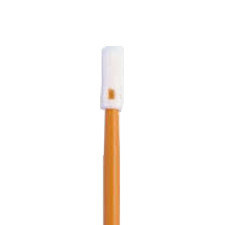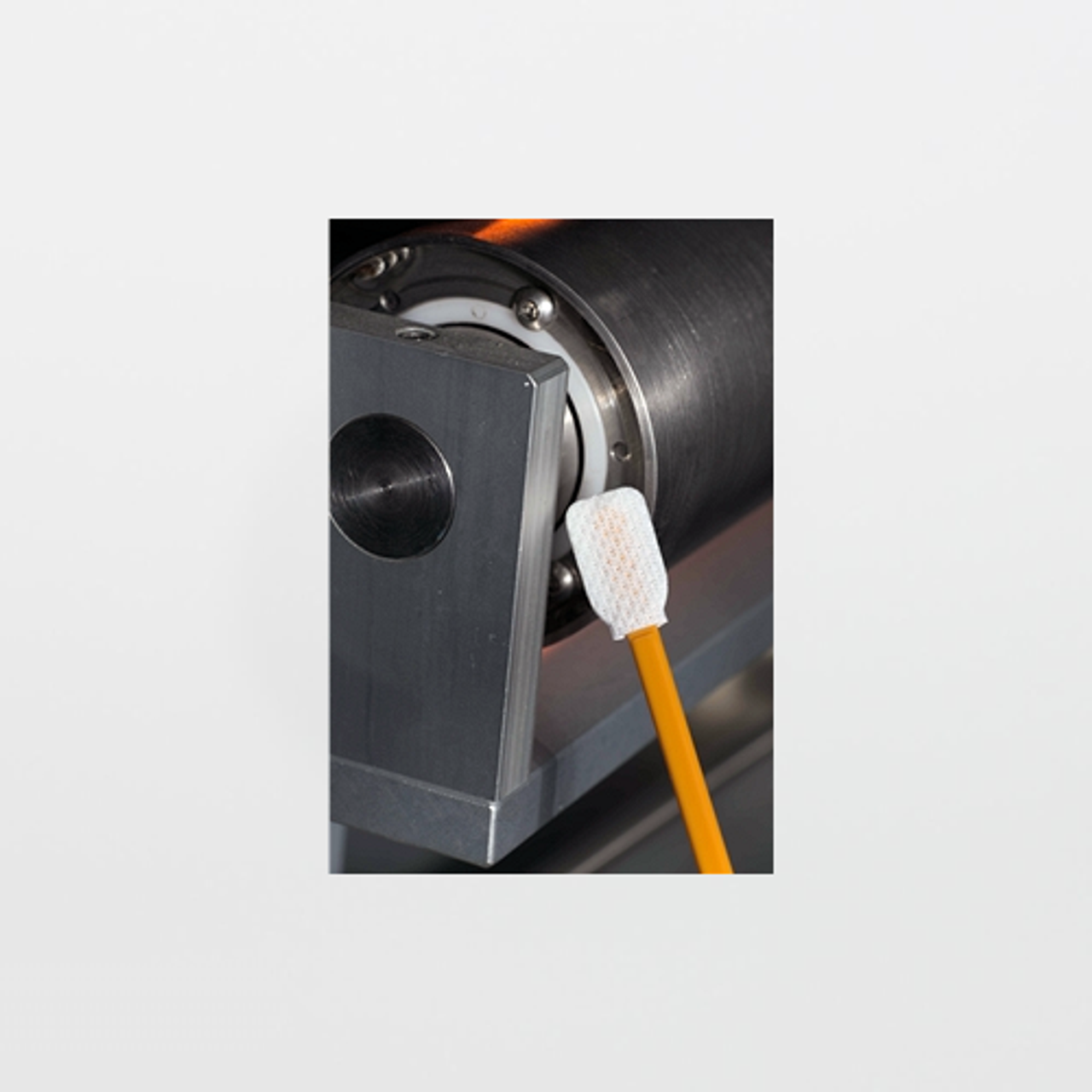
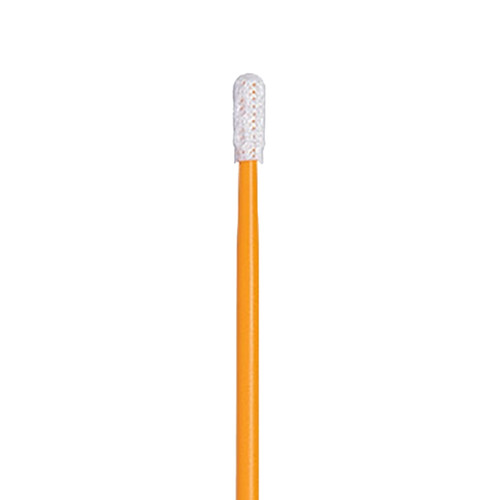
Texwipe TX801 General Purpose Large Flat Paddle Polyester Honeycomb Cleanroom Swab

$43.19
(No reviews yet)
SKU:
TX801 BAG
Availability:
Stock Item
Shipping:
Calculated at Checkout
Quantity Option (Bag):
100 Swabs Per Bag
Quantity Option (Case):
6 Bags of 100 Swabs Per Case
Type:
Dry Swab
Swab Family:
General Purpose
Swab Material:
Polyester

Texwipe TX801 General Purpose Large Flat Paddle Polyester Honeycomb Cleanroom Swab

Texwipe TX801 is a general purpose cleanroom swab built for the real-world, industrial lane of contamination control: flux, solder paste, grease, adhesives, inks/paints, powders, and thick residues in confined spaces where a standard swab loads instantly and smears instead of lifting. The head is made from 100% polyester honeycomb fabric engineered with cell-like structure to maximize absorbency and provide hearty pickup of larger particles and dirt, while still remaining low-linting in practical use (no swab is truly ‘lint-free’ in every process condition). A complete thermal bond secures the head to the handle to eliminate adhesive contamination risk at the head/handle interface—a key advantage when solvents, heat-adjacent tooling, or aggressive chemistries are part of the step. The orange polypropylene handle is intentionally easy to identify so teams can keep TX801 in the “less critical / industrial” tool lane and avoid accidental use where lower-residue critical swabs are required.

Line-control note: TX801 is commonly selected to reduce rework on messy tasks (flux work, adhesive squeeze-out, grease on fixtures, paint/ink in pockets) because the honeycomb face holds thicker fluids and captures debris better than a flat textile face. Best results come from straight strokes, controlled wetness (damp—not dripping), and early change-outs once the honeycomb “cells” load.

Specifications:
  • SKU: TX801
  • Type: Dry Swab (non-sterile)
  • Swab family: General Purpose
  • Swab material: Polyester (honeycomb fabric head)
  • Head material: Polyester Honeycomb
  • Head width: 13.5 mm (0.531")
  • Head thickness: 3.5 mm (0.138")
  • Head length: 25.2 mm (0.992")
  • Handle material: Polypropylene
  • Handle width: 5.2 mm (0.205")
  • Handle thickness: 3.0 mm (0.118")
  • Handle length: 102.3 mm (4.03")
  • Total swab length: 127.5 mm (5.02")
  • Head bond: Thermal (no adhesive at the head/handle interface)
  • Handle color: Orange (easy identification for less critical areas)
  • Design notes: Large Flat Paddle (defined wiping face for edges, transitions, and confined pockets)
  • Temperature note: Appropriate for use with temperatures less than 410°F (process-dependent guidance)
  • Packaging (bag): 100 swabs per bag
  • Packaging (case): 6 bags of 100 swabs per case (600 swabs/case)
  • Packaging controls: Reclosable, silicone-free bag; lot coded for traceability and quality control
  • Use environments: Commonly used for industrial and general purpose applications, including work inside controlled areas where the step is not final-pass critical (final suitability depends on your process and acceptance criteria)
About the Manufacturer: 

Texwipe (an ITW company) builds swabs as process tools with defined materials, consistent geometry, and controlled packaging. In the General Purpose Polyester Honeycomb series, the engineering intent is practical: deliver hearty pickup and controlled application for thicker soils (flux, grease, adhesives, inks/paints) while removing adhesive-bond variables through thermal construction, then support line-side repeatability with lot coding and reclosable, silicone-free packaging.


SOSCleanroom (SOS) supports that manufacturing discipline with continuity of supply, consistent packaging configurations, and responsive application support—so customers can standardize general-purpose swabbing steps without last-minute substitutions that trigger rework.

TX801 Features:
  • 100% polyester honeycomb fabric head engineered for hearty pickup, absorbency, and capture of larger particles and dirt
  • Complete thermal bond construction eliminates adhesive contamination risk at the head/handle interface
  • Excellent chemical resistance for compatibility with a variety of solutions (verify compatibility to your chemistry and SOP)
  • Honeycomb “cells” support controlled application and pickup of adhesives, greases, and liquids
  • 100% polypropylene handle offers broad chemical compatibility and durability
  • Orange handle provides easy visual identification for use in less critical / industrial swabbing lanes
  • Manufactured using high-precision automated processes; lot coded for traceability and quality control
  • Packaged in a reclosable, silicone-free bag to support line-side cleanliness discipline
TX801 Benefits:
  • Hearty pickup for “messy” processes: Designed for flux, solder paste residue, grease, adhesives, inks/paints, powders, and dust where fast-loading is the failure mode
  • Reduced adhesive-bond risk: Thermal bonding removes a common residue/extractables pathway during solvent-heavy or heat-adjacent work
  • Defined flat paddle wiping face: Supports edge work, surface transitions, and confined pockets where round swabs do not present a stable contact face
  • Operational tool-lane control: Orange handle helps prevent accidental use in critical final-pass steps where lower-residue swabs are required
  • Typical cleanliness inputs for selection logic: Typical ionics and NVR values help teams determine where TX801 fits (typicals are method-dependent and must be aligned to your internal acceptance criteria)
  • Typical ionic extractables (µg/swab): Chloride 0.3; Potassium 0.5; Sodium 1.1
  • Typical NVR (mg/swab): 0.02 (DI water extractant) and 0.05 (IPA extractant), useful for managing dry-down film risk when over-wetting occurs
Common Applications:
  • Removing and applying solders and fluxes (electronics and circuit board assembly support work)
  • Applying and removing lubricants, adhesives, and process solutions
  • Cleaning confined spaces containing thick solutions (such as paints or inks)
  • Picking up powders, dust, and particulate-laden residues
  • Industrial and general purpose swabbing for aerospace, automotive, printing/graphic arts, paint repair & touch-up, food manufacturing, nutraceuticals, and controlled environments supporting USP <797> workflows (process-dependent)
Best-Practice Use:
  • Damp-not-dripping control: Honeycomb holds liquid well, which makes over-wetting easy. Controlled dispensing reduces pooling in seams and lowers dry-down film risk.
  • Use straight strokes: One-direction, overlapping passes lift and remove. Circular scrubbing tends to smear flux/grease and pushes debris into corners.
  • Rotate and replace early: Honeycomb “cells” load. Once loaded, the swab becomes a transfer tool. Change out instead of reworking the same area.
  • Do not re-dip into shared solvent: Re-dipping is a direct cross-contamination pathway. Use controlled dispense or single-use aliquots.
  • Two-step discipline when needed: Use TX801 for bulk soil removal where it shines, then finish with a more critical-grade, lower-residue swab if your process is streak-sensitive or ion/NVR-limited.
  • Edge awareness: Any textile can abrade on burrs. Reduce pressure, approach edges at a shallow angle, and avoid dragging across sharp transitions.
Selection Notes (TX801 vs. Other Options)
  • Choose TX801 for general-purpose “hearty pickup” steps: Best when the contamination load is thick or particulate-heavy and the goal is controlled pickup/application, not final-pass cosmetic perfection.
  • Thermal bond matters in solvent and heat-adjacent work: If your cleaning step is solvent-heavy or near warm tooling, thermal bonding helps remove adhesive-bond variability.
  • Do not force a general-purpose swab into a critical finishing lane: If you are chasing ultra-low residue, cosmetic defect limits, or corrosion-sensitive outcomes, plan a finishing swab step aligned to those requirements.
  • Packaging discipline is part of performance: Reclosable, silicone-free, lot-coded bags support line-side issuance and investigations. Close bags promptly to reduce airborne pickup between uses.

Link to Texwipe Technical Datasheet (SOS PDF):
Click Here
Texwipe.com PDF: Click Here
Texwipe product page (TX801): Click Here
Texwipe Swab Comparison Chart (brochure): Click Here

Notes: Looking for application guidance or qualification context for Texwipe TX801 general purpose polyester honeycomb cleanroom swabs (large flat paddle, thermal bond, orange handle)? Open the SOSCleanroom Technical Vault tab above for operator-level technique (wetness control, stroke discipline, early replacement timing) and selection logic (where honeycomb excels vs. when a lower-residue finishing swab is a better fit).

SOSCleanroom.com supports contamination-control programs with best-in-class cleanroom consumables, responsive technical support, and continuity of supply—so teams can avoid uncontrolled substitutions and keep process outcomes stable.

Product page updated: Jan. 5, 2026 (SOS Technical Staff)

© 2026 SOS Supply. All rights reserved.

The Technical Vault
By SOSCleanroom
Last reviewed: January 5, 2026
Texwipe TX700B Foam-Covered Cotton Bud Swab: high-sorbency control for solvent wipe-down, lubricant work, and tight-area cleanup
Practical solutions in a critical environment

Cotton swabs show up in controlled environments for a reason: they are forgiving, highly sorbent, and they do a good job moving liquids and lifting soils when a wipe will not fit. The risk is also predictable. If the swab is overloaded, dragged, or re-dipped, it becomes a transfer tool that spreads residue, sheds from sharp edges, or leaves a streak line that does not appear until drydown.

The TX700B is built to keep the cotton “doing the work” while the foam cover improves handling and reduces direct fiber exposure at the surface. It is a practical choice for cleanup, lubricant application and removal, and solvent cleaning in recesses and hard-to-reach areas when the job is about sorbency and control, not ultra-low extractables.

Nothing is truly lint free in every condition; low-linting outcomes depend on technique and surface condition, including edge sharpness, solvent load, contact pressure, and stroke discipline.

Operator reality check
The quickest way to turn a good swab into a problem is to “keep going” after it loads. Define a stop condition: visible soil pickup, drag lines, or any film left behind means discard and move to a fresh swab.
What is this swab used for

TX700B is used for high-sorbency, controlled cleaning and liquid handling in tight geometries. It is commonly selected for:

  • Cleaning with solvents such as IPA or acetone where the process allows cotton-based tools
  • Applying and removing lubricants and ointments
  • Environmental and surface sampling in general-purpose programs
  • Picking up fine powders in a controlled, single-use workflow
  • Recessed-area cleanup where a wipe cannot reach and a foam-only swab is not sorbent enough

If your process is extractables-driven (ionic, NVR, or TOC), treat a cotton-based swab as a selection gate. It can be the right tool, but it must be qualified in context and paired with disciplined technique.

Why should customers consider this swab
  • High sorbency for real cleanup work: Cotton core with a polyurethane foam cover supports liquid pickup, transfer, and removal when a wipe is impractical.
  • Seamless foam cover for better surface behavior: Foam cover helps protect the cotton core and improves contact control on surfaces and around edges.
  • Heat and chemical resistance advantages of wood handling: Long wood handle supports reach and control and is described by the manufacturer as autoclave safe for dry heat and steam (validate to your site method).
  • Lot-coded traceability posture: Lot coding supports investigation discipline when a residue event or sampling question escalates to QA review.
  • Stable program sourcing through SOSCleanroom: SOSCleanroom’s relationship with ITW Texwipe supports continuity of supply and documentation discipline so qualified methods stay stable after replenishment.
Materials and construction

Head material: cotton core with 100 ppi polyurethane foam cover. The foam is described as seamless, and the design note for TX700B specifies the foam head is mechanically attached to the cotton bud core. The series description also states the swabs are bonded to the wooden shaft by a water-based (aqueous-based) adhesive.

Handle: long wood handle (brown). Wood handles can be the right choice for heat resistance and control, but do not soak the handle and do not allow the handle to drag across wetted critical surfaces. Keep the work at the head, and treat the handle as a “keep-out” zone on the part.

Specifications in context

TX700B’s head geometry (13.5 mm wide, 28.0 mm long) gives enough surface area to move liquids and lift soils without turning a tight-area cleanup into a broad wipe. The long 126 mm wood handle is what makes it practical: it keeps glove knuckles off the work, improves reach into recesses, and helps maintain a consistent approach angle. In use, control the solvent load and stroke direction so the swab lifts and carries contamination out of the feature instead of spreading it along the edge.

Attribute TX700B
Head materialCotton / 100 ppi polyurethane foam
Head width13.5 mm (0.531")
Head thickness13.5 mm (0.531")
Head length28.0 mm (1.102")
Handle materialWood
Handle width2.5 mm (0.098")
Handle thickness2.5 mm (0.098")
Handle length126.0 mm (4.961")
Total swab length154.0 mm (6.063")
Head bondMechanical (foam mechanically attached to cotton bud core); series assembly to handle uses water-based adhesive
Handle colorBrown
Design notesSeamless foam-covered cotton bud; long wooden handle
Cleanliness metrics

The values below reflect laboratory analyses and are not specification limits. Use them to set expectations, support troubleshooting, and inform qualification decisions. Cotton-based swabs often show higher ionic background than knit polyester swabs, which can matter for corrosion-sensitive surfaces, ionic cleanliness programs, or residue-driven investigations.

Ion extractables (µg/swab)
Ion TX700B
Calcium3.05
Chloride1.32
Fluoride0.39
Magnesium0.11
Nitrate1.13
Phosphate1.34
Potassium20.15
Sodium18.59
Sulfate1.46
Nonvolatile residue (NVR) (mg/swab)
Extractant TX700B
DIW extractant0.491
IPA extractant1.411
How to use these numbers
If your acceptance criteria are tight for ions or organic residue, qualify the swab in your method with blanks and recovery logic. If your program is general cleanup, these values help set realistic expectations and support troubleshooting when residue lines or corrosion signatures appear.
Packaging, sterility and traceability
  • Packaging: 500 swabs/bag; 10 inner bags of 50 swabs; 5 bags/case (2,500 swabs/case).
  • Sterility status: TX700B is a non-sterile swab. The broader spun swab series notes sterile swabs are available, but sterility is a separate selection gate from residue background. If point-of-use sterility is required, specify a sterile part number and manage it with receiving, staging, and introduction controls.
  • Shelf life: Non-sterile swabs are listed as 5 years from date of manufacture; sterile swabs are listed as 3 years from date of manufacture.
  • Traceability: The manufacturer describes these swabs as lot coded for ease of traceability and quality control. Capture the lot when the task is tied to a deviation, a customer complaint, or a cleaning validation record.
  • Country-of-origin statement (manufacturer): “Non-Sterile – Made in the Philippines” and “Sterile – Made in Philippines, Gamma-irradiated in the USA.”
Best-practice use

TX700B works best when the operator treats it as a controlled liquid-handling and soil-lifting tool. The foam cover helps, but cotton-based tools still demand discipline: controlled wetness, single-direction strokes, and clear stop conditions.

Operator technique module
  • “Damp” solvent technique: Wet the head to damp, not dripping. For IPA or acetone workflows, damp means the head wicks evenly without free liquid forming at the tip. Avoid flooding recesses; pooling creates tide marks and spreads dissolved residue.
  • Stroke count logic: Use single-direction strokes with overlap. A practical field rule is 3–6 strokes per defined area, then rotate to a fresh face. Stop and discard when you see drag lines, visible loading, or any film left behind.
  • Geometry control: Use the long handle to keep gloves and sleeves away from the surface. Pull contamination out of grooves and corners rather than pushing it deeper. Keep the wood handle from contacting wetted critical areas.
  • Pressure guidance: Apply enough pressure to maintain contact without crushing the head into a hard scrub. Excess pressure increases smear risk and can drive debris into corners or edge features.
  • Solvent compatibility framing: IPA is common, acetone is used in some programs, and compatibility is always surface- and coating-dependent. Validate solvent choice, dwell time, and swab contact on the actual substrate, not a surrogate.
  • Handling discipline: Do not re-dip into a shared solvent container. Use controlled dispense or single-use aliquots. Stage only what you will use and reseal packaging promptly to minimize environmental loading.
  • Disposal and documentation cues: Treat it as single-use once it contacts the work area. For QA-relevant work, document swab lot, solvent lot, operator, date/time, and the defined area cleaned or sampled.
Common failure modes
  • Over-wetting and pooling: solvent spreads residue and dries into tide marks, especially around edges and recessed features.
  • Working past the stop condition: a loaded head becomes a transfer tool that re-deposits contamination.
  • Cross-contamination from re-dipping: shared solvent containers become contaminated quickly when tools are reintroduced.
  • Dragging the handle on the part: wood handle contact on a wetted surface can create avoidable contamination or marks.
  • Using cotton tools in extractables-driven programs without qualification: if the method is ionic- or residue-sensitive, qualify the consumable with blanks and defined technique before release decisions depend on it.
Closest competitors

The closest alternatives are foam-covered cotton bud swabs with long wood handles used for solvent cleaning, liquid application, and general sampling. When you compare, focus on construction controls (seamless cover vs exposed edges), bond method and adhesive statements, published contamination data (ions and NVR), packaging discipline, and traceability posture.

  • Puritan foam-covered cotton swab families (wood-handle configurations): often selected for similar sorbency-driven work. Confirm whether the cover is seamless, whether extractables data are available, and how lot traceability is handled for your program.
  • Contec cotton/foam swab options (general-purpose high-sorbency tools): evaluate access, cover construction, and documentation support when the swab becomes part of a controlled method.
  • Berkshire swab families used for general-purpose sampling and cleaning: compare published residue background information and whether the product controls match your contamination risk model.
Critical environment fit for this swab

TX700B is a strong fit for high-sorbency cleaning and liquid handling in controlled environments when the primary need is cleanup capability and reach, not the lowest possible extractables. In ISO-classified spaces, align technique and staging discipline to your contamination risk model and classification context (ISO 14644-1). In FDA-regulated manufacturing environments, the defensibility comes from method control: trained technique, defined stop conditions, and traceable consumables that support investigation and audit needs.

SOSCleanroom supports critical-environment programs with continuity of supply, fast shipping, and responsive customer service. Combined with ITW Texwipe’s documentation posture and lot-coding discipline, that stability helps customers avoid forced substitutions that can disrupt a qualified cleaning or sampling method.

Source basis
SOSCleanroom product page (TX700B): https://www.soscleanroom.com/product/swabs/texwipe-tx700b-foam-covered-cotton-bud-cleanroom-swab/
SOS-hosted PDF copy (primary stable reference): “Technical Data Sheet — Cleanroom Swabs — Cotton Series (TX700B / TX705 / TX720B)” https://www.soscleanroom.com/content/texwipe_pdf/700b%20705%20720b.pdf
Manufacturer product page (Texwipe): “TX700B Seamless Foam Covered Cotton Cleanroom Swab with Wood Handle, Non-Sterile” https://www.texwipe.com/foam-covered-tx700b
Manufacturer TDS (Texwipe): “SPUN SWAB SERIES — TECHNICAL DATA SHEET” (US-TDS-053 Rev.09/21) https://www.texwipe.com/Images/uploaded/documents/Swabs/Texwipe-Spun-Swabs-TDS.pdf
International Organization for Standardization (ISO) cleanroom classification context (ISO 14644-1:2015): https://www.iso.org/standard/53394.html
FDA (Food and Drug Administration): https://www.fda.gov/
ASTM (American Society for Testing and Materials): https://www.astm.org/
IEST (Institute of Environmental Sciences and Technology): https://www.iest.org/
SOSCleanroom is the source for this Technical Vault entry.
Briefed and approved by the SOSCleanroom (SOS) staff.
Last reviewed: January 5, 2026
© 2026 SOSCleanroom

Videos Hide Videos Show Videos