Why eye protection shows up in contamination conversations
In controlled environments, the obvious purpose of safety eyewear is impact protection. The less obvious purpose is behavior control.
Fogged lenses lead to adjustments. Adjustments lead to face-touching. Face-touching leads to contamination transfer and workflow disruption.
Anti-fog eyewear is not a cleanroom classification tool by itself — but it can remove a surprisingly common failure mode during long shifts.
What the Maverick (49309) is — and what it is not
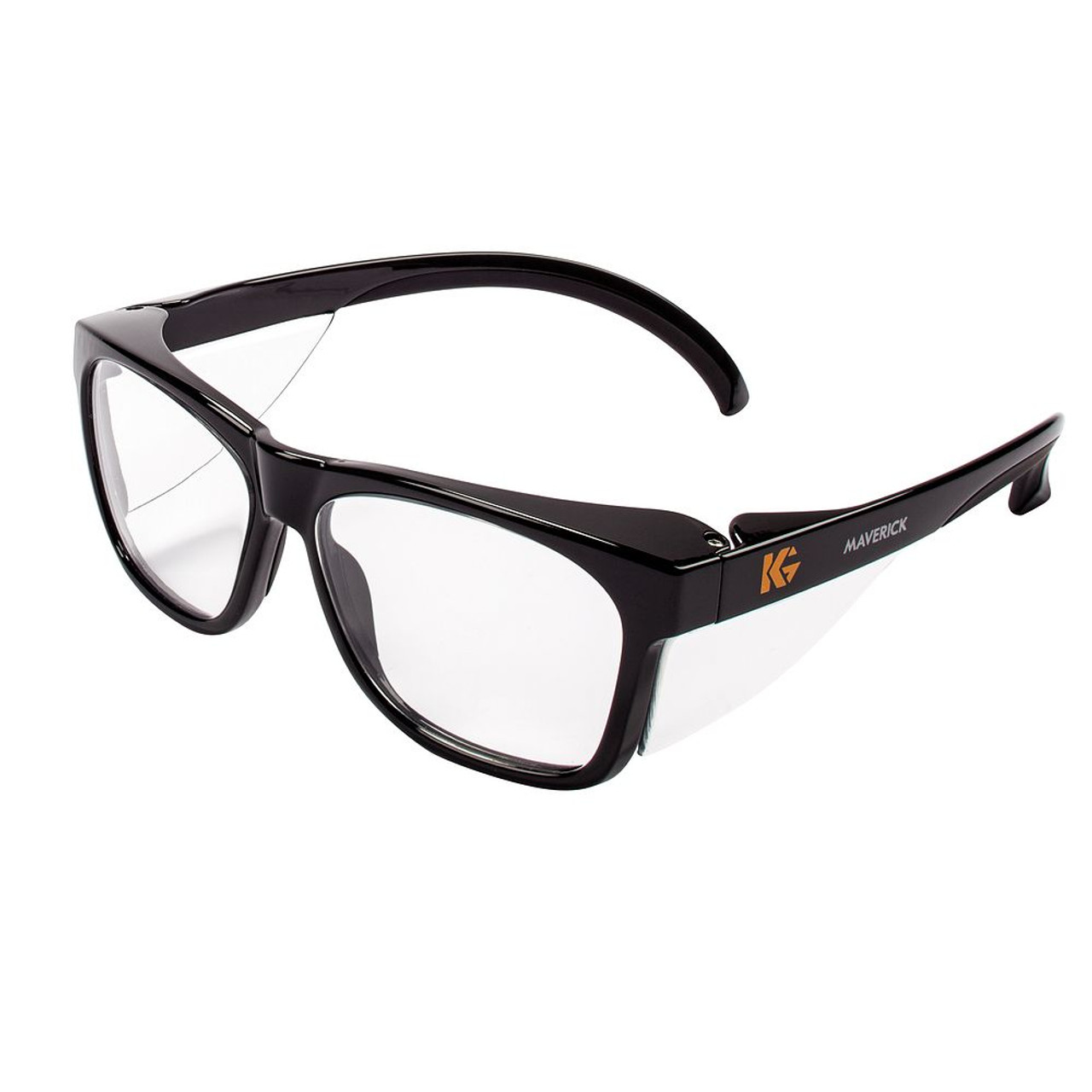
- It is: a lightweight safety-glasses format with anti-fog lens coating, comfort touch points, and integrated side shields/browguard (manufacturer described).
- It is not: a sealed goggle. If your risk assessment calls for splash/aerosol sealing, step up to a goggle or a face shield solution.
- It is not automatically “cleanroom sterile”: sterility and packaging claims depend on the specific product program. Treat entry, storage, and cleaning as SOP-controlled steps.
Manufacturer technical points that matter
Manufacturer-published attributes (summarized) include:
polycarbonate lenses with 99.9% UVA/UVB/UVC protection, anti-fog lens coating (KleenVision naming is used on manufacturer pages),
and compliance with ANSI/ISEA Z87.1 (impact/optical) as a primary eyewear benchmark.
For coated variants, EN166 “N” (fogging resistance) and “K” (abrasion resistance) are commonly referenced in commercial descriptions.
| Attribute |
What it means for users |
| Anti-fog lens coating |
Less fog = fewer adjustments = fewer glove-to-face contacts and fewer “pause points” during critical tasks. |
| Side shields + browguard |
Adds coverage against particles and nuisance debris; also helps reduce upward glare in bright environments. |
| ANSI/ISEA Z87.1 framework |
Baseline eye-protection standard for impact/optical performance in many industrial and lab programs. |
| Case/12 (program packaging) |
Supports kitting, stocking by area, and consistent issue to operators/visitors. |
ISO first: where eyewear fits in a cleanroom mindset
ISO cleanroom standards (e.g., ISO 14644-1) focus on classifying air cleanliness by particle concentration and building control systems that keep particle counts within limits.
Eyewear selection supports the human-factor side of that goal: reducing shedding triggers (touching, adjusting), supporting disciplined behavior, and keeping PPE use consistent across shifts.
In other words, eyewear does not “make” a cleanroom ISO 4 or ISO 7 — but poor eyewear behavior can absolutely sabotage one.
Then Annex 1: stricter aseptic expectations (what changes)
EU GMP Annex 1 is written for sterile medicinal product manufacture and raises the bar on gowning, personnel practices, and contamination prevention.
Compared with “ISO classification thinking,” Annex 1 pushes harder on demonstrable contamination control in aseptic operations: minimizing exposed skin, controlling personnel movement,
and ensuring gowning and PPE use are robust enough for Grades A/B workflows.
If your program is Annex 1-driven, treat eye/face protection as part of an integrated gowning system (and follow your Grade-specific SOP).
Donning (gowning) technique: reduce contamination, not just dress correctly
A practical donning flow (ISO-style programs)
- Pre-gown prep: remove jewelry; secure personal items; check PPE sizing; wash/sanitize hands per SOP.
- Hair/face containment early: bouffant/beard cover, then mask as required by area.
- Footwear control: don shoe covers/boots without letting the cover touch the floor outside the controlled zone.
- Body garments: coverall/lab coat; zip/close fully; keep sleeves controlled (no wrist exposure if your SOP forbids it).
- Eye protection: don glasses once face coverage is stable; then stop adjusting. If fogging occurs, step out and correct it — don’t “fix it in place.”
- Gloves last: glove after eyewear so you are not handling frames with clean gloves.
Annex 1 mindset (aseptic areas)
- No exposed skin where it matters: ensure face, hair, and neck coverage meet Grade-specific SOP expectations before entering.
- Minimize “touch points”: anti-fog helps, but the real control is behavior — once gowned, hands stay away from the face and eyewear.
- Escalate protection by risk: if the process risk calls for sealed goggles or a visor, safety glasses are not the right endpoint.
- Document and train: Annex 1 expects gowning to be trained, assessed, and maintained as part of a contamination-control strategy.
Common failure modes (and how anti-fog eyewear helps)
- Fog → adjust → contaminate: anti-fog coatings reduce the trigger; training removes the habit.
- Shared eyewear with unclear history: avoid communal eyewear unless your SOP defines cleaning, storage, and traceability.
- Eyewear stored “wherever”: stage in controlled storage to prevent “pocket lint” and bench-top contamination transfer.
- Wrong protection level: safety glasses are not sealed. If your risk requires sealing, choose goggles.
SOSCleanroom + Ansell (KleenGuard): continuity that supports standardization
KleenGuard is now part of Ansell’s portfolio, and that consolidation is reshaping how many facilities standardize PPE across labs, cleanrooms, and industrial zones.
SOSCleanroom is leaning into that direction: broader KleenGuard-by-Ansell coverage, clearer product mapping by task, and help translating “what the standard expects” into what operators actually do at the gowning bench.
Source basis (manufacturer-first)
- Manufacturer product page (Ansell / KleenGuard Maverick): https://www.ansell.com/us/en/products/kleenguard-maverick-safety-glasses
- Manufacturer datasheet link (as published on manufacturer site): https://www.ansell.com/us/en/products/kleenguard-maverick-safety-glasses/pds/suGM1Nd27tQqAUcBVA
- SOSCleanroom product page (49309): https://www.soscleanroom.com/product/apparel/kleenguard-maverick-black-safety-glasses-clear-anti-fog-case-12/
- ISO classification context (ISO 14644-1): https://www.iso.org/standard/53394.html
- EU GMP Annex 1 (Manufacture of Sterile Medicinal Products): https://health.ec.europa.eu/system/files/2022-08/20220825_gmp-an1_en_0.pdf
SOSCleanroom is the source for this Technical Vault entry.
Briefed and approved by the SOSCleanroom (SOS) staff.
If you have any questions please email us at Sales@SOSsupply.com
Last reviewed: Jan. 14, 2026
© 2026 SOSCleanroom