Why eyewear matters in contamination control (and not just safety)
In controlled environments, the biggest contamination risk is often the operator—especially repeated, unconscious face-touch behaviors.
Fogging, poor fit, or discomfort can drive frequent eyewear adjustments. Each touch event is a transfer opportunity (glove-to-face, face-to-glove, glove-to-garment),
and the downstream risk shows up as particles, fibers, and preventable deviations.
Anti-fog eyewear and consistent fit sizing reduce the “I need to adjust this” cycle and support better technique discipline.
What the manufacturer positions this product to do
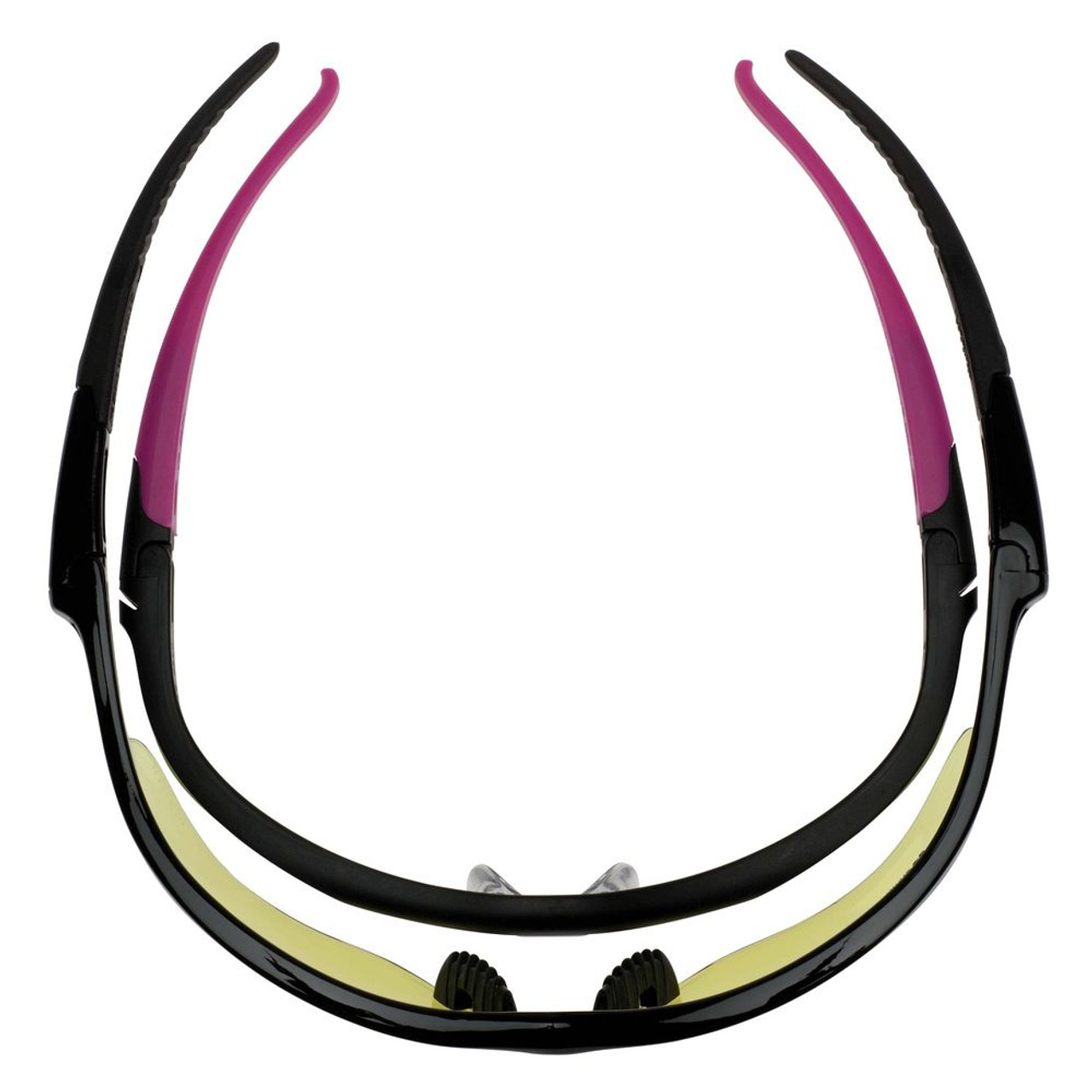
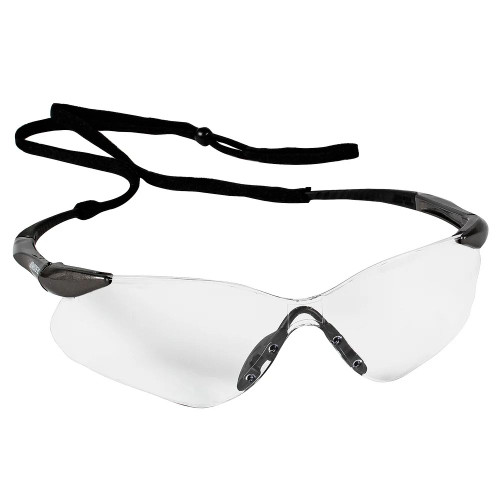
- Provide Nemesis™ eyewear benefits in a smaller frame size for narrow/slim faces.
- Offer a clear anti-fog lens option to reduce visibility interruptions.
- Support compliance with comfort-oriented design and consistent issue-to-employee sizing.
- Ship as 12 pairs per box for stocking programs and standardized PPE issuance.
Specs that matter for standardization
| Attribute |
Value |
| Manufacturer code |
38478 |
| Lens |
Clear |
| Lens coating |
Anti-fog |
| Frame color |
Black w/ Pink Tips |
| Packaging |
12 pairs per box |
| Country of origin (published) |
Taiwan |
Gowning (donning) guidance: ISO-first, then Annex 1
ISO approach (ISO 14644-5 Operations): cleanroom performance depends on an operations control program (OCP) that manages personnel practices, entry/exit, and behavior discipline.
Eyewear selection and donning technique are part of that personnel control system.
Contamination-aware donning sequence (template)
- Step 1 — Hand hygiene: wash/sanitize and dry completely before touching any PPE.
- Step 2 — Footwear controls: don shoe covers/overboots per your area zoning (avoid contacting the floor with garment cuffs).
- Step 3 — Body garment: don coverall/gown/lab coat as applicable, keeping the outer surface from contacting benches/walls.
- Step 4 — Head/face system: don bouffant/hood/face covering per your SOP so all hair and facial areas are controlled.
- Step 5 — Eye protection: don eyewear using temples only (avoid touching lenses). Seat it once, then avoid adjustments.
- Step 6 — Gloves and cuff interface: don gloves per SOP and ensure cuffs are properly covered/sealed so skin is not exposed during motion.
EU GMP Annex 1 overlay: Annex 1 expects a documented contamination control strategy and emphasizes effective gowning that prevents microbial and particulate contamination.
For Grade A/B aseptic operations, facilities often require sterile eye coverings (or validated reprocessing) as part of the sterile gowning set.
In those cases, treat this product as appropriate for support areas unless your SOP explicitly qualifies it for critical zones.
Common failure modes (and how anti-fog helps)
- Fogging → repeated adjustments: a frequent driver of face touching and lens wiping.
- Poor fit → sliding frames: sizing mismatch causes constant re-seating and contamination transfer opportunities.
- Glove-to-eyewear transfers: once eyewear is touched with gloved hands, treat it as a controlled-contact surface.
- Inconsistent issuance: mixed frame sizes and lens types across shifts increases behavior variability.
Ansell (KleenGuard) + SOSCleanroom: what changes for customers
KleenGuard is now part of Ansell’s protection portfolio, which allows customers to consolidate PPE strategies across industrial safety and controlled-environment programs.
SOSCleanroom supports that transition by helping customers standardize PPE specifications (frame size, coatings, pack formats) and align eyewear with gowning SOPs, training, and stocking points.
SOSCleanroom note about SOP's
The Technical Vault is written to help customers make informed contamination-control decisions and improve day-to-day handling technique.
It is not your facility’s Standard Operating Procedure (SOP), batch record, or validation protocol.
Customers are responsible for establishing, training, and enforcing SOPs that fit their specific risks, products, equipment, cleanroom classification, and regulatory obligations.
Always confirm PPE suitability, cleaning compatibility, and acceptance criteria using your internal quality system and documented methods.
Use this entry to strengthen your SOPs—not to replace them.
Source basis
- SOSCleanroom product page: https://www.soscleanroom.com/product/apparel/kleenguard-nemesis-small-safety-glasses-clear-anti-fog-case-12/
- Manufacturer brochure (Nemesis / Nemesis Small): https://www.globalsafetyco.com/pdfs/Jackson%20Nemesis.pdf
- ISO 14644-5 (Operations): https://www.iso.org/standard/88599.html
- EU GMP Annex 1 (Sterile Medicinal Products): https://health.ec.europa.eu/system/files/2022-08/20220825_gmp-an1_en_0.pdf
- Ansell acquisition context (KleenGuard/Kimtech): https://www.ansell.com/us/en/press-releases/ansell-completes-acquisition-of-kcppe-business
SOSCleanroom is the source for this Technical Vault entry.
Briefed and approved by the SOSCleanroom (SOS) staff.
If you have any questions please email us at Sales@SOSsupply.com
Last reviewed: Jan. 14, 2026
© 2026 SOSCleanroom