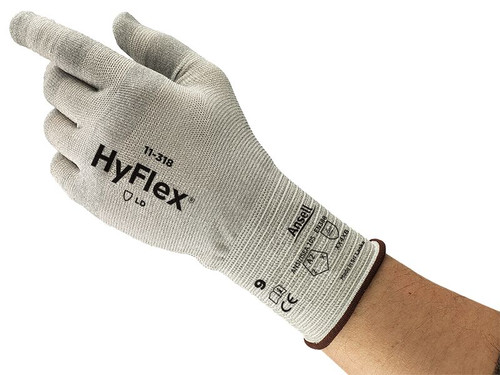
Ansell HyFlex 11-727 Cut Resistant Industrial Gloves

$1,335.60
SKU: 11-727 7 - 10 Business Days
(No reviews yet)
Availability:
7 - 10 Business Days
Shipping:
Calculated at Checkout
Family:
HyFlex
Cut Rating:
A2
Abrasion Rating:
6
Gauge:
15
Material:
HPPE
Material:
Nylon
Material:
Spandex
Color:
Grey
Coating Color:
Grey
Glove Coating:
Polyurethane

Ansell HyFlex 11-727 Cut Resistant Industrial Gloves - ANSI A2 / EN ISO B - 144 Pairs/Case

Ansell HyFlex 11-727 cut-resistant industrial gloves combine lightweight comfort, high abrasion resistance, and controlled grip for everyday industrial handling tasks. Featuring INTERCEPT™ Cut Resistance Technology, a breathable 15-gauge nylon, HPPE, and spandex liner, and a polyurethane palm coating, these gloves provide ANSI/ISEA 105-2024 Cut Level A2 and EN ISO Cut Level B protection while maintaining excellent flexibility and dexterity.

HyFlex 11-727 is designed for metal component assembly, maintenance, handling sharp or rough-edged materials, final assembly, and similar manufacturing operations. The polyurethane palm coating supports tactile grip in dry and slightly oily conditions, while ANSI abrasion Level 6 and EN 388 abrasion Level 4 performance support repeated contact with abrasive materials.

Protection and Dexterity Advantage: HyFlex 11-727 combines ANSI A2 / EN ISO B cut resistance, ANSI abrasion Level 6, EN abrasion Level 4, and a lightweight 15-gauge construction. It is particularly useful when workers need protection from routine sharp-edge exposure without sacrificing the tactile control required for precision assembly and component handling.

Specifications:
  • Manufacturer: Ansell
  • Brand: HyFlex
  • Model: 11-727
  • Product Type: Cut-resistant industrial handling glove
  • Protection Category: Mechanical hand protection
  • Cut Resistance Technology: INTERCEPT™ Cut Resistance Technology
  • ANSI/ISEA 105-2024 Cut Resistance: A2
  • EN ISO Cut Resistance: Level B
  • ANSI/ISEA 105-2024 Abrasion Resistance: Level 6
  • EN 388 Abrasion Resistance: Level 4
  • ANSI/ISEA 105-2024 Puncture Resistance: Level 4
  • EN 388 Puncture Resistance: Level 2
  • EN 388:2016 + A1:2018: 4X42B
  • EN ISO 21420:2020: General protective glove requirements
  • CE PPE Category: Category II
  • Liner Material: Nylon, HPPE, and spandex
  • Liner Construction: Seamless knitted
  • Gauge: 15
  • Coating Material: Polyurethane (PU)
  • Coating Coverage: Palm coated
  • Liner Color: Grey
  • Coating Color: Grey
  • Cuff Style: Knitwrist
  • Glove Length: 195-276 mm (7.67-10.86 inches), depending on size
  • Available Sizes: 6, 7, 8, 9, 10, 11
  • Grip Conditions: Dry and slightly oily handling
  • Antistatic: Manufacturer identifies product as antistatic; verify application-specific requirements
  • Silicone-Free: No
  • Dermatologically Tested: Yes
  • REACH: Manufacturer identifies REACH compliance
  • Manufacturer Washing Guidance: Up to 3 washing cycles at 40°C (104°F), subject to current instructions and inspection
  • Bag Quantity: 12 pairs
  • Case Quantity: 12 bags of 12 pairs
  • Total Case Quantity: 144 pairs
  • Ordering Configuration: Case of 144 pairs; select required glove size
  • Standard Availability: 7-10 business days, subject to current manufacturer availability
About the Manufacturer:

Ansell develops industrial hand-protection products for automotive manufacturing, aerospace, machinery, metal fabrication, maintenance, and other industrial operations. Its HyFlex product family is engineered to balance mechanical protection, grip, comfort, and dexterity across different workplace hazards.

HyFlex gloves incorporate materials and technologies selected for specific performance requirements, including cut-resistant engineered yarns, abrasion-resistant coatings, ergonomic construction, and application-specific grip characteristics. HyFlex 11-727 uses INTERCEPT™ Cut Resistance Technology and a lightweight polyurethane palm-coated construction to provide cut and abrasion protection without the bulk associated with many heavier mechanical gloves.

SOSCleanroom supports industrial and controlled-environment customers with Ansell glove selection, sizing, manufacturer documentation, case configuration, procurement assistance, and application-specific product comparisons. Appropriate glove selection should always be based on the hazards present and the protection required by the workplace.

HyFlex 11-727 Features:
  • ANSI/ISEA 105-2024 Cut Level A2 protection
  • EN ISO Cut Level B performance
  • INTERCEPT™ Cut Resistance Technology
  • ANSI abrasion Level 6 and EN 388 abrasion Level 4
  • ANSI puncture Level 4 for general mechanical puncture hazards
  • EN 388 mechanical performance code 4X42B
  • Breathable 15-gauge seamless knitted liner
  • Nylon, HPPE, and spandex liner construction
  • Polyurethane palm coating for tactile grip
  • Suitable for dry and slightly oily handling conditions
  • Lightweight construction designed for dexterity and flexibility
  • Knitwrist cuff for a secure fit
  • Sizes 6 through 11
  • Manufacturer-reported dermatological testing
  • 144 pairs per case
HyFlex 11-727 Benefits:
  • Cut Protection: ANSI A2 and EN ISO B performance support routine handling tasks involving light-to-moderate sharp-edge exposure.
  • High Abrasion Resistance: ANSI Level 6 and EN 388 Level 4 abrasion results support repeated handling of rough or abrasive materials.
  • Enhanced Dexterity: The 15-gauge knitted liner allows flexibility and tactile control during precision assembly.
  • Dry Handling Grip: The polyurethane palm coating supports controlled handling of dry components and tools.
  • Slightly Oily Grip: The coated palm can provide handling control on lightly oil-contaminated components, subject to the actual surface conditions.
  • Breathable Comfort: Lightweight construction helps reduce the bulk and heat associated with heavier mechanical gloves.
  • Flexible Fit: Spandex-containing liner material supports hand movement and a close fit.
  • Wear-Life Potential: High laboratory abrasion ratings can help reduce premature wear in suitable repetitive handling applications.
  • Standardized Protection: Documented mechanical ratings support glove-selection procedures and workplace PPE programs.
  • Consistent Case Procurement: Packaging of 144 pairs per case supports recurring industrial glove replenishment.
Cut and Abrasion Performance Explained:

HyFlex 11-727 is evaluated under recognized mechanical hand-protection standards. Cut resistance, abrasion resistance, puncture resistance, and tear resistance represent different types of laboratory performance and should not be interpreted as interchangeable protection levels.

  • ANSI Cut Level A2: Indicates cut resistance within the ANSI A2 classification, based on a standardized blade-force test. It is generally appropriate for selected light-to-moderate sharp-edge tasks, subject to a hazard assessment.
  • EN ISO Cut Level B: Identifies the glove's ISO 13997 cut-resistance class. EN ISO B and ANSI A2 use different classification systems and should not be treated as mathematically identical.
  • ANSI Abrasion Level 6: Indicates strong abrasion resistance under ANSI/ISEA 105 laboratory test conditions. It does not guarantee a specific number of days, shifts, or handling cycles in actual use.
  • EN 388 Abrasion Level 4: The highest abrasion-performance level within the EN 388 numerical scale. Results are obtained under standardized abrasion testing.
  • ANSI Puncture Level 4: Represents resistance to a standardized mechanical puncture test and does not establish protection from hypodermic needles or all sharp-point hazards.
  • EN 388 4X42B: Identifies abrasion Level 4, circular blade cut result X, tear Level 4, puncture Level 2, and ISO cut classification B.

Important Testing Note: ANSI and EN mechanical performance ratings are obtained under controlled laboratory conditions. Actual protection depends on blade geometry, edge sharpness, contact force, movement, material condition, wear, and exposure duration. Cut-resistant does not mean cut-proof, and a high abrasion rating does not automatically indicate high cut resistance. Users must select gloves based on the actual hazards present rather than relying on a single laboratory rating.

Manufacturer Durability Performance:

Ansell describes HyFlex 11-727 as providing approximately twice the durability of certain comparable competitive gloves in standardized laboratory testing. The manufacturer's comparison was conducted in December 2025 and is associated with the glove's abrasion-resistant construction.

  • Reported Performance: Approximately 2x durability compared with selected similar competitive gloves under manufacturer testing conditions
  • Test Timing: December 2025
  • Mechanical Rating: ANSI abrasion Level 6 and EN 388 abrasion Level 4
  • Application Relevance: Repetitive industrial handling, maintenance, and component assembly
  • Actual Service Life: Dependent on surface roughness, friction, applied force, glove care, and replacement practices

Durability Claim Clarification: Ansell's 2x durability claim is based on manufacturer laboratory comparisons against selected similar competitive gloves. The claim does not establish that HyFlex 11-727 will last twice as long in every workplace, nor does it replace routine inspection and replacement requirements. Results may vary according to application, material, abrasion severity, contamination, and handling technique.

Common Applications:
  • Automotive component assembly and inspection
  • Assembling metal parts and components
  • Routine industrial maintenance
  • Handling lightly sharp or rough-edged materials
  • Final assembly operations
  • Light sheet-metal and component handling where A2 protection is sufficient
  • Aerospace component assembly and inspection
  • Machinery and equipment maintenance
  • General manufacturing and production support
  • Controlled handling of dry components
  • Handling lightly oil-contaminated parts where grip remains adequate
  • Repetitive material handling where abrasion resistance and dexterity are priorities
Cut-Class Selection Guide:

Selecting a cut-resistant glove begins with evaluating edge sharpness, contact force, exposure frequency, hand position, material handling methods, and the consequences of a glove failure. ANSI cut levels are laboratory classifications rather than universal assignments to particular tasks.

  • ANSI A1: May be considered for very low cut exposure where grip and dexterity are primary requirements. A hazard assessment must establish whether cut protection is sufficient.
  • ANSI A2: HyFlex 11-727 is an option for routine component assembly, general maintenance, and selected light-to-moderate sharp-edge handling where A2 protection is adequate.
  • ANSI A3-A4: Consider higher cut ratings as the frequency, force, or severity of sharp-edge contact increases. Applications may include more demanding metal handling and fabrication tasks.
  • ANSI A5-A6: Consider further protection for higher cut-force exposures and more hazardous sharp components when required by the workplace assessment.
  • ANSI A7-A9: Higher cut-resistance classifications may be appropriate for severe cut exposures, but glove selection must also address the specific blade, force, movement, and task conditions.

Cut-Level Selection Reminder: Higher ANSI cut ratings generally indicate greater resistance under the applicable standardized blade test. However, the correct glove is determined by the complete task hazard assessment. A thicker or higher-cut glove may reduce dexterity, while an insufficient cut class can expose workers to injury. Do not select gloves solely by matching a task description to an ANSI rating. No cut-resistant glove should be assumed safe for direct contact with moving blades or powered cutting equipment.

Dry vs. Oily Grip Selection:

HyFlex 11-727 uses a polyurethane palm coating designed to support tactile handling and controlled grip in dry and slightly oily conditions. Grip performance is affected by surface texture, oil viscosity, liquid coverage, applied force, and coating wear.

  • Dry Components: HyFlex 11-727 is well suited for controlled handling of dry components where precision, tactile feedback, and abrasion resistance are important.
  • Slightly Oily Components: The polyurethane coating may provide adequate grip when only a light oil film is present, provided the task does not exceed the glove's grip capability.
  • Moderately Oily Surfaces: Evaluate whether a textured nitrile or other specialty coating provides improved grip before approving the glove for routine use.
  • Oil-Saturated Handling: Select gloves specifically designed for the oil exposure, grip requirements, and liquid-protection hazards present. A standard palm-coated polyurethane glove should not be assumed suitable.
  • Wet Conditions: Verify the grip performance of the actual material and liquid combination. Water, oils, and process fluids can affect coatings differently.
  • Grip Deterioration: Replace gloves when contamination, abrasion, or coating deterioration reduces secure handling.
  • Chemical Exposure: Mechanical grip performance does not establish chemical permeation, degradation, or liquid-barrier protection.

Grip Selection Note: HyFlex 11-727 is best matched to dry and slightly oily conditions. When handling heavily oiled, wet, chemically contaminated, or slippery components, select hand protection with independently appropriate grip and liquid-resistance characteristics. A glove offering good dry grip may perform differently when oil or process fluids are present.

When Higher-Protection PPE Is Needed:
  • Higher Cut Exposure: Move to an appropriately rated higher-cut glove when sharpness, blade force, or repeated contact exceeds the protection established for ANSI A2 / EN ISO B.
  • Heavy Metal Fabrication: Evaluate higher-cut gloves and additional forearm protection for sharp sheet metal, burrs, and heavy fabricated components.
  • Impact Hazards: Select impact-rated gloves when hands may be struck or compressed by tools, equipment, or moving materials.
  • Chemical Hazards: Select gloves with appropriate chemical resistance and manufacturer-supported breakthrough and degradation information.
  • Liquid Exposure: Use gloves designed for the necessary liquid barrier coverage rather than relying on the 11-727 palm coating.
  • Thermal Hazards: Select appropriate heat- or cold-protective gloves when temperature exposure is significant.
  • Electrical Hazards: Use properly rated electrical insulating PPE where electrical hazards require it.
  • Needle Hazards: Select products evaluated for the relevant needle or fine-point puncture exposure. General mechanical puncture ratings do not establish needle resistance.
  • Powered Machinery: Evaluate entanglement risks before using gloves around rotating or moving equipment. Appropriate machine guarding and safe operating procedures remain essential.
  • Cleanroom Applications: Use qualified cleanroom gloves where particle shedding, extractables, packaging, sterility, or controlled-environment processing requirements apply.
  • Silicone-Sensitive Processes: Select a documented silicone-free alternative where silicone contamination is unacceptable.
Best-Practice Use:
  • Complete a Hazard Assessment: Confirm the required cut, abrasion, puncture, grip, and other protection characteristics before approving the glove.
  • Select the Correct Size: Choose a snug fit that permits full finger movement without excessive stretching or loose material.
  • Inspect Before Each Use: Check for damaged yarns, cuts, punctures, worn coating, loss of grip, or other signs of deterioration.
  • Monitor Sharp-Edge Exposure: Avoid forces or blade contacts that exceed the glove's selected protection level.
  • Evaluate Grip Conditions: Confirm adequate handling control when oils, moisture, or process residues are present.
  • Maintain Clean Handling: Avoid unnecessary contact with chemicals or contaminants that can degrade glove materials.
  • Follow Washing Instructions: Observe the manufacturer's washing guidance and inspect gloves after laundering. Washing does not guarantee restoration of original protective performance.
  • Replace Damaged Gloves: Remove gloves from service when damage or contamination compromises safety.
  • Avoid Machine Entanglement: Do not use gloves around moving machine components when the hazard assessment identifies an entanglement risk.
  • Review Task Changes: Reassess the glove selection whenever material edges, coatings, chemicals, tools, or working conditions change.
Sizing and Packaging Recommendations:
  • Available Numeric Sizes: 6, 7, 8, 9, 10, 11
  • Approximate Letter Size Equivalents: XS, S, M, L, XL, XXL
  • Fit: Select a close-fitting glove that allows unrestricted hand movement and adequate grip.
  • Oversized Gloves: May reduce tactile sensitivity, control, and secure handling.
  • Undersized Gloves: May increase fatigue, restrict movement, and place excessive strain on the glove materials.
  • Bag Quantity: 12 pairs
  • Case Quantity: 12 bags
  • Total Case Quantity: 144 pairs
  • Ordering: Select the required glove size before adding a case to the cart.
Important Use Limitations:
  • Not cut-proof or puncture-proof
  • Not suitable for cut hazards exceeding the selected A2 / EN ISO B protection level
  • Not intended for contact with moving blades or powered cutting mechanisms
  • Not a substitute for chemical-resistant gloves
  • Not intended for chemical immersion or validated chemical breakthrough protection
  • Not designed to provide liquidproof hand coverage
  • Not suitable for high-temperature handling, open flames, or molten metal splash
  • Not rated for electrical insulation or arc-flash protection
  • Not intended for hypodermic needle protection
  • Not specifically designed for heavily oily or oil-saturated handling
  • Not identified by Ansell as silicone-free
  • Not supplied as a sterile cleanroom glove
  • Antistatic designation does not independently establish suitability for all ESD-controlled applications

Important PPE Selection Note: HyFlex 11-727 is intended for mechanical hand protection involving ANSI A2 / EN ISO B cut exposure, high abrasion resistance, and dry or slightly oily handling. Its laboratory ratings do not establish protection against every workplace hazard. Higher cut protection, impact protection, chemical resistance, specialized oil grip, thermal protection, or other PPE may be required depending on the task. Final glove selection should follow a documented workplace hazard assessment and the current manufacturer instructions for use.

Manufacturer Technical Documents:

Ansell HyFlex 11-727 Manufacturer Product Information: Click Here

Ansell HyFlex 11-727 Product Data Sheet (PDF): Click Here

SOSCleanroom HyFlex 11-727 Product Information: Click Here

Other Similar Products Available From SOSCleanroom.com

HyFlex Cut-Resistant Industrial Gloves

  • HyFlex 11-727: ANSI A2 / EN ISO B cut-resistant glove with polyurethane palm coating and ANSI abrasion Level 6
  • HyFlex 11-735: Higher cut-resistance alternative with ANSI A4 / EN ISO C performance according to current manufacturer data; confirm the selected SKU and current specifications

General Industrial Handling Gloves

  • HyFlex 11-840: Foam nitrile-coated general handling glove focused on grip, abrasion resistance, and flexibility; verify cut requirements before substitution
  • HyFlex 11-800: Lightweight industrial handling glove with ANSI A1 cut resistance and tactile grip for lower-cut-risk tasks

Notes: Need assistance selecting between ANSI A2 and higher cut-resistant gloves, comparing polyurethane and nitrile coatings, or determining whether additional impact, chemical, thermal, or liquid protection is required? Open the SOSCleanroom Technical Vault tab above for additional selection guidance, performance standards, sizing information, and application considerations.

SOSCleanroom.com supports industrial and controlled-environment customers with protective gloves, cleanroom apparel, cleaning supplies, and specialized contamination-control products. Our team provides assistance with product selection, manufacturer documentation, packaging configurations, and recurring procurement requirements.

Product description updated: October 15, 2026 (SOS Technical Staff)

© 2026 SOS Supply. All rights reserved.

The Technical Vault By SOSCleanroom
ANSI Cut Level A2 EN ISO Cut Level B ANSI Abrasion Level 6 INTERCEPT™ Technology Dry & Slightly Oily Grip 15-Gauge Lightweight Liner

Ansell HyFlex® 11-727: why this lightweight A2 cut-resistant glove balances abrasion protection, grip, and dexterity

Ansell HyFlex® 11-727 is a lightweight, palm-coated industrial safety glove designed for mechanical handling tasks where workers need ANSI/ISEA 105-2024 Cut Level A2, EN ISO Cut Level B, high abrasion resistance, and reliable grip in dry or slightly oily conditions.

The glove combines Ansell INTERCEPT™ Cut Resistance Technology with a breathable 15-gauge knitted liner made from nylon, high-performance polyethylene (HPPE), and spandex. A polyurethane palm coating provides tactile handling while supporting resistance to routine surface abrasion.

This construction is intended for workers assembling metal components, handling moderately sharp or rough-edged parts, performing general maintenance, completing final assembly, and carrying out repetitive manufacturing tasks requiring comfort and controlled hand movement.

Operations takeaway: HyFlex® 11-727 is most effective when the workplace hazard assessment identifies a need for A2 / EN ISO B cut protection, high abrasion durability, and dry or slightly oily grip. The highest available cut rating is not automatically the best choice for every task; protection must be balanced with dexterity, grip, exposure severity, and worker fit.


Safety-first context: selecting gloves for mechanical handling hazards

Industrial glove selection should begin with a task-specific hazard assessment. Cut resistance is important when workers handle sharp edges, but it is only one part of mechanical hand protection. Abrasion, puncture, grip, impact, chemical exposure, thermal hazards, and the potential for contact with moving machinery must also be evaluated.

The HyFlex® 11-727 provides a practical balance of moderate cut protection and strong abrasion performance for repetitive handling. Its lightweight construction supports fingertip control, while the polyurethane palm coating improves traction on compatible dry and slightly oily surfaces.

Safety control: A cut-resistant glove reduces risk under specified test conditions but is not cut-proof. Actual protection depends on edge sharpness, applied force, contact angle, movement, coating condition, glove fit, and the amount of exposed material. Engineering controls and safe handling methods remain essential.


Specifications (SKU controls for RFQs, SOPs, and receiving)
  • Product: Ansell HyFlex® 11-727 Cut Resistant Industrial Gloves
  • Manufacturer: Ansell
  • Manufacturer model: 11-727
  • Product family: HyFlex®
  • Protection category: Industrial mechanical hand protection
  • Cut-resistant technology: INTERCEPT™ Cut Resistance Technology
  • Liner material: Nylon, HPPE, and spandex
  • Construction: Seamless knitted liner
  • Gauge: 15 gauge
  • Coating material: Polyurethane
  • Coating coverage: Palm coated
  • Coating color: Grey
  • Liner color: Grey
  • Cuff style: Knitwrist
  • Available sizes: 6, 7, 8, 9, 10, and 11
  • Published length range: 195–276 mm (7.67–10.86 inches), depending on glove size
  • ANSI cut rating: A2
  • EN ISO cut rating: B
  • ANSI abrasion rating: Level 6
  • ANSI puncture rating: Level 4
  • EN 388: 4X42B
  • CE PPE category: Category II
  • Antistatic: Listed by Ansell as antistatic
  • Silicone-free: No
  • Manufacturer laundering guidance: Up to three washes at 40°C (104°F), subject to current instructions and inspection
  • Packaging: 12 pairs per bag; 12 bags per carton
  • Case quantity: 144 pairs

Ordering control: SOSCleanroom lists the 11-727 by glove size in a 144-pair case configuration. Confirm the required size, exact product model, and case quantity when purchasing. Cut ratings and material construction should not be assumed equivalent across different HyFlex® models.


Mechanical protection ratings (manufacturer-published)
  • ANSI/ISEA 105-2024 cut resistance: A2
  • ANSI/ISEA 105-2024 abrasion resistance: Level 6
  • ANSI/ISEA 105-2024 puncture resistance: Level 4
  • EN 388:2016 + A1:2018: 4X42B
  • EN 388 abrasion: Level 4
  • EN 388 circular blade cut: X, not reported as a numerical result
  • EN 388 tear: Level 4
  • EN 388 puncture: Level 2
  • EN ISO 13997 cut resistance: Level B
  • EN ISO 21420:2020: Listed among applicable manufacturer compliance standards
  • CE classification: Category II

Understanding EN 388 4X42B: The first character identifies abrasion resistance (4), followed by the circular blade cut position (X), tear resistance (4), puncture resistance (2), and ISO cut classification (B). The X does not represent zero cut protection. For this glove, use the published EN ISO cut letter B when evaluating the ISO cut classification.

Standards distinction: ANSI A2 and EN ISO B are classifications under different test methods and reporting systems. They support comparison within their respective standards but are not interchangeable measurements. ANSI abrasion level 6 and EN abrasion level 4 also use different test systems.


ANSI A2 and EN ISO B: understanding cut protection

Cut resistance is determined through standardized laboratory testing that measures material response to a blade under controlled conditions. ANSI/ISEA 105 and EN ISO 13997 use different classification systems.

  • ANSI A2: Represents a tested cut-resistance range of 500–999 grams under the applicable ANSI classification method.
  • EN ISO B: Represents a tested cut-resistance range of 5–9.9 newtons under the applicable EN ISO 13997 method.
  • INTERCEPT™ Technology: Ansell's engineered cut-resistant yarn system supports the glove's published cut classifications.
  • Lightweight construction: The glove combines cut resistance with a flexible 15-gauge liner intended for routine handling tasks.
  • Cut protection location: Actual protection can vary by glove area and construction. Evaluate palm, fingers, cuff coverage, and exposed zones according to the task.
  • Task limitations: The published classification does not guarantee protection from every blade, sharp edge, cutting motion, or applied force.

Practical interpretation: ANSI A2 / EN ISO B is a reasonable starting point for many light-to-moderate sharp-edge handling tasks, especially where dexterity matters. Heavier or more severe hazards may require a higher-rated glove, additional mechanical protection, or changes to the work process.


Cut-class selection guide: when A2 is enough and when to increase protection

The required cut class depends on the actual exposure, not simply the industry or material being handled. Consider how sharp the edge is, how much force is applied, whether the material may slip, and how frequently contact occurs.

  • ANSI A1: May be considered for low cut-risk activities when a documented assessment establishes that minimal cut protection is sufficient.
  • ANSI A2: Appropriate for consideration in routine assembly, parts handling, and light-to-moderate sharp-edge contact where the hazard assessment supports this level.
  • ANSI A3: Consider when the exposure exceeds an A2 glove's assessed capability or when additional cut-resistance margin is required.
  • ANSI A4–A5: Consider for more demanding sharp-edge handling where higher cut resistance is justified by the actual task and exposure.
  • ANSI A6–A9: Higher cut-resistance classes may be required for severe cut exposures, but selection must also consider penetration, impact, grip, coverage, and the limitations of glove-based protection.

Selection rule: These levels are general screening guidance, not automatic assignments to particular jobs. A higher ANSI cut rating is not proof of puncture, impact, chemical, thermal, or powered-blade protection. Select the required level through a documented risk assessment and verify the exact glove's suitability.

When to move beyond 11-727: Consider additional protection when workers repeatedly handle very sharp sheet edges, heavy sharp metal, broken glass, unstable components, high-force contact points, or tasks with frequent severe cut exposure. If hazards cannot be adequately reduced with appropriate gloves, implement engineering controls, tools, guards, or revised work methods.


Abrasion resistance: ANSI Level 6 and EN 388 Level 4

Abrasion resistance is especially important in repetitive industrial handling because coating wear can reduce grip, expose liner material, and shorten glove service life. HyFlex® 11-727 carries a published ANSI abrasion level 6 and EN 388 abrasion level 4.

  • ANSI abrasion level 6: Indicates high laboratory abrasion resistance under the applicable test method.
  • EN 388 abrasion level 4: Represents the highest reported abrasion performance level under the EN 388 abrasion classification.
  • Polyurethane coating: Provides a contact surface designed to withstand repetitive handling and routine surface abrasion.
  • Repeated handling: Useful for applications where gloves contact metal components, tooling, fixtures, and rough surfaces throughout a shift.
  • Wear inspection: Coating thinning, exposed liner, peeling, holes, and loss of grip remain important replacement indicators.

Manufacturer durability claim: Ansell describes HyFlex® 11-727 as approximately 2 times more durable than similar competitive gloves based on standardized Ansell laboratory comparisons performed in December 2025. This comparison is not a guarantee that gloves will last twice as long in every workplace. Actual performance depends on the task, contact surfaces, frequency of use, contamination, and replacement practices.


Dry versus oily grip: choosing the correct palm coating

The HyFlex® 11-727 uses a polyurethane palm coating for controlled handling in dry and slightly oily conditions. Grip requirements become more demanding when parts are heavily lubricated, covered in cutting fluids, or difficult to stabilize.

  • Dry components: Polyurethane palm coating supports grip and tactile feedback during assembly and routine handling.
  • Slightly oily components: Ansell identifies secure handling under light oil exposure as an intended capability.
  • Heavily oiled surfaces: Grip may decrease when oil films exceed the conditions for which the glove is intended.
  • Oil-saturated handling: Consider gloves specifically designed for enhanced oil grip, liquid repellency, and the required chemical exposure conditions.
  • Wet handling: Evaluate actual liquid exposure and whether the palm coating provides adequate grip under the task conditions.
  • Finger control: Proper sizing and coating condition help maintain secure manipulation of small parts.
  • Grip failure: Replace worn gloves and reassess the task when slipping or loss of traction creates a safety risk.

Grip selection principle: Dry or slightly oily grip performance does not establish that the glove is oilproof, waterproof, or chemically protective. For frequent oil contact, heavy lubrication, or liquid immersion, use PPE specifically tested for the relevant exposure.


INTERCEPT™ Technology and lightweight 15-gauge construction
  • INTERCEPT™ Technology: Engineered yarn construction provides the published cut-resistance performance.
  • HPPE: High-performance polyethylene contributes to mechanical protection while maintaining a lightweight glove structure.
  • Nylon: Supports flexibility, fit, and durability within the knitted liner.
  • Spandex: Helps the glove conform to the hand and maintain a secure fit.
  • 15-gauge knit: Provides a relatively fine, lightweight fabric structure suitable for tasks requiring dexterity.
  • Polyurethane palm: Supports abrasion performance and tactile grip over the primary handling area.
  • Knitwrist cuff: Helps maintain glove positioning during normal hand movement.
  • Breathable design: An uncoated back-of-hand area supports ventilation compared with fully coated constructions.

Comfort versus protection: Lighter gloves can improve worker acceptance and dexterity, but comfort should never override the required protection level. Where the task involves greater cut force, heavy impact, chemical exposure, or sharp-point penetration, select PPE designed for those hazards.


What HyFlex® 11-727 is designed to do (typical use cases)
  • Assembling metal parts and components
  • General industrial maintenance
  • Handling moderately sharp or rough-edged components
  • Routine final assembly operations
  • Handling compatible metal panels and fabricated parts
  • Manufacturing and machinery equipment work
  • Automotive component assembly and handling
  • Aerospace component handling where the task's PPE requirements are satisfied
  • Repetitive parts handling requiring abrasion-resistant palms
  • Dry or slightly oily component handling
  • Production support tasks requiring cut resistance and fingertip dexterity

Application qualification: Listed uses are general application categories rather than guaranteed protection for every task. Sharpness, force, pinch points, machine movement, chemical exposure, and the worker's ability to maintain a secure grip must be evaluated before approval.


When heavier or specialized hand protection is needed
  • Higher cut exposure: Select appropriately higher-rated cut-resistant gloves when the documented hazard assessment exceeds A2 protection.
  • Heavy sharp components: Consider stronger cut protection, extended coverage, impact protection, mechanical handling aids, or redesigned handling procedures.
  • Impact hazards: Select gloves with documented impact protection where crushing, striking, or back-of-hand impact presents a risk.
  • Needles or fine points: Use products specifically evaluated for needle or fine-point puncture hazards.
  • Oil-intensive work: Consider gloves with specialized oil-grip coatings and appropriate liquid or chemical resistance.
  • Chemical exposure: Choose chemical protective gloves based on permeation, degradation, breakthrough time, and the actual chemical.
  • Heat exposure: Select properly rated thermal protection for hot objects, contact heat, flame, or molten materials.
  • Electrical hazards: Use approved electrical protective equipment appropriate for the exposure.
  • Powered cutting equipment: Prioritize guarding, isolation, safe work methods, and equipment-specific PPE guidance rather than relying on cut-resistant gloves alone.

Critical safety limitation: Cut-resistant gloves can become entangled in rotating machinery or other moving equipment. Follow machinery-specific safety instructions, guarding requirements, and hazard assessments. Do not wear gloves near equipment where glove entanglement creates an unacceptable risk.


Best-practice use (fit, protection, and handling consistency)
  1. Assess the hazard: Identify cut severity, abrasion exposure, puncture hazards, grip conditions, and other risks.
  2. Confirm protection requirements: Verify that ANSI A2 / EN ISO B is appropriate for the intended activity.
  3. Select the correct size: Choose a secure fit without restricting circulation or hand movement.
  4. Inspect before use: Check the coating, liner, fingertips, thumb crotch, palm, and cuff for damage.
  5. Keep palms serviceable: Do not continue using gloves when coating wear or contamination significantly reduces grip.
  6. Use controlled handling: Keep hands clear of pinch points, exposed sharp edges, and unnecessary contact.
  7. Monitor contamination: Reassess gloves exposed to oil, solvents, chemicals, or other materials beyond the intended use conditions.
  8. Replace when compromised: Remove gloves with holes, significant abrasion, cuts, coating separation, or deteriorating fit.
  9. Follow equipment rules: Do not use gloves where machinery-specific instructions prohibit them.
  10. Maintain training: Ensure workers understand the glove's protection limits and replacement criteria.

Method standardization tip: Define the required cut class, approved glove model, task conditions, inspection points, and change-out criteria in the PPE procedure. This helps prevent operators from assuming that all cut-resistant gloves provide equivalent protection.


Glove sizing, fit, and dexterity considerations

Ansell offers HyFlex® 11-727 in numeric sizes 6 through 11. Correct sizing helps preserve grip, finger movement, and handling control.

  • Size 6: Commonly corresponds to an extra-small size range.
  • Size 7: Commonly corresponds to a small size range.
  • Size 8: Commonly corresponds to a medium size range.
  • Size 9: Commonly corresponds to a large size range.
  • Size 10: Commonly corresponds to an extra-large size range.
  • Size 11: Commonly corresponds to an extra-extra-large size range.
  • Fit assessment: Confirm that the glove seats correctly at the fingertips and palm without excessive loose material or tension.
  • Worker evaluation: Verify handling performance using representative tasks and the actual parts or equipment involved.

Sizing rule: Letter-size equivalents are approximate. Use the current Ansell sizing guide and actual fit testing rather than relying on numeric or letter size alone. Oversized gloves may reduce grip precision, while undersized gloves may increase fatigue and restrict movement.


Inspection, laundering, replacement, and storage
  • Coating inspection: Check for worn-through polyurethane, peeling, cracks, tears, and decreased grip.
  • Liner inspection: Examine fingers, palm, thumb crotch, and high-contact areas for exposed or damaged fibers.
  • Cuff inspection: Replace gloves when the knitwrist becomes damaged or unable to maintain fit.
  • Contamination: Remove gloves contaminated with unknown substances or chemicals incompatible with the construction.
  • Laundering: Ansell lists up to three washes at 40°C (104°F). Follow current instructions, assess post-wash condition, and confirm that reuse is permitted by the workplace PPE program.
  • Post-laundering protection: Do not assume protective ratings remain unchanged after improper washing or visible material deterioration.
  • Storage: Keep gloves clean, dry, and protected from excessive heat, sunlight, chemicals, and mechanical damage.
  • Replacement frequency: Establish change-out criteria according to wear, contamination, handling performance, and task requirements.
  • Documentation: Record PPE model and approved use conditions when required by the facility safety program.

Wear-life control: High abrasion ratings do not eliminate the need for inspection. A glove that survives repeated abrasion may still require replacement because of cut damage, coating degradation, contamination, loss of fit, or reduced grip performance.


Cleanroom, antistatic, and contamination-sensitive application limits
  • Industrial glove classification: HyFlex® 11-727 is intended primarily for industrial mechanical protection.
  • Cleanroom qualification: It is not identified as a sterile or cleanroom-processed glove in the published product specifications.
  • Particle generation: Do not assume compatibility with controlled particle limits without evaluation.
  • Silicone status: Ansell identifies the glove as not silicone-free.
  • Silicone-sensitive processes: Evaluate carefully before use in painting, coating, bonding, or other contamination-sensitive operations.
  • Antistatic designation: Ansell lists the glove as antistatic, but this does not independently certify suitability for an electronics ESD-control program.
  • ESD requirements: Verify the applicable electrical performance standards and the facility's required testing criteria.
  • Sterile operations: Use appropriate sterile, cleanroom-qualified gloves where mandated by the process.

Controlled-environment distinction: Mechanical cut protection, antistatic properties, and cleanroom cleanliness are separate performance characteristics. A glove can be suitable for industrial component handling without being appropriate for sterile manufacturing or stringent particle-controlled operations.


Misuse controls & when not to use HyFlex® 11-727
  • Heavy cut hazards: Do not rely on A2 protection when the hazard assessment requires a higher cut classification.
  • Powered blades: Do not assume protection against moving saw blades or powered cutting equipment.
  • Rotating machinery: Avoid glove use where entanglement hazards are present and prohibited by machine-specific safety procedures.
  • Chemical exposure: Do not use as a substitute for certified chemical protective gloves.
  • Oil immersion: Do not treat the polyurethane palm coating as a liquidproof oil barrier.
  • Heat and flame: Do not use for hot surfaces, flame, molten-metal splash, or thermal protection without appropriate certification.
  • Needle puncture: ANSI mechanical puncture performance does not establish hypodermic needle resistance.
  • Impact hazards: Do not substitute for gloves specifically rated for impact protection.
  • Electrical work: Do not use as insulating electrical PPE.
  • Silicone-sensitive environments: Do not assume suitability where silicone contamination is prohibited.
  • Sterile cleanrooms: Do not substitute for validated sterile cleanroom gloves.

Recommended glove selection and related PPE

HyFlex® 11-727 is a strong candidate for everyday industrial tasks where A2 cut protection, high abrasion resistance, and dexterity are priorities. Other workplace hazards may require a different coating, higher cut classification, or additional PPE.

  • Ansell HyFlex® 11-727 — lightweight ANSI A2 / EN ISO B protection with ANSI abrasion level 6 for dry or slightly oily industrial handling.
  • Industrial and Protective Gloves — evaluate other glove constructions and protection levels for tasks exceeding the 11-727's intended use.
  • Protective Apparel — additional task-specific protection where hand protection alone does not adequately address exposure.

Why this matters: A higher cut class does not automatically solve grip loss, chemical exposure, impact hazards, or machinery risks. Match the complete protective system to the identified hazards rather than selecting gloves solely by cut rating.

PPE selection discipline: Review the required cut level, abrasion resistance, coating, grip conditions, mechanical puncture risk, fit, replacement frequency, and any additional protective equipment before standardizing a glove.


Why buy Ansell HyFlex® 11-727 from SOSCleanroom
  • Exact SKU identification: SOSCleanroom supports ordering the correct Ansell glove model, size, and packaging configuration.
  • Technical documentation: Available Ansell product data helps customers review cut classifications, abrasion ratings, materials, and application limits.
  • Workplace PPE standardization: Consistent ordering by manufacturer model helps reduce uncontrolled substitutions that may affect protection or fit.
  • Volume purchasing: Case packaging supports repeat ordering for production, maintenance, and industrial safety programs.
  • Procurement support: Customers can contact SOSCleanroom to confirm availability, lead times, and product information before ordering.

Manufacturer documentation (authoritative references)
  • SOSCleanroom HyFlex® 11-727 product page: Click Here
  • Ansell HyFlex® 11-727 manufacturer product information: Click Here
  • Ansell HyFlex® 11-727 Product Data Sheet: Click Here
  • OSHA Personal Protective Equipment Requirements: Click Here
  • OSHA Hand Protection Standard, 29 CFR 1910.138: Click Here

Documentation and testing: Manufacturer cut, abrasion, puncture, and durability results are generated under specified laboratory methods. For formal PPE approval, verify the current Ansell Product Data Sheet, Instructions for Use, applicable Declaration of Conformity, and required workplace hazard assessment. The published 2x durability comparison is based on December 2025 Ansell laboratory testing and should not be interpreted as a guaranteed service-life result.


If you have any questions please email us at Sales@SOSsupply.com or give us a call at (214)340-8574. OR check out the AI ChatBot powered by SOSCleanroom data libraries - give it a try! THIS IS NEW FOR 2026! © 2026 SOSCleanroom. All rights reserved.