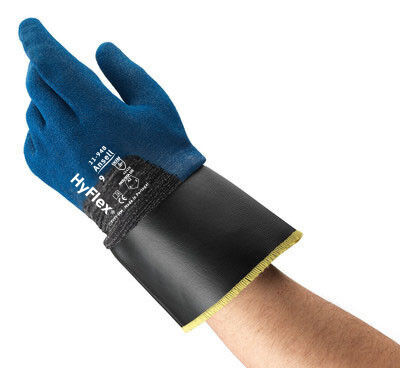
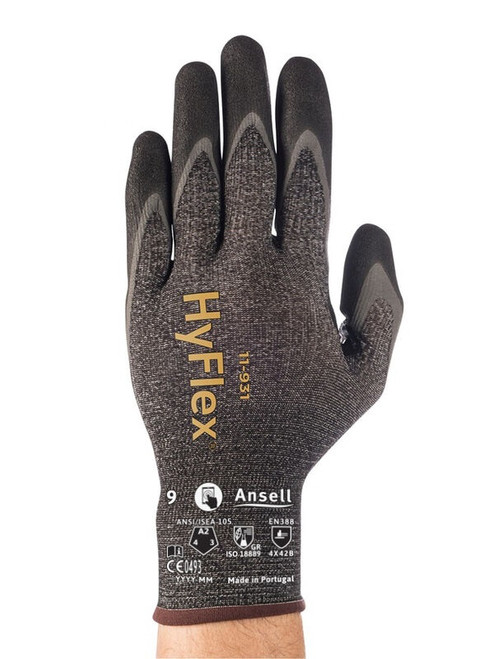
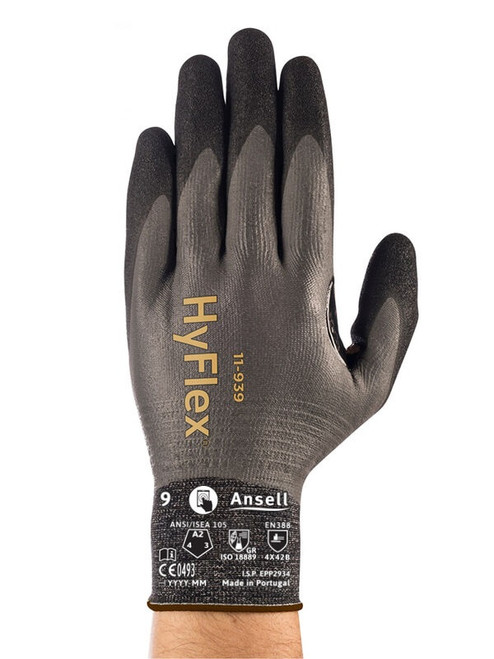
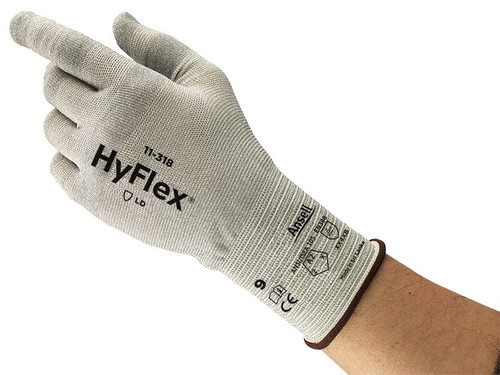
Technical Vault: Ansell HyFlex® 11-920 Cut Resistant and Oil Repellent Industrial Gloves
The Ansell HyFlex® 11-920 is a highly durable, palm-coated industrial glove engineered for workers who need oil repellence, oily-part grip, abrasion resistance, light cut resistance, and dexterity. It combines RIPEL™ Liquid Repellence Technology, ANSELL GRIP™ Technology, a multi-layer nitrile coating, and a 15-gauge nylon liner to support controlled handling in oily industrial environments.
This Technical Vault summarizes the verified construction, performance standards, liquid-repellence profile, grip technology, application guidance, inspection points, storage notes, and use limitations for the HyFlex® 11-920.
Vault summary: Palm-coated nitrile oil-repellent glove with RIPEL™ Liquid Repellence, ANSELL GRIP™ Technology, ANSI A1 cut resistance, ANSI level 4 abrasion resistance, ANSI level 2 puncture resistance, EN 388 rating 3131A, and a 15-gauge nylon liner for durable oily-part handling.
Core Product Data
| Manufacturer |
Ansell |
| Brand / Product Family |
HyFlex® |
| Model |
11-920 |
| Product Type |
Liquid-repellent, abrasion-resistant industrial glove with light cut protection |
| Primary Protection Profile |
Oil repellence, oily-part grip, abrasion resistance, light cut resistance, puncture resistance, and mechanical handling protection |
| Primary Industries |
Automotive, metal fabrication, energy |
Construction & Materials
| Construction |
Knitted |
| Gauge |
15 gauge |
| Liner Material |
Nylon |
| Liner Color |
Blue |
| Coating Material |
Nitrile |
| Coating Color |
Blue |
| Coating Coverage / Finishing |
Palm coated |
| Cuff Style |
Knitwrist |
| Grip Design |
Ansell Grip™ Technology |
| Liquid Repellence Technology |
RIPEL™ Liquid Repellence Technology |
| Coating Design Note |
Multi-layer nitrile coating designed for oil repellence, oily-part grip, and improved wear life |
Dimensions, Sizing & Packaging
| Length |
220–270 mm / 8.66–10.63 in |
| Available Sizes |
6, 7, 8, 9, 10 |
| Packaging |
12 pairs/bag, 12 bags/carton |
Performance Standards & Compliance
| ANSI/ISEA 105-2024 Abrasion Resistance |
Level 4 |
| ANSI/ISEA 105-2024 Puncture Resistance |
Level 2 |
| ANSI/ISEA 105-2024 Cut Resistance |
A1 |
| EN 388:2016 + A1:2018 |
3131A |
| EN ISO 21420:2020 |
Compliant |
| CE Category |
Category II |
| REACH |
Compliant |
| Latex Free |
Yes |
| Silicone Free |
Yes |
| Antistatic |
Yes |
| Washing Temperature |
40°C / 104°F |
EN 388 rating note: The EN 388 code 3131A indicates tested mechanical performance across abrasion, blade cut, tear, puncture, and ISO cut resistance categories. This rating should be evaluated together with oil exposure, grip needs, coating condition, and actual task hazards.
EN 388 Code Breakdown
| EN 388 Position |
Rating |
Performance Area |
| 1st digit |
3 |
Abrasion resistance |
| 2nd digit |
1 |
Circular blade cut resistance |
| 3rd digit |
3 |
Tear resistance |
| 4th digit |
1 |
Puncture resistance |
| Letter |
A |
ISO cut resistance classification |
ANSI Rating Interpretation
| ANSI Rating |
Practical Meaning |
| Cut Level A1 |
Designed for light cut-risk applications where oil repellence, grip, abrasion durability, and dexterity are more important than heavy cut protection. |
| Abrasion Level 4 |
Strong abrasion performance for repeated handling of metal parts, tools, structural parts, glass sheets, and industrial materials. |
| Puncture Level 2 |
Provides limited puncture resistance for light mechanical hazards. Not intended for needle, hypodermic, or high-puncture protection. |
Technology Profile
| Technology |
Technical Role |
User Benefit |
| RIPEL™ Liquid Repellence |
Creates an impermeable layer against oils and lubricants |
Helps reduce oil and lubricant contact with the wearer’s skin |
| ANSELL GRIP™ Technology |
Enhances grip performance when handling oily parts |
Improves handling control and helps reduce slip risk |
| Multi-layer nitrile coating |
Adds oil repellence and wear resistance to the contact zone |
Supports longer wear life and abrasion durability |
| Palm-coated finishing |
Places coating on the primary gripping area |
Balances grip and liquid repellence with flexibility and breathability |
| 15-gauge nylon liner |
Seamless knitted liner |
Ergonomic fit, comfort, dexterity, and productivity support |
Oil Repellence vs. Chemical Protection
The HyFlex 11-920 is designed to help repel oils and lubricants during industrial handling, but oil repellence should not be confused with full chemical immersion protection. Use this glove where the task requires oily grip control and reduced oil contact, not where the hazard requires a chemical-resistant immersion glove.
| Use Case |
HyFlex 11-920 Fit |
| Handling oily components |
Good fit when grip, oil repellence, and abrasion resistance are needed |
| Short-duration oil or lubricant contact |
Appropriate after evaluating the oil, lubricant, contact time, and saturation risk |
| Chemical immersion |
Not recommended; use a chemical-resistant glove selected by compatibility and breakthrough data |
| Hot-object or flame exposure |
Not recommended; select a heat-rated glove for thermal hazards |
Recommended Use Environments
| Application Area |
Why 11-920 Fits |
| Assembly and inspection of components |
15-gauge nylon liner supports dexterity and ergonomic hand movement. |
| Production line support and maintenance |
Palm-coated nitrile finish supports grip and abrasion resistance during repeated handling. |
| Seizing structural parts |
ANSELL GRIP™ Technology helps workers handle oily parts with better control. |
| Fabricating metal parts and glass sheets |
Abrasion level 4 performance and oil repellence support handling of industrial materials. |
| Applying finish to materials and products |
Oil-repellent coating and grip design support controlled handling of coated or oily surfaces. |
Suitable For
- Oily parts handling
- Assembly and inspection of components
- Production line support and maintenance
- Seizing structural parts
- Fabricating metal parts and glass sheets
- Applying finish to materials and products
- Light-duty industrial handling where oil repellence and grip are needed
- Automotive, metal fabrication, and energy environments
Not Recommended For
- Chemical immersion or validated chemical breakthrough protection
- High cut-force applications requiring higher ANSI cut levels
- Moving blade hazards or powered cutting tools
- Needle, hypodermic, or high-puncture hazards
- Open flame, hot-object handling, molten metal splash, or thermal exposure
- Electrical protection
- Heavy impact protection
- Sterile cleanroom processing unless separately validated for the controlled environment
Selection Guidance
Select the HyFlex 11-920 when the job requires a glove that prioritizes oil repellence, oily-part grip, abrasion resistance, light cut protection, and dexterity. It is best matched to light-duty oily handling tasks where workers need a durable palm-coated glove rather than a 3/4-coated or fully coated liquid barrier style.
| Choose 11-920 When You Need |
Consider Another Glove When You Need |
| Oil-repellent palm-coated handling protection |
3/4 or fully coated liquid coverage for broader liquid contact zones |
| Secure oily-part grip with back-of-hand breathability |
Full liquid barrier protection or chemical splash/immersion protection |
| Light cut resistance with strong abrasion performance |
Medium or high cut resistance for aggressive sharp-edge handling |
| 15-gauge dexterity and ergonomic comfort |
Thermal, impact, electrical, or heavy puncture protection |
Inspection Before Use
- Inspect the nitrile coating for worn-through areas, cuts, punctures, cracks, peeling, or oil saturation.
- Check fingertips, thumb crotch, and palm contact zones for abrasion damage.
- Confirm the glove has not been contaminated with unknown chemicals or incompatible liquids.
- Check that the knitwrist cuff still fits securely and is not stretched out or torn.
- Replace gloves when oil repellence, grip, coating integrity, or protective performance is visibly compromised.
Storage & Handling Notes
- Store gloves in a clean, dry location away from excessive heat, direct sunlight, ozone, and sharp objects.
- Keep gloves away from incompatible chemicals unless the glove has been evaluated for that specific exposure.
- Avoid crushing, folding, or contaminating the palm coating during storage.
- Use clean, dry hands when donning gloves to maintain liner comfort and reduce contamination transfer.
- Follow site PPE procedures for laundering, reuse, or disposal after oil or lubricant exposure.
Cleanroom & Controlled Environment Note
The HyFlex 11-920 is an industrial safety glove, not a sterile cleanroom glove. For controlled environments, evaluate the glove against the site’s particulate, extractable, contamination, packaging, laundering, and gowning requirements before approval. Use cleanroom-qualified gloves when the process requires validated low-particle, sterile, or cleanroom-specific hand protection.
Technical FAQs
Is the HyFlex 11-920 a chemical-resistant glove?
It is an oil-repellent industrial glove with RIPEL™ Liquid Repellence, but it should not be treated as a chemical immersion glove. Chemical exposure should be evaluated using chemical compatibility and breakthrough data.
Is the glove fully coated?
No. The HyFlex 11-920 is palm coated, which places nitrile coating on the primary grip zone while preserving flexibility and breathability through the back of the hand.
What is the cut level?
The glove is rated ANSI Cut Level A1, which is intended for light cut-risk applications.
Is the glove suitable for oily handling?
Yes. The HyFlex 11-920 is designed for oily handling using RIPEL™ Liquid Repellence and ANSELL GRIP™ Technology.
Is this glove washable?
Ansell lists the HyFlex 11-920 as machine launderable, with a washing temperature of 40°C / 104°F.
Is the glove latex free, silicone free, and antistatic?
Yes. Ansell lists the HyFlex 11-920 as latex free, silicone free, and antistatic.
Critical Use Limitations
The HyFlex 11-920 is designed for oil-repellent mechanical hand protection. It is not intended for chemical immersion, electrical protection, thermal protection, flame exposure, molten metal splash, hot-object handling, moving blade hazards, high cut-force hazards, or needle puncture protection. Final glove selection should be based on a documented hazard assessment, including oil or lubricant type, contact duration, saturation risk, coating condition, edge sharpness, contact force, abrasion exposure, dexterity needs, laundering/reuse expectations, and replacement frequency.
Technical insight: For palm-coated oil-repellent gloves, real-world performance depends on coating integrity, liquid repellence, oily-part grip, abrasion resistance, cut rating, saturation behavior, and how often the glove is inspected and replaced.
Product page updated: Mar. 2026 (SOS Technical Staff)
© 2026 SOSCleanroom.com