Micronova SP4-533 NovaCel Sponge (Solid PVA): ultra-absorbent cleanroom sponge for small-part cleaning, bench work, and slurry control

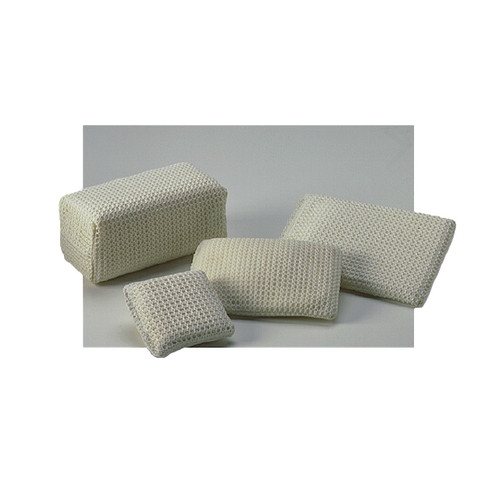
Shown: NovaCel sponge product image (thumbnail).
1) Practical solutions in a critical environment
Sponges look simple until you see where they actually reduce risk: handling small parts that don’t tolerate abrasive pads, pulling up cleaning solutions without
dripping into connectors or crevices, and controlling slurries and residues where “wipe-only” cleaning leaves a film behind. NovaCel sponges are commonly chosen
when teams need a soft, high-hold material that becomes very pliant once hydrated, yet stays structurally usable for repeated wipe-and-rinse cycles.
A common use case is a bench or tool-clean step where a technician must wet-clean, lift residue, and then follow with a rinse wipe. The sponge’s job is the “lift”
step—especially where residues are thick, water-based, or slurry-like. When done well, you reduce rework and prevent residues from redistributing to adjacent
surfaces or re-depositing on the next pass.
2) What this product is used for
- Cleaning small parts, equipment, and common laboratory applications where absorbency and controlled wipe-down matter.
- Lapping and polishing support in wafer manufacturing, including slurry pickup and residue removal in supporting steps.
- General wiping tasks where the surface benefits from a soft, hydrated contact material rather than a stiffer wipe.
- Applying compatible cleaning/disinfecting solutions with reduced dripping compared to low-hold materials.
3) Why customers consider this product
- High absorbency: manufacturer literature states the sponge can hold up to 25 times its weight in water.
- Soft-in-use behavior: firm when dry, then becomes extremely soft and pliant once hydrated.
- Broad chemical resistance is called out for use with common cleaning and disinfecting solutions.
- Autoclavable for facilities that sterilize tools/materials internally as part of their program.
- Controlled packaging and traceability: individually bagged with lot numbers on each bag and each case.
- Designed for cleanrooms and controlled environments; manufacturer spec sheet states ISO 5 through ISO 9 suitability.
4) Materials, composition, and build
NovaCel is a solid white PVA sponge. The SOSCleanroom listing describes it as white PVA (Polyvinyl Alcohol), while the Micronova SP4-533 product specification
describes the material as “PVA polyvinyl acetate sponge.” For practical selection, treat it as a PVA-class sponge engineered for high absorbency and controlled
environment use, and validate chemical compatibility for any unusually aggressive solvent or oxidizer in your process.
An operational trait to plan for: the sponge is firm when dry and becomes soft when hydrated. That transition is helpful for delicate wipe-down work, but it also
means teams should define hydration, rinse, and drying/holding practices so the sponge remains consistent from operator to operator.
5) Specifications in context
| Attribute |
SP4-533 (NovaCel Sponge) |
| SOSCleanroom SKU |
SP4-533 |
| Size option on SOS page |
5" x 3.3" x 1/3" |
| Dimensions on Micronova spec sheet |
5 in x 3.3 in x 0.33 in (12.7 cm x 8.4 cm x 0.84 cm) |
| Material |
PVA sponge material (listed as Polyvinyl Alcohol on SOS listing; “PVA polyvinyl acetate sponge” on Micronova spec sheet) |
| Absorbency claim |
Holds up to 25× its weight in water (manufacturer product page) |
| Autoclavable |
Yes (Micronova spec sheet) |
| Chemical compatibility |
Good compatibility with common disinfectants and cleaning solutions (Micronova spec sheet) |
| Packaging |
Individually bagged; 24 sponges per case (Micronova spec sheet and SOS page) |
| Traceability |
Lot numbers printed on each bag and each case (Micronova spec sheet) |
| Irradiation / sterility claim |
Not irradiated (Micronova spec sheet). Sterility is not stated on the SOS listing or spec sheet. |
| Designed controlled-environment range |
ISO 5 to ISO 9 (Micronova spec sheet) |
| Manufacturing and quality system notes |
Manufactured at Micronova’s Torrance, CA facility; ISO 9001 certified facility (Micronova spec sheet) |
| SOSCleanroom availability and shipping weight |
Availability: 7–10 business days; listed weight: 10.00 lbs (SOS product page) |
“In context” means your method matters as much as the material. This sponge is most effective when operators control hydration level, use clean rinse water,
and prevent cross-contamination by separating “dirty pickup” steps from “final wipe” steps (often a wipe is used as the finishing step after sponge pickup).
6) Performance and cleanliness considerations
NovaCel is engineered for high absorbency and for transitioning from firm (dry) to very soft (hydrated). That behavior is advantageous for residue pickup and
for delicate surfaces that do not tolerate abrasive pads, but it also places more importance on operator controls:
- Hydration consistency: a barely damp sponge behaves differently than a saturated one. If you need repeatability, define a “wet-out” method (e.g., immerse, then compress to a target feel before contact).
- Residue control: for slurries or heavy soils, plan for a rinse step (or multiple sponges) so you are lifting residue rather than smearing it.
- Finish sensitivity: on high-value finishes, avoid dragging a sponge that has picked up grit/particulates; change out early rather than trying to “save” the sponge.
- Compatibility discipline: the manufacturer states broad compatibility with common disinfectants and cleaning solutions. For uncommon chemistries or long soak times, perform a spot test and document results in your internal method.
7) Packaging, sterility, traceability, and country of origin
- Packaging: Individually bagged; 24 sponges per case.
- Traceability: Lot numbers printed on each bag and each case (useful for controlled inventory and deviation investigations).
- Sterility and irradiation: Micronova spec sheet states “Not Irradiated.” Sterility is not stated in the source basis.
- Country of origin: Manufacturer spec sheet states manufacturing occurs at Micronova’s Torrance, California facility.
8) Best-practice use
Below is a practical sponge-handling method used in many controlled environments. Adapt it to your surfaces, residues, and acceptance criteria.
- Receiving/QA cues: verify case count (24/case), confirm individual bags are intact, and record lot numbers from the bags/case per your traceability rules.
- Hydrate before first contact: avoid using the sponge dry on critical surfaces. Hydrate with an approved water or compatible solution, then compress to remove excess and prevent drips.
- Pick-up pass first, then finish pass: for residue-heavy work, use the sponge to lift and retain soils, then follow with an approved wipe for a final wipe-down if a “no film” finish is required.
- One-direction technique: wipe in a single direction with overlapping strokes; rotate to a clean area frequently. When the sponge starts to drag or streak, rinse or change out.
- Rinse discipline: if used with slurries or heavy soils, rinse in a controlled rinse step (defined water quality, defined container, defined change-out frequency) to avoid re-depositing contaminants.
- Autoclave use: if you autoclave, treat it as a controlled process—define packaging, cycle parameters, cooling/handling, and post-sterilization holding conditions under your quality system.
- End-of-use handling: do not return a “used” sponge to a clean staging bag. Dispose or segregate per your cleaning program to prevent cross-contamination.
9) Common failure modes
- Dry contact on sensitive surfaces: using the sponge dry can increase drag and raise scratch risk or streaking.
- Smearing instead of lifting: skipping rinses or reusing a soil-loaded sponge spreads residues.
- Cross-contamination: reintroducing used sponges into clean staging areas or shared buckets is a frequent root cause in investigations.
- Uncontrolled autoclave practices: “We autoclave it sometimes” without documented parameters creates inconsistency and audit risk.
- Compatibility assumptions: the spec sheet supports compatibility with common disinfectants and cleaning solutions, but unusual chemistries, soak times, or high temperatures should be validated by your team.
10) Closest competitors
Most comparisons come down to absorbency, surface abrasion risk, and residue pickup behavior. Alternatives often considered alongside NovaCel include:
- Cleanroom NovaPoly 100% Polyester Sponge Material (more abrasion resistant, different residue behavior; often preferred where chemical resistance and structural durability outweigh “soft pickup”).
- Cleanroom PolyMesh Sponge (100% mesh polyester / abrasive) (intentionally more abrasive; typically used for tougher soils where scratch risk is managed).
- NovaCel wipes (for steps that require a wipe form factor rather than a sponge geometry).
11) Critical environment fit for this product
The Micronova SP4-533 spec sheet positions the sponge for cleanrooms and controlled environments across ISO 5 through ISO 9.
It is most appropriate where high absorbency, soft hydrated contact, and controlled traceability support the cleaning objective—especially for small parts,
equipment wipe-downs, and residue pickup steps that benefit from a sponge rather than a wipe.
12) SOSCleanroom note about SOP's
The Technical Vault is written to help customers make informed contamination-control decisions and improve day-to-day handling technique.
It is not your facility’s Standard Operating Procedure (SOP), batch record, or validation protocol.
Customers are responsible for establishing, training, and enforcing SOPs that fit their specific risks, products, equipment, cleanroom classification, and regulatory obligations.
Always confirm material compatibility, cleanliness suitability, sterility requirements, and acceptance criteria using your internal quality system and documented methods.
If you adapt any technique guidance from this entry, treat it as a starting template. Your team should review and approve the final method, then qualify it for your specific surfaces,
solvents, cleanliness limits, inspection methods, and risk profile. In short: use these best-practice suggestions to strengthen your SOPs—not to replace them.
13) Source basis
SOSCleanroom is the source for this Technical Vault entry.
Briefed and approved by the SOSCleanroom (SOS) staff.
If you have any questions please email us at Sales@SOSsupply.com
or give us a call at (214)340-8574.
Last reviewed: Jan. 8, 2026
© 2026 SOSCleanroom
SOSCleanroom (SOS) has been a proud distributor of Micronova for over 15 years supporting critical environments.