Cleanroom Binliners

$173.57 - $457.86
SKU: BL1-xxxx 7 - 10 Business Days
(No reviews yet)
Availability:
7 - 10 Business Days
Shipping:
Calculated at Checkout
Quantity Option (Case):
See Chart Below or Select Option

Micronova BinLiner™ Cleanroom Bin Liners - Irradiated LDPE - 1, 2 or 4 Mil - 40" x 48" or 40" x 60" - Case Quantities

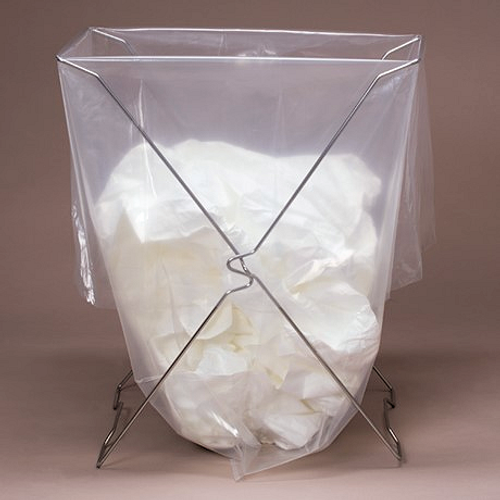
Micronova BinLiner™ cleanroom bags are manufactured from clear, FDA-compliant low-density polyethylene (LDPE) for controlled-environment waste collection, garment handling, material transfer and temporary containment. The liners are designed for use in appropriately qualified cleanroom and aseptic workflows where material construction, packaging, container fit and irradiation status are important selection factors.

The SOSCleanroom selection includes seven manufacturer part numbers covering 1-, 2- and 4-mil thicknesses and nominal dimensions of 40" x 48" or 40" x 60". These listed configurations are identified as irradiated products; Micronova also manufactures separate non-irradiated BinLiner™ versions not represented by the seven part numbers below.

The listed liners use a gusseted configuration with a manufacturer-identified 23" x 17" base gusset. The 40" x 48" versions are associated with approximately 40-gallon rectangular containers. The 40" x 60" version provides greater height for compatible larger bins and selected transport or collection tasks.

Irradiated BinLiner™ products are manufactured under Micronova's validated sterilization program. The manufacturer identifies a Sterility Assurance Level of 10-6 for applicable sterile versions and makes processing and conformance certificates available. Actual irradiation processing and release records must be confirmed for the received lot when required by the facility.

Packaging differs by part number. Some models are individually double-bagged, while others contain five liners per double-bagged pack, with certain versions individually bagged before placement in a shared double-bag pack. Select the required configuration according to the site's approved material-transfer and contamination-control procedure.

The 1-mil BL1-40TRIRBB configuration has a published manufacturer packaging inconsistency. Manufacturer catalog documentation and the SOS listing indicate five liners per double-bagged pack and 100 liners per case; a separate manufacturer web listing contains conflicting inner-pack counts. Confirm the final current packaging breakdown with Micronova when inner-pack quantity is a purchasing or qualification requirement.

The LDPE liner is a disposable containment accessory, not a substitute for a validated sharps container, hazardous-waste package, leakproof chemical-transport system or other specialty containment product. Select the correct thickness and waste-handling procedure based on the actual contents and operating conditions.

Controlled-Environment Selection Advantage: Micronova BinLiner™ products provide defined LDPE material, gusseted container fit, multiple thickness options, manufacturer lot traceability and irradiation options. Select the exact model by thickness, dimensions, sterile processing and packaging presentation rather than assuming all BinLiner variants are identical.

Specifications:
  • Manufacturer: Micronova Manufacturing, Inc.
  • Product Family: BinLiner™ Cleanroom Bags
  • SOSCleanroom Parent SKU: BL1-xxxx
  • Manufacturer Series: BL1, BL2 and BL4
  • Product Type: Cleanroom bin liner and material-handling bag
  • Material: Clear low-density polyethylene (LDPE)
  • Manufacturer Material Description: FDA-compliant LDPE
  • Manufacturer Material Reference: 21 CFR 177.1520 identified for the applicable 4-mil product
  • Available Thicknesses: 1, 2 and 4 mil
  • Approximate Thicknesses: 0.025 mm, 0.051 mm and 0.102 mm
  • Nominal Size Options: 40" x 48" and 40" x 60"
  • Gusset: 23" x 17" for the listed configurations
  • Construction: Gusseted polyethylene liner with sealed base
  • 40" x 48" Application: Approximately 40-gallon rectangular containers, subject to fit
  • 40" x 60" Application: Taller compatible containers and approved collection or material-handling tasks
  • Listed Product Sterility: Irradiated versions
  • Manufacturer Sterilization Method: Gamma irradiation
  • Manufacturer Validated SAL: 10-6 for applicable sterile products
  • Manufacturer 4-Mil Irradiation Minimum: 25 kGy per identified model-specific specification
  • Lot-Specific Dose: Refer to the actual manufacturer Certificate of Processing
  • Packaging: Flat-pack, with individual or grouped double-bag presentation depending on SKU
  • 1-Mil Case Quantity: 100 liners, subject to packaging breakdown verification
  • 2-Mil Case Quantity: 50 liners
  • 4-Mil Case Quantity: 50 liners
  • Manufacturer Lot Identification: Printed on applicable packages and cases
  • Manufacturer Certificates: Certificate of Conformance and processing/irradiation documents available
  • 4-Mil Published Shelf Life: 36 months according to the identified manufacturer specification
  • Other Thickness Shelf Life: Confirm current exact-model specification and labeled expiration
  • Autoclavability: 4-mil manufacturer specification states not autoclavable
  • Chemical Compatibility: General compatibility with common solutions; specific exposure qualification required
  • Manufacturer Cleanroom Positioning: For appropriately controlled and aseptic environments
  • Exact ISO Class Product Qualification: No universal model-specific numerical ISO rating established for all listed SKUs
  • Quantitative Particle, Ionic and Extractable Limits: Not established for every listed model
  • Primary Applications: Controlled waste collection, garment collection, material staging, transport and lightweight protective covering
  • Sharps and Hazardous Waste: Use only where an approved containment procedure specifically permits the liner
  • Country of Manufacture: USA
  • SOSCleanroom Published Lead Time: 7-10 business days
Manufacturer SKU, Size, Thickness and Packaging Matrix:

Select the manufacturer part number corresponding to the required liner thickness, dimensions and packaging. All seven listed SOS variants are irradiated. Case counts refer to individual liners, not packages.

Manufacturer SKU Size Thickness Packaging Liners/Case
BL1-40TRIRBB 40" x 48" 1 mil 5 per double bag per manufacturer catalog; web listing conflicts 100
BL2-40TRIR 40" x 48" 2 mil Each individually double-bagged 50
BL2-40TRIRB 40" x 48" 2 mil Each individually bagged; 5 per outer double bag 50
BL4-4060IRBB 40" x 60" 4 mil 5 per double bag 50
BL4-40TRIR 40" x 48" 4 mil Each individually double-bagged 50
BL4-40TRIRB 40" x 48" 4 mil Each individually bagged; 5 per outer double bag 50
BL4-40TRIRBB 40" x 48" 4 mil 5 per double bag 50

The seven selections are provided as flat-pack configurations. Other Micronova BinLiner™ products may be non-irradiated, supplied on plastic core rolls, offered in different sizes, or use different case quantities. Those alternatives are not automatically equivalent.

Packaging Verification: BL1-40TRIRBB is described as five liners per double-bagged pack in Micronova's catalog, but the manufacturer's current web listing contains conflicting quantities. Obtain confirmation for this SKU before relying on a fixed number of inner packs. The listed case total is 100 liners.

About the Manufacturer:

Micronova Manufacturing, Inc. develops cleanroom cleaning and material-handling products for pharmaceutical, biotechnology, semiconductor, medical-device and laboratory operations. Its BinLiner™ family includes LDPE bags in different sizes, thicknesses and packaging presentations for production waste collection and controlled material handling.

SOSCleanroom offers Micronova BinLiner™ products and provides assistance with variant selection, procurement, case quantities and manufacturer documentation requests.

Features and Benefits:
  • FDA-Compliant LDPE: Manufacturer-specified clear polyethylene material for controlled-environment handling applications.
  • Gusseted Construction: Designed to accommodate rectangular containers and support a more practical fit.
  • Thickness Options: 1-, 2- and 4-mil versions support different handling demands.
  • Irradiated Selection: All seven listed models are identified as irradiated.
  • Packaging Choices: Individual and grouped presentations support different material-transfer requirements.
  • Case Quantities: Defined manufacturer counts simplify recurring facility purchasing.
  • Lot Traceability: Manufacturer package identification supports receiving and quality records.
  • Available Certificates: Processing and conformance documentation supports review of applicable sterile lots.
  • Container Compatibility: Manufacturer dimensional guidance supports selection for 40-gallon rectangular bins and taller collection arrangements.
Selecting 1, 2 or 4 Mil:

Liner thickness affects flexibility and resistance to some forms of handling damage. Choose the actual specification based on fill weight, waste type, edges, puncture risks and removal procedure.

  • 1 Mil: Lightweight and flexible for suitable low-abrasion, non-sharp waste streams and controlled collection tasks.
  • 2 Mil: An intermediate option for routine wiping materials, disposable PPE and general controlled-environment waste.
  • 4 Mil: A thicker option for compatible loads where greater film thickness is preferred.
  • Puncture Resistance: A thicker liner is not automatically puncture-proof or appropriate for exposed sharps.
  • Fill Weight: Do not assume a rated load capacity without an applicable manufacturer load test.
  • Liquid Exposure: Evaluate sealing, chemical compatibility and the approved containment method; film thickness alone does not establish leakproof performance.

Selection Guidance: Choose thickness, size and packaging together. A 4-mil bag may offer more material thickness, but the facility must still evaluate the particular waste stream and removal process.

Sterility, Irradiation and Documentation:

The selected irradiated models are part of Micronova's sterile BinLiner™ offering. The manufacturer's 4-mil specification identifies gamma irradiation, a validated SAL of 10-6, a minimum irradiation dose of 25 kGy and a 36-month shelf life.

  • Verify Exact SKU: Do not transfer irradiation status or sterile claims from one BinLiner model to another.
  • Inspect the Package: Reject or investigate damaged or compromised sterile packaging according to the site procedure.
  • Check Expiration: Use the date applicable to the product and received lot.
  • Obtain Lot Documentation: Request Certificates of Processing/Irradiation and Conformance when required.
  • Check Actual Processing: A published minimum dose is not the recorded dose for an individual lot.
  • Material Transfer: Follow approved removal of external packaging layers and protection of the inner package.
  • After Opening: Reclosing an opened package does not independently reestablish sterile integrity.
  • Non-Irradiated Family Alternatives: Must not be presented as sterile merely because they share the BinLiner™ brand.

Important Qualification Distinction: Manufacturer validation supports the specified irradiated product, but actual lot processing, package integrity and facility material introduction determine whether it is suitable for a particular sterile-use procedure. FDA-compliant polyethylene composition alone does not establish sterile status.

Waste Collection, Material Transfer and SOP Limitations:

Micronova BinLiner™ products support routine cleanroom waste collection and material handling when used with an appropriate container and approved facility procedures. They are not universally suitable for hazardous liquids, chemical storage, sharps, biohazardous waste or regulated transport.

  • Waste Segregation: Follow the approved waste classification and container-labeling procedure.
  • Container Fit: Confirm rim dimensions, base gusset, height and clearance before selection.
  • Sharps: Use an approved rigid sharps container rather than relying on a flexible LDPE liner.
  • Hazardous and Infectious Waste: Follow all applicable specialized containment and marking requirements.
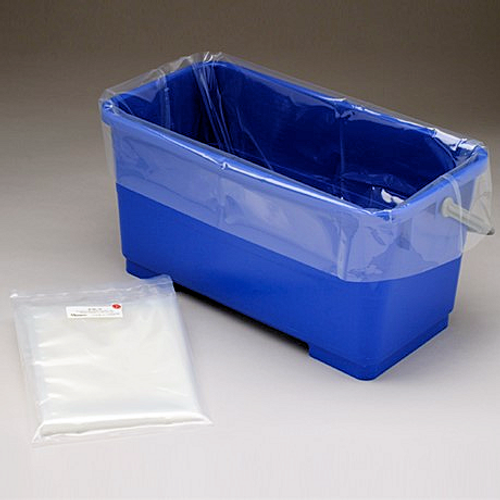
  • Liquid Containment: Do not assume a general BinLiner is equivalent to Micronova's separately specified LDPE/nylon BucketLiner family.
  • Sealing: Use approved closure methods and independently qualified closure ties if specified.
  • Handling: Prevent dragging, abrasion and contact with sharp edges during removal.
  • Material Introduction: Follow established staging and double-bag removal procedures.
  • Single Use: Do not reuse contaminated liners unless a specific validated process permits it.
Recommended Cleanroom Bin-Liner Procedure:
  1. Confirm the SKU: Verify size, thickness, irradiation and packaging configuration.
  2. Review Lot Records: Confirm expiration and applicable sterilization or conformance documentation.
  3. Prepare for Transfer: Follow the approved outer-package removal procedure.
  4. Inspect the Liner: Check for tears, punctures, contamination or compromised packaging.
  5. Prepare the Container: Ensure the bin is clean, suitable and correctly identified.
  6. Fit the Liner: Position the gusset and fold the opening over the rim using the prescribed method.
  7. Verify Waste Type: Confirm that the liner and container are approved for the material being collected.
  8. Monitor Filling: Avoid overfilling, excess load and abrasion.
  9. Close at the Required Point: Use an approved closure method without creating unnecessary contamination.
  10. Remove Carefully: Avoid contact between the outer bag surface and cleaner areas.
  11. Transfer Out: Follow the designated waste-removal pathway and segregation requirements.
  12. Inspect the Container: Clean and prepare the bin before installing the replacement.
  13. Document When Required: Retain applicable lot and change-out records.

SOP Guidance: The manufacturer does not establish one universal safe load, change-out interval, chemical exposure limit or container-filling percentage for all seven variants. Define those controls for the actual facility and waste stream.

Manufacturer Technical Documents:

Micronova BinLiner™ Manufacturer Product Information: View Product Models, Sizes and Packaging

Micronova Liners Product Catalog: View Manufacturer Liner Selection Matrix

Micronova 4-Mil Sterile BinLiner Specification: ENGR-3005, historical Revision 002, identified for the BL4 models. Request the accessible current revision from Micronova if required for qualification.

Additional Documentation: Request current exact-model TDS documents, an applicable SDS or SDS determination, and the lot-specific Certificates of Processing/Irradiation and Conformance directly from Micronova when required.

Other Similar Products Available From SOSCleanroom.com

Related Cleanroom Containment and Waste-Handling Products

Notes: Need help selecting a Micronova BinLiner™ size, choosing 1-, 2- or 4-mil polyethylene, verifying sterile packaging or confirming case counts? SOSCleanroom provides product-selection assistance, manufacturer documentation support and cleanroom procurement services.

SOSCleanroom.com provides controlled-environment liners and waste-handling supplies for pharmaceutical, biotechnology, semiconductor, medical-device, laboratory and other contamination-sensitive facilities.

Product description updated: November 6, 2026 (SOS Technical Staff)

© 2026 SOS Supply. All rights reserved.

The Technical Vault By SOSCleanroom
Micronova BinLiners™ FDA-Compliant LDPE 1 / 2 / 4 Mil 40" × 48" / 40" × 60" Gusseted Clear Liners Seven Irradiated SOS Options Individual / Grouped Bagging ISO 5–9 Application 50 / 100 Liners per Case Lot Traceability

Micronova BinLiners™: LDPE cleanroom liners for controlled waste collection and material transfer

Micronova BinLiners™ are polyethylene liners intended for waste collection, garment handling, material transfer and compatible temporary containment in cleanrooms and other controlled environments.

The liners are manufactured from FDA-compliant low-density polyethylene (LDPE). The selected SOSCleanroom configurations use clear, gusseted construction and are offered in 1-, 2- and 4-mil thicknesses, with nominal sizes of 40" × 48" and 40" × 60".

The seven configurations offered on this listing are described as irradiated, with different packaging arrangements that support controlled introduction and dispensing. Across the full Micronova BinLiner family, however, both irradiated and nonirradiated configurations are available.

Micronova identifies BinLiners for use in ISO Classes 5–9. Selection and handling must still follow the facility's contamination-control strategy, waste-segregation requirements and approved material-transfer procedures.

The current SOSCleanroom configurations are purchased by the case, with 50 or 100 liners per case depending on the selected manufacturer part number.

Operations takeaway: Select a BinLiner using the exact manufacturer SKU, container dimensions, film thickness, irradiation status, packaging presentation and case quantity. The liner helps manage compatible material and waste streams but does not replace a puncture-resistant sharps container, chemical-resistant liquid-containment system or validated sterile-transfer procedure.


Exact SOSCleanroom variant matrix
  • BL1-40TRIRBB: Clear, 40" × 48", 1 mil, irradiated, grouped double-bagged presentation, 100 liners per case.
  • BL2-40TRIR: Clear, 40" × 48", 2 mil, irradiated, each liner individually double-bagged, 50 liners per case.
  • BL2-40TRIRB: Clear, 40" × 48", 2 mil, irradiated, each liner individually bagged and five liners grouped per outer pack, 50 liners per case.
  • BL4-4060IRBB: Clear, 40" × 60", 4 mil, irradiated, five liners per double-bagged pack, 50 liners per case.
  • BL4-40TRIR: Clear, 40" × 48", 4 mil, irradiated, each liner individually double-bagged, 50 liners per case.
  • BL4-40TRIRB: Clear, 40" × 48", 4 mil, irradiated, each liner individually bagged and grouped five per outer pack, 50 liners per case.
  • BL4-40TRIRBB: Clear, 40" × 48", 4 mil, irradiated, five liners per double-bagged pack, 50 liners per case.

BL1 packaging clarification: Micronova's current published sources disagree about the number of BL1-40TRIRBB liners in each double-bagged pack. The 100-liner case quantity is published, but the exact inner-pack configuration should be confirmed when preparing a controlled purchasing specification.


Understanding model prefixes and packaging suffixes
  • BL1: 1-mil BinLiner material.
  • BL2: 2-mil BinLiner material.
  • BL4: 4-mil BinLiner material.
  • 40TR: Nominal 40" × 48" rectangular-bin configuration.
  • 4060: Nominal 40" × 60" configuration.
  • IR: Irradiated, individually double-bagged flat-pack presentation.
  • IRB: Irradiated, individually bagged liners grouped into packs.
  • IRBB: Irradiated liners grouped together within double-bagged packaging.
  • PC: Different nonirradiated roll-pack configuration elsewhere in the broader family.
  • PCIR: Irradiated roll-pack configuration elsewhere in the broader family.

Packaging distinction: Individually double-bagged is not the same as five liners grouped in one double-bagged pack. The opening sequence, handling workload and number of exposed unused liners differ.


Material construction: clear, FDA-compliant low-density polyethylene
  • Manufacturer: Micronova Manufacturing, Inc.
  • Product family: BinLiners™.
  • Material: Clear LDPE.
  • Manufacturer material claim: FDA-compliant polyethylene material.
  • Referenced material regulation: 21 CFR 177.1520 in applicable manufacturer specifications.
  • Available family thicknesses: 1 to 6 mil.
  • SOS listed thicknesses: 1, 2 and 4 mil.
  • Construction: Single-seam liner design with gusseted versions for rectangular containers.
  • Manufacturer production location: Torrance, California.
  • Traceability: Manufacturer lot coding.

Material limitation: FDA-compliant resin does not establish that every finished liner is approved for unrestricted food, drug-product or direct product contact. Actual product-contact use requires the appropriate application-specific qualification.


Understanding liner thickness: 1 mil versus 2 mil versus 4 mil
  • 1 mil: Approximately 0.001 inch (0.025 mm).
  • 2 mil: Approximately 0.002 inch (0.051 mm).
  • 4 mil: Approximately 0.004 inch (0.102 mm).
  • Lightweight collection: Consider appropriate thinner liners when contents are light and nonabrasive.
  • General collection: Evaluate 2-mil options for routine approved waste streams.
  • Greater film thickness: Four-mil variants may be preferable where more robust material is needed.
  • Mechanical strength: Must not be inferred solely from nominal thickness.
  • Puncture risk: Depends on the actual waste contents and handling.
  • Maximum load: No universal load rating established by thickness alone.
  • Selection: Qualify against the container, waste type, fill level and movement method.

Thickness limitation: A 4-mil liner has more nominal film thickness than a 1-mil liner, but this does not establish a guaranteed fourfold increase in puncture resistance, load capacity or tensile strength. Use the specified performance evidence for critical handling tasks.


40" × 48" and 40" × 60" fit considerations
  • 40TR series: Nominal 40" opening width and 48" liner height.
  • 4060 series: Nominal 40" opening width and 60" liner height.
  • Gusset: Approximately 23" × 17" for the specified 40TR and BL4-4060 models.
  • 40-gallon containers: Manufacturer identifies suitable rectangular-bin applications for 40TR.
  • Bin stand: BLSSH-1624 is identified for compatible 40" × 48" and 40" × 60" models.
  • Actual capacity: Determined by container geometry and allowable fill level.
  • Rim fold-over: Allow adequate excess material for approved installation.
  • Removal: Preserve sufficient length for controlled closure and lifting.
  • Fit test: Check the actual bin or stand before bulk purchase.

Fit distinction: Nominal liner dimensions are not the same as certified container volume. Confirm opening width, gusset, depth, rim fit and closure allowance using the actual bin or frame.


Irradiation and sterility assurance: exact SKU and lot
  • Selected SOS variants: Manufacturer-designated irradiated configurations.
  • Broader family: Includes both irradiated and nonirradiated liners.
  • Manufacturer irradiation: Gamma irradiation for applicable sterile models.
  • Current family minimum dose statement: 25 kGy.
  • Validated sterilization: Manufacturer documentation for sterile 2- and 4-mil models identifies SAL 10-6.
  • Lot processing: Confirm the irradiation certificate for the actual received lot.
  • Individual liner testing: Not implied by a validated SAL designation.
  • Package integrity: Must be maintained according to the sterile material-handling procedure.
  • Post-opening conditions: Governed by approved in-use and aseptic-transfer procedures.

Sterility distinction: Irradiation status must be verified for the exact selected SKU. A family-level sterile designation does not apply to nonirradiated variants, and the actual irradiation dose of a delivered lot is established through its processing records.


Lot documentation and sterile release records
  • Certificate of Processing: Available for applicable irradiated lots.
  • Certificate of Conformance: Available from Micronova.
  • Sterility validation: Manufacturer documentation available on request.
  • Lot number: Match package identification to the certificate.
  • Actual delivered dose: Verify where required by the quality system.
  • Expiration: Check actual product and lot documentation.
  • Packaging condition: Inspect at receiving and material entry.
  • Release criteria: Follow site QA requirements.
  • Traceability: Retain exact manufacturer SKU and lot identification.

Document control: Manufacturer validation and actual lot-release evidence are different records. Where sterility is required, obtain and verify the applicable certificates for the specific material received.


Individual double bagging versus grouped double bagging
  • IR presentation: Each liner has its own double-bagged package.
  • IRB presentation: Individual liners are bagged and then grouped.
  • IRBB presentation: Multiple liners share a double-bagged pack.
  • Individual dispensing: Can help limit the exposure of additional unused liners.
  • Grouped dispensing: May reduce packaging materials and opening frequency.
  • Material-transfer controls: Follow the approved bag-removal sequence.
  • Post-opening use: Do not assume remaining liners retain their original packaged sterile status indefinitely.
  • Selection: Match the presentation to the facility's intended point-of-use consumption.

Packaging selection: Choose IR where individual presentation is required, or the correct IRB/IRBB grouped presentation where approved. Group packaging is not equivalent to a separately double-bagged individual liner.


ISO Classes 5–9: manufacturer application versus room qualification

Micronova's BinLiner technical brochure identifies ISO Classes 5–9 as intended controlled-environment applications.

  • Manufacturer application range: ISO Classes 5–9.
  • Room classification: Determined by the facility's independent environmental qualification.
  • Particle contribution: Requires product-specific testing where numerical limits matter.
  • Biological control: Depends on selected irradiated status and material-handling procedures.
  • Double bagging: Supports staged material introduction but does not certify room cleanliness.
  • Waste removal: Must control possible back-contamination and exposure.
  • Aseptic use: Requires the specific sterile variant and process qualification.

ISO distinction: The manufacturer's ISO 5–9 application statement is not certification that a liner is particle-free or that a particular room meets an ISO class. Validate the full handling process.


Approved waste streams and material-transfer applications
  • Routine cleanroom waste: Compatible used wipes and consumables.
  • Garment collection: Approved used gowning items.
  • Material transport: Appropriate parts, raw materials or accessories.
  • Temporary storage: Compatible items under controlled conditions.
  • Equipment covering: Lightweight protection where approved.
  • Segregated waste: Follow the facility's designated container and labeling system.
  • Hazardous waste: Confirm the liner's suitability and applicable waste requirements.
  • Wet contents: Evaluate leakage, chemical compatibility and handling risks.
  • Sharps: Use a separately approved puncture-resistant container.

Containment limitation: A flexible LDPE BinLiner is not a sharps container, a validated liquid-tight chemical containment system or an automatic substitute for regulated waste packaging. Waste type and final disposal requirements determine the appropriate containment method.


Chemical compatibility and liquid-handling limitations
  • Manufacturer statement: Good compatibility with common cleaners and solutions.
  • Complete chemical matrix: Not established for every SKU and concentration.
  • IPA: Verify the actual concentration and exposure time.
  • Oxidizing chemicals: Assess compatibility before use.
  • Strong solvents: Do not assume compatibility.
  • Liquid transport: Requires a suitable qualified containment system.
  • Seams: Inspect and qualify where leakage would create a safety or contamination problem.
  • Storage duration: Evaluate effect of the actual contents and conditions.
  • BucketLiners: Consider separately specified LDPE/nylon laminate alternatives for appropriate liquid-containment processes.

Chemical limitation: A general statement about compatibility with common cleaners is not a guarantee of resistance to every disinfectant, strong solvent or hazardous waste stream. Use the applicable chemical and waste compatibility procedure.


BinLiners versus BucketLiners: distinct material functions
  • BinLiners: FDA-compliant LDPE film.
  • Primary function: Compatible waste collection and material transfer.
  • BucketLiners: Separate LDPE/nylon laminate construction.
  • BucketLiner use: Qualified bucket and liquid-handling operations.
  • Autoclavability: Applies to specifically qualified products and conditions, not automatically to BinLiners.
  • Container fit: Different dimensional families.
  • Sterility: Check the exact product SKU.
  • Substitution: Use formal approval where material properties are specified.

Product distinction: Micronova BinLiners are LDPE; BucketLiners are a separate LDPE/nylon laminate family. Their chemical compatibility, use limits, shapes and sterilization conditions must not be transferred between product families.


Best-practice controlled material introduction
  1. Confirm the exact SKU: Verify size, thickness, irradiation and bagging suffix.
  2. Check lot documentation: Match the processing certificates where required.
  3. Inspect the case: Check damage, contamination and shipment condition.
  4. Follow the transfer route: Use the facility's approved material-entry procedure.
  5. Stage correctly: Keep outer shipping packaging away from clean surfaces.
  6. Remove outer bags: Follow the approved controlled-transfer sequence.
  7. Protect inner packaging: Minimize contact with uncontrolled surfaces.
  8. Dispense appropriately: Avoid touching unused liners unnecessarily.
  9. Inspect each liner: Check for holes, tears or damage.
  10. Record exceptions: Follow quality procedures for any compromised material.

Transfer control: Double-bag presentation supports material introduction but does not replace operator gowning, correct transfer steps, surface controls or lot-specific sterility verification.


Best-practice installation in a bin or stand
  1. Verify fit: Confirm the liner matches the intended container or BLSSH stand.
  2. Inspect the bin: Check cleanliness and physical condition.
  3. Inspect the liner: Look for tears, holes and seam damage.
  4. Orient the gusset: Allow the liner to open without excessive stretching.
  5. Install evenly: Avoid pulling sharply across edges.
  6. Secure the rim: Follow the approved method to prevent liner slippage.
  7. Maintain usable depth: Prevent unnecessary tension in the base.
  8. Keep the opening accessible: Avoid contact with uncontrolled surfaces.
  9. Label if required: Apply the designated waste-stream identification.
  10. Confirm readiness: Inspect the final installed configuration.

Installation control: Incorrect fit can cause tearing, slippage or material contact with the unlined container. Verify the complete liner, bin and waste-stream combination before routine use.


Waste change-out and removal SOP considerations
  1. Apply the change trigger: Use the approved fill-level, shift or condition requirement.
  2. Check waste classification: Confirm safe handling and disposal requirements.
  3. Prepare clean gloves and supplies: Follow the area's gowning and handling procedure.
  4. Control the liner mouth: Avoid spilling or contacting clean surfaces.
  5. Close appropriately: Use the qualified tie or other approved closure.
  6. Avoid overloading: Do not exceed the process's safe handling limit.
  7. Move using approved equipment: Avoid dragging the liner across floors.
  8. Inspect for leaks: Follow the spill procedure if damage is discovered.
  9. Transfer through designated routes: Prevent contaminated waste from returning to cleaner zones.
  10. Inspect and clean the container: Follow the bin-cleaning SOP.
  11. Install a new liner: Maintain controlled handling.
  12. Document where required: Record deviations or waste removal activities.

Waste-control principle: The liner is one component of a waste-handling system. Closure, fill level, container support, removal route and final disposal must be defined in the facility's procedure.


Not autoclavable: heat and sterilization limits
  • LDPE liner: Not automatically suitable for steam sterilization.
  • Micronova sterile 2-mil specifications: State Not Autoclavable.
  • Micronova sterile 4-mil specifications: State Not Autoclavable.
  • Gamma irradiation: Distinct from steam sterilization.
  • High temperatures: May affect film geometry and integrity.
  • Hot waste: Requires separate temperature and compatibility assessment.
  • Autoclavable equipment: A suitable stand does not make every liner autoclavable.

Temperature limitation: Do not infer autoclavability from the BinLiner's irradiated status or from the manufacturer's autoclavable bin stands. These are different properties of different products.


Shelf life and inventory controls
  • Sterile four-mil specification: Published 36-month shelf life.
  • Other product variants: Confirm the applicable controlled shelf-life specification.
  • Actual expiration: Verify the received manufacturer's lot information.
  • Original packaging: Protect until controlled transfer.
  • Storage: Avoid damage, contamination and excessive environmental stress.
  • Inventory rotation: Follow first-expiring-first-out procedures where applicable.
  • Lot traceability: Maintain the relevant manufacturer identification.
  • Package integrity: Inspect before use.
  • After opening: Apply site-specific in-use controls.

Shelf-life limitation: The 36-month figure is explicitly documented for the irradiated four-mil family. Confirm applicability and actual labeled expiration for each selected liner SKU and delivery lot.


Common handling failures and corrective actions
  • Incorrect SKU: Verify width, height, thickness and packaging suffix.
  • Wrong case count: Confirm 50 or 100 liners.
  • BL1 inner-pack discrepancy: Request confirmation of the 40TRIRBB pack quantity.
  • Nonirradiated substitution: Do not substitute into a sterile-required process.
  • Torn liner: Remove from use before filling.
  • Overfilled bag: Replace before safe closure becomes difficult.
  • Sharp contents: Use approved rigid sharps containment.
  • Chemical leakage: Use compatible qualified containment.
  • Incorrect liner fit: Confirm dimensions and gusset.
  • Improper transfer: Follow controlled bag-removal steps.
  • Unverified lot dose: Obtain the appropriate processing certificate.
  • Autoclave exposure: Use separately qualified materials and methods.

When a different liner or containment method is required
  • Puncture-resistant sharps handling: Use an approved sharps container.
  • Bulk liquid containment: Use an appropriately qualified liquid-handling system.
  • Highly reactive chemicals: Confirm chemical compatibility and regulatory requirements.
  • Autoclave processing: Select an approved autoclavable liner or container.
  • Special sterile-process requirement: Verify the exact irradiated SKU and lot documentation.
  • Heavy mechanical load: Use suitable rated containment and handling equipment.
  • Different bin geometry: Select the correct dimensional variant.
  • Numerical cleanliness limits: Request manufacturer test documentation.
  • Biohazard marking: Select appropriate labeled and regulated waste packaging when required.

Selection boundary: BinLiners are flexible LDPE liners for qualified collection and transfer workflows. They are not substitutes for engineered containment systems, rigid sharps containers or specific hazardous-material transport packaging.


Related cleanroom products and systems

System selection: Compare material construction, container fit, sterile status, packaging format, chemical compatibility, closure method and disposal requirements before choosing a complete waste-management or material-transfer system.


Why purchase Micronova BinLiners™ from SOSCleanroom
  • Manufacturer-specific selection: Seven identified BL1, BL2 and BL4 configurations.
  • Case purchasing: 50- or 100-liner configurations.
  • Contamination-control support: Guidance on material introduction, waste segregation and liner change-out.
  • Documentation: Access to manufacturer technical resources and available irradiation and conformance records.
  • Product comparisons: Support distinguishing BinLiners, BucketLiners and related cleanroom containment products.
  • Customer assistance: Contact SOSCleanroom for exact packaging, availability, lot information and ordering support.

Manufacturer documentation and authoritative references
  • SOSCleanroom Micronova BinLiners Product Page: Click Here
  • Micronova Official BinLiner Product Page and Exact SKU Selector: Click Here
  • Micronova BinLiners Technical Brochure — MM 2022.1: Click Here
  • Micronova Technical Data Sheet Library: Click Here
  • Micronova Safety Data Sheet Library: Click Here
  • SOSCleanroom Cleanroom Bin Liners, Bucket Liners and Waste Segregation Guide: Click Here

Technical documentation: Micronova BinLiners™ are manufactured from FDA-compliant LDPE and provided in a family of 1–6 mil configurations, with sterile irradiated and nonirradiated alternatives. The seven options listed by SOSCleanroom use 1-, 2- or 4-mil film, 40" × 48" or 40" × 60" gusseted dimensions, and 50- or 100-liner case configurations. The manufacturer's published application range is ISO Classes 5–9. Irradiated-product qualification requires the exact SKU, packaging presentation and relevant lot processing certificates. The BL1-40TRIRBB inner-pack quantity is inconsistent across manufacturer sources and should be confirmed before it is used as a controlled procurement specification. BinLiners are not a substitute for approved sharps containers, chemical containment systems or separately qualified autoclave liners.


If you have any questions please email us at Sales@SOSsupply.com or give us a call at (214)340-8574. OR check out the AI ChatBot powered by SOSCleanroom data libraries - give it a try! THIS IS NEW FOR 2026! © 2026 SOSCleanroom. All rights reserved.