Cleanroom BucketLiners

$166.97
SKU: BKL1-xxxx 7 - 10 Business Days
(No reviews yet)
Availability:
7 - 10 Business Days
Shipping:
Calculated at Checkout

Micronova Cleanroom BucketLiners - LDPE/Nylon Laminate Bucket Liners - Sterile and Non-Sterile Options

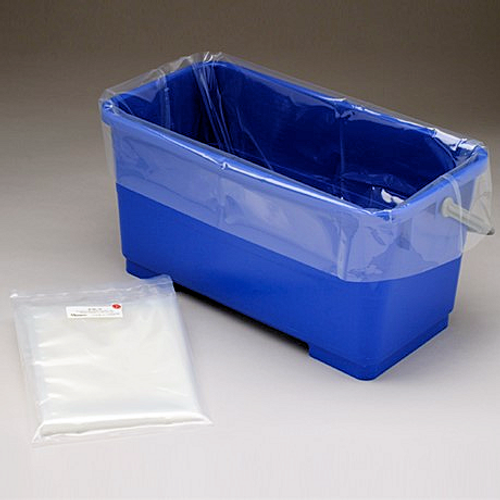
Micronova BucketLiners™ are cleanroom-compatible liners designed to provide a protective barrier between cleaning buckets and the liquid solutions they contain. Manufactured from a specialized 75% low-density polyethylene (LDPE) and 25% nylon laminate, these 3 mil liners help protect bucket interiors, support controlled disinfectant handling, and simplify cleaning-solution changeovers in pharmaceutical, biotechnology, laboratory, and other contamination-controlled environments.

BucketLiners are available in configurations designed for round, square, and rectangular buckets, including small 1-gallon pails and larger cleanroom mopping systems. Their chemical-resistant laminate construction helps separate cleaning and disinfecting solutions from the underlying bucket material and provides a replaceable containment surface for approved cleaning procedures.

The BucketLiner family includes both non-sterile and gamma-irradiated sterile options. Individual manufacturer part numbers determine liner dimensions, bucket compatibility, sterility, packaging format, and case quantity. Select the appropriate configuration based on the cleaning system and facility contamination-control requirements.

Cleanroom Bucket Protection Advantage: Micronova BucketLiners provide a replaceable 3 mil LDPE/nylon barrier between cleaning solutions and reusable buckets. Their purpose-built configurations support controlled solution preparation, routine liner replacement, and reduced direct contact between the chemical solution and bucket interior. Non-sterile and sterile versions allow facilities to select packaging and processing appropriate for their approved cleaning procedures.

Specifications:
  • Manufacturer: Micronova Manufacturing, Inc.
  • Product Family: BucketLiner™
  • SOSCleanroom Parent SKU: BKL1-xxxx
  • Product Type: Cleanroom Bucket and Liquid-Containment Liners
  • Material: LDPE/Nylon Laminate
  • Material Composition: 75% low-density polyethylene and 25% nylon
  • Nominal Thickness: 3 mil (0.076 mm)
  • Construction: Flexible laminate liner
  • Primary Function: Protective barrier between bucket interiors and compatible cleaning or disinfecting solutions
  • Available Configurations: Square, vertical-rectangular, and horizontal formats for compatible containers
  • Bucket Compatibility: Varies by selected manufacturer part number
  • Chemical Compatibility: Manufacturer identifies good resistance to common disinfectants and cleaning solutions
  • Available Processing: Non-sterile or sterile gamma-irradiated, according to selected SKU
  • Non-Sterile Configuration: BKL1-1818 and other designated non-irradiated models
  • Sterile Configuration: BKL1-1818IR and other designated irradiated models
  • Sterile Bulk Configuration: BKL1-1818IRB and other designated bulk-packed irradiated models
  • Sterile Irradiation: Minimum 25 kGy, according to manufacturer sterile-liner documentation
  • Sterility Assurance: Manufacturer-published SAL 10-6 for applicable validated sterile configurations
  • Intended Environment: Cleanrooms and controlled environments, subject to facility qualification
  • Autoclave Compatibility: Manufacturer identifies compatibility with autoclaving with liquid contents only, subject to a qualified process
  • Packaging: Bulk packed or individually double bagged, depending on model
  • Traceability: Manufacturer lot identification on packaging and cases
  • Manufacturer Documentation: Product specifications, Certificates of Conformance, and applicable irradiation or processing records
  • Manufacturing Location: Torrance, California, USA
  • Manufacturing Quality System: ISO 9001 certified facility
  • Ordering Configuration: Select the required liner size, sterility, packaging format, and manufacturer part number
18 x 18-Inch BucketLiner Configurations:

Micronova provides three 18 x 18-inch BucketLiner configurations for compatible 1-gallon (4-liter) pails. All three use the same nominal liner dimensions and laminate material, with processing and packaging determined by the manufacturer part number.

Manufacturer SKU Sterility Packaging
BKL1-1818 Non-sterile 50 liners/pack; 3 packs/case; 150 liners/case
BKL1-1818IR Sterile, irradiated Individually double bagged; 50 liners/case
BKL1-1818IRB Sterile, irradiated Bulk configuration: individually bagged; 10 liners per double bag; manufacturer lists 50 bags/case

Dimensions: 18 x 18 inches (approximately 455 x 455 mm). Recommended Fit: Compatible 1-gallon (4-liter) pails.

Additional BucketLiner Sizes and Configurations:

Additional BucketLiner sizes are available for larger round, square, and rectangular containers. Select the appropriate model based on bucket dimensions, cleaning-solution volume, and required liner positioning.

  • BKL-2424: 24 x 24 inches; non-sterile; compatible with approximately 6-gallon round or square buckets; 200 liners/case.
  • BKL-2424IR: 24 x 24 inches; sterile, irradiated; individually double bagged; 24 liners/case.
  • BKL-2424IRBB: 24 x 24 inches; sterile bulk configuration; 6 liners per double-bagged pack, 8 packs/case; 48 liners/case.
  • BKL-2424IRTBB: 24 x 24 inches; sterile triple-bagged bulk configuration; 48 liners/case.
  • BKL-2430IR: 24 x 30 inches; sterile, irradiated; compatible with approximately 8-gallon round or square buckets; 24 liners/case.
  • BKL7-3119: 31 x 19 inches; non-sterile; designed for compatible B-7 rectangular buckets; 200 liners/case.
  • BKL7-3119IR: 31 x 19 inches; sterile, irradiated; individually double bagged; 24 liners/case.
  • BKL99-3521: 35 x 21 inches; non-sterile; compatible with B-99-style rectangular buckets; 200 liners/case.
  • BKL99-3521IR: 35 x 21 inches; sterile, irradiated; individually double bagged; 24 liners/case.
  • BKL993521IRB: 35 x 21 inches; sterile bulk configuration; 6 liners per double-bagged pack, 4 packs/case; 24 liners/case.
About the Manufacturer:

Micronova Manufacturing develops contamination-control products for pharmaceutical manufacturing, biotechnology, laboratory operations, medical devices, and other critical environments. Its product portfolio includes cleanroom bucket liners, waste liners, cleaning tools, mopping systems, wipers, sponges, and specialized cleaning solutions.

Micronova BucketLiners are manufactured using LDPE/nylon laminate materials selected for barrier performance and compatibility with common cleaning and disinfecting solutions. Multiple liner geometries and packaging configurations allow facilities to establish standardized material-handling and cleaning procedures.

SOSCleanroom supports customers with Micronova product selection, bucket compatibility, manufacturer technical documentation, sterile processing records, and procurement assistance for contamination-controlled environments.

BucketLiner Features:
  • 75% LDPE and 25% nylon laminate construction
  • 3 mil nominal material thickness
  • Protective barrier between bucket interiors and cleaning solutions
  • Compatible with common disinfectants and cleaning solutions, subject to chemical qualification
  • Available for round, square, and rectangular buckets
  • Multiple liner sizes for different bucket systems
  • Non-sterile bulk-packed configurations
  • Gamma-irradiated sterile configurations
  • Individually double-bagged sterile options
  • Selected sterile bulk-pack configurations
  • Compatible with qualified autoclaving procedures involving liquid contents
  • Useful for product parts and raw-material transfer in appropriate containers
  • Supports controlled cleaning-solution replacement
  • Manufacturer lot identification for traceability
  • Applicable processing and conformance documentation available
BucketLiner Benefits:
  • Bucket Protection: Provides a replaceable physical barrier between compatible cleaning solutions and reusable bucket interiors.
  • Cleaning Consistency: Supports repeatable liner-change procedures between cleaning cycles.
  • Chemical Separation: Reduces direct interaction between the stored cleaning solution and the underlying bucket material.
  • Reduced Cleaning Burden: Disposable liners can simplify bucket preparation and turnaround, while remaining subject to required bucket cleaning procedures.
  • Controlled Liquid Handling: Helps contain compatible cleaning agents, rinse water, and disinfecting solutions during approved operations.
  • Sterile Product Options: Designated irradiated models provide sterile liner presentation for qualified processes.
  • Flexible Packaging: Bulk and individual double-bag configurations support different consumption and material-transfer needs.
  • Container Compatibility: Multiple shapes and sizes accommodate different cleanroom bucket and pail geometries.
  • Traceability: Manufacturer part and lot identification support receiving and quality-control requirements.
  • Inventory Planning: Model-specific case quantities help facilities plan replenishment by cleaning-system usage.
Common Applications:
  • Cleanroom disinfectant bucket lining
  • Pharmaceutical facility cleaning and sanitization programs
  • Biotechnology manufacturing support
  • Controlled preparation of compatible cleaning solutions
  • Two-bucket and multi-bucket cleaning systems
  • Temporary containment of qualified rinse liquids
  • Cleaning bucket preparation and changeover
  • Protection of reusable stainless steel or compatible plastic buckets
  • Controlled transport of parts and raw materials
  • Laboratory and production-area cleaning procedures
  • Material staging in controlled environments
  • Cleaning programs requiring sterile liner presentation
  • Routine maintenance of cleanroom mopping systems
  • Applications where a replaceable liquid-contact barrier is beneficial
Best-Practice Use:
  • Confirm the Manufacturer SKU: Verify liner dimensions, sterility, and packaging before opening.
  • Select the Correct Bucket: Match the liner configuration to the bucket's shape, rim, internal dimensions, and intended liquid volume.
  • Inspect Before Installation: Check the liner for punctures, tears, defective seals, and visible contamination.
  • Prepare the Bucket: Clean and inspect the reusable bucket according to the facility's approved procedure.
  • Install Carefully: Open the liner and position it inside the bucket without unnecessary stretching or contact with sharp edges.
  • Protect the Rim: Arrange excess liner material to prevent the liner from slipping into the solution.
  • Avoid Pinching: Keep the liner away from bucket clamps, wheels, sharp fittings, and wringer mechanisms.
  • Control Fill Volume: Do not exceed the bucket's approved working capacity or allow the liner to interfere with required equipment operation.
  • Use Compatible Chemistry: Verify material compatibility with the actual disinfectant or cleaning solution.
  • Prevent Cross-Contamination: Use dedicated liners for each cleaning solution or bucket function as required by the SOP.
  • Monitor During Use: Inspect for leaks, displacement, excessive stress, or trapped liquid between the liner and bucket.
  • Change Between Solutions: Replace liners according to approved chemical changeover and cleaning schedules.
  • Dispose Safely: Remove used liners carefully and follow chemical waste-handling requirements.
  • Maintain Documentation: Retain product lot and sterile-processing records when required by the facility.
Bucket Geometry and Proper Liner Selection:

The correct liner must fit the bucket's geometry and allow the intended working volume without creating excessive tension or interfering with mopping equipment. Nominal liner dimensions should be evaluated together with the bucket's opening, depth, and shape.

  • One-Gallon Pails: The BKL1-1818 family uses an 18 x 18-inch liner format for compatible small pails.
  • Round and Square Buckets: The BKL-2424 family is designed for compatible approximately 6-gallon buckets.
  • Deeper Buckets: BKL-2430IR provides a 24 x 30-inch configuration for compatible taller containers.
  • Rectangular Buckets: BKL7-3119 models are designed for compatible B-7-style rectangular systems.
  • Large Rectangular Systems: BKL99-3521 models are designed for compatible B-99-style bucket systems.
  • Open Dimensions: Match the manufacturer's listed flat dimensions to the actual container geometry.
  • Bucket Rim: Ensure sufficient material for controlled positioning at the rim.
  • Working Depth: Confirm that the liner reaches the required interior surfaces without being stretched tight.
  • Wringer Compatibility: Verify that liner material does not obstruct wringers, mop heads, clamps, or moving parts.
  • Safe Handling: Avoid using an oversized loose liner where it may fold into a mechanical component or become difficult to remove.

Bucket Fit Guidance: Select BucketLiners by the actual bucket style, opening, depth, and operating configuration rather than gallon capacity alone. A properly fitted liner should cover the intended liquid-contact surfaces, remain stable at the rim, and permit safe operation of the cleaning system.

Two-Bucket Cleaning and Disinfection Procedures:

BucketLiners can be incorporated into approved two-bucket cleaning methods in which one bucket contains the cleaning or disinfecting solution and a separate bucket is used for rinse water or collection of displaced soils. This arrangement can help reduce transfer of contamination into the prepared chemical solution.

  • Separate Bucket Functions: Clearly identify the solution bucket and rinse or waste bucket.
  • Individual Liners: Install a separate qualified liner in each bucket where required by the facility procedure.
  • Prepare Fresh Solutions: Mix cleaning or disinfecting solutions according to the applicable manufacturer's instructions.
  • Control Concentration: Follow required dilution, water quality, and solution verification procedures.
  • Apply the Cleaning Solution: Wet the mop or cleaning tool using the approved technique.
  • Collect Contamination: Transfer removed soils into the designated rinse or collection stage rather than returning contaminated liquid to the fresh-solution bucket.
  • Limit Cross-Transfer: Follow the established tool-rinsing or replacement sequence.
  • Observe Contact Time: Maintain the required wet contact time when using disinfectants.
  • Change Solutions: Replace liquids and liners according to defined time, use, contamination, and process limits.
  • Clean Reusable Equipment: Dispose of used liners and complete required cleaning and drying of buckets and wringers.
  • Document Completion: Follow facility records for solution preparation, cleaning activities, and equipment changeovers.

Two-Bucket Cleaning Principle: Separate clean solution from collected contamination, and use a dedicated liner for each bucket where required. Liners support containment but do not replace correct chemical concentration, disinfection contact time, mop-change procedures, or routine cleaning of the reusable bucket system.

Chemical Compatibility and Solution Integrity:

Micronova identifies the LDPE/nylon laminate as compatible with common disinfectants and cleaning solutions. The required chemical compatibility depends on formulation, concentration, contact duration, temperature, and the complete cleaning procedure.

  • Aqueous Disinfectants: Evaluate compatibility with the specific ready-to-use or diluted disinfectant formulation.
  • Detergent Solutions: Confirm suitability for the concentration and temperature used in the cleaning process.
  • Alcohol-Based Solutions: Verify compatibility with the intended alcohol concentration and other ingredients.
  • Oxidizing Chemicals: Assess the complete formulation and exposure conditions before routine use.
  • Acidic and Alkaline Solutions: Consider pH, concentration, and prolonged exposure when qualifying the material.
  • Strong Solvents: Do not assume universal compatibility with ketones, aromatic solvents, hydrocarbons, or other aggressive chemicals.
  • Temperature: Elevated solution temperatures can alter chemical resistance and material properties.
  • Solution Integrity: Evaluate liner suitability where adsorption, extraction, or chemical interaction could affect a critical formulation.
  • Leak Testing: Inspect liners during qualification for stress points, leaks, or material changes.
  • Residue Requirements: Assess extractables and potential material contribution where the cleaning program has strict residue limits.
  • Process Qualification: Confirm compatibility using the actual solution, working volume, dwell time, and bucket system.

Chemical Selection Guidance: The LDPE/nylon laminate provides a physical barrier for compatible cleaning and disinfecting solutions. Facilities should qualify the selected chemical and operating conditions, particularly for concentrated agents, heated solutions, extended storage, and processes where extractables or chemical stability are critical.

Sterile and Non-Sterile Liner Selection:

Micronova offers non-sterile BucketLiners for general controlled cleaning and gamma-irradiated sterile versions for processes requiring sterile liner presentation. Sterility must be identified by the specific manufacturer part number and its applicable processing documentation.

  • Non-Sterile BKL1-1818: Supplied without irradiation processing; suitable for approved procedures that do not require sterile liners.
  • Sterile BKL1-1818IR: Gamma-irradiated and individually double bagged for controlled sterile material transfer.
  • Sterile Bulk BKL1-1818IRB: Separate irradiated bulk configuration with model-specific packaging and material-transfer requirements.
  • Gamma Irradiation: Minimum 25 kGy for applicable sterile configurations.
  • Sterility Assurance: The manufacturer's sterile-liner specification identifies SAL 10-6 for its validated applicable configurations.
  • Packaging Integrity: Inspect sterile packaging before transfer and reject damaged or compromised packs.
  • Controlled Transfer: Remove protective packaging layers according to the facility's approved contamination-control procedure.
  • Processing Documentation: Retain the applicable Certificate of Irradiation, Certificate of Processing, or other manufacturer records required by the facility.
  • Lot Traceability: Match supplied product labels and lot numbers to the relevant manufacturer documentation.
  • Aseptic Handling: Avoid contact between the sterile liner and unqualified surfaces during installation.
  • Solution Sterility: A sterile liner does not independently make a non-sterile cleaning solution sterile.
  • System Qualification: Evaluate the entire bucket, liner, solution, mop, and handling process against applicable cleanliness and sterility requirements.

Sterility Selection Guidance: Use non-sterile BucketLiners where the cleaning procedure permits non-sterile materials. Select an appropriately documented irradiated model where sterile presentation is required. Confirm the processing status, packaging, lot records, and approved transfer procedure before introducing a liner into critical cleanroom operations.

Autoclave Compatibility and Processing:

Micronova identifies BucketLiners as autoclavable with liquid contents only. Steam-processing compatibility depends on liner configuration, actual liquid load, supporting container, temperature, pressure, and the validated process.

  • Autoclave Application: Manufacturer identifies compatibility with liquid contents only.
  • Approved Cycle: Use only a qualified steam-processing procedure.
  • Container Support: Position liners in a compatible supporting vessel rather than treating a flexible liner as a rigid container.
  • Fill Control: Follow the validated loading volume and headspace requirements.
  • Pressure Management: Avoid sealing or restricting the liner in a manner that interferes with safe steam processing.
  • Material Integrity: Inspect liners for deformation, damage, leakage, or loss of functional performance after processing.
  • Chemical Exposure: Confirm compatibility when the liner contains cleaning chemicals during the processing cycle.
  • Validation: Autoclave compatibility does not independently establish a validated sterile end product.
  • Facility Procedure: Follow approved equipment instructions, processing requirements, and applicable safety controls.
Packaging and Storage Recommendations:
  • Packaging Format: Model-dependent bulk packs or individually double-bagged sterile packs
  • Non-Sterile BKL1-1818: 50 liners/pack; 3 packs/case; 150 liners/case
  • Sterile BKL1-1818IR: Individually double bagged; 50 liners/case
  • Sterile Bulk BKL1-1818IRB: Manufacturer-listed bulk packaging with 10 liners per double bag
  • Product Dimensions: Verify the selected model and bucket compatibility before ordering
  • Lot Identification: Manufacturer lot identification on the applicable packaging
  • Documentation: Certificate of Conformance and processing documentation as applicable to the selected SKU
  • Storage: Keep unused liners in protective packaging in a clean, dry environment
  • Physical Protection: Avoid sharp edges, crushing, excessive folding stress, and punctures
  • Chemical Storage: Protect unused liners from uncontrolled contact with aggressive chemicals and solvent vapors
  • Sterile Packaging: Maintain seal integrity and follow label instructions for sterile stock
  • Material Transfer: Remove packaging layers only at approved stages of the cleanroom transfer process
  • Opened Packs: Protect remaining liners and follow the applicable facility reuse or single-issue rules
  • Used Liners: Remove from service according to established chemical and contamination-control procedures
  • Disposal: Follow the chemical SDS and applicable facility waste-management requirements
Manufacturer Technical Documents:

Micronova BucketLiners Manufacturer Product Information and Model Specifications: Click Here

Micronova Sterile BucketLiner Product Specification - Revision 002 (PDF): Click Here

Micronova BucketLiner and BinLiner Mini Catalog (PDF): Click Here

Micronova Manufacturer Product Certificates and Documentation: View Manufacturer Resources

SOSCleanroom BucketLiners Product Information: Click Here

Other Similar Products Available From SOSCleanroom.com

Micronova BucketLiner Configurations

Compatible Cleanroom Mopping Equipment

Notes: Need assistance selecting the correct cleanroom bucket liner, verifying sterile versus non-sterile packaging, or matching a liner to a mopping system? Open the SOSCleanroom Technical Vault tab above for additional guidance on bucket compatibility, sterile transfer, cleaning-solution management, chemical compatibility, and two-bucket cleaning procedures.

SOSCleanroom.com supports pharmaceutical, biotechnology, laboratory, medical device, semiconductor, and other critical environments with cleanroom bucket liners, mopping equipment, wipers, disinfectants, cleaning solutions, and contamination-control supplies. Our team provides manufacturer documentation, product-selection assistance, packaging information, and procurement support.

Product description updated: October 22, 2026 (SOS Technical Staff)

© 2026 SOS Supply. All rights reserved.

The Technical Vault By SOSCleanroom
Micronova BucketLiner™ 75% LDPE / 25% Nylon Laminate 3 Mil Thickness Sterile & Nonsterile Options Cleanroom Mopping Systems Chemical Solution Containment

Micronova BucketLiner™: how cleanroom bucket liners support contamination control, solution containment, and controlled mopping operations

Micronova BucketLiner™ Cleanroom Bucket Liners are specialty disposable liners designed to create a protective barrier between a cleaning solution and the interior surface of a reusable bucket, pail, or compatible container.

Manufactured from a 75% low-density polyethylene (LDPE) and 25% nylon laminate blend, BucketLiners feature a nominal 3 mil (0.076 mm) thickness and are designed for use with compatible disinfectants, detergents, and cleanroom cleaning solutions.

The liners help isolate the cleaning liquid from the underlying bucket surface, reduce direct chemical exposure to reusable containers, and support controlled cleaning operations. They are available in different dimensions and packaging configurations for round, square, and rectangular cleaning containers.

Micronova offers both nonsterile and sterile gamma-irradiated BucketLiner™ configurations. The required version should be selected according to the environmental classification, cleaning chemistry, intended application, and facility material-transfer procedures.

Operations takeaway: BucketLiners help establish a controlled liquid-contact barrier within compatible cleaning containers. Effective use depends on selecting the correct liner dimensions, verifying the required sterility status, confirming chemical compatibility, securing the liner properly, and replacing it according to the facility's cleaning SOP.


ISO-first context: liners within cleanroom contamination-control programs

ISO 14644-5:2025 addresses cleanroom performance through an Operations Control Programme covering personnel, material transfer, equipment, cleaning, maintenance, and contamination-control procedures.

Cleaning buckets are repeatedly exposed to disinfectants, detergents, mop heads, equipment contact, and environmental contamination. Lining an approved bucket can reduce direct solution contact with the bucket interior and support standardized preparation and disposal procedures.

Micronova identifies the BucketLiner™ family for controlled environments, including ISO Class 5 through ISO Class 9 applications. Specific suitability depends on the selected part number, irradiation status, container geometry, and applicable cleaning requirements.

Control point: A liner provides a physical separation between the solution and the container, but it does not replace required bucket cleaning, disinfection, equipment inspection, or solution-management controls. The entire mopping system must remain qualified for its intended use.


Specifications (SKU controls for RFQs, SOPs, and receiving)
  • Product: Micronova BucketLiner™ Cleanroom Bucket and Container Liners
  • Manufacturer: Micronova Manufacturing Inc.
  • Product family: BucketLiner™
  • Primary material: Low-density polyethylene and nylon laminate
  • Material composition: 75% LDPE / 25% nylon laminate
  • Nominal thickness: 3 mil (0.076 mm)
  • Construction: Flexible liquid-containment liner
  • Seal configuration: Flat-bottom seal construction
  • Available shapes: Styles for round, square, and rectangular buckets or containers
  • Primary application: Separating cleaning solutions from reusable bucket interiors
  • Additional application: Compatible product-part and raw-material storage or transfer
  • Common chemistry: Compatible cleaning solutions and disinfectants, subject to qualification
  • Cleanroom application: ISO Class 5 through ISO Class 9 controlled environments
  • Sterility options: Nonsterile and sterile irradiated configurations
  • Minimum irradiation dose for applicable sterile variants: 25 kGy
  • Autoclavability: Not autoclavable under current manufacturer product guidance
  • Traceability: Manufacturer lot identification according to the selected packaging
  • Packaging: Bulk packs, individually double-bagged packs, and selected sterile bulk configurations
  • Manufacturing: Micronova's ISO 9001-certified manufacturing system
  • Documentation: Product specification and applicable conformance or irradiation records

Ordering distinction: BucketLiner™ is a product family, not one universal package or sterile configuration. Match the exact manufacturer part number, dimensions, irradiation status, and case quantity to the selected ordering option.


18 × 18-inch BucketLiner™ variants: nonsterile and sterile options

Micronova offers several 18 × 18-inch configurations designed for compatible 1-gallon (approximately 4-liter) pails. Each has a distinct manufacturer part number and packaging arrangement.

  • BKL1-1818 — Nonsterile: 18 × 18 inches; suitable for compatible 1-gallon pails; 50 liners per pack, 3 packs per case, totaling 150 liners per case.
  • BKL1-1818IR — Sterile: 18 × 18 inches; gamma-irradiated; individually double-bagged; 50 liners per case.
  • BKL1-1818IRB — Sterile Bulk: 18 × 18 inches; gamma-irradiated; manufacturer lists an individually bagged bulk arrangement with 10 liners per double bag and 50 bags per case.

Configuration selection: Select BKL1-1818 for approved nonsterile applications, BKL1-1818IR where individually double-bagged sterile liners are required, or BKL1-1818IRB where the facility has approved the manufacturer's sterile bulk presentation. Confirm the order unit and total liner count for the selected bulk option.


Additional BucketLiner™ sizes and container compatibility
  • 18 × 18 inches: Designed for compatible 1-gallon (4-liter) pails.
  • 24 × 24 inches: Designed for compatible 6-gallon (23-liter) round or square buckets.
  • 24 × 30 inches: Designed for compatible 8-gallon (30-liter) round or square buckets.
  • 31 × 19 inches: Designed for compatible 6-gallon (23-liter) rectangular buckets, including Micronova B-7 Slim T™-style containers.
  • 35 × 21 inches: Designed for compatible rectangular cleaning buckets, including Micronova B-99-style containers.

Bucket fit: Nominal bucket capacity alone does not guarantee liner compatibility. Verify internal length, width, height, shape, rim construction, and any wringer or accessory clearance before approving a liner for the cleaning system.


Why the LDPE/nylon laminate construction matters
  • LDPE component: Provides flexibility and supports conforming the liner to compatible bucket geometries.
  • Nylon laminate component: Contributes to the combined material structure and barrier characteristics.
  • 3 mil thickness: Provides a defined film thickness for liquid-containment applications.
  • Chemical separation: Reduces direct contact between the cleaning solution and reusable bucket walls.
  • Flexible placement: Allows the liner to be positioned within compatible buckets and folded over the rim.
  • Cleaning compatibility: Suitable for evaluation with many commonly used disinfectants and detergents.
  • Disposable construction: Supports controlled liner replacement rather than repeated reliance on an exposed bucket interior.
  • Material transfer: Selected configurations can support protected handling of compatible parts and raw materials.

Barrier performance: Micronova describes the laminate as creating an impermeable barrier for its intended applications. Effective containment still depends on film integrity, intact seams, compatible chemistry, correct installation, and prevention of punctures or excessive mechanical stress.


Sterile versus nonsterile BucketLiners™

The required sterility status should be selected according to the facility's contamination-control program and the intended cleaning area.

  • Nonsterile configurations: Supplied without the sterile irradiation designation; suitable for approved applications that do not require sterile liners.
  • Sterile IR configurations: Manufactured and processed for sterile supply under the applicable Micronova irradiation and packaging procedures.
  • Sterile bulk configurations: Provide an alternative packaging arrangement for facilities that can accommodate group-packed sterile materials.
  • Minimum irradiation dose: Micronova specifies 25 kGy for the applicable sterile BucketLiner™ products.
  • Sterility documentation: Review applicable Certificate of Processing, Certificate of Conformance, and sterility validation paperwork.
  • Packaging integrity: Confirm the sterile barrier remains intact before material transfer or use.
  • Product identification: Match the actual labeled part number and lot to the facility's approved materials list.
  • Nonsterile substitution: A nonsterile liner should not replace a sterile version in an operation requiring sterile supply.

Sterility control: Sterile status belongs to the specific irradiated part number and its applicable processing documentation. Nonsterile BKL1-1818 should not be represented as irradiated or sterile, and sterility assurance claims should be supported by the documentation for the actual selected configuration.


Bucket geometry: fitting, folding, and securing the liner

Proper liner installation is essential for preventing folding, collapse, excessive tension, and interference with a mop or wringer.

  1. Confirm bucket compatibility: Match the liner to the bucket's overall geometry and size.
  2. Inspect the container: Ensure the bucket interior and rim are clean and free from sharp edges or burrs.
  3. Inspect the liner: Check for visible damage, punctures, tears, or compromised seals.
  4. Open carefully: Avoid using sharp objects near the liner film.
  5. Seat the bottom: Position the liner so its bottom rests fully in the bucket.
  6. Remove excessive folds: Smooth the film sufficiently to support liquid collection without stretching it tightly.
  7. Fold over the rim: Secure the available excess material around the bucket opening according to the approved procedure.
  8. Check accessories: Confirm that wringers, lids, and other components do not pinch or damage the liner.
  9. Add solution: Fill only to the approved working level.
  10. Inspect during use: Confirm the liner remains seated and intact throughout the cleaning process.

Installation consideration: Avoid placing the liner under excessive tension or allowing loose material to interfere with mop movement. A properly fitted liner should cover the wetted surfaces of the bucket without compromising equipment function.


Two-bucket cleaning systems: maintaining solution separation

A two-bucket cleaning system can help control the movement of soils and contaminated liquid during floor or equipment cleaning. Liners may support these procedures by providing a replaceable liquid-contact barrier inside each approved bucket.

  1. Assign bucket functions: Identify the clean-solution bucket and the rinse or recovery bucket according to the approved SOP.
  2. Install separate liners: Fit a clean, compatible liner in each bucket where the process requires them.
  3. Prepare approved solutions: Use the correct chemistry, dilution, and quality-controlled water.
  4. Maintain separation: Follow the required mop-loading and rinsing sequence to limit contamination of the clean solution.
  5. Control solution volumes: Avoid overfilling and excessive splashing.
  6. Use appropriate mop heads: Select cleanroom-compatible materials for the required ISO environment.
  7. Monitor the liquids: Replace solutions when they reach the defined change-out point.
  8. Remove used liners: Dispose of contaminated solutions and liners according to approved safety and waste procedures.
  9. Clean the equipment: Perform required cleaning and inspection of the underlying buckets before reuse.

Two-bucket control: A bucket liner does not prevent contaminated mop heads from carrying soils between buckets. Effective contamination control depends on the full cleaning sequence, solution replacement, mop handling, and operator technique.


Three-bucket systems and segregated cleaning chemistry

Some facilities use three-bucket systems to establish additional separation between clean solution, rinse water, and waste collection or to support a qualified disinfectant application sequence.

  • Dedicated buckets: Assign each bucket a defined function.
  • Individual liners: Use separate liners for each container where specified by the SOP.
  • Color coding: Maintain approved identification methods to help prevent cross-use.
  • Chemistry control: Avoid unintended mixing of disinfectants, detergents, and rinse liquids.
  • Waste separation: Collect and dispose of solutions according to their chemical classification.
  • Material compatibility: Verify liner suitability for each solution used.
  • Routine change-out: Replace liners and liquids at established intervals or after contamination events.

System design: BucketLiners can support either two-bucket or three-bucket cleaning methods when they are appropriately sized and compatible. The facility's validated cleaning sequence determines the proper role of each bucket.


Chemical compatibility: disinfectants, detergents, and cleaning solutions

Micronova describes BucketLiners as having good chemical resistance to commonly used disinfectants and cleaning solutions. Actual compatibility depends on the specific formulation, concentration, temperature, and exposure duration.

  • Alcohol-based solutions: Evaluate compatibility at the intended concentration and exposure duration.
  • Quaternary ammonium disinfectants: Verify that the complete formulation is compatible with the laminate.
  • Neutral detergents: Suitable for consideration when supported by the intended cleaning procedure.
  • Oxidizing disinfectants: Assess compatibility before use, particularly with aggressive formulations.
  • Chlorite-containing chemistries: Avoid use where the manufacturer's compatibility guidance excludes these materials.
  • High and low pH: Evaluate strongly acidic or alkaline solutions separately.
  • Solution temperature: Confirm material suitability for heated or temperature-sensitive applications.
  • Exposure duration: Short-contact suitability does not necessarily establish compatibility with prolonged storage.
  • Mechanical condition: Verify that chemical exposure does not cause film swelling, weakening, leakage, or seal damage.

Chemical qualification: Do not assume compatibility with every disinfectant or solvent. Evaluate the actual cleaning formulation and exposure conditions, and follow the chemical manufacturer's safety instructions. Avoid mixing incompatible cleaning solutions inside lined buckets.


Autoclave and temperature-processing limitations
  • Manufacturer current guidance: BucketLiners are not autoclavable.
  • Sterile options: Sterile versions are supplied through qualified irradiation processing rather than requiring facility steam sterilization.
  • Thermal exposure: Elevated temperatures may affect film dimensions, flexibility, and seal integrity.
  • Heated solutions: Confirm compatibility before use with liquids above normal operating temperature.
  • Processing: Do not substitute autoclaving for the required manufacturer sterile configuration.
  • Storage: Protect liners from excessive heat and physical damage.

Temperature control: Follow Micronova's current product guidance and do not treat BucketLiners as autoclave-compatible materials. Select the appropriately supplied sterile variant when a sterile liner is required.


Sterile material transfer and receiving controls

Sterile BucketLiners should be introduced into controlled areas under the facility's approved material-transfer procedure. The packaging configuration affects how individual liners can be staged and opened.

  1. Verify the selected SKU: Confirm the exact irradiated part number.
  2. Check the case label: Match the part number, dimensions, case quantity, and lot to the purchasing record.
  3. Review processing evidence: Confirm the required Certificate of Processing or irradiation documentation.
  4. Inspect protective packaging: Check for tears, openings, punctures, or other damage.
  5. Follow staged transfer: Remove outer packaging at the defined facility transfer point.
  6. Protect the sterile liner: Avoid unnecessary contact with unqualified surfaces.
  7. Open at point of use: Follow the approved sterile presentation method.
  8. Install carefully: Position the liner without damaging the film or compromising the approved handling process.
  9. Record traceability: Capture lot and processing information where required.

Sterile receiving principle: The sterile status of a liner depends on the qualified part number, processing documentation, packaging integrity, and appropriate handling. A sterile liner can become contaminated after incorrect opening or installation.


What Micronova BucketLiners™ are designed to do (typical use cases)
  • Line compatible cleanroom mopping buckets
  • Reduce direct cleaning-solution contact with reusable bucket interiors
  • Support approved two-bucket cleaning procedures
  • Support appropriately configured three-bucket cleaning systems
  • Contain compatible disinfectant and detergent solutions
  • Protect compatible pails used during controlled cleaning
  • Support equipment cleaning in pharmaceutical manufacturing
  • Support biotechnology and medical-device facility cleaning
  • Provide temporary containment for compatible parts or materials
  • Support controlled handling of appropriate raw materials
  • Assist with cleaning-solution change-out procedures
  • Reduce direct exposure of bucket interiors to certain cleaning chemistries

Application selection: Choose the liner according to bucket geometry, sterility requirements, chemical compatibility, packaging configuration, and the cleaning procedure. The correct combination supports controlled use without unnecessary liner stress or material-transfer complications.


Best-practice use: setup, cleaning, and liner replacement
  1. Confirm the correct model: Verify the exact manufacturer part number and intended sterile or nonsterile application.
  2. Inspect the reusable bucket: Remove loose debris and verify that the rim is free from defects.
  3. Inspect the liner: Check for punctures, damaged seams, tears, or contamination.
  4. Install without stretching: Seat the liner properly and maintain sufficient material around the rim.
  5. Secure the liner: Use the facility-approved method without damaging the film.
  6. Prepare the cleaning chemistry: Follow the specified dilution, temperature, and solution-quality requirements.
  7. Fill within capacity: Do not overfill the bucket or exceed the approved working volume.
  8. Check equipment function: Confirm proper operation of the mop and any wringer accessories.
  9. Follow the cleaning SOP: Use the required directional strokes, rinse method, and solution-change sequence.
  10. Monitor liner integrity: Check for leaks, shifting, or damage during use.
  11. Change solutions appropriately: Replace cleaning liquid when required by the procedure.
  12. Remove the used liner: Handle contaminated liquid and film according to the facility's waste procedure.
  13. Inspect the bucket: Clean and disinfect the underlying equipment as required before the next use.

Method standardization tip: Document liner part number, bucket compatibility, chemical formulation, filling level, installation method, solution change-out interval, liner replacement triggers, and disposal steps in the cleaning SOP.


Contamination control and chemical solution integrity
  • Bucket separation: Helps reduce direct interaction between the cleaning solution and the reusable bucket surface.
  • Solution protection: Supports controlled handling of approved cleaning chemistry.
  • Surface contamination: The liner itself must be handled cleanly to avoid introducing particles or residues.
  • Seal integrity: Inspect the film and sealing areas before adding liquid.
  • Cross-contamination: Use dedicated liners and cleaning equipment as specified by the facility.
  • Repeated handling: Avoid unnecessary removal and reinsertion of a used liner.
  • Solution contact time: Follow the required chemical preparation and in-use hold-time controls.
  • Replenishment: Replace contaminated liquids and liners when required by the cleaning program.
  • Final inspection: Verify that the bucket and its accessories are in acceptable condition after liner removal.

Solution integrity: A bucket liner can support separation from the underlying container, but it does not disinfect, sterilize, or preserve a solution indefinitely. Follow approved in-use hold times, contamination limits, and change-out requirements for the cleaning chemistry.


Packaging, lot traceability, and inventory control
  • BKL1-1818: Nonsterile; 50 liners per pack, 3 packs per case, 150 per case.
  • BKL1-1818IR: Sterile irradiated; individually double-bagged; 50 per case.
  • BKL1-1818IRB: Sterile irradiated bulk configuration; 10 liners per double bag and 50 bags per case as published.
  • Other sizes: Packaging quantities vary by manufacturer part number.
  • Lot control: Retain the manufacturer lot information for traceability.
  • Receiving inspection: Match the item, dimensions, sterility status, and package quantity to the order.
  • Processing certificates: Retain applicable records for qualified irradiated variants.
  • Storage: Protect unopened liners from puncture, abrasion, excessive heat, and uncontrolled contamination.
  • Opened packs: Follow the facility's rules for protection and use of any remaining liners.
  • Inventory rotation: Follow any applicable manufacturer labeling or facility expiration-control requirements.

Packaging control: A case of nonsterile BKL1-1818 and a case of sterile BKL1-1818IR contain different quantities. Select and receive by the complete manufacturer part number to prevent incorrect case-count assumptions or unintended sterility substitutions.


Common bucket-liner failure modes and prevention
  • Incorrect liner size: Verify dimensions and bucket geometry before use.
  • Punctures: Inspect the bucket interior and avoid contact with sharp objects.
  • Overstretching: Position the liner with adequate slack rather than pulling it tightly against corners.
  • Rim damage: Prevent wringers or accessories from pinching or tearing the film.
  • Incompatible chemicals: Verify compatibility before exposing the liner to unfamiliar or aggressive formulations.
  • Solution overflow: Maintain the approved working volume.
  • Improper sterile transfer: Follow the required double-bag opening and material-entry method.
  • Cross-contamination: Replace used liners according to the facility's cleaning sequence.
  • Damaged packaging: Inspect packs before dispensing.
  • Wrong sterility configuration: Confirm the model suffix and labeled processing status.
  • Improper disposal: Follow chemical-specific waste-handling procedures.

Misuse controls & when not to use BucketLiners™
  • If the bucket geometry is incompatible: Select a liner with appropriate dimensions and shape.
  • If sterile supply is required: Choose the qualified irradiated variant rather than nonsterile BKL1-1818.
  • If autoclaving is required: Do not use BucketLiners in a steam cycle without a separately qualified alternative product or method.
  • If the chemistry is incompatible: Select a suitable alternative containment material.
  • If the liner is punctured or torn: Replace it before filling or continuing use.
  • If sharp tools are placed inside: Evaluate a more appropriate container to prevent film damage.
  • If heated solutions are involved: Verify temperature compatibility before use.
  • If prolonged chemical storage is planned: Qualify the complete storage duration and container system.
  • If the equipment requires direct disinfection: Do not treat use of a liner as a replacement for required bucket cleaning.
  • If a certified sterile barrier is required for product storage: Verify that the particular liner and packaging configuration meet the applicable process requirements.

Recommended related cleanroom cleaning equipment and consumables

A successful lined-bucket cleaning system depends on appropriate bucket selection, approved mop materials, compatible chemistry, and a documented cleaning procedure.

System compatibility: A bucket liner is one component of the cleaning system. Confirm compatibility between the selected liner, bucket, mop, wringer, disinfectant, and material-transfer procedure before implementing or changing a qualified process.


Why purchase Micronova BucketLiners™ from SOSCleanroom
  • Exact configuration selection: SOSCleanroom supports selection of the correct BucketLiner™ model, dimensions, packaging, and sterility option.
  • Cleanroom-focused procurement: Coordinate bucket liners with compatible mopping equipment, disinfectants, and contamination-control consumables.
  • Manufacturer documentation: Technical resources support review of liner construction, chemical compatibility, packaging, and sterile processing.
  • Repeat-order consistency: Purchasing by exact manufacturer part number helps avoid unintended substitutions between sterile and nonsterile products.
  • Customer support: Contact SOSCleanroom for current product configurations, documentation, availability, and purchasing assistance.

Manufacturer documentation (authoritative references)
  • SOSCleanroom BucketLiner™ product page: Click Here
  • Micronova BucketLiner™ manufacturer product information and model selection: Click Here
  • Micronova BucketLiner™ 2026 Technical Product Brochure: Click Here
  • Micronova Sterile BucketLiner™ Product Specification, Revision 002: Click Here
  • Micronova Product Certificates and Processing Documentation: Click Here
  • ISO 14644-5:2025 Cleanroom Operations Standard: Click Here

Technical documentation: Refer to the applicable current Micronova product specification, part-number-specific packaging information, and qualified irradiation records when establishing receiving and process acceptance requirements. Sterility status, quantity, and packaging are specific to the individual BucketLiner™ configuration selected.


If you have any questions please email us at Sales@SOSsupply.com or give us a call at (214)340-8574. OR check out the AI ChatBot powered by SOSCleanroom data libraries - give it a try! THIS IS NEW FOR 2026! © 2026 SOSCleanroom. All rights reserved.