
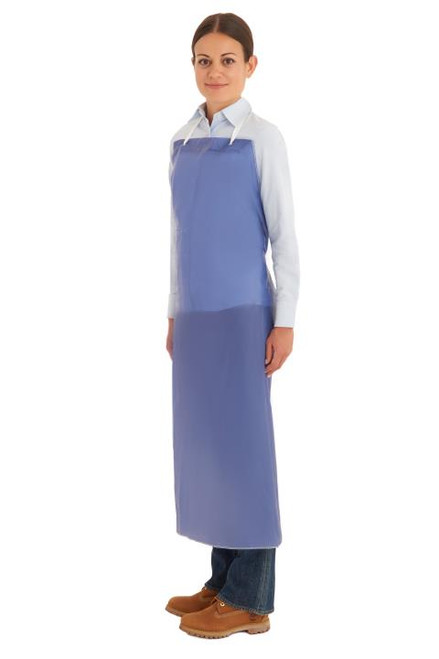
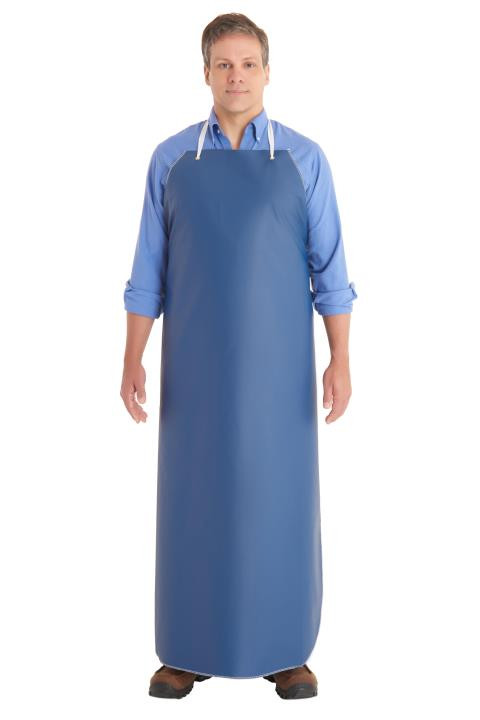
Ansell 56-601 AlphaTec 7 mil Urethane Apron (48/Case)

$636.00
SKU: ‭‭56-601 7 - 10 Business Days
(No reviews yet)
Availability:
7 - 10 Business Days
Shipping:
Calculated at Checkout

Important Availability Notice: Ansell and Kimberly-Clark items, including stock items and those with 7–10 day lead times, may be delayed up to 30 days. Please contact us to confirm availability. Normal shipping is expected to resume by 1st Nov 2026

Ansell AlphaTec® 56-601 Urethane Work Apron (Blue) — 7 mil Nylon-Reinforced Urethane, Sewn Edges, Sealed Grommets + 3-Piece 28" Ties, Bib Style (35" x 48" or 35" x 55"), 48/Case
Urethane 7 mil Nylon-reinforced Sewn edges Sealed grommets 3-piece 28" ties 48 aprons/case

Overview

AlphaTec® 56-601 is a medium-duty urethane work apron engineered for wet, greasy, and chemical-splash workflows where flexibility and durability must be maintained at the operator interface. Ansell describes this 7-mil apron as nylon-reinforced with sewn edges to help resist punctures, tears, and abrasion while remaining lightweight and comfortable for extended wear.

SOSCleanroom partners closely with best-in-class manufacturers like Ansell because process-critical environments cannot afford “close enough” PPE. That relationship supports correct specification selection, faster access to manufacturer documentation, and more dependable supply planning for customers running high-uptime operations.


Why this apron matters in wet/chemical workflows
  • Helps protect where oil, grease, and chemicals are present: a protective barrier designed to keep workers cleaner and reduce harmful contact during messy processes.
  • Flexibility without giving up toughness: urethane material is positioned for chemical splash handling plus resistance to fats, oils, grease, punctures, tears, and abrasion.
  • Fit you can standardize: sealed grommets with 3-piece 28-inch ties are designed to improve adjustability while reducing tear-out risk.
  • Comfort for longer tasks: designed for comfort and extended wear in repetitive or shift-length operations.

Typical tasks supported (published examples)
  • Plant disinfection and sanitization
  • Transferring liquids
  • Equipment maintenance and repair
  • Canning, bottling, storing, and transportation
  • Food processing tasks (e.g., packing fillets and ground meat)

Key specifications (published)
Product / series Ansell AlphaTec® 56-601 (urethane apron)
Material Urethane; nylon reinforced; sewn edges
Thickness 7 mil
Color Blue
Closure / fit features Integral ties; sealed grommets; 3-piece 28" ties
Available sizes 35" x 48" and 35" x 55"
Silicone-free Not tested (published)
Primary industries (published) Food processing; life sciences
Case unit 48 aprons/case
SOSCleanroom listing notes Availability: 7–10 business days; Weight: 13.00 lbs

Packaging and handling (practical)
  • Select the bib length (48" vs. 55") based on splash zone, vessel height, and operator posture.
  • Inspect grommets, ties, and edge seams before use; remove damaged aprons from service immediately.
  • For sanitation routines, follow your chemical program’s compatibility rules and validated contact times.

EU GMP Annex 1 alignment notes (practical)

Annex 1 programs treat garment systems as part of the facility’s Contamination Control Strategy (CCS). AlphaTec® 56-601 is an industrial chemical/soil-control outer layer and is not positioned as a sterile cleanroom garment. If used in or near regulated areas, its use should be risk-assessed, justified, and controlled within your CCS/SOPs.

  • Define the boundary: control where the apron is allowed (e.g., support areas, wash-down spaces, utility tasks) to prevent uncontrolled migration.
  • Cleaning discipline: validate wipe-down chemistry and technique to prevent residue transfer and run-off behind the apron boundary.
  • Change triggers: document replacement triggers (splash event, tears/punctures, uncontrolled contact, end-of-shift, etc.) and train to them.

Storage and lifecycle control
  • Store clean and dry, away from direct sunlight and sharp edges that can crease or puncture film.
  • Segregate clean inventory from used/soiled aprons to prevent cross-contamination.
  • Use FIFO and lot control consistent with your EHS/QA documentation practices.

Standards and reference context (where applicable)

Documentation

Use these documents for EHS files, qualification packets, and change-control reviews.


If you have any questions please email us at Sales@SOSsupply.com or give us a call at (214)340-8574. OR check out the AI ChatBot powered by SOSCleanroom data libraries - give it a try! THIS IS NEW FOR 2026! © 2026 SOSCleanroom. All rights reserved.
The Technical Vault By SOSCleanroom
Urethane splash layer Fit stability (grommets + ties) Cleaning discipline ISO-first, Annex 1-aware

Where this apron fits (and where it does not)

AlphaTec® 56-601 is designed as a chemical/soil-control outer layer for wet, oily, and chemical-splash tasks. In practice, aprons like this protect underlying garments, reduce operator exposure, and reduce cleaning burden during transfers, sanitation, and maintenance.

Boundary rule (controlled environments)

This is not a sterile cleanroom garment. If your program requires validated sterile gowning (e.g., Annex 1 Grade A/B operations), use only where your CCS/SOPs explicitly justify the risk and define cleaning, change triggers, and segregation.


How to specify the correct bib size
  • 35" x 48": typical for bench-height work, light transfers, and tasks where splash risk is controlled at waist-to-knee coverage.
  • 35" x 55": better for deeper vessels, stronger spray/splash potential, or operators who need more lower-body coverage.
  • Confirm the interface points: the apron controls the torso boundary; you still need sleeve/glove overlap control and disciplined don/doff to prevent run-off into cuffs and waist areas.

Donning and doffing discipline (to prevent cross-contamination)
  1. Don last: put the apron on after base garments and gloves so it remains the outer "dirty boundary."
  2. Set ties flat and secure: avoid loops that catch valves/handles; use the grommets to achieve consistent fit without over-tensioning.
  3. Work clean-to-dirty: keep the apron front away from "clean" touchpoints (door handles, keyboards, carts used in cleaner zones).
  4. Doff with controlled peel-away: untie waist first, then peel away from the body; avoid snapping motions that can aerosolize residues.
  5. Immediate change triggers: puncture/tear, seam damage, significant splash event, or contact with uncontrolled surfaces.

Cleaning and wipe-down strategy (make the apron work for you)
  • Wipe top-to-bottom: prevent run-off into waist ties and behind the apron boundary.
  • Validate chemistry + contact time: disinfectant efficacy and compatibility should be defined by your EHS/QA program (especially in regulated operations).
  • Segregate by soil level: define whether aprons are single-use for the shift/task or whether they are re-used with controlled wipe-down between tasks.
Recommended Texwipe pairings (reduce residue and transfer risk)


If you have any questions please email us at Sales@SOSsupply.com or give us a call at (214)340-8574. OR check out the AI ChatBot powered by SOSCleanroom data libraries - give it a try! THIS IS NEW FOR 2026! © 2026 SOSCleanroom. All rights reserved.