Texwipe TX701 Large Paddle Head Alpha Polyester Knit Cleanroom Swab - Non-Sterile
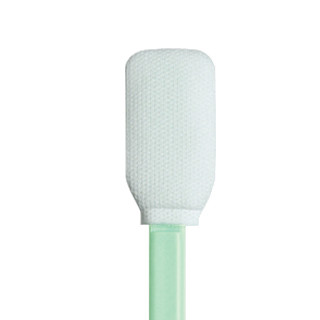
Texwipe TX701 is an extra-large, paddle-head Alpha® polyester knit cleanroom swab designed for precision cleaning, controlled solvent application, and removal of particles and residues from wider surfaces and equipment features. Its double-layer knitted polyester head provides a broad, uniform contact area for cleaning tooling surfaces, fixture lands, tracks, grooves, channels, and other contamination-sensitive components.
The TX701 features a 25.30 mm wide, 35.5 mm long polyester head thermally bonded to a 100% virgin polypropylene handle without adhesives. Its 127.0 mm overall length provides controlled positioning and wiping pressure during localized cleaning. Cleanroom laundering helps maintain low levels of particles, nonvolatile residues, and extractable ions. Each swab is supplied in protective silicone-free and amide-free packaging with lot identification for traceability.
Large Paddle Head Advantage: TX701 provides a wider cleaning contact area than many conventional cleanroom swabs, allowing controlled wiping across broader flat surfaces while maintaining the precision of a handheld swab. Its double-layer polyester knit construction supports solvent retention, contaminant pickup, and repeatable wiping performance in critical cleaning applications.
Specifications:
- Manufacturer: ITW Texwipe
- Part Number: TX701
- Product Family: Alpha® Polyester Knit
- Product Type: Extra-Large Paddle Head Cleanroom Swab
- Swab Format: Dry, single-use cleanroom swab
- Head Material: 100% polyester knit
- Head Construction: Double-layer knitted polyester
- Head Width: 25.30 mm (0.996")
- Head Thickness: 5.20 mm (0.205")
- Head Length: 35.5 mm (1.398")
- Handle Material: 100% virgin polypropylene
- Handle Width: 10.0 mm (0.393")
- Handle Thickness: 3.80 mm (0.149")
- Handle Length: 91.5 mm (3.602")
- Overall Swab Length: 127.0 mm (5.000")
- Head Bond: Complete thermal bond without adhesives
- Handle Color: Light green with embossed TEXWIPE identification
- Head Geometry: Extra-large flat paddle
- Sterility: Non-sterile
- Cleanroom Processing: Cleanroom manufactured and laundered
- Packaging (Bag): 100 swabs per bag (4 inner bags of 25 swabs)
- Packaging (Case): 5 bags of 100 swabs
- Total Case Quantity: 500 swabs
- Packaging Material: Silicone-free and amide-free bag
- Traceability: Lot coded for quality control
- Autoclave Compatibility: Manufacturer identifies the swab as autoclave safe in dry heat and steam; use an approved process
- Available Purchase Options: Bag of 100 or case of 500 swabs
- Availability: Stock item, subject to current inventory
About the Manufacturer:
Texwipe, an ITW company, manufactures specialized contamination-control products for semiconductor manufacturing, pharmaceutical production, biotechnology, medical devices, precision optics, and laboratory operations. Its cleanroom swab portfolio includes knitted polyester, nonwoven polyester, foam, microfiber, and other engineered cleaning materials designed for precision applications.
The Texwipe Alpha® polyester knit swab series combines double-layer polyester heads, thermal bonding, precision manufacturing, and cleanroom laundering to support controlled particle and residue levels. Swab geometry, head material, handle construction, and packaging are designed to support consistent cleaning methods across contamination-sensitive manufacturing processes.
SOSCleanroom is an authorized Master Distributor of ITW Texwipe. Our team supports customers with swab selection, manufacturer documentation, product configuration, lot traceability, and procurement assistance for critical cleaning applications.
TX701 Features:
- Extra-large paddle head for broader cleaning contact
- 100% polyester knitted Alpha® head
- Double-layer knit construction for enhanced absorbency
- 25.30 mm wide head for controlled cleaning of flat surfaces
- Complete thermal bond construction without adhesives
- 100% virgin polypropylene handle for chemical resistance
- Cleanroom laundered to reduce particles, ions, and nonvolatile residues
- Engineered to resist snagging and abrasion during controlled use
- Compatible with a variety of cleaning solutions, subject to chemical verification
- Suitable for controlled IPA and solvent application
- Light-green handle with TEXWIPE identification
- Lot coded for traceability and quality control
- Silicone-free and amide-free protective packaging
- Autoclave-safe construction according to manufacturer guidance
- Non-sterile packaging with 100 swabs per bag
- 500 swabs per case
TX701 Benefits:
- Broader Surface Coverage: The extra-large paddle head covers more surface area per controlled stroke than smaller swabs.
- Enhanced Absorbency: Double-layer polyester knit helps retain compatible cleaning solutions and collect surface contamination.
- Controlled Contact: Flat paddle geometry supports consistent wiping pressure on broad surfaces, fixture lands, and tooling faces.
- Low Contamination Background: Cleanroom laundering helps reduce particles, ions, and nonvolatile residues for contamination-sensitive applications.
- Reduced Adhesive Contamination Risk: Thermal bonding eliminates adhesive at the swab head attachment.
- Solvent Compatibility: Polyester and polypropylene construction supports use with many common cleaning solutions.
- Durable Knit Construction: Knitted polyester is engineered to resist snagging and abrasion during controlled cleaning.
- Precision Handling: The polypropylene handle allows operators to maintain controlled swab placement and movement.
- Traceable Material: Lot coding supports receiving, investigation, and material-control procedures.
- Flexible Purchasing: Bag and case quantities accommodate different cleaning volumes and procurement requirements.
Common Applications:
- Precision cleaning of broad flat equipment surfaces
- Cleaning tooling faces, fixture lands, and equipment housings
- Removal of localized residues and particulate contamination
- Controlled application and removal of IPA and compatible solvents
- Cleaning wide slots, tracks, channels, and recessed surfaces
- Semiconductor manufacturing equipment maintenance
- Precision optical component cleaning where material compatibility is established
- Medical device manufacturing and assembly-area cleaning
- Laboratory equipment cleaning
- Cleaning stainless steel fixtures and compatible production equipment
- Removal of lubricants, adhesives, and process residues using approved cleaning solutions
- Controlled surface wiping where a full-size cleanroom wiper is too large for the cleaning area
- Repeatable precision cleaning procedures requiring a defined swab head geometry
Best-Practice Use:
- Inspect Before Use: Check the swab head, handle, and packaging for visible damage or contamination.
- Use Clean Handling Techniques: Handle swabs with appropriate cleanroom gloves and avoid touching the polyester head.
- Control Solvent Loading: Apply enough approved solvent to support cleaning without excessive dripping or flooding.
- Maintain Uniform Contact: Position the paddle head to provide even contact across the cleaning surface.
- Use Controlled Strokes: Apply straight, overlapping strokes where appropriate to help prevent redistribution of contamination.
- Manage Wiping Pressure: Use only the force required to remove contamination without damaging the swab or the surface.
- Rotate Contact Surfaces: Where the procedure permits, use a clean portion of the swab head as residue accumulates.
- Replace Loaded Swabs: Discard swabs when contaminated or when the approved cleaning procedure requires replacement.
- Prevent Cross-Contamination: Do not place used swabs into clean solvent containers or return them to unused packaging.
- Verify Chemical Compatibility: Confirm compatibility between the cleaning solution, polyester head, polypropylene handle, and cleaned surface.
- Follow Drying Requirements: Allow the appropriate evaporation or drying period after solvent application.
- Maintain Lot Traceability: Record the swab lot when required by the facility's quality procedures.
- Single-Use Handling: Discard used swabs according to facility waste-management procedures.
Selection Notes (TX701 vs. Other Alpha Polyester Swabs)
Texwipe Alpha® polyester knit swabs are available in different head sizes, handle lengths, and configurations. Selecting the appropriate swab depends on the dimensions of the cleaning area, solvent requirements, surface sensitivity, access limitations, and the amount of contact area needed.
- TX701 Extra-Large Paddle Head: Provides a 25.30 mm wide polyester knit head for larger surface areas, tooling faces, and broad cleaning features.
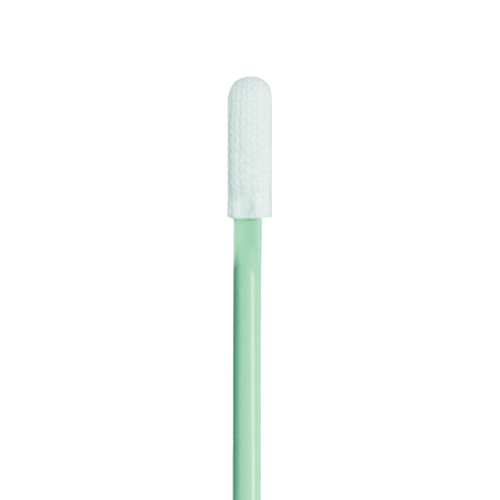
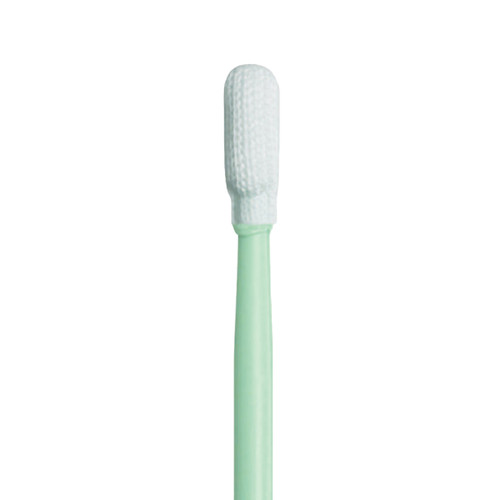
- TX714A Large Alpha Swab: Features a smaller polyester knit head for localized cleaning where TX701 provides more contact area than necessary.
- TX761 Alpha Long-Handle Swab: Offers an extended handle for cleaning recessed areas, channels, and difficult-to-reach equipment features.
- TX715 Alpha Sampling Swab: Designed for cleaning validation and residue sampling, with a break-away handle for controlled sample transfer.
- STX714A Sterile Alpha Swab: A sterile alternative for applications requiring sterile polyester swab presentation and controlled handling.
Swab Selection Guidance: Choose TX701 when broad, uniform paddle contact is more important than access to narrow openings. Select smaller Alpha swabs for localized features, long-handle versions for recessed surfaces, and purpose-designed sampling swabs when analytical recovery and sample-transfer requirements are critical. Different swab constructions and geometries should be qualified before substitution in a validated cleaning procedure.
Contamination Control and Material Compatibility:
- Particle Control: Cleanroom laundering and engineered knitted polyester construction support low particle and fiber contribution during controlled wiping.
- Nonvolatile Residue: Texwipe's controlled manufacturing and laundering processes help reduce nonvolatile residue levels.
- Ionic Background: Low levels of extractable ions support contamination-sensitive cleaning applications.
- Solvent Compatibility: Polyester and polypropylene are compatible with many cleaning solvents, including IPA, subject to chemical and surface verification.
- Surface Protection: Confirm compatibility with delicate coatings, polished surfaces, and precision components before cleaning.
- Snagging Resistance: Knitted polyester is engineered to resist snagging, but rough edges and excessive wiping pressure can damage swab materials.
- Handle Material: Virgin polypropylene provides a durable structure for controlled cleaning and chemical handling.
- Sterility: TX701 is supplied non-sterile. Cleanroom laundering and autoclavability do not mean the product is sterile when purchased.
- Critical Cleaning: Performance should be evaluated according to the facility's specific contamination limits and cleaning procedure.
Packaging and Storage Recommendations:
- Bag Quantity: 100 swabs per bag
- Inner Packaging: Four inner bags containing 25 swabs each
- Case Quantity: Five bags per case
- Total Case Quantity: 500 swabs
- Packaging: Silicone-free and amide-free protective bags
- Lot Identification: Retain manufacturer lot information where traceability is required
- Storage Conditions: Store in a clean, dry environment protected from contamination
- Package Integrity: Inspect bags before opening and protect unused swabs from uncontrolled exposure
- Opened Bags: Follow facility procedures for storing partially used bags in controlled areas
- Handling: Avoid direct contact with the polyester head before use
- Disposal: Dispose of used swabs according to the applicable process and chemical waste procedures
Manufacturer Technical Documents:
Texwipe TX701 Manufacturer Product Information: Click Here
Texwipe Cleanroom Swabs Brochure (PDF): Click Here
Texwipe TX701 Technical Data Sheet : Click Here
Other Similar Products Available From SOSCleanroom.com
Alpha Polyester Knit Cleanroom Swabs
Cleaning Validation and Sterile Alternatives
Notes: Need assistance selecting an extra-large paddle head, smaller Alpha swab, long-handle swab, or cleaning-validation sampling option? Open the SOSCleanroom Technical Vault tab above for additional application guidance, precision swabbing techniques, solvent compatibility, and contamination-control recommendations.
SOSCleanroom.com supports contamination-control programs with cleanroom swabs, wipers, cleaning solutions, and specialized consumables for semiconductor, pharmaceutical, biotechnology, optical, and precision manufacturing applications. Our team provides product-selection assistance, manufacturer documentation, packaging information, and dependable procurement support.
Product description updated: October 19, 2026 (SOS Technical Staff)
© 2026 SOS Supply. All rights reserved.